What was the purpose of the Opportunity Rover?
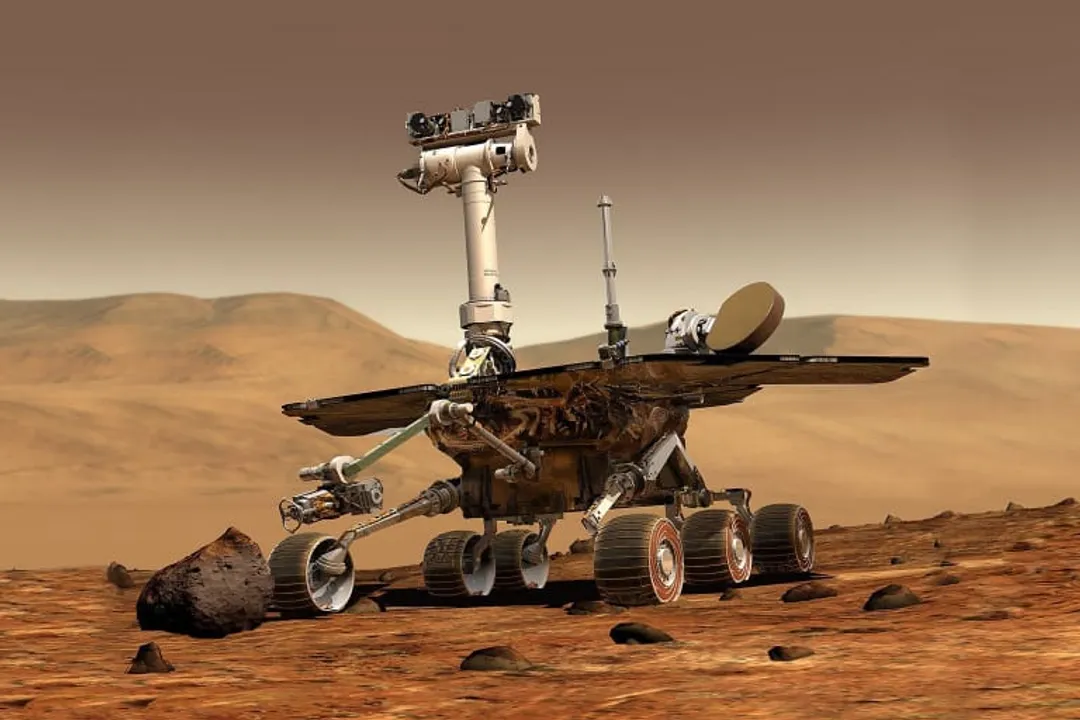
The primary directive for the Opportunity rover was straightforward yet profound: ascertain whether liquid water once existed on Mars. [2] When it landed on the red planet in January 2004, this robotic geologist joined its twin, Spirit, to begin what was planned as a three-month reconnaissance mission in Meridiani Planum. [2][5] The expectation was modest, a ninety-sol sprint to examine rocks and soil for definitive chemical or physical signs that Mars, currently a cold, arid world, once possessed the necessary ingredients for life as we know it. [2][7]
# Water Search
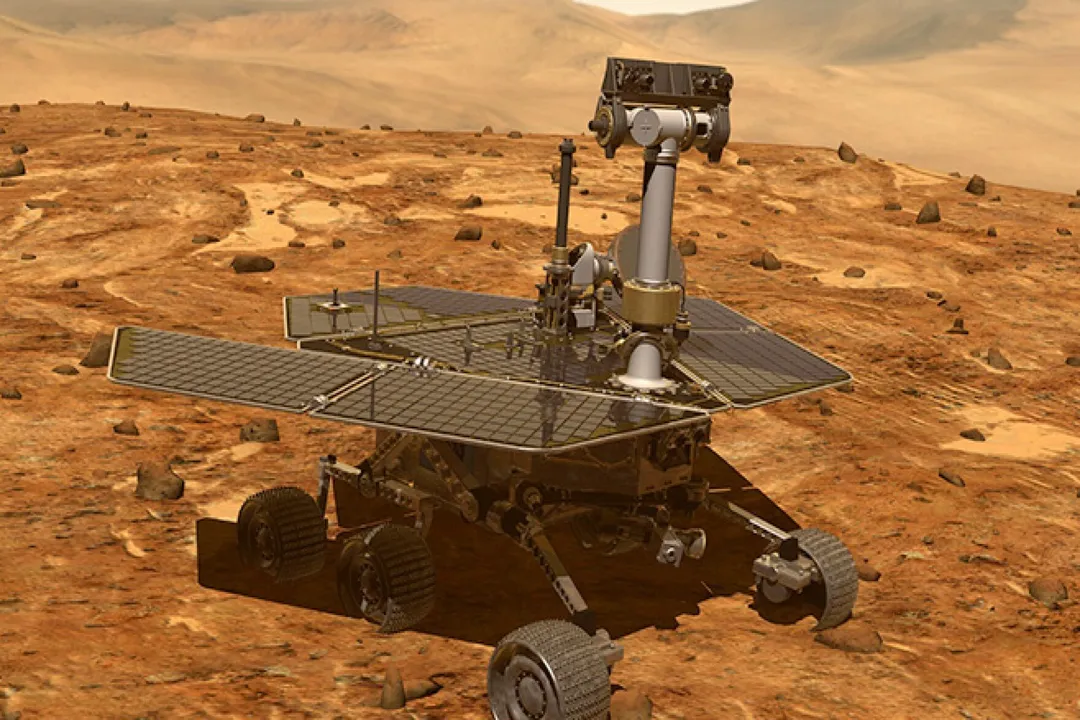
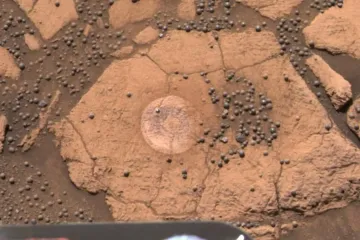
The core scientific objective hinged on identifying minerals formed in the presence of water, such as sulfates and hematite spherules, often called "blueberries". [2] Opportunity was equipped with an array of sophisticated instruments designed to analyze rock composition and texture right where it stood or by drilling into the surface. [8] This was more than just looking for traces; it was about determining the environmental conditions of ancient Mars—was it just damp occasionally, or did it sustain persistent, perhaps even habitable, bodies of water?[2]
The rover's capability to interact directly with Martian geology, using its robotic arm to grind away weathered outer layers of rocks to expose fresh material for its instruments, was key to achieving this goal. [8] By examining bedrock and loose materials in its landing zone, scientists sought to read the planet's ancient hydrological history, one layer of sedimentary rock at a time. [2]
# Extreme Lifespan
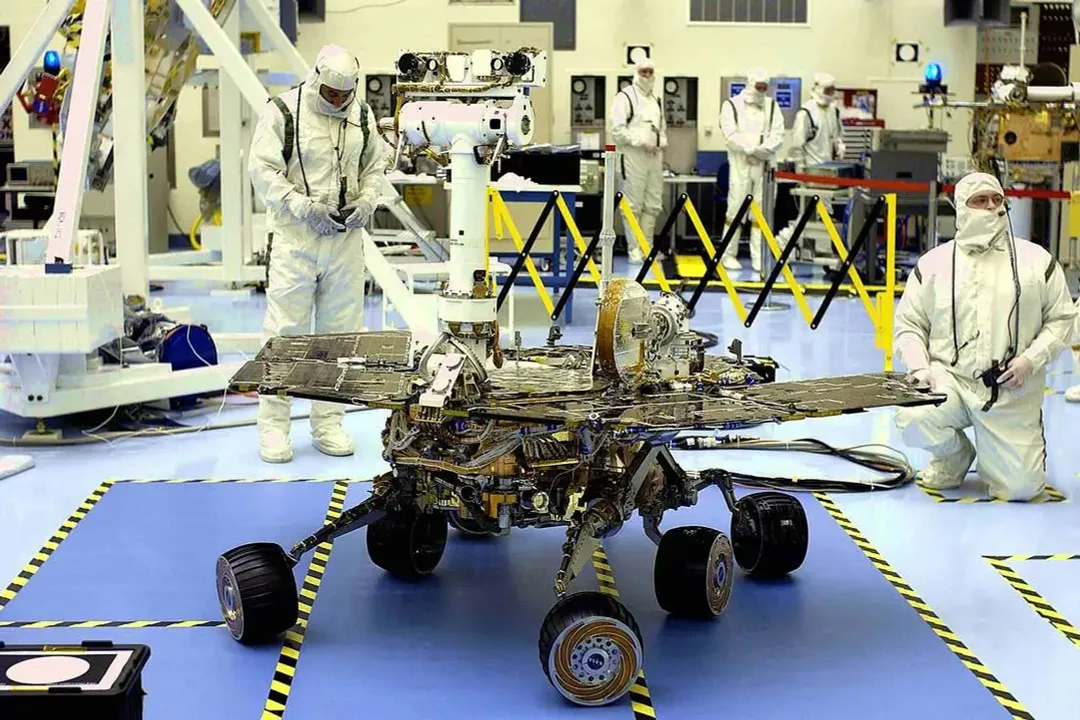
What followed the initial ninety sols was an unprecedented chapter in space exploration. Opportunity did not just complete its mission; it shattered every expectation concerning longevity and distance covered on an extraterrestrial surface. [5][7] While the mission was initially limited to the expected operational window, the rover kept functioning, day after Martian day, long after its twin, Spirit, succumbed to the harsh environment. [2][4]
The rover's final tallied distance was staggering: it traversed over 28 miles (about 45 kilometers) across the Martian surface before its contact was lost. [1][5] Consider the difference between the planned ninety-sol duration and the nearly fifteen years it actually operated. This incredible endurance suggests a remarkable convergence of initial engineering quality, the favorable terrain of Meridiani Planum, and the dedication of the ground teams who kept coaxing data from the aging hardware. [5] The rover effectively became a mobile geology lab that kept moving, providing a continuous, long-baseline dataset that a stationary lander could never have achieved. [2]
This persistence fundamentally redefined mission parameters for robotic planetary exploration. While the initial goal was to prove water once existed, the extended mission became an unexpected masterclass in long-term operations, effectively turning a proof-of-concept technology demonstration into a generational scientific instrument. [5]
# Rock Record
The data returned provided undeniable evidence. Opportunity confirmed that past Mars was significantly wetter than the planet we see today. [9] The rover found clear evidence of past interaction between rock and liquid water, specifically through observing layered rock formations and the presence of minerals that require water to form. [2]
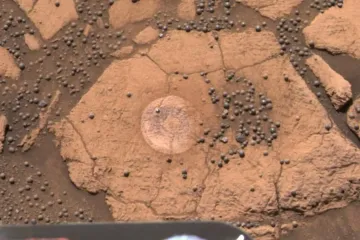
The traverse itself became part of the story. Imagine the rover as a slow-moving historian, reading a continuous scroll of Martian history written in stone. By driving over 28 miles, the science team wasn't just charting a path; they were observing transitions between different geological units—perhaps moving from an ancient streambed environment to a drier, more volcanic plain. [2] Each major stop, like the one at Endeavour Crater, offered a new chapter, exposing layers that told stories spanning billions of years. [1] The discovery of iron oxide spherules, the "blueberries," cemented the case for past watery environments, as these small spheres are typically formed through processes involving moving water. [2]
# Twin Rovers
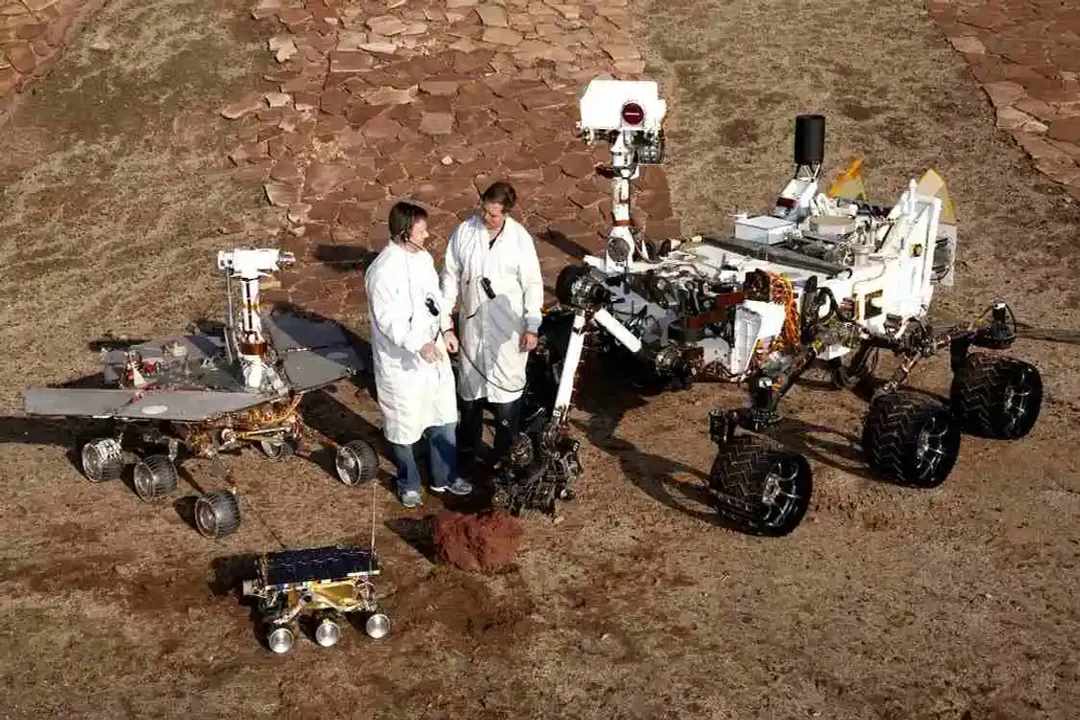
It is impossible to discuss Opportunity without mentioning Spirit. [2] They were launched together as the Mars Exploration Rovers (MER) mission, a pair designed to work in tandem, covering different terrains to maximize the initial scientific return. [2][5] Spirit was tasked with examining the opposite side of Mars, exploring the Columbia Hills region. [2] The success of one validated the approach for the other, and their simultaneous operation allowed for comparative planetology—understanding if the wet history was regional or global. [5]
While Spirit had its own challenges, including getting stuck in soft soil that eventually led to its mission ending, Opportunity demonstrated superior mobility in its chosen terrain. [4] The science community benefited from having two highly functional rovers operating concurrently for years, offering redundancy and a broader geographical context for their groundbreaking findings. [2]
# Final Silence
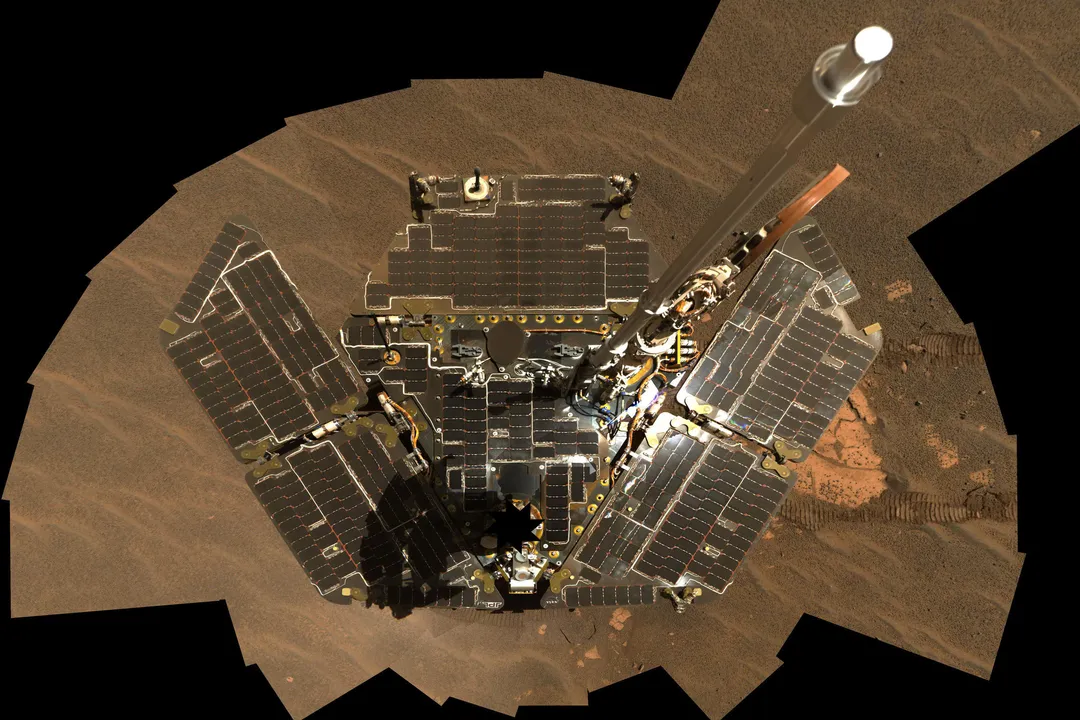
The incredible run of the Opportunity rover eventually met an unavoidable Martian obstacle: the weather. [7] In mid-2018, a planet-encircling dust storm began to brew, shrouding Mars in darkness and blocking the sunlight needed to recharge the rover's solar panels. [7]
This was the end of Opportunity's working life. As the dust settled, the team continued to listen, sending commands and waiting for a signal that never came. [7] The failure was not due to mechanical breakdown or instrument failure in the traditional sense, but a slow power-down caused by the atmosphere becoming too opaque for the solar arrays to generate sufficient electricity. [7] The last communication from the rover was received on June 10, 2018. [7] The scientific community, after months of hopeful silence, formally declared the mission over in February 2019. [7] The silence that followed was the final chapter for a machine designed for 90 sols that bravely endured for over 5,000. [2][7]
The scientific legacy of Opportunity rests firmly on its confirmation of an ancient, wet Mars, but its engineering story is just as compelling—a testament to designing machinery that can withstand environments far harsher and longer than initially planned. [5][9]
Related Questions
#Citations
Opportunity (rover) - Wikipedia
Mars Exploration Rovers: Spirit and Opportunity - NASA Science
Mars rover Opportunity's mission and longevity - Facebook
Spirit & Opportunity - ROBOTS: Your Guide to the World of Robotics
Mars Rovers Spirit, Opportunity Exceeded Expectations
What Has Gone Wrong With The Opportunity Rover After 15 years?
This is what we learned after 15 years exploring Mars
Arm of Opportunity – Exploring Mars By Rover - Motiv Space Systems
Why Is The Opportunity Rover So Important To Science? - VPM.org