Is Opportunity still functioning on Mars?
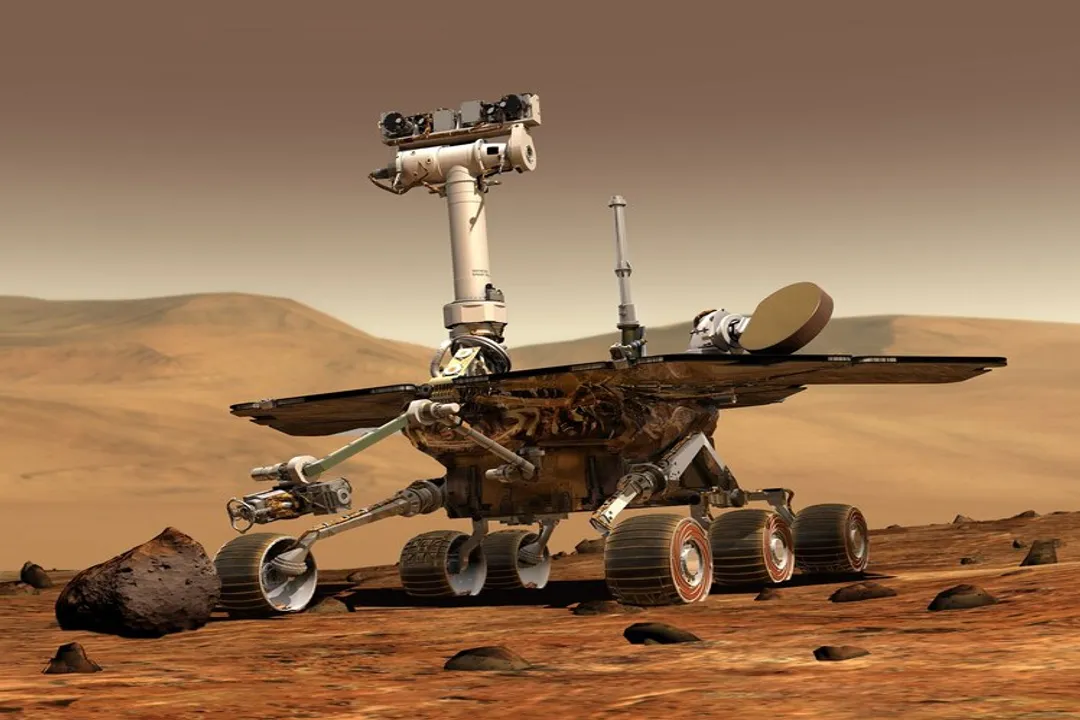
The question of Opportunity's current operational status is answered with a definitive, albeit fond, silence: the rover is no longer functioning on Mars. NASA officially declared the end of the Mars Exploration Rover-B (MER-B) mission on February 13, 2019. The last whisper from the six-wheeled geologist, nicknamed Oppy, reached Earth on June 10, 2018, just before a planet-engulfing dust storm rendered its solar panels incapable of harvesting enough energy to keep its systems awake.
# An Unforeseen Epic
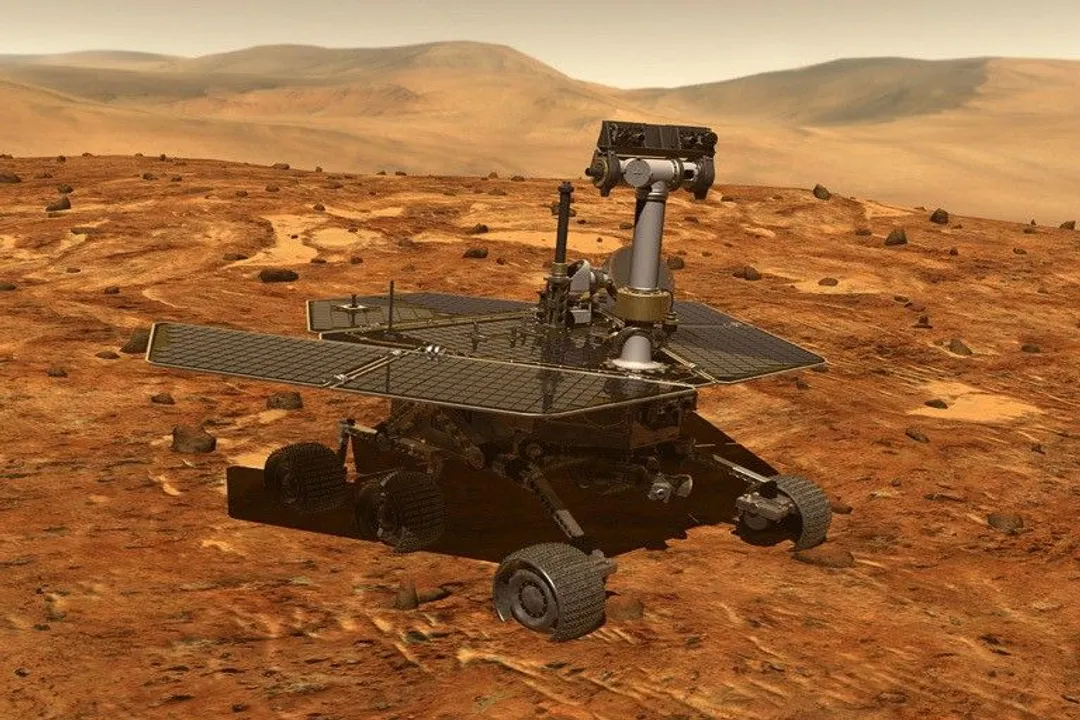
When Opportunity launched on July 7, 2003, tucked into the protective shell of a Delta II Heavy rocket, its warranty was set for a mere 90 Martian sols, or about three Earth months. Its twin, Spirit, shared the same modest lifespan expectation. The mission's goal was straightforward: land in specific areas—Meridiani Planum for Opportunity—and search for definitive evidence that liquid water once existed on the Red Planet. Against this incredibly short planned window, the actual performance was a narrative defying probability. Opportunity operated for an astonishing 5,111 sols, translating to 14 years and 138 days of continuous activity. This meant the rover functioned for approximately 57 times its initial design duration.
The engineers at the Jet Propulsion Laboratory (JPL) had anticipated dust accumulation on the solar arrays would eventually choke the power supply, ending the mission. While dust certainly played the final role, the initial degradation timeline was repeatedly reset by Martian weather itself. Several times over the mission's tenure, seasonal winds swept across the surface, coincidentally cleaning the solar panels of accumulated grime and restoring power levels to near-new conditions. This phenomenon was an immense stroke of operational luck, far surpassing the conservative estimates baked into the original design margins. While the fundamental engineering was undeniably sound—allowing it to survive challenges like getting temporarily stuck in sand in 2005 and enduring seven Martian winters—the longevity was heavily contingent on these unpredictable atmospheric "washes" that kept the power flowing. It highlights a fascinating balance in deep-space engineering: meticulously calculating survival limits while simultaneously hoping for the unexpected reprieve that only the environment itself can grant.
# Water Clues

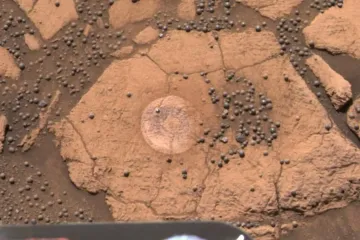
The scientific dividends paid by Opportunity were directly proportional to its extended life. Following its successful landing in Eagle Crater on January 25, 2004, the rover immediately began investigating bedrock outcrops. Within its first operational phase, Opportunity uncovered countless small, spherical hematite concretions, swiftly nicknamed "blueberries". These spherules are recognized on Earth as forming in the presence of liquid water, providing the first compelling evidence that Meridiani Planum was once a water-rich environment, albeit one potentially acidic at that time.
As the mission progressed and the rover traversed miles across the Martian surface, the evidence for habitability grew richer and more complex. Later in its explorations, particularly after reaching the massive Endeavour crater in 2011, Opportunity found bright, thin veins of gypsum cutting through the rocks. Gypsum is another mineral that forms when water flows through rock fractures, depositing minerals as it evaporates. Even more significant was the discovery of phyllosilicates, or clay minerals, at Cape York on the Endeavour rim, suggesting that billions of years ago, neutral liquid water—environments more conducive to life as we know it—persisted on the surface. The combined data from Opportunity and Spirit fundamentally reshaped the understanding of Mars from a static, dry world to one with a dynamic, warmer, and wetter past capable of supporting microbial life.
# Distance Milestones

The sheer distance covered by the rover transformed it from a stationary lab into the first true overland expedition on another world. Opportunity was never meant to travel much farther than about 1,100 yards ($1$ kilometer). Yet, it kept moving, analyzing rocks, studying craters like Endurance and Victoria, and finally making the three-year trek to the $13$-mile-wide Endeavour crater.
On March 25, 2015, the mission achieved a unique milestone: Opportunity became the first human-made vehicle to travel the distance of a marathon ($42.195$ km or $26.219$ miles) on a celestial body other than Earth. By the time communications ceased, the odometer read $45.16$ kilometers ($28.06$ miles). This vast distance meant that Opportunity had covered more ground than all previous Mars rovers combined. It also set records for the steepest slope driven by any rover on Mars, successfully navigating tilts up to $32$ degrees.
# The Final Event
The environment that had occasionally aided Opportunity through dust-clearing winds ultimately proved too overwhelming. In the Martian summer of 2018, a colossal, planet-encircling dust storm developed. The sheer density of the suspended dust—measured at an opacity tau of $10.8$, far above the typical $0.5$ for that region—plunged the surface into deep twilight, blocking virtually all solar energy. Opportunity entered hibernation mode on June 12, 2018, hoping the storm would pass and the wind would return to clean its arrays.
When the global storm subsided in October, the rover remained silent. NASA diligently sent over $1,000$ recovery commands through the end of January 2019, attempting to coax a response, even trying a last-ditch effort to reset its mission clock. The final transmission on June 10, 2018, reported critically low power reserves. While some media poetically interpreted the data state as the rover saying, "My battery is low and it's getting dark," this was a journalistic paraphrase of official status reports regarding low energy and high opacity, not a direct English message from the vehicle. The silence confirmed that the event was catastrophic, likely resulting from either a critical system failure or the solar panels being permanently blanketed by too much fine dust. The final, official end came on February 13, 2019, with JPL leadership expressing deep appreciation for the machine's service.
# The Long Quiet Monument
The question of what Opportunity looks like now remains in the realm of scientific projection, as the physical state of the machinery is subject to Martian forces over vast timescales. It is believed the rover is resting in Perseverance Valley, a location fittingly named for its dogged nature. Because Mars lacks significant atmospheric humidity and free oxygen, conventional corrosion (rusting) is essentially nonexistent.
The primary threats to the rover's long-term integrity are physical abrasion from windblown dust and cosmic radiation. However, because the Martian atmosphere is only about $1%$ the density of Earth's, the abrasive force is extremely slow. One analysis suggests that the rover’s husk might remain largely intact for $10,000$ years, or perhaps even for geological ages, eventually becoming buried by accumulating regolith which would aid preservation. While plastics and exposed composites will degrade from UV exposure over centuries, harder aluminum components, protected by a surface oxide layer, will persist much longer. The irony is that the very dust storm that ended its mission is now helping to preserve its components from further physical weathering by burying it.
The physical artifacts of the mission—the $45$ km of wheel tracks—are already disappearing, lost to the wind within a few years of being laid down. Yet, the $52$ holes drilled into the rock by the Rock Abrasion Tool (RAT) might remain as more permanent scars on the landscape. The lander, backshell, and parachute may also persist for centuries, making Opportunity an unintentional time capsule of early $21$st-century Earth technology.
# Passing the Torch
Opportunity's incredible performance established a new baseline for planetary exploration, proving that engineering diligence, combined with a dash of solar luck, can yield scientific returns far exceeding the original budgetary justification. The data and experience harvested from Opportunity were immediately fed into the design and operation of its successor, Curiosity, which landed in 2012 and operates on a more durable radioisotope thermoelectric generator (RTG) power source, avoiding the solar dependency that claimed Oppy. Furthermore, many engineers and scientists who guided Opportunity transitioned to work on the subsequent Mars 2020 rover (Perseverance), which is designed to cache samples for eventual return to Earth.
One profound legacy is the inspiration for the next generation of scientists and engineers, many of whom were inspired to pursue careers in the field while watching Opportunity function years past its expected demise. It is no longer just a machine; it is a monument to perseverance itself, resting forever on the Red Planet, having delivered incontrovertible proof that Mars was once a world waiting for life. The team can walk away feeling good about the conclusion: if a rover designed for $90$ days must end its mission, being taken out by one of the most ferocious storms in decades after $14$ years of success seems an honorable exit.
#Videos
Left for Dead on Mars: What Happened to NASA's Opportunity Rover?
Related Questions
#Citations
Opportunity (rover) - Wikipedia
Mars Rover Mission Comes to an End, But Science, Legacy Live on
How long will the Opportunity last on Mars? : r/space - Reddit
Left for Dead on Mars: What Happened to NASA's Opportunity Rover?
Opportunity - NASA Science
Mars rover Opportunity ends mission after 15 years
The Mars rover Opportunity is dead. Here's what it gave humankind.