How long will it take the rocket to get to Mars?
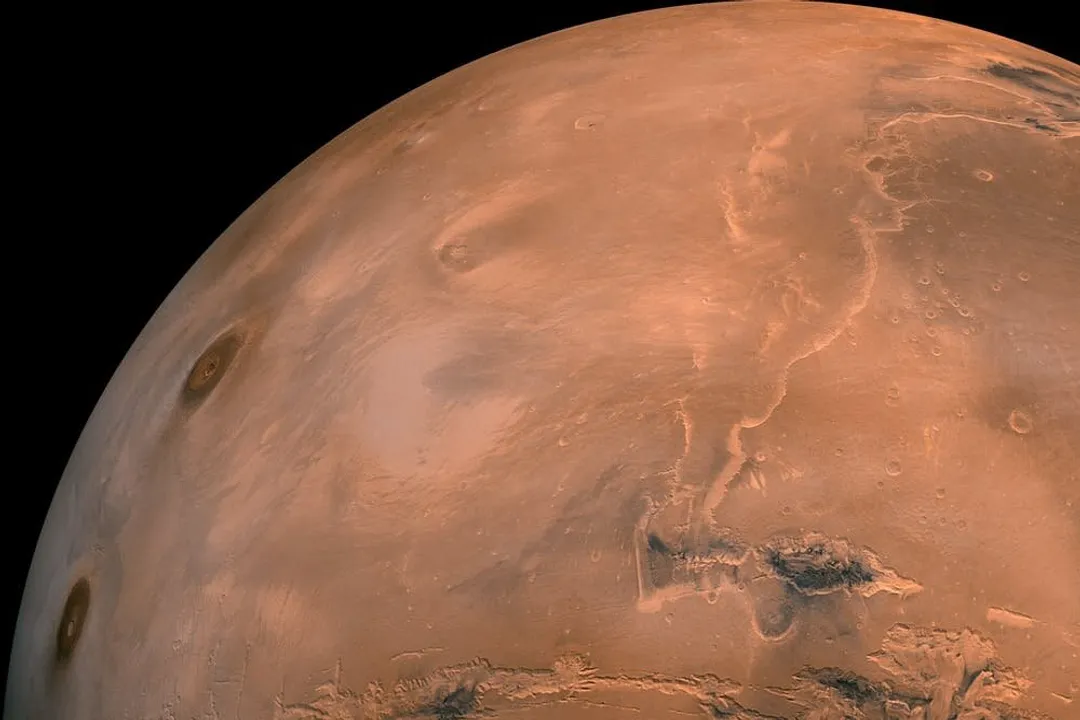
Figuring out the travel time to Mars is rarely a straightforward subtraction problem; it’s a complex astronomical calculation dictated by the eternal, elliptical dance between Earth and the Red Planet. While the shortest straight-line distance separating the two worlds is about 33.9 million miles, launching a spacecraft in a direct line when they are that close is almost never an option due to the energy requirements. In reality, a one-way trip for a robotic probe or an early crewed mission typically falls into a window ranging from about six to nine months. NASA experts often cite an approximate duration of seven months for their robotic probes on a one-way trip. However, that number is highly dependent on when you leave and how you plan to get there.
# Orbital Mechanics
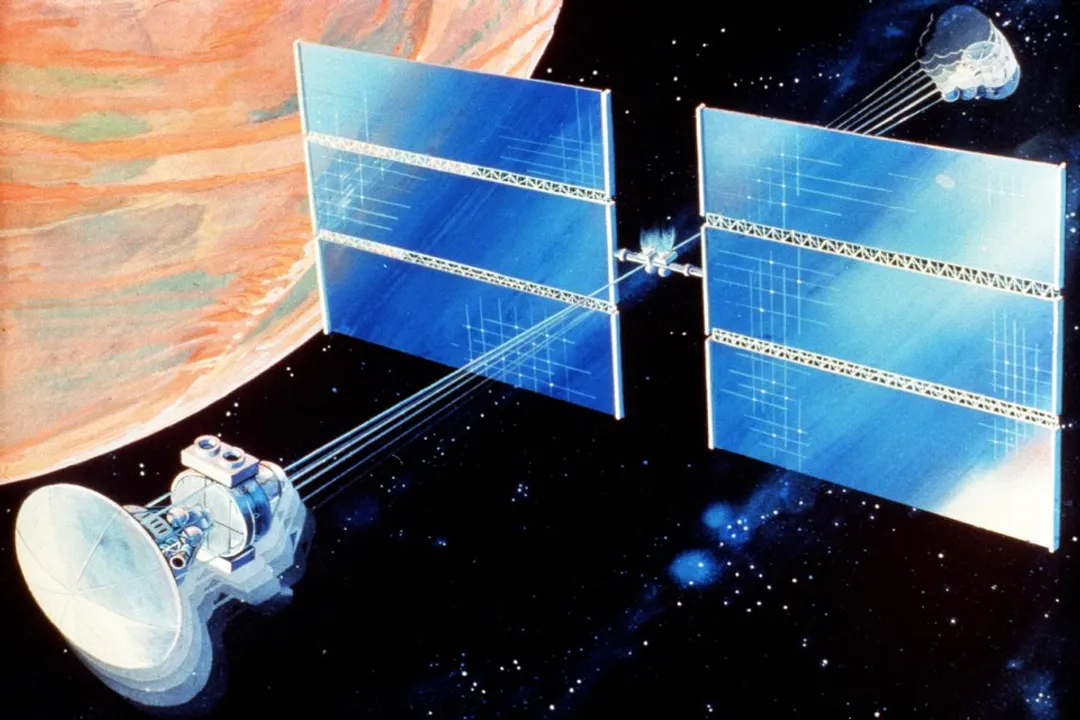
The primary reason for the variable travel time lies in the fact that neither Earth nor Mars orbits the Sun in a perfect circle, nor do they orbit at the same speed. Earth zips around the Sun in roughly 365 days, while Mars takes closer to 687 Earth days to complete its circuit. This difference in orbital periods means that the relative positions of the two planets are constantly shifting. If you imagine two runners on concentric circular tracks, one moving faster than the other, the distance between them continuously changes.
When planning a mission, engineers are not interested in the absolute closest point; they are interested in the point where they can launch the spacecraft to intersect Mars’s orbit at precisely the right moment for arrival. This point in space and time is dictated by the synodic period of Earth and Mars, which is the time it takes for the Earth to "lap" Mars again. This favorable alignment, allowing for the most energy-efficient trajectory, occurs approximately every 26 months. Missing this window means either waiting over two years for the next opportunity or taking a significantly longer, high-energy path that would burn through precious propellant reserves.
Imagine a vast, shifting three-dimensional target rather than a fixed point. For any chemical rocket-powered mission, the time it takes is intrinsically linked to the alignment of that target. A mission launched just as the alignment is perfect will be faster than one launched when the planets are further apart in their respective orbits, even if both launch during the same 26-month "launch window." The difference in travel time can be a matter of weeks, depending on how close to the optimal departure point the launch occurs.
# Transit Paths
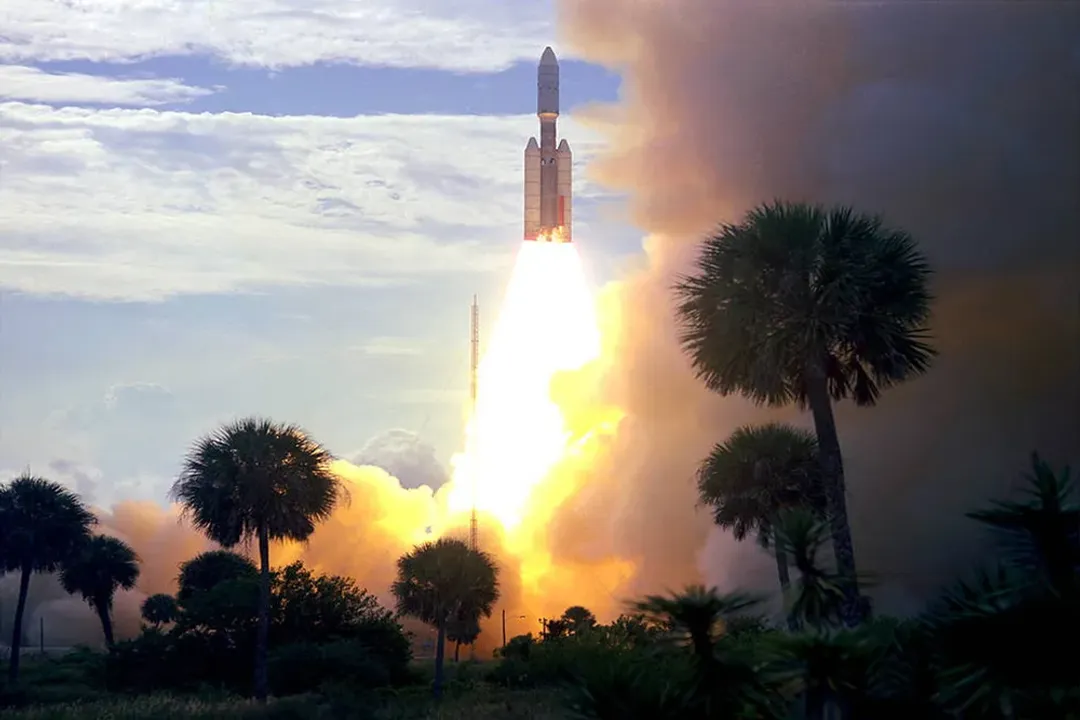
The route a spacecraft takes from Earth to Mars is the single biggest factor influencing the duration of the trip, second only to the launch window itself. There are several theoretical paths, each representing a trade-off between speed, fuel consumption, and trajectory complexity.
# Hohmann Transfer
The most commonly discussed, and generally the most fuel-efficient method for uncrewed and early crewed missions, is the Hohmann transfer orbit. This trajectory is an elliptical path that uses the least amount of propellant to move between two orbits—in this case, Earth’s orbit and Mars’s orbit.
A spacecraft launched into a Hohmann transfer spirals outward, effectively using the Sun's gravity to guide it along an arc that meets the orbit of Mars. This path is inherently slow because it requires the spacecraft to match Mars’s slower orbital velocity. This gentle, fuel-saving approach generally requires between seven and nine months to complete. This method is favored for robotic missions because it minimizes the mass that must be lifted off Earth, maximizing the scientific payload that can be sent.
# High Velocity Routes
While the Hohmann transfer is the frugal choice, it is not the fastest. It is entirely possible to design a trajectory that reaches Mars much sooner, perhaps in as little as five to seven months. These faster paths are sometimes called "fast transit" or "high-energy trajectories."
To achieve a shorter flight time, the spacecraft must be injected onto a path that is faster than the standard Hohmann arc. This requires a much larger initial velocity change, known as a higher (delta-v), meaning the rocket must burn significantly more fuel to achieve the escape velocity needed for that trajectory. If you think of the planets’ orbits as roads, the Hohmann transfer is driving the speed limit to conserve gas, while a fast transit is flooring the accelerator, resulting in a much quicker arrival but an empty fuel tank upon entry into Mars’s sphere of influence. For future human missions, reducing transit time is critical to mitigating crew exposure to deep-space radiation and the psychological effects of long-duration confinement, making the increased fuel cost a worthwhile expenditure.
# The Role of Propulsion
The duration calculation changes dramatically when propulsion technology advances beyond traditional chemical rockets. The development of advanced systems like nuclear thermal propulsion or high-power electric propulsion could drastically shorten the travel time. For instance, a high-power electric propulsion system might allow for a continuous, gentle acceleration over a longer period, leading to a much higher final velocity and a potentially shorter trip overall, though the initial burn to get out of Earth's gravity well remains a hurdle.
An interesting trade-off for mission planners involves mass fraction. For a chemical rocket, nearly 80-90% of the vehicle's initial mass might be propellant just to escape Earth. If you choose a faster trajectory, you need more propellant. This means you have less mass available for life support, radiation shielding, or scientific instruments on a crewed mission. Therefore, the "quickest" path isn't always the "best" path when considering the total mission architecture.
# Mission Planning Complexities
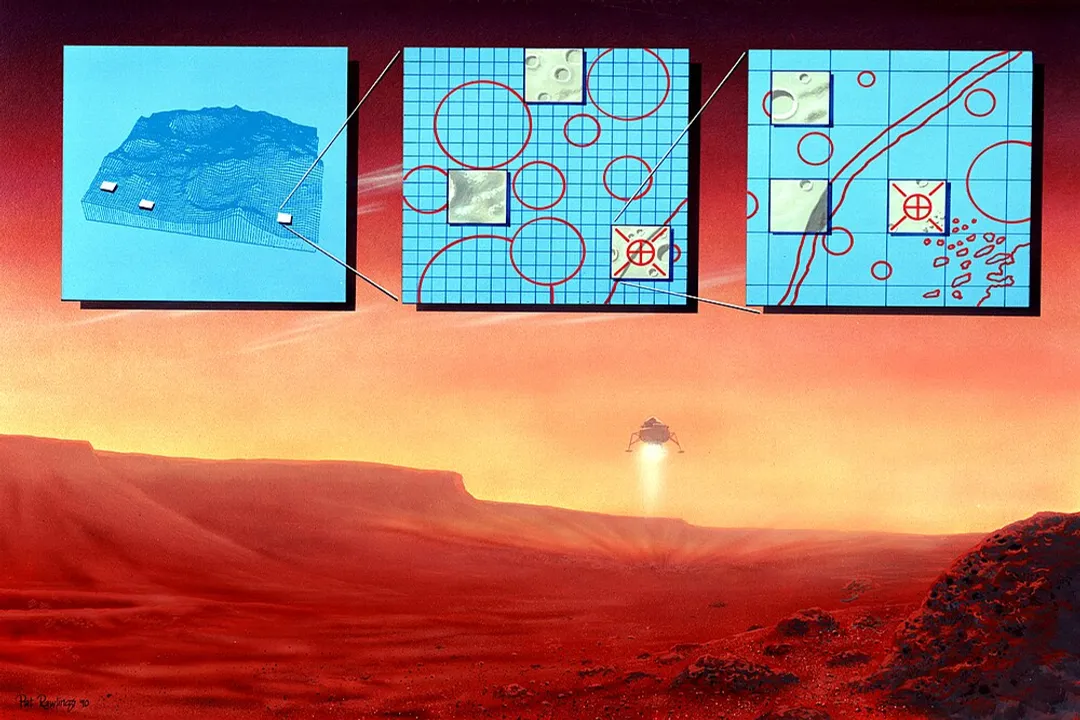
When discussing travel time, it is essential to differentiate between the transit time (the time spent flying through space) and the total mission duration. For robotic probes like those sent by NASA, the mission duration is simply the transit time, as the probe can be retired upon arrival or simply wait for further commands. For human missions, the picture is far more complicated, requiring a return journey.
# The Wait on Mars
A round trip to Mars is fundamentally different from a trip to the Moon because of the orbital mechanics. Once a crew arrives at Mars, they cannot simply turn around and fire their engines to come home immediately. If they did, they would arrive back at Earth far behind where Earth is in its orbit, missing it entirely.
Instead, the crew must wait on the Martian surface, often for over a year and a half, until the planets realign into the next favorable launch geometry for the return trip. Therefore, while the one-way journey might be seven months, the total surface stay time to enable an efficient return path extends the entire mission duration to well over two years.
| Mission Profile | Typical Transit Time (One-Way) | Total Mission Time Estimate | Primary Constraint |
|---|---|---|---|
| Robotic Probe (Fuel Optimized) | 7–9 Months | ~7–9 Months | Propellant Mass |
| Crewed Mission (Safety Optimized) | 6–8 Months | ~2.5+ Years (Including Surface Stay) | Crew Health & Return Window |
| Theoretical Fast Transit | 5–6 Months | Variable | High Requirement |
This waiting period is crucial for mission design. It necessitates sending substantial supplies, power generation, and habitats ahead of time, or developing in-situ resource utilization (ISRU) capabilities, such as manufacturing propellant from Martian resources, to avoid sending the return fuel from Earth.
# Future Speeds
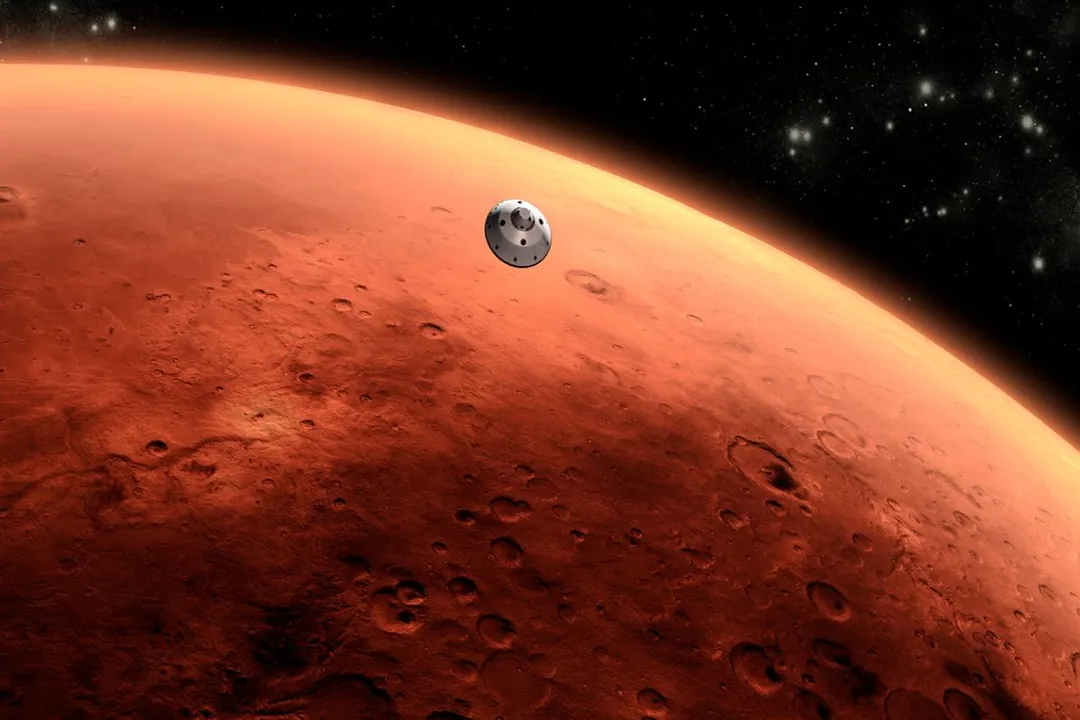
The current era of space exploration is keenly focused on reducing transit times to make human exploration more feasible and safer. Companies like SpaceX are actively working on systems designed to fundamentally alter the travel time equation.
SpaceX's Starship architecture, for instance, is being developed with the goal of significantly reducing the time spent in transit. While specific finalized mission profiles are subject to change, the underlying capability of the vehicle and the planned use of in-orbit refueling aim to allow for more frequent and potentially faster transit opportunities than the historical constraints imposed by the Hohmann transfer on smaller chemical rockets. Elon Musk has frequently spoken about reducing the transit time to the point where the crew experiences less radiation exposure and psychological fatigue, aiming for a trip measured in months rather than pushing toward the year-long mark.
If propulsion technology can be scaled up—for example, by using high-thrust nuclear rockets—the travel time could theoretically be driven down to just a few months, perhaps even three or four, by maintaining continuous acceleration for the first half of the trip and then decelerating for the second half. This "brachistochrone" path, or a path closely approximating it, would require massive amounts of propellant but would dramatically improve crew safety.
A lesser-discussed aspect of travel time is the effect on communication latency. While the actual flight time is measured in months, the time it takes for a radio signal to travel between Earth and Mars changes dramatically based on their relative positions. At their closest, a message takes about 3 minutes to reach Mars. At their farthest, it takes over 22 minutes. This means that even if we could consistently achieve a 6-month transit, the operational reality of commanding a rover or receiving status updates from a crew would still involve a minimum 6-minute round-trip delay, demanding a high degree of spacecraft autonomy.

# Defining a Successful Arrival
The time it takes to reach Mars is therefore not a single, fixed number but a range of optimized possibilities based on mission goals. Are we sending a cheap robotic lander designed to sip fuel over nine months? Or are we sending a crew whose health depends on arriving in under six months, accepting the massive logistical challenge of heavier lift requirements?
For the current generation of planned crewed missions, the consensus hovers around the six- to eight-month mark for the one-way flight, factoring in the need for safety margins and the slight deviations from a perfect Hohmann transfer to account for atmospheric braking and orbital insertion burns upon arrival. Ultimately, the duration is a carefully calibrated compromise between the physics of orbital mechanics, the limits of chemical propulsion, and the biological tolerances of the human body facing the void between worlds. As propulsion technology matures, that number will inevitably shrink, but for now, planning for a half-year expedition remains the standard for getting our hardware to the Red Planet.
#Videos
How Long Would It Take Us To Go To Mars? - YouTube
Related Questions
#Citations
How long does it take to get to Mars? - Space
How long will it actually take to get to Mars? Is this really possible?
How Long Would It Take Us To Go To Mars? - YouTube
How long does it take to get to Mars - BBC Sky at Night Magazine
How long would it take to travel to Mars and how many stops ... - Quora
Human mission to Mars - Wikipedia
Mars in a Minute: How Do You Get to Mars? – Video
How Long Does it Take to Get to the Moon... Mars... Jupiter ... - NASA
Mission: Mars - SpaceX
How Long Does It Take to Get to Mars? Travel Time, Facts, and ...