How long does it take a star to become a white dwarf?
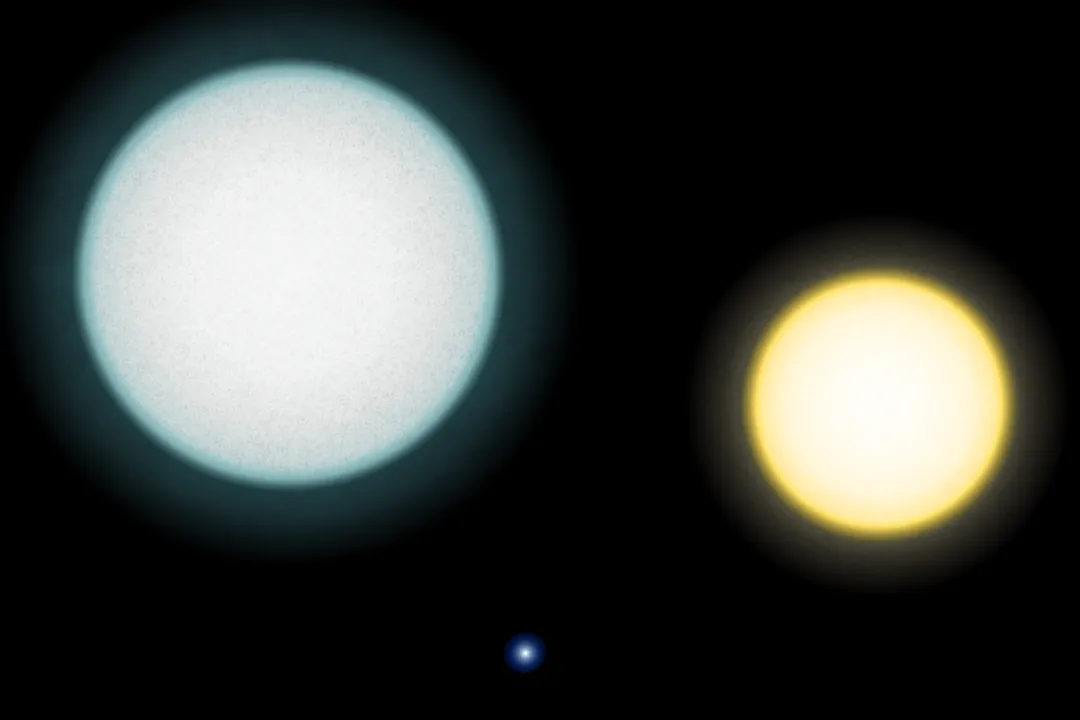
The time it takes for a star to complete its long life and settle down into the compact stellar remnant we call a white dwarf is not a single number; it is a story written by the star’s initial mass. A white dwarf represents the final evolutionary stage for the vast majority of stars—those with initial masses between approximately $0.07$ and $10$ solar masses (). These stellar corpses are supported not by the outward push of nuclear fusion, which has ceased entirely, but by electron degeneracy pressure. Everything we observe them emitting—their light and heat—is simply residual energy escaping from their incredibly dense cores.
The journey to this state is an exercise in stellar aging, with the clock running much faster for heavier stars. A star’s entire lifespan, from its birth in a nebula to its final transformation, is governed by how quickly it can burn the fuel in its core against the crushing force of its own gravity.
# Main Sequence Stint
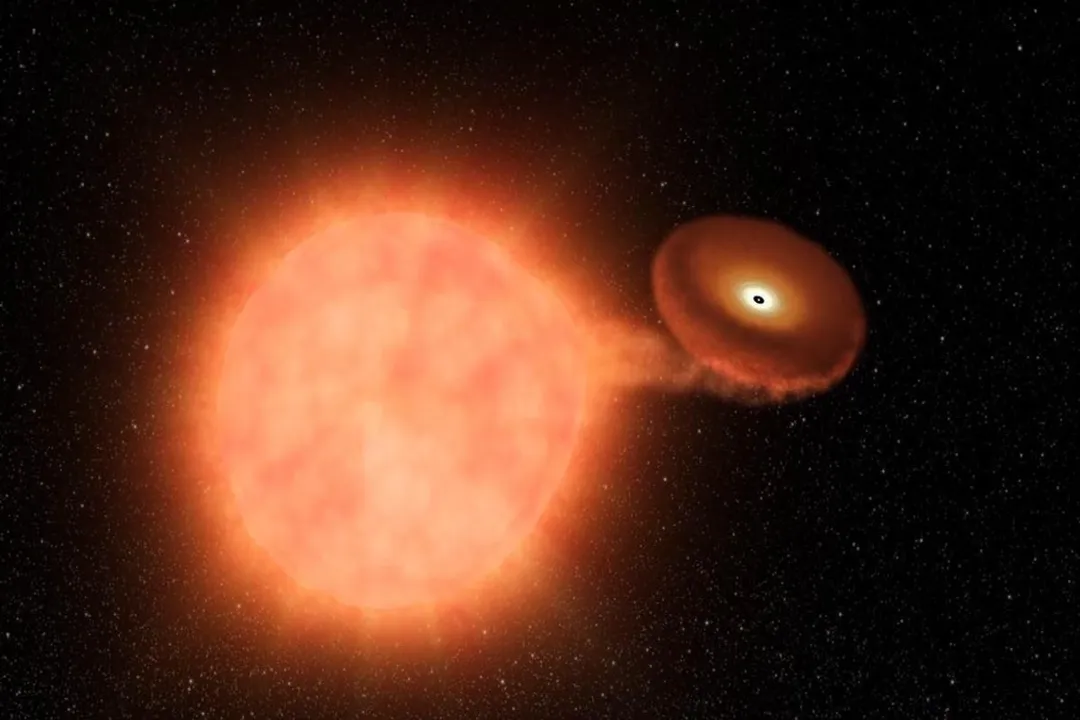
The longest period in any star’s life is the main sequence phase, where it steadily converts hydrogen into helium in its core to maintain hydrostatic equilibrium. Stars, including our Sun, spend about $90%$ of their active existence in this stable state. For a star like the Sun, this hydrogen-burning phase stretches out for roughly ten billion years.
However, this timescale contracts dramatically as the star becomes more massive. A star slightly more massive than the Sun, perhaps , experiences its main sequence life much more quickly, lasting only about 500 million years before moving on. This swift consumption of fuel in more massive stars is why they live fast and die young, relative to their smaller cousins. When the hydrogen fuel in the core is finally exhausted, the delicate balance tips toward gravity, and the star begins its dramatic retirement sequence.
# Giant Phase Transition
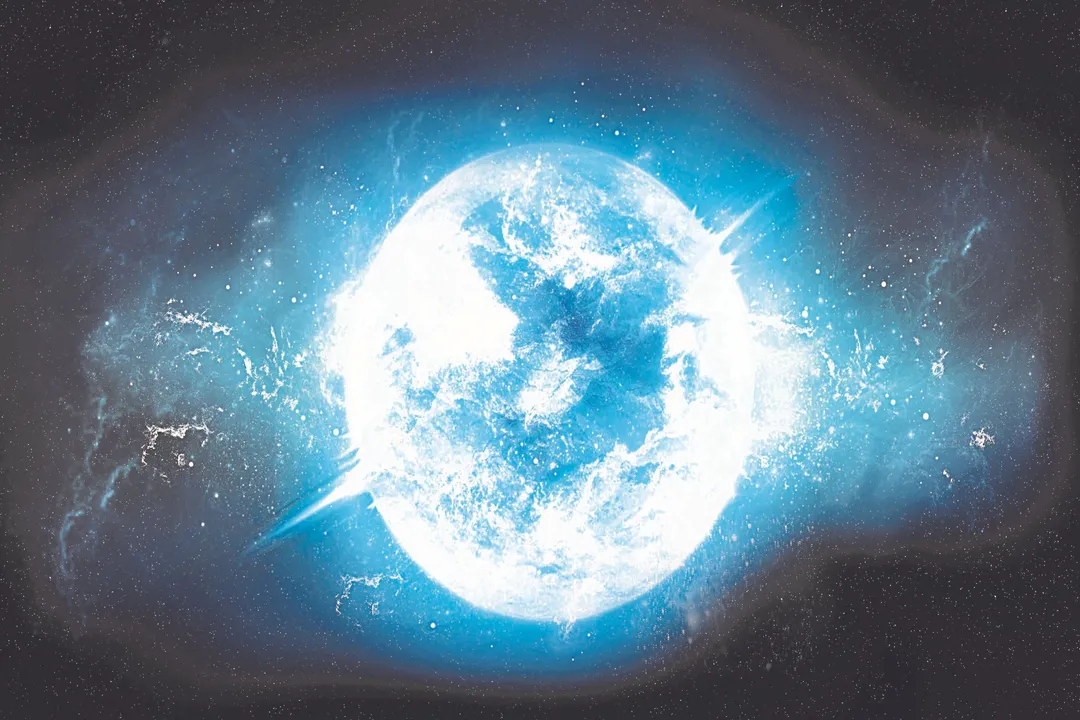
Once the core fuel is spent, the star initiates shell burning around the inert core, causing the outer layers to expand vastly and cool, transforming the star into a red giant or, for the most massive progenitors, a red supergiant.
For a star of solar mass, this red giant phase, where helium is fused into carbon and other heavier elements, consumes the next major block of time—about one billion years. Stars up to about will fuse helium but generally fail to reach the temperatures needed to burn the resulting carbon. Once the core helium is exhausted, the star may enter a second red giant phase, pulsating and becoming unstable as it attempts to fuse elements in shells surrounding the core.
During this unstable, swollen state, the star begins to shed its expanded outer envelope. This expelled material forms the beautiful, but short-lived, structure known as a planetary nebula.
It is fascinating to consider that while the Sun’s entire hydrogen-burning life lasts about $10$ billion years, the subsequent, messy period of becoming a red giant and shedding its layers might take around $1$ billion years, based on estimates for solar-mass stars. The central object, however, is racing toward its final state much faster than it took to live on the main sequence.
The crucial element for calculating the time to become a white dwarf is the final shedding process. The planetary nebula phase itself is remarkably brief in cosmic terms, lasting only a few tens of thousands of years. The core remnant, which is the white dwarf, takes shape in this relatively short interval. Stars comparable to the Sun are estimated to become white dwarfs within about 75,000 years after they have expelled their envelopes. This suggests that the total time spent transitioning from the end of helium burning to a stable white dwarf is a matter of mere tens of thousands to perhaps a hundred thousand years, a blink compared to the preceding billions of years of stability.
# Mass Benchmarks
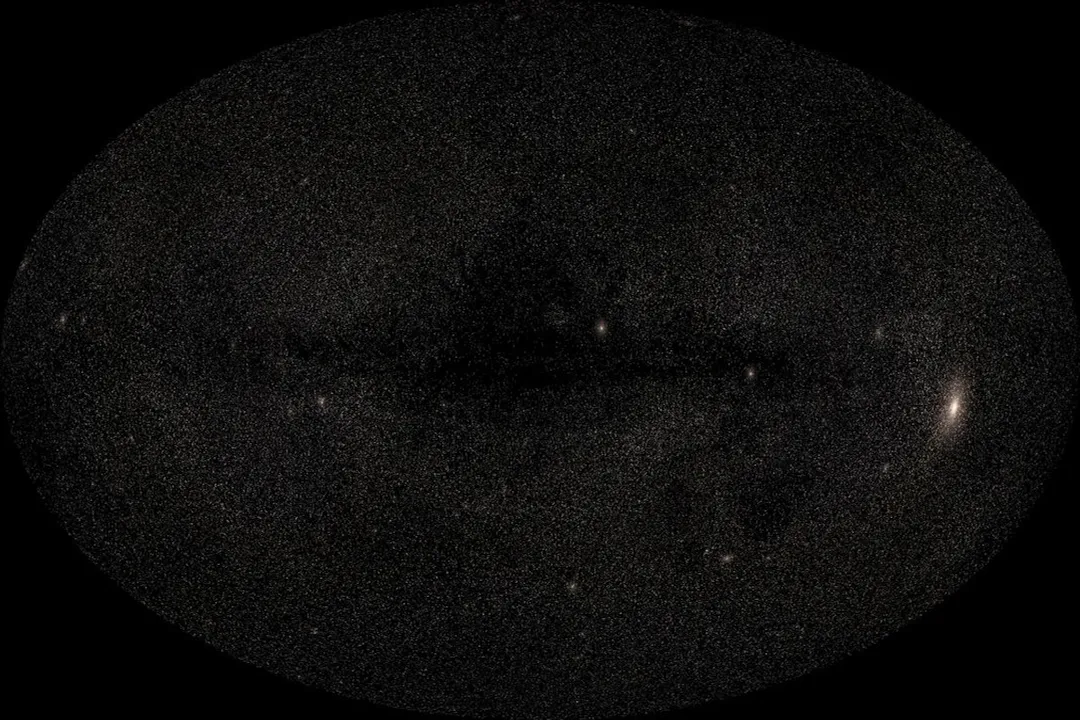
To fully grasp the time scales, we must compare the evolutionary pace across different masses, as demonstrated by recent discoveries:
| Progenitor Mass () | Main Sequence/Giant Lifetime (Approx.) | White Dwarf Mass () | Estimated Age of Observed WD (Gyr) |
|---|---|---|---|
| (Sun-like) | N/A (Future) | ||
The data confirms that higher initial mass translates directly into a much shorter overall stellar lifetime, even though the subsequent white dwarf remnant can be very long-lived. The star mentioned in some recent observations had a total life span, including its final stages, of only about half a billion years before settling into a white dwarf core that has now existed for over $10$ billion years. This shows that the process of stellar death, once the final core is established, is a marathon, but the lead-up is a sprint for anything significantly heavier than the Sun.
# Cooling Time vs. Formation Time
It is essential to differentiate the time it takes for a star to become a white dwarf (the focus here, spanning from a few hundred million to ten billion years, depending on the initial mass) from the time it takes the white dwarf to cool down once formed. The latter is what defines the white dwarf’s "survival" time, which is vastly longer.
Once the hot, degenerate core is left behind, it shines solely from stored thermal energy. Because white dwarfs are incredibly dense, their material has a very low opacity, yet they possess high thermal conductivity, meaning the interior is nearly isothermal. They radiate this heat away slowly due to their small surface area.
It requires roughly 10 billion years for a typical Sun-mass white dwarf to cool down to a surface temperature around —still quite hot, but past its initial blazing-hot phase. To shed nearly all visible light and become the theoretical, cold black dwarf, estimates suggest a duration of around 10 trillion years ( years), which is hundreds of times the current age of the universe. Because the cooling rate slows down as the temperature drops (the cooling time scales roughly as ), they linger at lower temperatures for eons. Furthermore, the interior material may crystallize as it cools, releasing latent heat and further delaying the cooling process.
This extreme longevity is why astronomers use the age of the oldest, coolest white dwarfs in globular clusters like as a cosmic clock; the universe must be old enough for these stellar remnants to have reached their observed temperatures. Any object that is a white dwarf has already lived out a long main-sequence life, endured a brief giant phase, and then ejected its guts over the course of less than $100,000$ years, setting itself up for a future that will last for trillions upon trillions of years.
Related Questions
#Citations
White dwarf - Wikipedia
White Dwarfs - Imagine the Universe! - NASA
how long does a white dwarf "life"? : r/astrophysics - Reddit
White Dwarf - ESA/Hubble
Stellar Evolution - | The Schools' Observatory
White dwarfs: Facts about the dense stellar remnants - Space