How long would it take to go around UY Scuti?
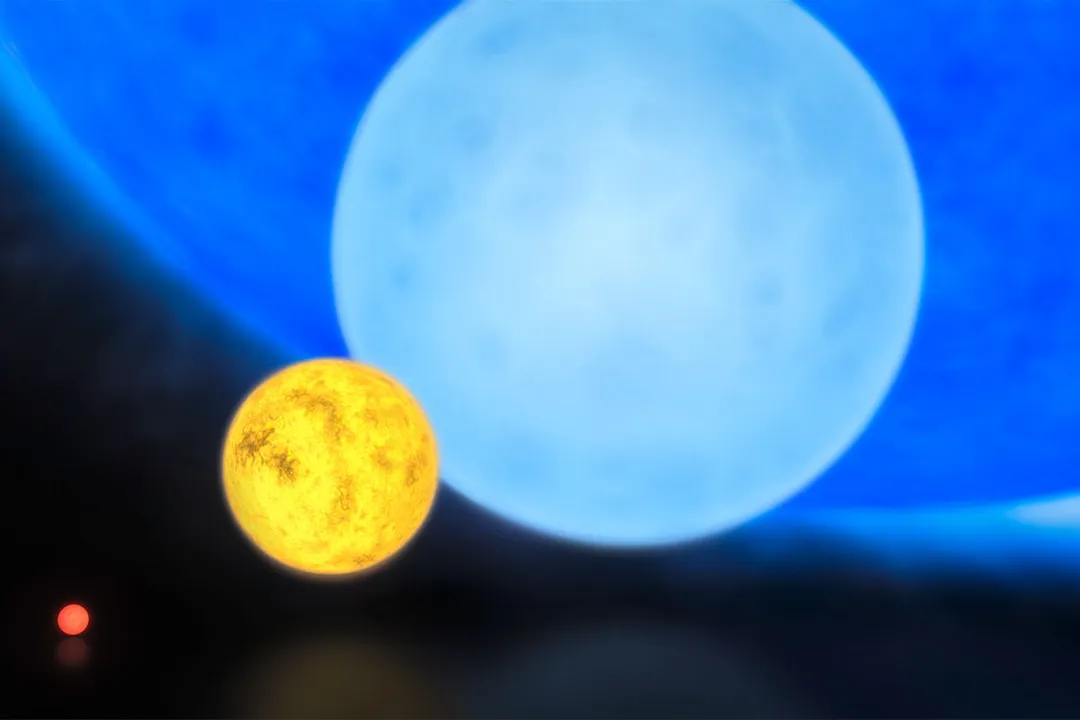
The sheer scale of celestial objects often defies easy comprehension, but few stars demand more mental stretching than UY Scuti. When we shift the perspective from measuring the time it takes light to travel across its surface—which is already immense—to imagining a physical object making a mundane trip around its girth, the numbers become truly staggering. The question of how long such a circumnavigation would take forces us to confront the variable nature of astronomical measurement and the practical limits of terrestrial speed.
# Size Variation
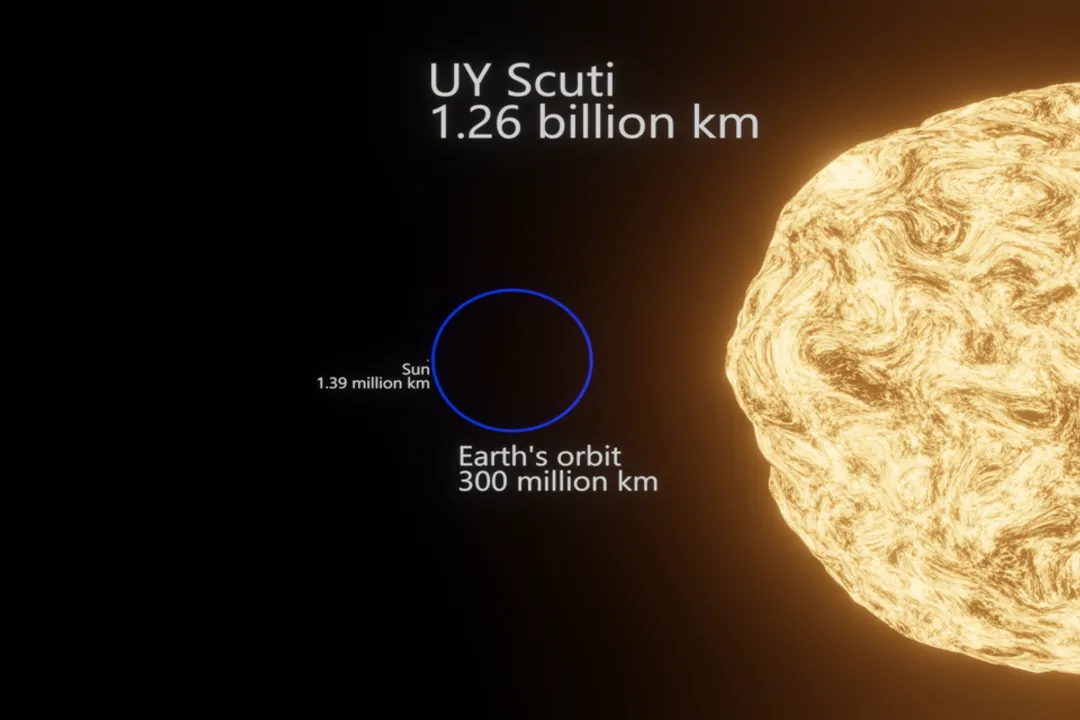
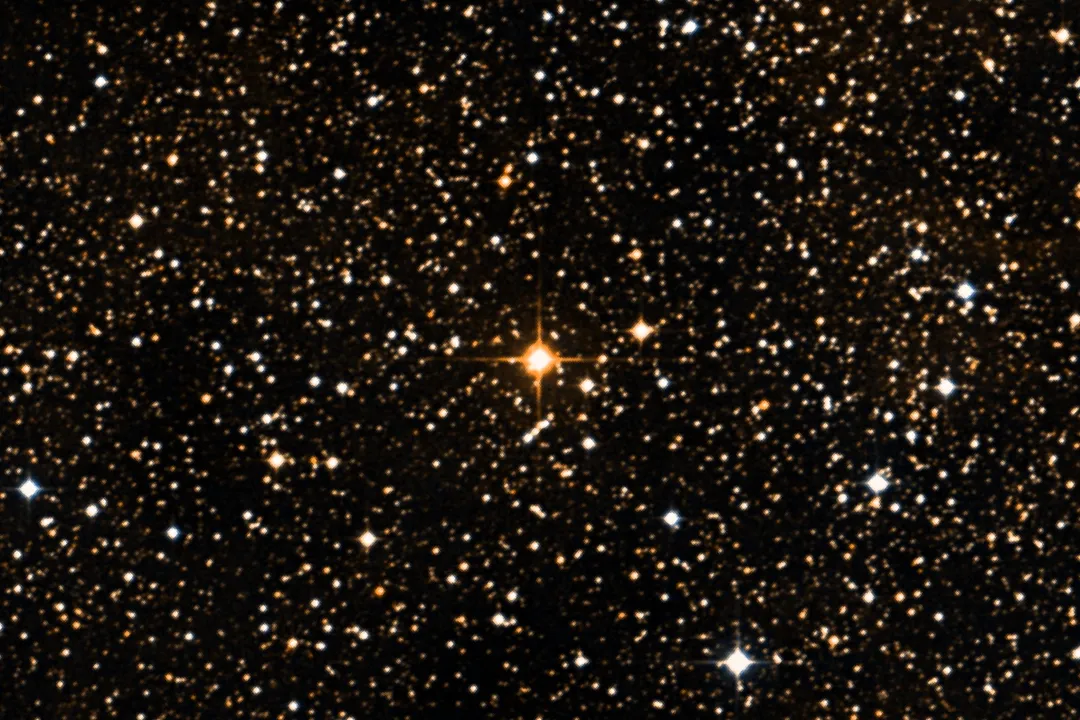
UY Scuti, a red supergiant residing in the constellation Scutum, holds the distinction of being among the largest stars yet observed. [3] However, determining a single, precise value for its size remains a challenge, leading to a range of estimates that significantly impact any travel time calculation. One influential early estimate placed its radius at $1,708$ times that of our Sun (), a figure often cited in popular discussions. [1] This gargantuan size suggests that if UY Scuti were substituted for the Sun in our own solar system, its outer surface, or photosphere, would extend beyond the orbit of Mars, possibly reaching the asteroid belt. A separate analysis from the European Southern Observatory (ESO) listed its radius at $1.2$ billion kilometers, or $738$ million miles. [3]
More recent data, however, suggests a slightly more restrained—though still massive—profile. Measurements compiled in $2023$ using refined techniques place the radius closer to . This smaller figure implies a volume about $750$ million times that of the Sun, rather than being closer to the estimate. A different set of measurements using Gaia Data Release 2 even suggests a radius near , though the reliability of the Gaia parallax data for this specific star is sometimes questioned due to high astrometric noise.
To ground these numbers, we must first consider the Sun itself. Its circumference, as used in some earlier calculations, is approximately $2,713,406$ miles. [1] By scaling this figure using the larger measurement, one calculation derived a circumference for UY Scuti of nearly $4.634$ billion miles. [1] If we instead use the radius for the Sun to derive the circumference of the star, we arrive at a total distance of approximately $7.4585$ billion kilometers. [1] These varying radii fundamentally change the answer to the circumnavigation question.
# Terrestrial Speeds
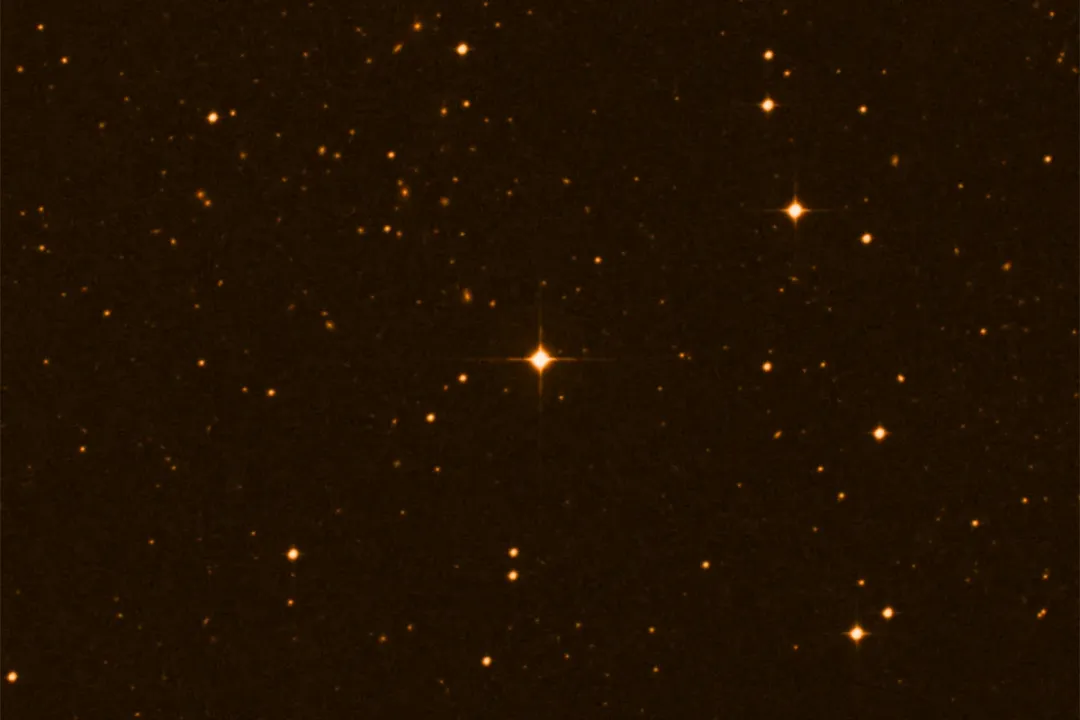
To travel around this stellar giant, we need a reference speed. Since this is a purely hypothetical exercise—a journey that would instantly vaporize any physical vehicle—the comparison is usually drawn against existing, high-speed human transport, with the caveat that we must assume infinite fuel, heat tolerance, and safety for the craft. [1]
Early thought experiments often referenced the fastest commercial aircraft. One comparison used the Gulfstream G650 business jet, with an initial estimated speed of $904$ miles per hour (MPH). [1] When an error in that initial speed was corrected to a more typical cruising velocity for the G650, cited around $610$ MPH, the projected travel time immediately extended. [1] Another user opted for the historical supersonic pace of the retired Tupolev TU-144, which could reportedly reach speeds near $1,510$ MPH (or $2,340$ kilometers per hour). [1]
Let's establish a few baseline travel scenarios using the larger $4.634$ billion mile circumference derived from the estimate:
| Hypothetical Vehicle | Approximate Speed | Time to Circumnavigate |
|---|---|---|
| Supersonic Airliner (TU-144) | MPH ( km/h) | years [1] |
| Faster Business Jet (Corrected G650) | MPH ( km/h) | years [1] |
| Speed of Light (for context) | million MPH | hours [3] (for VY Canis Majoris, UY Scuti would be longer) |
This comparison immediately shows that even at the very limits of atmospheric flight, the journey requires centuries. [1] The $363$ years, $6$ months, and $25$ days calculated for the TU-144 benchmark, when accounting for leap years, solidifies the time frame hovering around $364$ years for that larger circumference. [1]
# Calculating the Modern Baseline
To integrate a more modern, sustained cruising speed that might represent a theoretical long-duration vessel, let's use a speed closer to modern wide-body jets, around $550$ MPH, applied to the smaller, derived circumference. If we accept the circumference ratio derived on Reddit—that yields $4.634$ billion miles—then the star yields a circumference of approximately $2.463$ billion miles.
Traveling $2,463,000,000$ miles at a steady $550$ MPH results in approximately $4,478,181$ hours. Dividing this by the $8,766$ hours in a standard year yields about 511 years. This calculation, based on the more contemporary radius estimate and a realistic cruising speed, demonstrates that the circumnavigation time swings wildly based on which size measurement one accepts. The difference between the oldest estimate leading to $867$ years and this newer baseline leads to a $356$-year gap in projected travel time, underscoring how critical the initial radius measurement is to the entire exercise. [1]
# Stellar Environment Comparison
Beyond the sheer distance, the environment itself presents a fascinating contrast to a terrestrial trip. UY Scuti is not merely big; it is physically different from our local star. While being $1,708$ times wider than the Sun, [3] UY Scuti is surprisingly cool. Its surface temperature is estimated to be around (), making it nearly $40%$ cooler than the Sun's surface temperature of . [3]
This temperature differential has a profound implication for the hypothetical traveler: a cooler surface means a deep, dull reddish glow, characteristic of a star that has burned through much of its core hydrogen fuel. [3] You wouldn't be encountering the blinding, yellow-white intensity of a young, hot star. Instead, the "ground" you are perpetually circling is a vast, relatively cool, dust-enshrouded expanse. This is the inherent trade-off in observing these giants: the decrease in surface temperature is what allows the star to expand so vastly before it collapses in a supernova event. [3] The heat you are receiving is immense, but it is spread over an unimaginably greater area. For comparison, while it takes only about $14.5$ seconds to fly around the Sun at the speed of light, a similar trip around the surface of VY Canis Majoris, another massive star, would take six hours. [3] Given UY Scuti's even greater estimated size, the light-speed circumnavigation time would push well beyond that, emphasizing that our constant speed of $550$ MPH is virtually motionless in this context.
# Fuel and Lifetime
Another angle to consider when pondering this endless flight is the star's actual lifespan versus the time required for the voyage. UY Scuti is considered surprisingly young, perhaps only $10$ to $20$ million years old, a blink compared to our Sun’s estimated $4.6$ billion years. [3] Yet, because it consumes its fuel so rapidly due to its size, it is already nearing the end of its cycle. [3]
If a hypothetical spacecraft were undertaking the $511$-year journey calculated above (based on the estimate), the star would have only completed a tiny fraction of its remaining life cycle. A star of this mass is expected to eventually undergo core collapse, resulting in a supernova. This process involves ejecting its outer layers, perhaps becoming a yellow hypergiant or a Wolf–Rayet star before its dramatic end. Therefore, the traveler would not only be racing against the clock of their own journey but also against the stellar clock, which might end the entire "track" they are running on in just a few million years. While millions of years seem long, in stellar terms, it is the immediate future for a star burning this brightly and quickly. [3]
# Defining the Boundary
The conceptual difficulty in this thought experiment also lies in defining the "surface" itself. Stars do not have hard boundaries like planets; they thin out gradually into space. [1] The measurements quoted, such as $1.19$ billion km radius [3] or the measurement, refer to the photosphere—the layer where the gas becomes opaque enough to be optically visible. This is the boundary conventionally used for calculating size.
If the travel vehicle had to follow a path defined by a lower density layer, perhaps one much further out in the massive stellar wind and dust envelope that surrounds the star, the circumference would naturally be larger still. WOH G64, another large star, is noted to have a dust envelope extending nearly a light-year in diameter. [3] If UY Scuti possesses a similarly vast, albeit proportionally smaller, envelope, the path length could increase dramatically, pushing the centuries-long journey well into the millennia range, even for a very fast craft. This uncertainty in the "finish line" is as significant as the uncertainty in the measurement of the star's core radius itself.

# Conclusion
Circling UY Scuti is a captivating exercise in astronomical relativity. Based on widely discussed historical estimates, a hypothetical traveler using a supersonic jet would face a trip lasting over $360$ years. [1] If we adjust for more modern size estimates and a modern jet's cruising speed, the time frame settles around $511$ years. [1] Ultimately, the time required to complete one lap around the largest known star depends entirely on which radius estimate, ranging from to , is accepted, and which constant terrestrial speed is chosen for the impossible voyage. [1] The only certainty is that the journey would demand a commitment spanning multiple human lifetimes, undertaken against the backdrop of a star already far along its own brief, brilliant cosmic path. : [3][1] reddit.com/r/theydidthemath/comments/1zyvvh/request_how_long_would_it_take_to_circumnavigate/: [3] sciencefocus.com/space/largest-stars-in-the-universe: en.wikipedia.org/wiki/UY_Scuti
Related Questions
#Citations
[Request] How long would it take to circumnavigate the largest ...
Top 10 largest stars in the Universe | BBC Science Focus Magazine
UY Scuti - Wikipedia