How long does it take for a massive star to collapse?
The transition from a stable, shining giant in the night sky to a catastrophic supernova is one of the most dramatic events in the cosmos, and perhaps the most astonishing detail is just how quickly the final act occurs. While these massive stars burn fuel for millions or even billions of years, the internal processes leading to their demise speed up to an incredible pace once the critical turning point is reached. [6] The question of how long the collapse takes is not straightforward; it depends heavily on when you start the clock—is it from the moment fusion stops, or the moment the visible light arrives?
# Long Life Short End
Stars like our Sun spend the vast majority of their existence fusing hydrogen into helium in their cores, a process that generates the outward thermal pressure necessary to counteract the crushing force of their own gravity. [6] For very massive stars, those significantly larger than the Sun, this main-sequence life is dramatically shorter, perhaps lasting only tens of millions of years. [6] Even so, this is an aeon compared to the final death throes. Once the star exhausts the lighter elements, it begins fusing successively heavier elements—helium to carbon, carbon to neon, and so on—in concentric shells around an increasingly dense core. [7]
# Iron Limit Reached
This chain of fusion reactions creates an outward push, maintaining hydrostatic equilibrium. However, this cosmic energy generator hits an absolute wall when the core begins synthesizing iron. [7] Iron is the critical turning point because fusing iron atoms consumes energy rather than releasing it. [7][2] Once the core is composed almost entirely of iron, it can no longer generate the heat and pressure needed to support the immense overlying mass of the star. [7][8] With no counteracting force, gravity wins, and the star begins to fall in on itself instantly. [8]
# Pressure Loss Instant
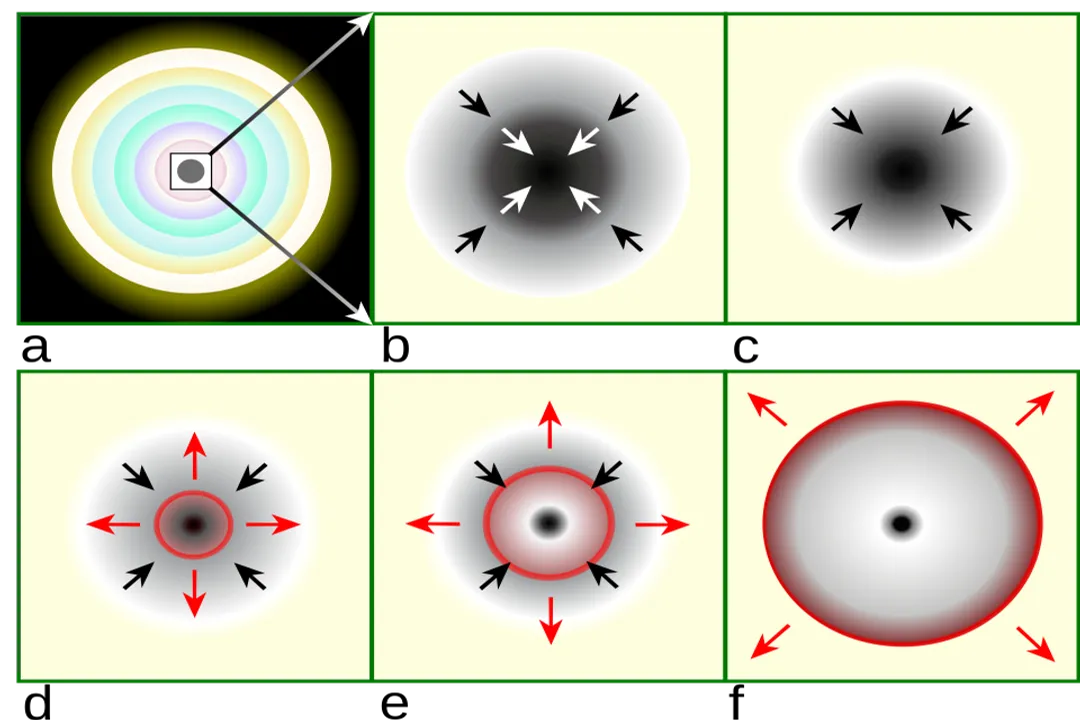
The moment the iron core surpasses the Chandrasekhar limit—the maximum stable mass supported by electron degeneracy pressure—the star has effectively run out of time to manage the crisis through gentle adjustment. The collapse is not gradual; it is a swift, runaway implosion. [7] The entire structure, weighing perhaps ten times the mass of our Sun or more, starts to fall inward almost immediately after the fusion process terminates in the core. [8]
# Seconds to Collapse
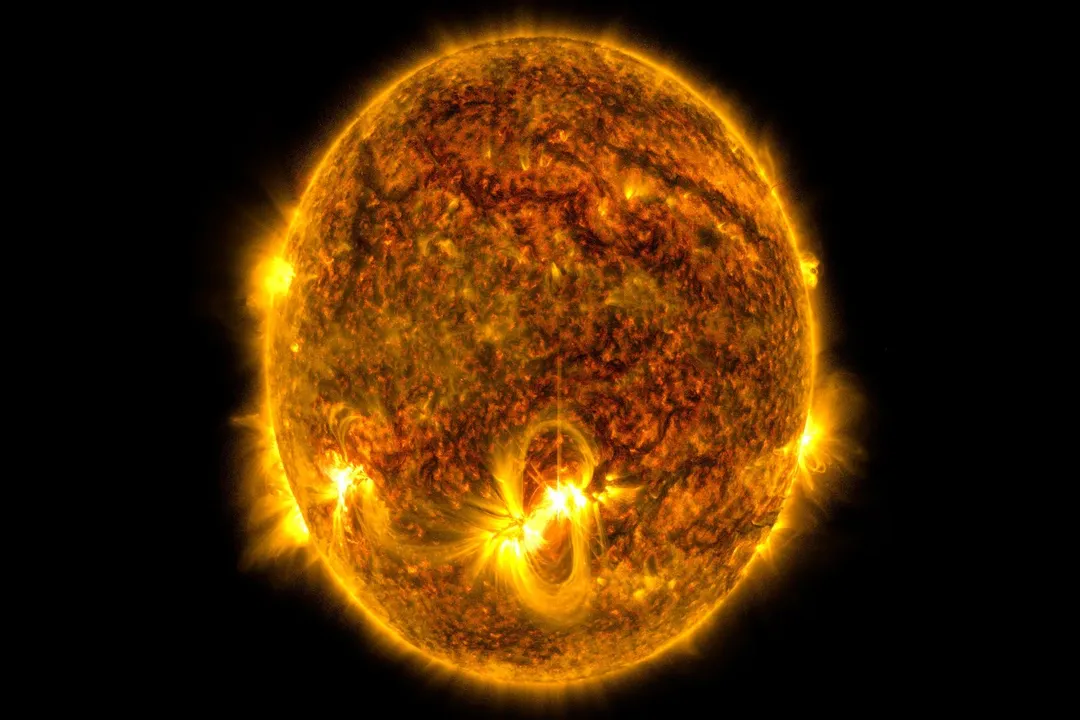
When we measure the time from when the core begins collapsing to the moment the catastrophic rebound occurs, the timescale shrinks dramatically, measured in mere seconds. [1][7] For a star about ten times the mass of the Sun, the core implosion to nuclear density can take as little as 250 milliseconds. [2] In this incredibly short span, the core shrinks from a size comparable to the Earth down to a sphere only a few tens of kilometers across. [2] As the core material slams together, it nears incredible velocities. Some estimates suggest the infalling matter approaches a significant fraction of the speed of light during this implosion phase. [1] To put that terrifying speed into perspective, the entire core collapse phase for a massive star is shorter than the time it takes for the average human heart to beat once, or less than the time it takes most people to blink their eyes. [2] The contrast between the star's billion-year existence and this sub-second demise is staggering.
# Shockwave Erupts
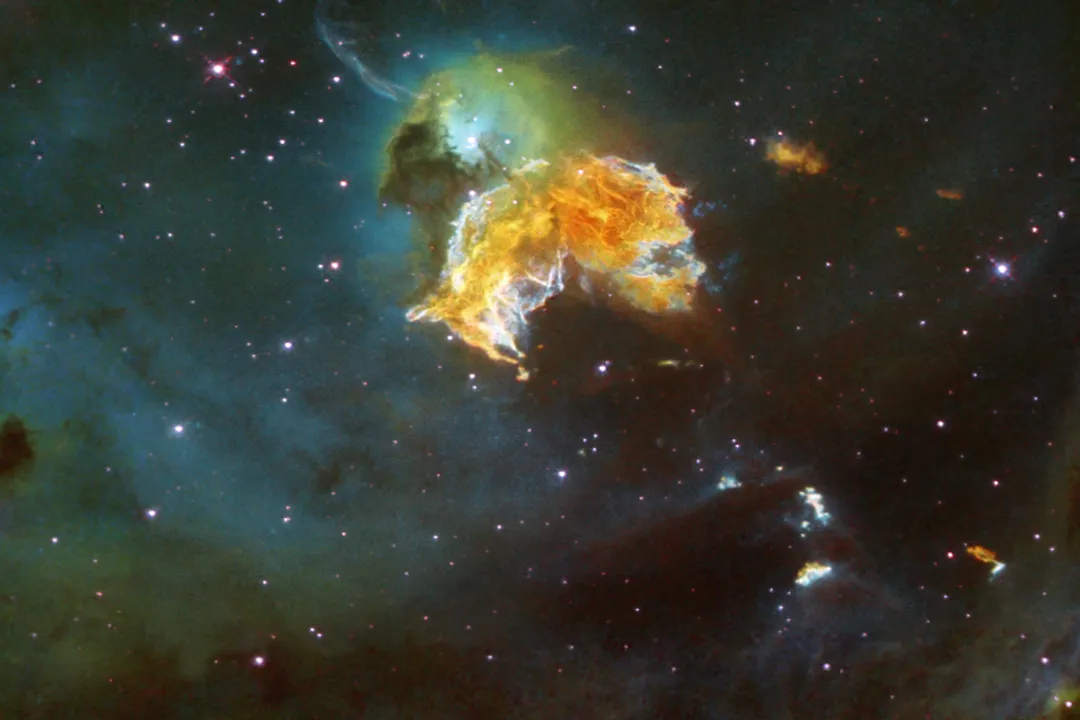
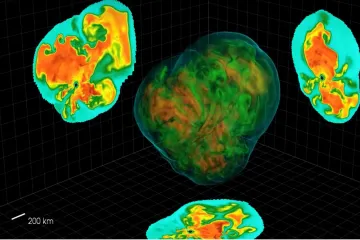
Once the core reaches nuclear densities, it becomes incredibly stiff, resisting further compression. The infalling outer layers of the core then violently collide with this newly rigid center, creating a powerful rebound shockwave. [2] This shockwave races outward through the star's remaining material, heating it intensely and driving the spectacular explosion we recognize as a Type II supernova. [3] The entire process from the start of the core compression to the visible, brilliant explosion on the surface can take only a few hours, though the core collapse phase itself remains in the sub-second range. [2][9]
# Final Object Forms
The supernova explosion itself is the visible manifestation of the core overcoming the star, but the formation of the final compact object—a neutron star or a black hole—takes slightly longer, though still very quickly by astronomical standards. [4] For stars that collapse but don't immediately form a black hole, the neutron star solidifies relatively quickly after the explosion. [4] If the remnant is massive enough to overcome the neutron degeneracy pressure that supports a neutron star, it collapses further to form a black hole. [4] This final transformation into the dark remnant may happen within milliseconds for the most extreme cases, or the aftermath might continue to settle over days or weeks as the surrounding material dissipates. [4] The visible light and energy from the explosion are what we observe, but the dense core has already done its work in a fraction of a second.
# Faint Signals Precede
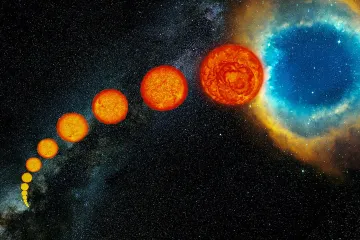
While the core collapse itself is instantaneous, there are potentially observable, albeit faint, changes in the star in the minutes or hours leading up to the visible blast. [9] These might involve neutrino bursts or subtle changes in the star’s luminosity or shape as the instability finally overwhelms the stellar structure. [9] Detecting these fleeting precursors is incredibly difficult because they occur so close to the main event, meaning any observational window is exceedingly narrow.
If we consider the entire collapse sequence from the cessation of energy generation to the visible explosion, the time frame is extremely tight. Think of it this way: if a star's main-sequence life were equal to the entire history of human civilization since writing was invented, the final core collapse to explosion would be less than the time it takes to read this single sentence aloud. This observation leads to an interesting consideration for astrophysics: the incredibly short timescale for core collapse puts severe constraints on the physics of extreme matter compression, as there is almost no time for complex magnetic fields or rotation to significantly alter the initial implosion dynamics unless they were already heavily established. [1][2]
# Mass Dependence
The ultimate fate—whether a neutron star or a black hole results—is fundamentally tied to the initial mass of the star's core after the supernova shock wave has blown off the outer layers. [4] A core remnant between roughly $1.4$ and $3$ solar masses generally settles as a neutron star, supported by the immense pressure of neutrons packed together. [4] If the remnant mass exceeds this upper threshold, gravity overcomes even the neutron degeneracy pressure, and the core continues collapsing, forming a black hole. [4] While the time for the initial collapse to nuclear density is consistently rapid across massive stars (fractions of a second), the result of that collapse is entirely mass-dependent. This subtle but vital difference dictates whether the remnant can be detected as a spinning pulsar or if it vanishes entirely behind an event horizon. [4]
#Videos
How Quickly Does A Supernova Happen? The Stunning Speed of a ...
Related Questions
#Citations
How fast does a star collapse? : r/askscience - Reddit
How quickly does a supernova happen? - Phys.org
Supernova - Wikipedia
When Does a Neutron Star or Black Hole Form After a Supernova?
How Quickly Does A Supernova Happen? The Stunning Speed of a ...
Star Basics - NASA Science
Once a star creates iron, how long will it be until it explodes? - Quora
When a star explodes… how long does it actually take? The answer ...
Are there observable changes in a star about to become supernova ...