Do more massive stars shine longer?
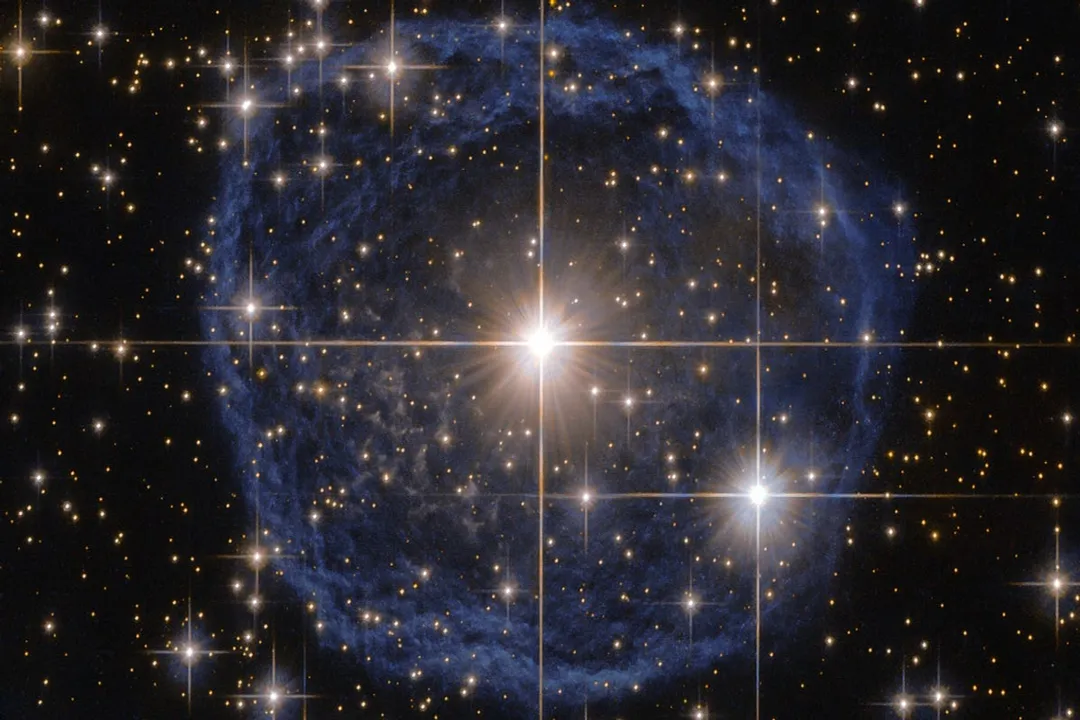
The common intuition about objects consuming resources suggests that something bigger should last longer, given enough initial supply. When we look up at the night sky, the most brilliant, eye-catching stars are often the giants, leading many to wonder if these massive stellar behemoths also enjoy the longest existences. In reality, the astrophysics governing a star’s life tells a remarkably different and counter-intuitive story: more massive stars shine brilliantly, but they burn out startlingly fast compared to their smaller, more sedate cousins like our Sun. [2][8]
# Mass Luminosity
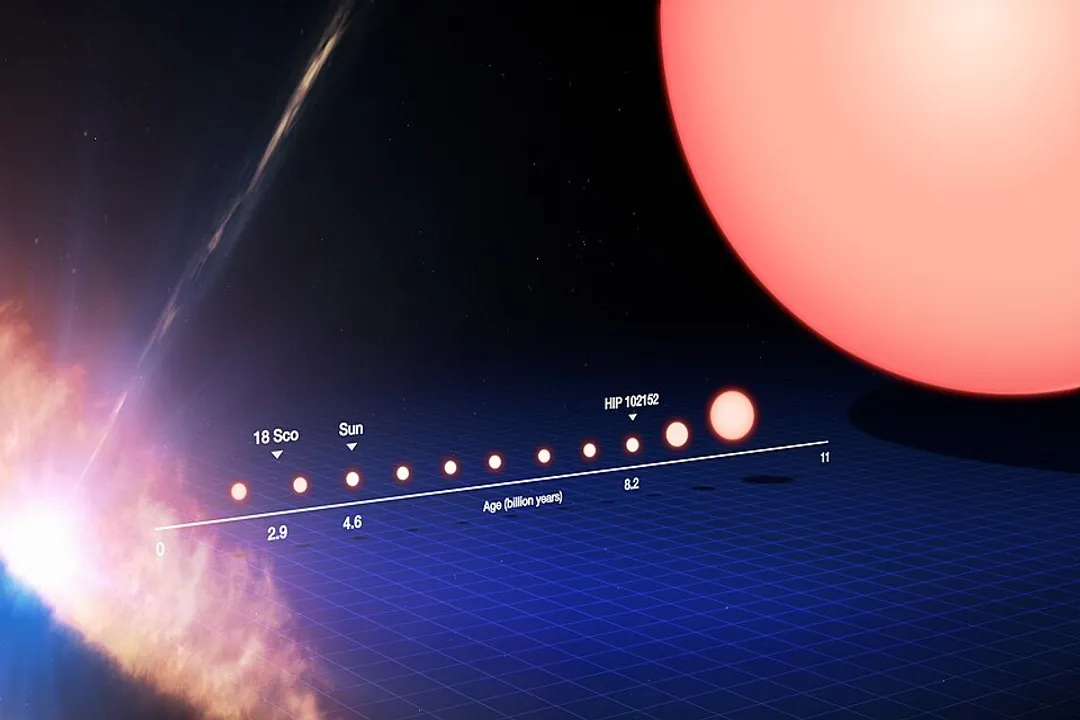
The key to understanding a star’s lifespan lies in its luminosity, which is simply the total amount of energy a star radiates per second. [1] A quick look at the stellar roster shows a strong correlation: the more massive a star is, the overwhelmingly more luminous it becomes. [1] This relationship isn't gradual; it’s aggressive. A star that is just a few times the mass of the Sun can be hundreds or even thousands of times brighter. [2] For instance, a star with about ten times the Sun's mass might put out in the neighborhood of ten thousand times the Sun's light. [2]
This extreme luminosity is a direct consequence of the star's immense mass creating crushing gravitational pressure at its core. [8] To counteract this inward crush and maintain hydrostatic equilibrium, the core temperature and pressure must skyrocket. [8] Higher temperature and density accelerate the nuclear fusion process—the engine of the star—allowing it to convert its hydrogen fuel into helium at an astonishing rate. [6] Essentially, the star is trying desperately to hold itself up against its own weight, and the only way to do that is by cranking the fusion furnace up to maximum power. [8]
# Fuel Burn Rate
The relationship between a star's mass and how quickly it consumes its fuel is perhaps the most critical factor in determining its life story. [3][9] While a more massive star starts with a larger reservoir of hydrogen fuel—it has more 'mass' available—the rate at which it burns that fuel completely dwarfs the rate of a smaller star. [2]
Consider the Sun, a star of middle age and moderate mass, expected to live for about years. [2] Now, picture a star perhaps times the mass of the Sun. This star holds times the fuel, but its core temperature and pressure drive fusion reactions so violently that it might exhaust its main sequence fuel in only about years. [2] That is a lifespan roughly times shorter than the Sun’s, despite having times the initial material.
If we were to chart this, we would see that the fuel efficiency plummets as mass increases. The equation governing this is often approximated as luminosity being proportional to mass raised to a power, frequently cited around the power (). [1] If a star is twice as massive, it’s not just twice as bright; it’s , or about times as bright, meaning it uses its fuel over ten times faster for only double the initial supply. The net result is a drastically truncated existence. [2][5]
A fascinating way to frame this is to think of stellar lifespans not just by years, but by how much fuel is converted per unit of light produced. A low-mass red dwarf might be incredibly efficient, converting its mass into light over trillions of years, whereas a blue supergiant is the stellar equivalent of a drag racer—massive power output for a spectacular, but brief, run across the cosmic track. [6]
# Stellar Endings
The brief, spectacular lives of massive stars dictate fundamentally different evolutionary paths from stars like our Sun. [3][8] A star's destiny is sealed the moment it forms, entirely based on that initial mass figure. [9]
Low-to-intermediate mass stars, like the Sun, will swell into red giants, shed their outer layers to form a beautiful planetary nebula, and eventually cool down over eons as a dense, faint white dwarf. [3][9]
Massive stars, however, have a much more dramatic end. Once they exhaust the hydrogen in their core, their sheer mass allows them to initiate fusion of heavier and heavier elements—carbon, neon, oxygen, silicon—in successive shells around the core. [8] This process continues until they form an iron core. [8] Since fusing iron consumes energy rather than releasing it, the core collapses catastrophically in milliseconds, leading to a Type II supernova explosion. [3][8] This explosion scatters the heavy elements synthesized during the star's life and death across the galaxy. [8] The remnant left behind is either an incredibly dense neutron star or, if the star was massive enough, a black hole. [3]
# Cosmic Time Shifts
The lifespan question also has an interesting dimension when viewed across cosmic time. Older stars, those formed billions of years ago when the universe was younger, tended to be more massive on average because the raw material available then was less "polluted" with heavy elements (what astronomers call "metals"). [7]
In the very early universe, stars formed almost purely from hydrogen and helium. [7] Later generations of stars, like our Sun, incorporate heavier elements recycled from the supernovae of previous massive stars. [7] The presence of these metals slightly alters the physics of fusion and opacity within the star, affecting its structure and potentially its lifespan, though the dominant factor remains the total initial mass. [7] The observation that the most massive stars we see today still follow the pattern of rapid burnout confirms that even with changing chemical compositions across epochs, the fundamental mass-luminosity-lifetime relationship holds true. [7]
Here is a comparison illustrating the stark difference:
| Star Type | Relative Mass (Solar Mass ) | Approximate Lifetime (Years) | Primary End State |
|---|---|---|---|
| Red Dwarf | Trillions | Fades to Black Dwarf | |
| Sun-like Star | White Dwarf | ||
| Massive Star | Supernova / Neutron Star | ||
| Very Massive Star | Supernova / Black Hole | ||
| [2][3][5][8] |
One key factor sometimes overlooked when comparing stars of different masses but similar luminosity is the role of composition, though this is a secondary effect. If you hypothetically found a star less massive than the Sun but with the same luminosity, it would have to be burning its fuel much faster than the Sun, resulting in a much shorter life. Conversely, a low-mass star that is less luminous than the Sun will burn its fuel far slower, leading to lifespans stretching into the billions or trillions of years. [2][5] A star needs to be significantly more massive than the Sun to maintain high luminosity, and that increased mass inescapably translates to a shorter residence time on the main sequence. [4]
While we focus on the main sequence (hydrogen burning phase), it's worth noting that the post-main sequence lives of massive stars are also brief compared to lower-mass stars. The Sun will spend about years fusing hydrogen, then about billion years in its red giant phase. [3] A massive star might spend only years fusing hydrogen, followed by mere thousands of years in its subsequent core fusion stages before the catastrophic collapse. [8] This means their entire stellar careers are compressed into a cosmic blink of an eye.
# Observing the Contrast
The contrast is so profound that it allows astronomers to use these stars as tracers for understanding galactic structure and history. When we look at distant galaxies, the very blue, very bright stars we detect are almost guaranteed to be young, massive stars that have only recently formed, as any older ones would have already exploded. [9] The fact that we see these massive stars tells us the star-forming region they inhabit is cosmologically young. [9] If a galaxy were old and quiescent (no longer forming stars), the brightest objects visible would be the longer-lived, lower-mass stars and the stellar remnants of past generations. [3]
The study of stellar evolution, tracing these different paths from birth clouds to final remnants, provides a powerful tool for dating stellar populations across the observable universe. [3] The initial mass of a star sets its entire life schedule, establishing a hard upper limit on its longevity that no amount of fuel efficiency can overcome. [5]
# Lifetimes Unbalanced
To summarize the fundamental physics: the primary determinant for how long a star shines is how much mass it starts with, and this relationship is inversely proportional. [5][9] Massive stars are fundamentally operating at a higher equilibrium setting—a higher temperature, a higher pressure, and consequently, a drastically higher energy output—which burns through their fuel supply in a fraction of the time the Sun requires. [2][6] Therefore, the answer is definitively no; massive stars do not shine longer; they shine brighter and shorter. [2][8] They live fast and die young, leaving behind the spectacular remnants that shape the chemical composition of future generations of stars and planets. [8]
Related Questions
#Citations
What makes a relatively small star more luminous than a large one?
If a star is more luminous and bigger size than the Sun but is ... - Quora
Stellar evolution - Wikipedia
The relationship between a star's mass and its lifespan is complex
Quiz 11 - Life Cycles of Stars Flashcards | Quizlet
Ask Ethan: When do stars turn the most mass into energy? - Medium
Are stars getting more metal-rich, less massive and shorter-lived ...
The Evolution of More Massive Stars – MCC AST
Stellar Evolution - | The Schools' Observatory