What is the massive explosion of a star called?
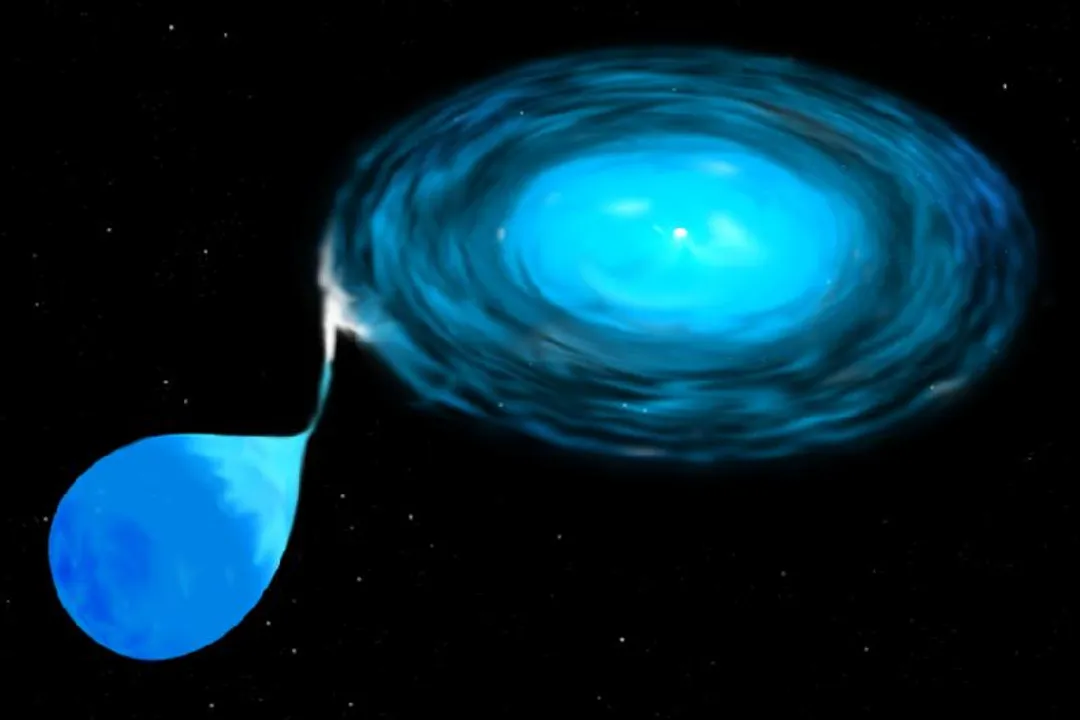
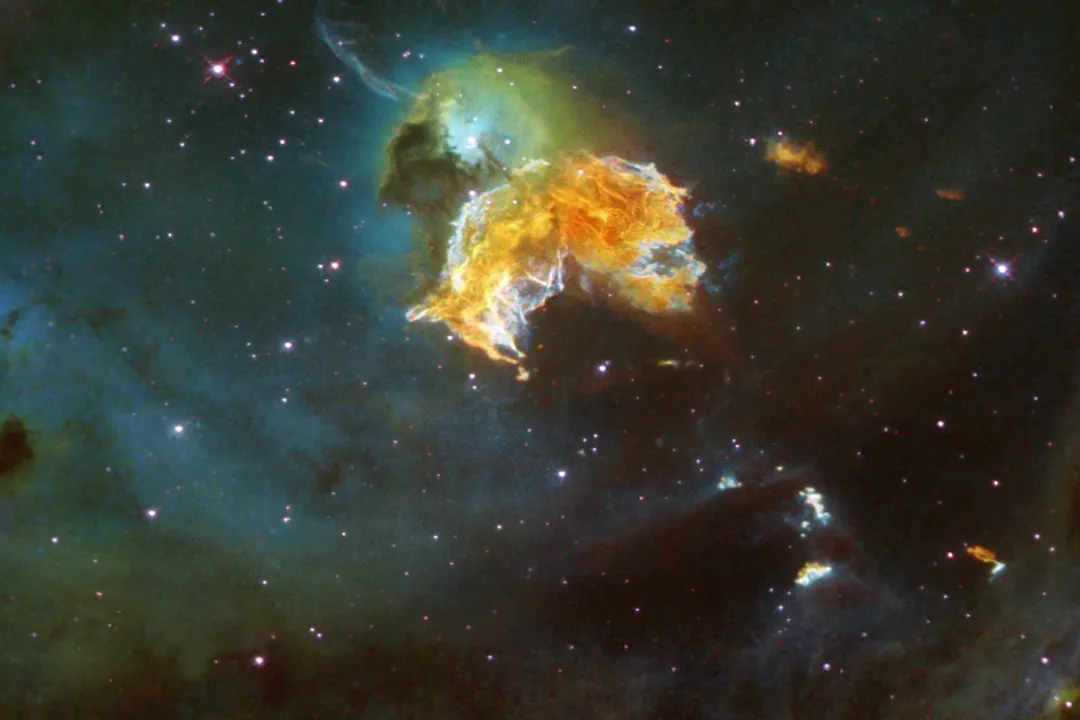
The most massive stellar event in the cosmos, the spectacular and colossal explosion of a star, is known by the powerful term supernova. These are not minor stellar flickers; they are the final, energetic curtain call for certain types of stars, capable of briefly outshining their entire host galaxy. While we may only observe one in our own Milky Way roughly three times per century, the sheer number of galaxies means astronomers witness hundreds of these brilliant, dying flares every year.
The light from a supernova can fade over several weeks or months. When they occur in our galaxy, they are categorized based on what the light reveals in their spectrum, but fundamentally, they arise from one of two extremely different paths to stellar destruction.
# Two Destinies
A star’s life is a constant tug-of-war between the relentless inward pull of its own gravity and the outward pressure generated by nuclear fusion in its core. For a star like our Sun, this balance is maintained for billions of years. However, for stars significantly more massive than the Sun, or for certain binary systems, this equilibrium eventually breaks down, leading to one of two distinct supernova scenarios: core collapse or thermonuclear runaway.
# Core Collapse
This catastrophic event marks the end for stars that are at least eight times the mass of our Sun. These massive stars burn through their nuclear fuel—fusing lighter elements into heavier ones—until the core converts its material into iron. Iron is the cosmic dead end; fusing it consumes energy rather than releasing it. Without the outward pressure to counteract gravity, the core collapses in a matter of seconds. A core roughly the size of Earth, containing the mass of the Sun, can be compressed into a ball of neutrons only a few kilometers across.
This sudden implosion generates an enormous shockwave that rebounds outward, blasting the star’s outer layers into space. The energy released in this process is staggering, with about Joules channeled into a burst of neutrinos. The visible light is almost a secondary effect, though still brilliant. The aftermath typically leaves behind an ultra-dense remnant: either a neutron star or, if the original star was especially large, a black hole.
# Runaway Fusion
The second path involves a different type of star: a white dwarf. These are the dense, Earth-sized remnants left behind after a star only slightly more massive than our Sun exhausts its fuel and sheds its outer layers. A white dwarf is stable only if its mass remains below the Chandrasekhar limit, approximately $1.4$ solar masses, held up by electron degeneracy pressure.
When a white dwarf exists in a close binary star system, it can become unstable. If it gravitationally pulls too much material from its companion, or if it merges entirely with another white dwarf, its core temperature and density can surge. This triggers a thermonuclear runaway reaction, igniting carbon fusion and detonating the entire star in an explosion that completely destroys the white dwarf.
It remains a subject of active research as to the exact mechanism that initiates this detonation, though the result is a Type Ia supernova.
# Classification Systems
Astronomers initially classified supernovae based on the elements visible in their spectra, leading to the well-known Type I and Type II designations.
| Supernova Type | Hydrogen Lines | Other Key Spectral Features | Progenitor/Mechanism |
|---|---|---|---|
| Type II | Present | Variable, often showing a "plateau" in light curve | Core Collapse of a massive star with its hydrogen envelope intact |
| Type I | Absent | Varies by sub-type | Result of core collapse or thermonuclear runaway |
| Type Ia | Absent | Strong ionized silicon () line | Thermonuclear explosion of a white dwarf |
| Type Ib | Absent | Shows neutral helium () lines | Core Collapse; progenitor lost its hydrogen envelope |
| Type Ic | Absent | Weak or no helium | Core Collapse; progenitor lost both hydrogen and helium envelopes (often a Wolf-Rayet star) |
While Type Ib/c supernovae come from core collapse, the progenitors are massive stars that have lost their outer layers, sometimes due to intense stellar winds or interaction with a companion star, leaving behind only the helium or even just the metal core.
The fact that Type Ia events result from white dwarfs hitting a specific mass threshold () means they are remarkably uniform in their peak intrinsic luminosity. This consistency is a major boon for cosmology, allowing scientists to use them as reliable standard candles to calculate vast intergalactic distances.
The highly consistent nature of the Type Ia explosion suggests that once a white dwarf approaches the Chandrasekhar limit, the final ignition process is extremely deterministic regarding energy output, regardless of the exact prior evolutionary path it took to reach that critical mass. This contrasts sharply with core-collapse supernovae, where the final explosion characteristics—whether Type II, Ib, or Ic—depend heavily on the progenitor's initial mass and its chemical content, or metallicity.
# Cosmic Aftermath
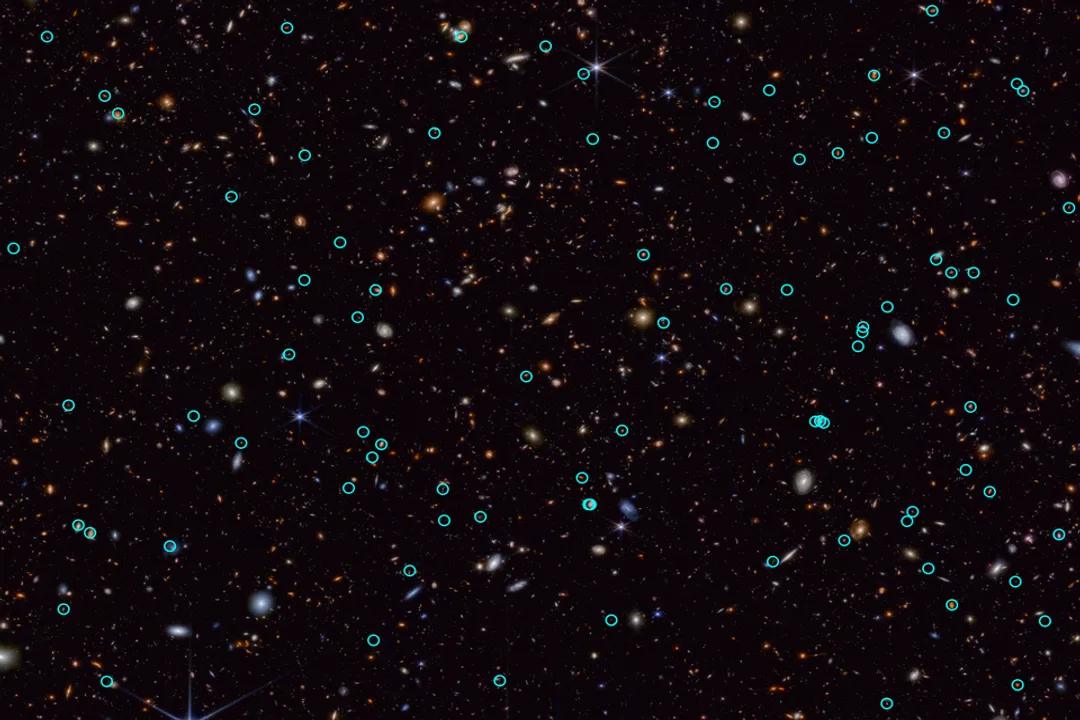
The immediate aftermath of any supernova is a rapidly expanding cloud of ejected material, or supernova remnant, which sweeps up interstellar gas and dust. This expanding wave of energy and matter is vital for cosmic evolution.
Supernovae are one of the universe's primary element factories. During nuclear fusion in the core and the explosion itself, elements up to iron are created. More critically, the incredible energy of the explosion facilitates the creation of elements heavier than iron, such as gold, silver, and uranium, via processes like the rapid neutron capture (r-process). The iron found in your blood owes its existence to an ancient stellar explosion. Furthermore, the kinetic energy of the expanding shock wave can compress adjacent molecular clouds, sometimes triggering the birth of the next generation of stars.
# Kilonovae and Double Blasts
A related, though distinct, process that creates the very heaviest elements occurs when two neutron stars merge—a phenomenon called a kilonova. This merger sends out a characteristic burst of gravitational waves and glows red as heavy elements (like gold) absorb blue light.
Recent observations have hinted at an even more complex event: the superkilonova. This hypothetical event occurs when a massive star explodes in a standard supernova, but instead of collapsing into a single neutron star or black hole, it leaves behind two neutron stars that quickly spiral inward and merge, creating a kilonova while still obscured by the initial supernova's expanding debris. Evidence for this "double explosion" was potentially found in an event designated AT2025ulz, where gravitational waves from a merger were detected hours before an associated, but unusually blue and hydrogen-rich, light signal—characteristic of a supernova—was observed. The gravitational wave signature suggested at least one of the merging neutron stars was sub-solar mass, which theory suggests requires an extremely rapidly spinning progenitor star. Observing more events like this will help confirm if this is a new category of cosmic violence.
# A Local Threat
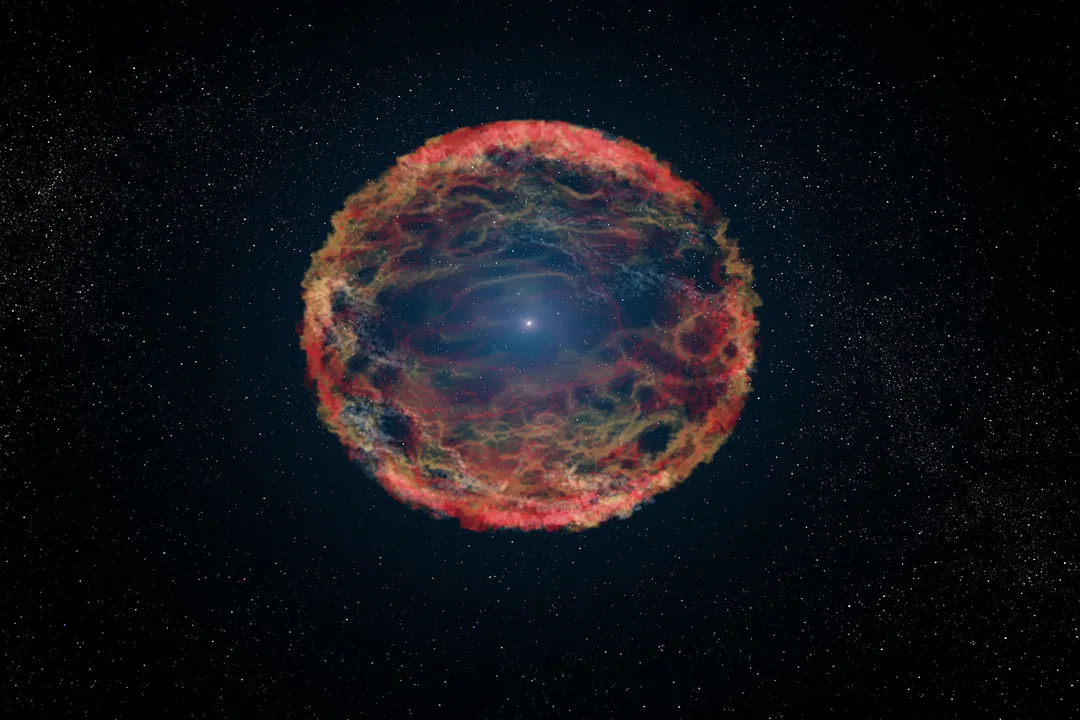
For inhabitants of Earth, supernovae are a double-edged sword. While they provide the heavy elements necessary for rocky planets and life itself, a nearby event poses a serious danger. If a supernova were to explode within approximately 25 light-years of us, the blast of X-rays and energetic particles could strip away Earth's atmosphere, making the planet uninhabitable. Fortunately, no known stellar candidates in our immediate vicinity pose such a threat; for instance, the famous red supergiant Betelgeuse, about 640 light-years away, would be visually impressive—over ten times brighter than the full moon—but safely distant.
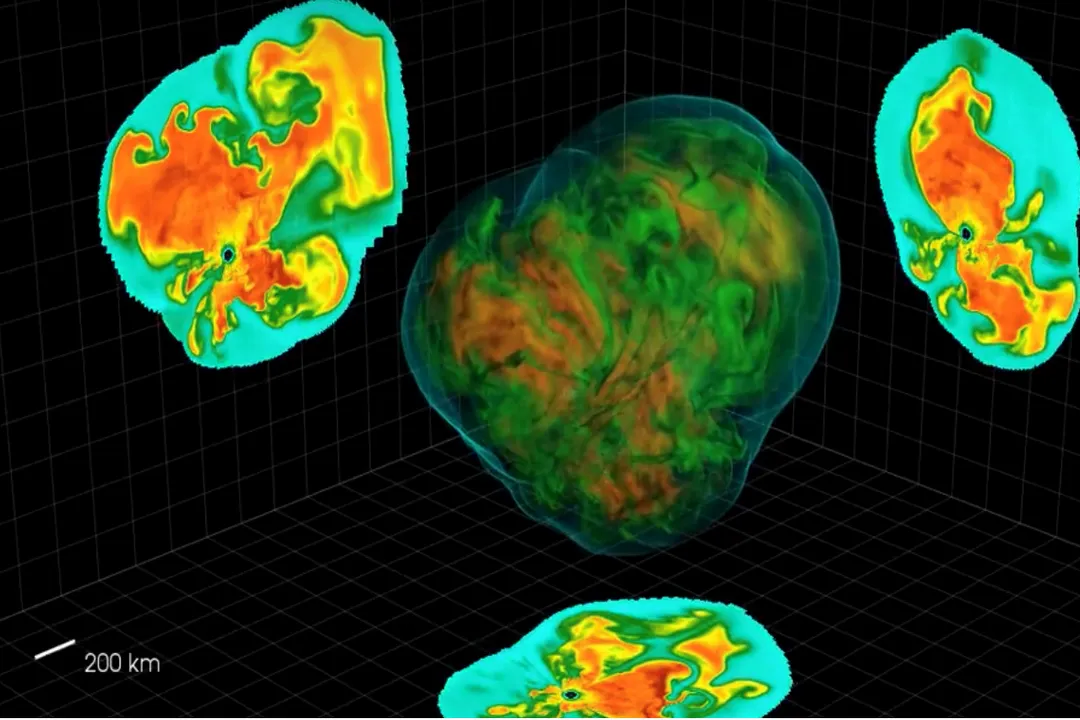
For those who scan the skies hoping to catch a Milky Way supernova, remember that the initial shock breakout—the very first moment the blast rips through the star's surface—is fleeting, lasting only hours and perhaps best seen in high-energy wavelengths, long before the main, months-long light curve peaks. Capturing that initial flash requires fast alerts and flexible telescopes, a coordination that has recently allowed astronomers to map the 3D shape of an explosion, revealing it to be elongated like an olive rather than a perfect sphere. This precision in observing the immediate mechanics of stellar death continues to refine our understanding of how these fundamental cosmic engines operate.
Related Questions
#Citations
Supernova - Wikipedia
What Is a Supernova? | NASA Space Place – NASA Science for Kids
DOE Explains...Supernovae - Department of Energy
Supernova explosions - Las Cumbres Observatory
How dangerous are supernova explosions?
Possible "Superkilonova" Exploded Not Once But Twice - Caltech
Astronomers may have spotted the 1st known 'superkilonova' double ...
What Is a Supernova? - LabXchange
Shape of Supernova: Massive star's explosive death captured with ...