Why are stars called dwarfs?
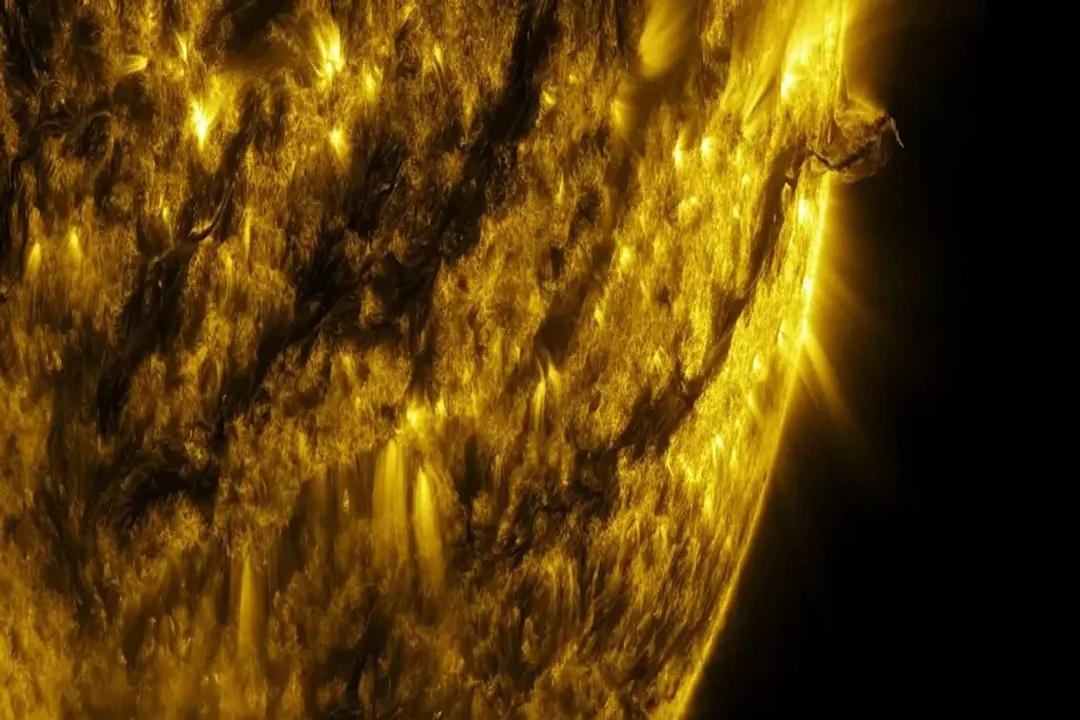
The classification of stars into categories like "dwarf" can often sound counterintuitive when we look up at the night sky, especially when we consider our own Sun. The reason stars are called dwarfs isn't always about being small in an absolute sense, but rather a term relative to the grand scale of stellar objects or indicative of a specific, often final, evolutionary stage. [1][5] Understanding this nomenclature requires stepping back to see the entire stellar population, which ranges from the massive and luminous giants down to the dimmest embers of dead stars. [5]
# Relative Scale
The vastness of stellar sizes dictates much of this naming convention. When astronomers look at the Hertzsprung-Russell (H-R) diagram, which plots stars based on their luminosity and temperature, a clear sequence emerges. [1] On one end, you have the giants and supergiants—stars that have ballooned dramatically in size after exhausting the hydrogen fuel in their cores. [5] These objects are immensely larger than stars still on the main sequence. Consequently, stars that are smaller than these behemoths are naturally grouped into the "dwarf" category, which includes the majority of stars currently burning hydrogen. [1][5]
To put this into perspective, consider the physical dimensions. A red supergiant might have a radius hundreds of times that of our Sun. [5] If we imagine the Sun as a standard beach ball—say, about 9 inches in diameter—a red giant might be the size of a small house, while a white dwarf, the remnant of a Sun-like star, would be the size of a marble (roughly Earth-sized) but holding the same mass as the original beach ball. [1][6] The term "dwarf," in this context, serves to distinguish the smaller, less evolved, or dead stars from their enormous, late-stage counterparts. [1]
# Main Sequence Dwarfs
The most common type of star in the galaxy, making up roughly three-quarters of the stellar population, belongs to the red dwarf class. [1][5] These are true dwarf stars on the main sequence, meaning they are actively fusing hydrogen into helium in their cores, just like our Sun. [1]
# Red Dwarfs
Red dwarfs are the smallest and coolest stars that can sustain hydrogen fusion. [1] Their low mass means they burn their fuel very slowly, giving them lifetimes that can stretch into the trillions of years, far longer than the current age of the universe. [1][5] Because they are so frugal with their fuel, they appear very dim and cool on the H-R diagram, hence their reddish hue. [1][7]
# Yellow Dwarfs
Our Sun is classified as a G-type main-sequence star. [4] In broader terms, the Sun is often referred to as a yellow dwarf. [3] It is important to note the nuance here: the Sun is not a dwarf in the same sense that a Red Dwarf is significantly smaller than it, nor is it a stellar remnant like a White Dwarf. [3][9] Rather, the term "dwarf star" in reference to the Sun is used when comparing its current, stable size against the much larger giants it will eventually become. [3] While the Sun is massive compared to planets, in the grand scheme of stellar evolution, it occupies a middle ground, but its current phase is that of a main-sequence dwarf. [5] For example, if the Sun were a standard grown man, a Red Dwarf might be a small child, and a Supergiant would be a skyscraper. [5]
When we look at the sheer abundance of stars, the Sun sits comfortably among the dwarfs—those stars still in their long, stable hydrogen-burning phases. [1] However, the Sun's fate involves becoming a different kind of dwarf—a white dwarf—once its main life is over. [9]
# Failed Stars
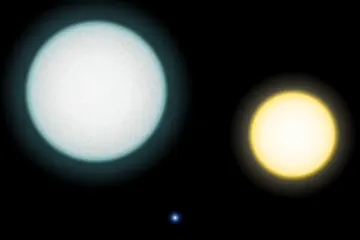
Perhaps the most fascinating group carrying the dwarf designation are the Brown Dwarfs. [1] These objects occupy a unique twilight zone in the cosmos, bridging the gap between the largest planets and the smallest true stars. [1] The defining characteristic that separates a brown dwarf from a red dwarf is mass. [1]
A true star, like a red dwarf, must have enough mass (at least about $0.08$ times the mass of the Sun, or $80$ times the mass of Jupiter) to initiate and sustain the nuclear fusion of ordinary hydrogen in its core. [1][5] Brown dwarfs fall below this critical threshold. They are sometimes called "failed stars" because they never ignite that core hydrogen fusion. [1]
Instead of sustained fusion, brown dwarfs generate a small amount of heat and light through slow gravitational contraction and, if they are slightly more massive, by briefly fusing deuterium, a heavy isotope of hydrogen. [1][4] This limited energy output makes them much cooler and dimmer than even the dimmest red dwarfs. [1] They cool and fade over time, unlike true stars which maintain a steady energy output for billions of years. [4]
One common misconception surrounds their structure. Often, simple diagrams might depict brown dwarfs as solid-looking spheres, similar to planets. [4] In reality, a brown dwarf is an object composed almost entirely of gas, much like a star, but it never reaches the temperature and pressure required for stable hydrogen burning. [4] The distinction is purely one of internal physics—the sustained fusion reaction—rather than a dramatic difference in overall composition or the gaseous nature of the body itself. [4]
If you were to catalogue every object in the galaxy by mass, you would find a smooth curve of gas giants, then a sudden jump in energy output at the $13$ Jupiter-mass mark (where deuterium burning begins), and another significant jump at the $80$ Jupiter-mass mark (where hydrogen burning begins). [1] The brown dwarfs inhabit that lower mass range, earning the "dwarf" title because they are significantly less massive and less luminous than any true star. [1]
# Stellar Endpoints
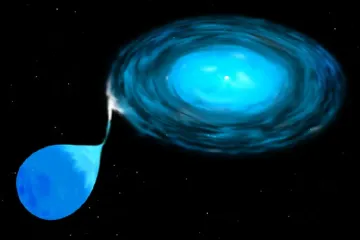
Another major category of dwarfs is the white dwarf, which represents the final stage for stars like our Sun. [1][6] When a Sun-like star exhausts the fuel in its core and sheds its outer layers, what remains is the exposed, incredibly dense core composed mainly of carbon and oxygen nuclei. [6]
White dwarfs are small, typically having a radius similar to that of Earth. [1][6] However, despite this small size, they retain nearly the entire mass of the original star—about the mass of the Sun. [6] This results in extreme density; a spoonful of white dwarf material would weigh tons. [6] Because they are no longer generating energy through fusion, white dwarfs are essentially cooling embers, radiating away their residual heat over eons until they become theoretical black dwarfs. [6] They are classified as dwarfs not because they are dim relative to a main sequence star—though they are less luminous—but because their physical size is so drastically reduced compared to their progenitor star. [1]
Consider the evolution timeline for a star like the Sun. It spends about $10$ billion years on the main sequence as a yellow dwarf. [3] When it transitions, it first swells into a Red Giant, perhaps hundreds of times its current size. [5] Then, after shedding its outer gas layers, the remaining core shrinks to the size of Earth, becoming a white dwarf. This final, compact form is why it shares the "dwarf" descriptor, albeit at the opposite end of the life cycle from the young, fuel-burning Red Dwarfs. [1][6]
# Synthesis of Naming
The term "dwarf star" therefore isn't a single, uniform classification but a grouping term encompassing objects at different stages of stellar life, all sharing the characteristic of being smaller than the large, luminous giant or supergiant phases, or being less massive than the minimum threshold for true fusion. [1][5]
| Star Class | Primary Energy Source | Relative Size | Evolutionary Stage |
|---|---|---|---|
| Red Dwarf | Sustained Hydrogen Fusion | Smallest true stars | Main Sequence (Longest-lived) [1][5] |
| Yellow Dwarf (Sun) | Sustained Hydrogen Fusion | Medium (Reference Point) | Main Sequence (Stable life) [3][5] |
| Brown Dwarf | Gravitational Contraction/Deuterium Fusion | Larger than giant planets | Failed Star (Non-fusing) [1][4] |
| White Dwarf | Residual Heat/Cooling | Earth-sized | Stellar Remnant (Dead Core) [1][6] |
The crucial difference lies in the basis for the name: Red and Yellow Dwarfs are named for their size relative to giants during their active life; Brown Dwarfs are named for their sub-stellar mass; and White Dwarfs are named for their collapsed, Earth-like size after death. [1] This hierarchy demonstrates the rich history packed into just one word used across multiple, distinct astronomical objects. [1][6]
When an astronomer labels an object a dwarf star, they are instantly communicating volumes about its expected energy output, its mass, and its probable fate, all summarized by its smaller stature compared to the most impressive stellar residents of the galaxy. [5] It is a shorthand that acknowledges the vast difference between a star that is merely beginning its life, one burning steadily, and one that has already concluded its fiery existence. [1][9]
Related Questions
#Citations
Dwarf star - Wikipedia
Glossary term: Dwarf Star - IAU Office of Astronomy for Education
Why is the star at the center of our solar system called a 'dwarf' star?
ELI5: why are Brown Dwarfs depicted as "solid", while stars ... - Reddit
Star Types - NASA Science
Neutron Stars and White Dwarfs | Center for Astrophysics | Harvard ...
Colorful Dwarfs - StarDate Online
Dwarf star Facts for Kids
star - Our Sun already a White dwarf? - Astronomy Stack Exchange