What is a big bright star called?
The most conspicuous and brilliant point of light in the night sky is a star known simply as Sirius. [2][4][8] While the question of what a big, bright star is called might suggest a category name, the reality is that the title belongs overwhelmingly to one specific celestial neighbor that dominates our view after the Sun. [2][4] This star is so exceptionally bright that its brilliance frequently draws the attention of casual observers and seasoned astronomers alike, often making it the first star people successfully locate after learning the major constellations. [8]
# The Dog Star
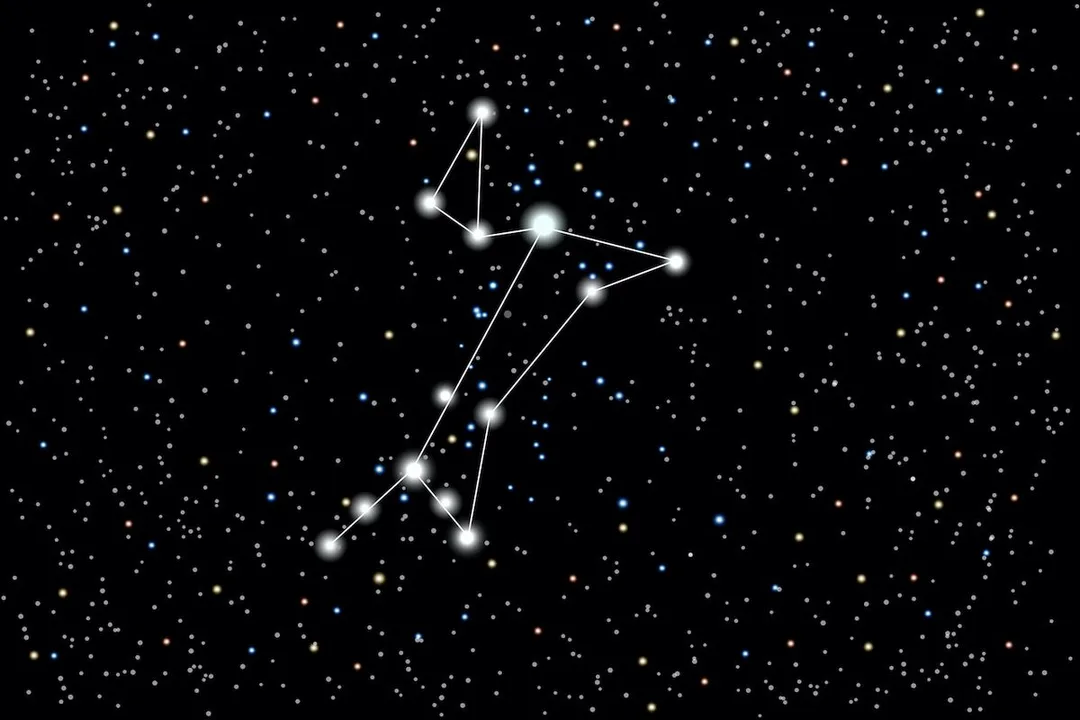
Sirius is not merely bright; it is the brightest star visible from Earth, boasting an apparent magnitude of approximately $-1.46$. [1] This measure of apparent brightness means it outshines every other star in the night sky, earning it the nickname the "Dog Star". [4][5][8] Its location is firmly anchored in the constellation Canis Major, or the Great Dog, a figure often depicted following the hunter Orion across the celestial sphere. [3][4] The relationship between Sirius and Orion is one of the easiest ways for amateur astronomers to locate it, especially during winter months in the Northern Hemisphere. [8] Historically, the rising of Sirius around the same time as the sun marked the "Dog Days" of summer in ancient calendars, a period associated with extreme heat. [4]
It is important to remember that apparent brightness—how bright a star looks from our vantage point—is a combination of its actual intrinsic luminosity and its distance from us. [1] Sirius shines so fiercely primarily because it is both intrinsically powerful and relatively close to our solar system, situated only about 8.6 light-years away. [1]
# Stellar Data
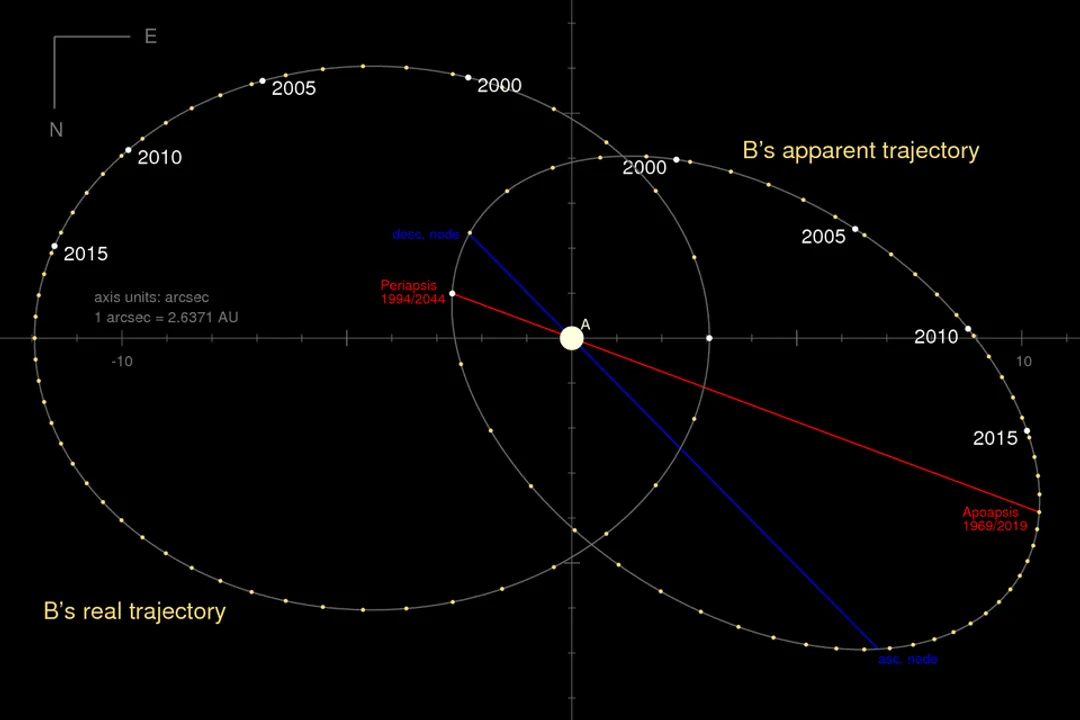
When we look at Sirius, we are not seeing a single star but rather a binary system, a pair of stellar companions orbiting a common center of mass. [1] This system consists of two components: Sirius A and Sirius B. [1]
Sirius A is the brilliant primary star. While it appears as a single, dazzling object to the naked eye, it is an A1 V spectral type star, meaning it is a main-sequence star, though considerably more energetic than our own Sun. [1] Data shows that Sirius A possesses roughly twice the mass of the Sun, yet it radiates an astonishing 25 times the Sun's total luminosity. [1]
The smaller, fainter companion is Sirius B. [1] This object provides a fascinating contrast to its massive partner. Sirius B is classified as a white dwarf, the dense, hot remnant left behind after a star like Sirius A exhausts its nuclear fuel. [1] White dwarfs are extremely compact; Sirius B packs a significant fraction of the Sun's mass into a volume roughly the size of the Earth, leading to incredibly high density. [1] Observing this pair requires proper equipment, as Sirius B is invisible to the naked eye. [1]
Here is a simplified comparison of the two visible members of the Sirius system:
| Component | Spectral Type | Approximate Mass (Solar Masses) | Appearance |
|---|---|---|---|
| Sirius A | A1 V (Main Sequence) | 2.0 | Extremely bright blue-white star |
| Sirius B | White Dwarf | ~0.98 | Faint, very dense remnant |
# Finding Sirius

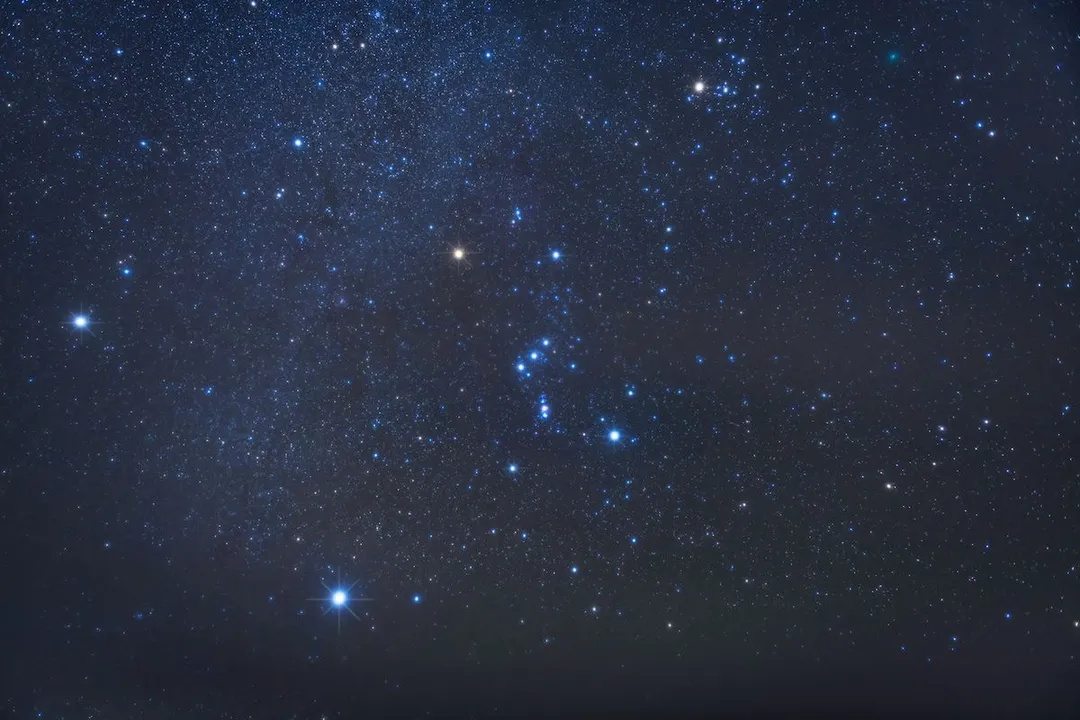
For observers using only their eyes, knowing where to look is key to confirming that Sirius is indeed the brightest star. [8] In the Northern Hemisphere, Sirius is a prominent feature of the winter sky. [6] A simple way to practice celestial navigation is to use the three belt stars of Orion—Alnitak, Alnilam, and Mintaka—as a guide. [8] If you trace a line extending down and to the left from Orion’s belt, Sirius is the next prominent star you will encounter in that direction. [8]
The star's position in the sky means it rises earlier and earlier throughout the year, eventually becoming visible in the predawn sky during the summer months, though it is most impressive when high in the winter sky. [6] The apparent brightness of Sirius, combined with its low declination (position relative to the celestial equator), means it never dips very far below the horizon for many mid-latitude observers, giving it a long period of visibility throughout the year, even if only briefly near dawn or dusk. [6] This consistent presence makes it an excellent fixed reference point for beginners learning the nightly motion of the heavens.
# Brightness Deception
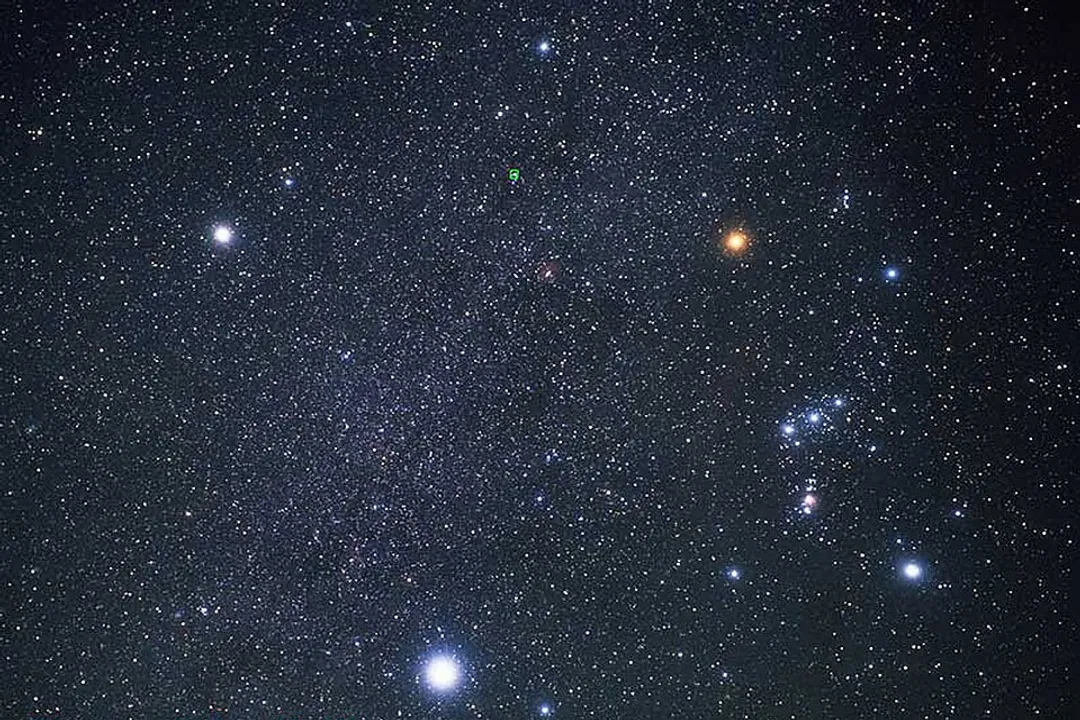
When we talk about stars appearing bright, the difference between Sirius and the next few brightest stars can be surprisingly large, which highlights how dominant Sirius is in our visual field. [1] While Sirius has an apparent magnitude near $-1.46$, the next brightest star, Canopus, has a magnitude of about $-0.72$, and Arcturus is near $-0.05$. [1] Because the magnitude scale is logarithmic, a difference of one magnitude represents a factor of about $2.5$ in brightness. This means that Sirius A is substantially brighter than Canopus, and the gap widens quickly as you move further down the list of brightest objects. [1]
It’s worth considering that Sirius A’s intrinsic luminosity—its true light output—is about 25 times that of our Sun. [1] Yet, because the Sun is so incredibly close (an astronomical unit away), it appears vastly brighter than Sirius, whose light takes over eight years to reach us. [1] Sirius, despite its distance of 8.6 light-years, manages to appear about 10 billion times brighter than the Sun as seen from Earth, simply by virtue of its powerful radiation combined with that relatively short cosmic commute. This illustrates the stark difference between a star’s actual stellar classification and its visual impact on a terrestrial observer. [1]
#Videos
Sirius - the brightest star - YouTube
Related Questions
#Citations
Sirius - Wikipedia
Sirius: The brightest star in Earth's night sky - Space
Sirius: The Brightest Star in the Night Sky! Located in the ... - Facebook
Star Types - NASA Science
See brightest star, Sirius, in your morning sky - EarthSky
Sirius - the brightest star - YouTube
List of brightest stars | Sirius, Alpha Centauri, Magnitudes ...
What's The Brightest Star In The Night Sky? How To Find ... - Forbes