What is a bright giant star?
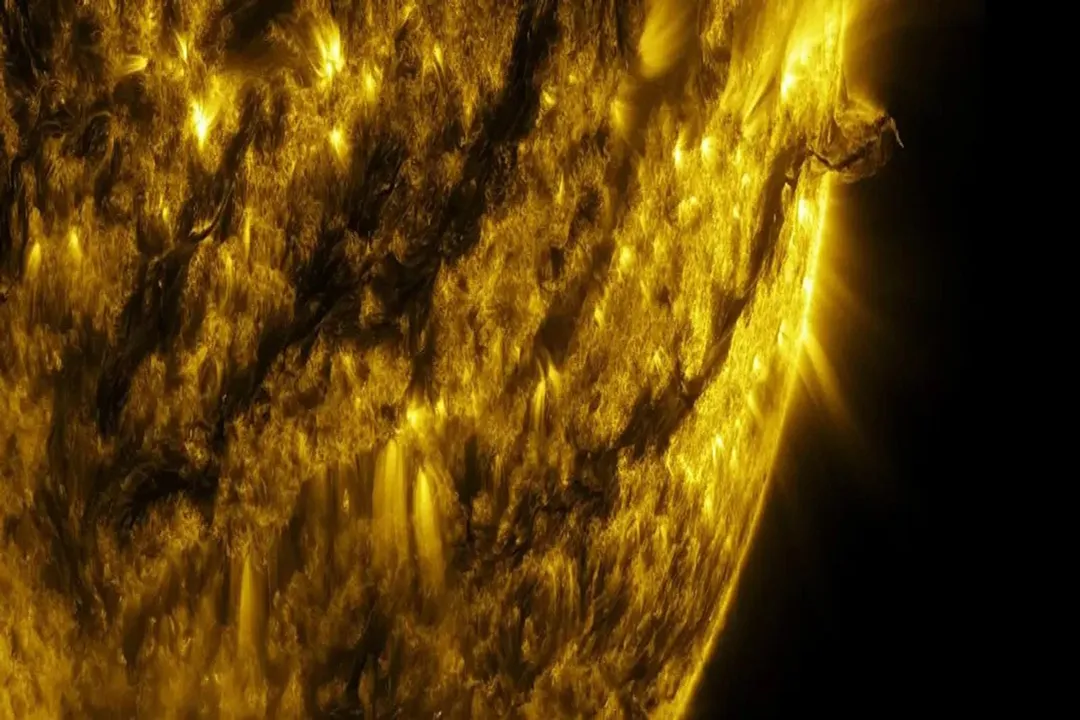
The stellar classification system describes stars based on their temperature and luminosity, placing them along a curve known as the Hertzsprung-Russell (H-R) diagram. Within this scheme, the category of bright giant stars occupies a distinct middle ground, bridging the gap between typical main-sequence stars and the much larger, more luminous supergiants. [1][5] These celestial bodies are characterized by their significantly higher luminosity compared to stars of similar surface temperatures that are still burning hydrogen in their cores, like our Sun. [4]
A bright giant star belongs to the luminosity class denoted by the Roman numeral III or sometimes II in older or more nuanced classification schemes. [1] Specifically, they are often identified as being in luminosity class II or III. [1][5] This placement signals that they have evolved off the main sequence but have not yet expanded into the truly enormous dimensions of a supergiant. [4] They are intrinsically much brighter than stars currently residing on the main sequence, such as stars of spectral type G, like the Sun. [5]
# Size Comparison
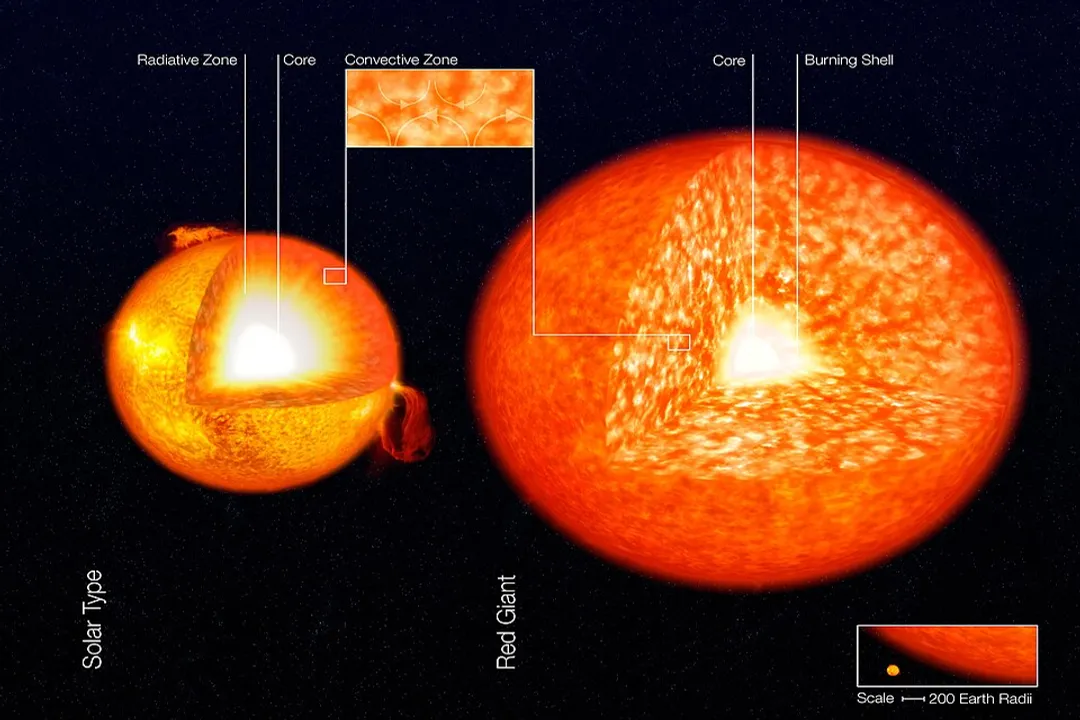
When we discuss the physical size of a star, the term "giant" suggests a substantial increase over a typical star. While a bright giant is indeed larger than a main-sequence star of the same mass, it doesn't reach the extreme radii of a true supergiant. [3] For instance, a star like a G-type main sequence star, which is similar to the Sun, might only have a radius of 1 solar radius, whereas a bright giant of a similar initial mass will have swelled considerably. [5] A bright giant is generally considered to be between about 10 to 100 times the size of the Sun. [2]
To put that expansion into perspective, consider a star that begins its life with about twice the Sun's mass. After exhausting the hydrogen fuel in its core, it begins to evolve. As it ascends the evolutionary track, it passes through the bright giant phase before potentially becoming a red giant or an actual supergiant, depending on its exact mass and evolutionary path. [3][7] A star entering this phase is visibly puffing up because its outer layers are expanding significantly as its internal energy generation processes change. [7]
If we were to visualize the difference, imagine the Sun as a small marble. A typical red giant might be the size of a large beach ball, but a bright giant might only be the size of a medium basketball—significantly larger than the marble, yet noticeably smaller than the largest celestial objects. [9] This size variation is intrinsically linked to their position on the H-R diagram, where they sit above the main sequence, indicating greater luminosity for a given temperature. [1]
# Luminosity Class II III
The classification of bright giants is formalized by their absolute magnitude and spectral type, which together assign the luminosity class. [1] Stars in this category have an absolute magnitude generally ranging between -3 and -5. [1] This means they shine with the collective light of hundreds to thousands of Suns. [5] For example, a bright giant with an absolute magnitude of -4 is roughly 630 times brighter than the Sun (since a difference of 5 magnitudes equals 100 times the brightness, and the relationship is exponential). [1]
Stars classified as bright giants often possess spectral types ranging from O, B, A, F, G, or K. [1] However, to be designated a bright giant, a star must exhibit a luminosity indicative of evolved status, typically falling into luminosity class II or III. [1][5] This is crucial because a main-sequence star (luminosity class V) of the same surface temperature would be far less luminous. [4] A star in this category is actively fusing helium in its core or has just begun doing so, marking a significant departure from its youth on the main sequence. [7]
Here is a simple mapping of how luminosity class relates to size and evolutionary stage:
| Luminosity Class | Common Name | Typical Evolutionary Stage |
|---|---|---|
| I | Supergiant | Post-main sequence, very high mass |
| II | Bright Giant | Evolved, high luminosity |
| III | Giant | Evolved, moderate luminosity |
| V | Main Sequence | Hydrogen core fusion (like the Sun) |
| [1][3][5] |
It is interesting to consider that many stars we observe that appear bright in the night sky aren't actually supergiants; some are simply bright giants that happen to be relatively close to us, appearing deceptively luminous because of their evolutionary status combined with their proximity. [6]
# Stellar Evolution Context
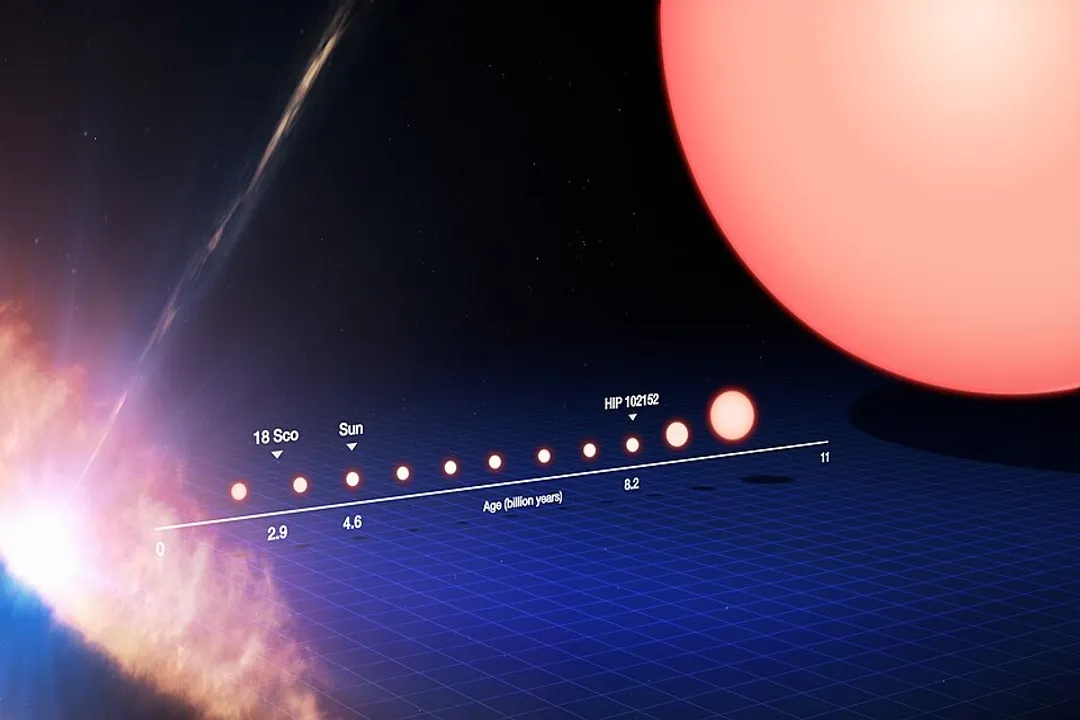
A star becomes a bright giant as it ages and evolves away from the main sequence. [4] This transition occurs after a star, having used up the hydrogen fuel in its core, begins contracting and heating up while simultaneously expanding its outer layers. [7] For stars that start their lives with masses roughly between $2$ and $8$ times the mass of the Sun, this evolutionary path often takes them directly through the bright giant phase. [7]
The time a star spends as a bright giant is typically short compared to its main-sequence lifetime. A star might spend billions of years fusing hydrogen steadily, but the subsequent phases of core contraction and shell burning proceed much more rapidly, meaning the bright giant stage might last only a few million years. [7] This rapid transition explains why we observe fewer bright giants than we do main-sequence stars of comparable mass—they simply don't remain in that state for very long. [5]
Once a star leaves the bright giant phase, depending on its initial mass, it will often proceed to become a true red giant or a supergiant star. [7] The evolutionary track is highly dependent on mass; lower-mass stars after the main sequence often swell into red giants, while higher-mass stars might skip the typical "red giant" designation and become supergiants directly, or pass through the bright giant stage on their way to becoming supergiants. [3][7] The specific temperature and radius achieved during this phase dictate whether it’s categorized as a bright giant (Class II/III) or a full supergiant (Class I). [1]
For instance, a star like our Sun will eventually swell to become a red giant, but it won't achieve the extreme luminosity of a bright giant or supergiant because its mass is insufficient. [7] Stars that do become bright giants are heavier than the Sun, indicating they had a more energetic, though shorter, youth on the main sequence. [6]
# Bright Giants Versus Supergiants
The distinction between a bright giant and a supergiant is subtle but important, resting primarily on the extent of their expansion and their absolute luminosity. [3] Supergiants, classified in luminosity class I, represent the most massive and luminous stars in the universe that are still undergoing fusion processes. [3][6] They can be hundreds of thousands of times more luminous than the Sun and can possess radii that dwarf the orbit of Mars, or even Jupiter, in the case of the most extreme examples like Betelgeuse. [3]
A bright giant sits just below this threshold. [1] While a bright giant might be 10 to 100 times the solar radius, a supergiant can easily exceed 100 solar radii and often reaches many hundreds. [2][3] The luminosity difference is equally pronounced; supergiants are far brighter than bright giants. [3] A bright giant might peak in luminosity around a few hundred to a few thousand times that of the Sun, whereas a supergiant can easily exceed ten thousand times the Sun’s output. [1][3]
Think of it as an architectural scale. If a standard house is the Sun, a bright giant is a large mansion, noticeably bigger and grander than the average dwelling. A supergiant, however, is a colossal skyscraper, operating on an entirely different scale of mass and energy output. The evolutionary track shows a smooth progression, but astronomers draw lines—luminosity class I for supergiants, and II/III for bright giants—to organize these stages of stellar old age. [1]
Another factor to consider is surface gravity. Because bright giants have expanded significantly from their main-sequence state, their outer layers are less densely packed than those of a main-sequence star of the same mass, resulting in lower surface gravity, a characteristic shared with supergiants, though to a lesser degree. [1]
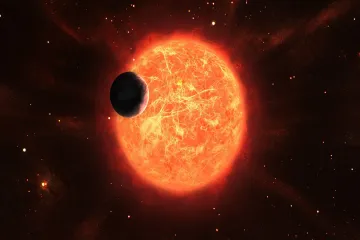
# Observing and Identifying Them
Identifying a bright giant requires measuring both its apparent brightness from Earth and its distance to calculate its true, or absolute, luminosity. [6] Since bright giants are intrinsically very luminous, even those that are relatively far away can still appear quite bright in our night sky compared to closer, dimmer stars. [6] This high intrinsic luminosity is what makes them valuable as "standardizable candles" in certain astronomical contexts, though less so than Type Ia supernovae or Cepheid variables, because their exact properties can vary based on the star's initial mass and metallicity. [4]
When astronomers analyze the spectrum of a star, the width of the spectral lines gives them clues about the surface gravity, which directly relates to the luminosity class. [1] Stars with lower surface gravity, like giants and supergiants, exhibit narrower spectral lines compared to main-sequence stars of the same temperature. [1] The spectrum of a bright giant will therefore show features indicative of luminosity class II or III. [1]
If one were to map out the stars visible to the naked eye, they would notice a concentration of bright objects that fall on this evolutionary track. If you track the path of a solar-mass star after its main sequence life, it moves upward and rightward on the H-R diagram, crossing into the bright giant territory briefly before settling into the deeper red giant phase, assuming it doesn't have enough mass to explode as a core-collapse supernova later on. [7] This movement represents a significant, temporary outpouring of energy before the star settles into its final, cooler expansion phase. [7] This brief, brilliant flare-up helps astronomers understand the late-stage physics of stars that are heavier than the Sun but not massive enough to become true supergiants, placing them in a specific evolutionary niche vital for understanding stellar death across the galaxy. [5]
Related Questions
#Citations
eSky: Bright Giant - Glyph Web
Bright giant | Verse and Dimensions Wikia - Fandom
Supergiant star | Massive, Luminous, Bright | Britannica
Bright Giant Definition - Intro to Astronomy Key Term | Fiveable
Glossary term: Giant Star - IAU Office of Astronomy for Education
Star Types - NASA Science
Red giant - Wikipedia
G. C. Sloan: Main Sequence Stars, Giants, and Supergiants
Giant star Facts for Kids