What is the really bright star right beside the Moon?

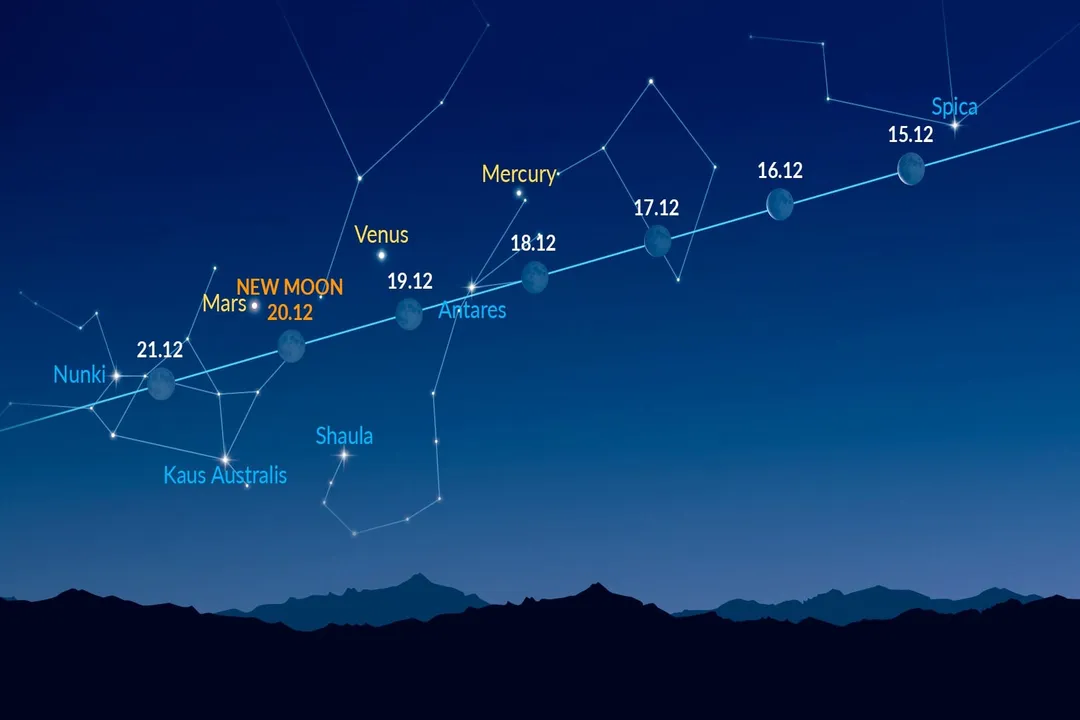
That brilliant point of light hanging right next to the Moon is one of the most common questions amateur skywatchers ask. It’s easy to assume it must be a star because the Moon is usually pictured near the fixed background of constellations, but this dazzling neighbor is almost always something much closer to home: a planet. [1][3] Because the Moon is always traveling across the sky, its close companions change nightly. This apparent closeness is known in astronomy as a conjunction, where the Moon passes near a bright planet from our viewpoint here on Earth. [5]
# Planetary Proximity
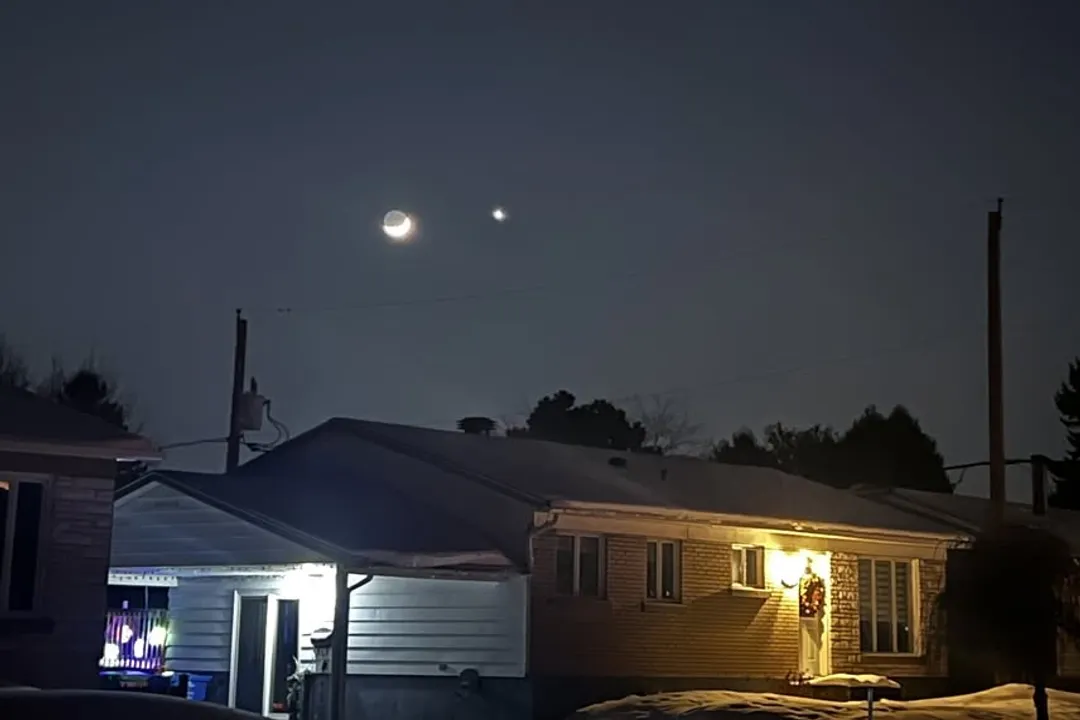
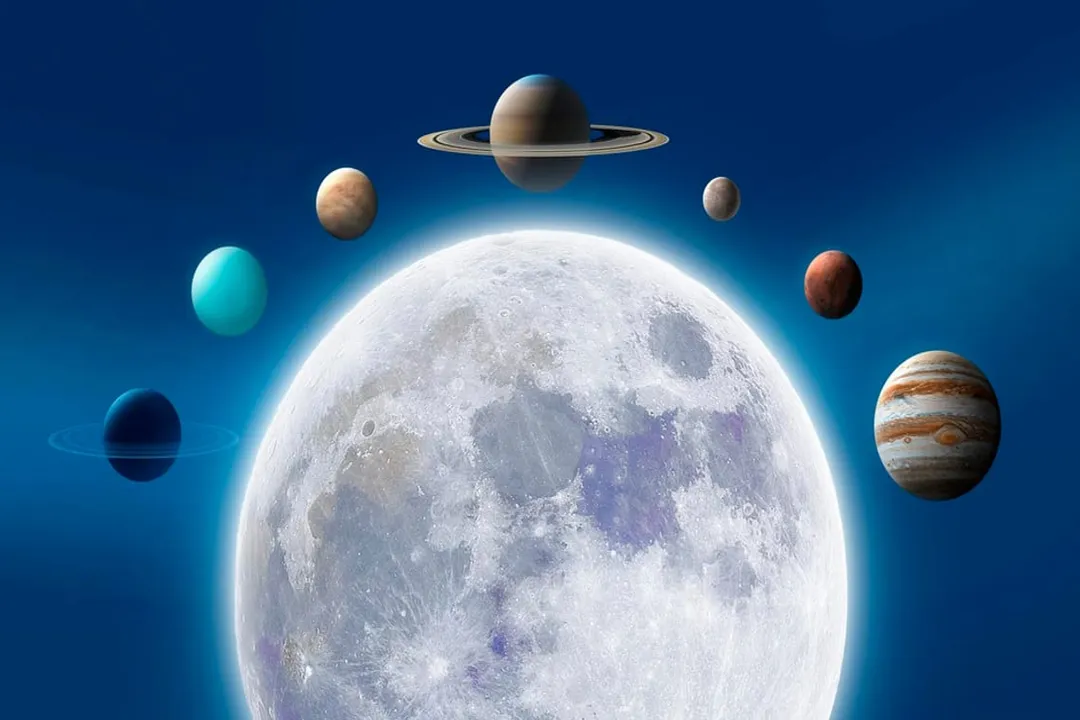
The objects that appear brightest near the Moon are typically the major planets in our solar system, which reflect the Sun’s light back to us. [1] Unlike true stars, which are unimaginably distant suns, planets are relatively close neighbors. When the Moon's orbital path brings it visually near one of these worlds, the resulting sight is dramatic. [5] The actual distance between the Moon and the planet in three-dimensional space can still be millions of miles, but they share a similar line of sight across our night sky. [5]
# Steady Light
One of the easiest ways to distinguish a planet from a true star, especially when it’s positioned near the Moon, involves looking at how the light behaves. Stars, being incredibly far away, appear as mere pinpricks of light, which makes their light paths easily disrupted by the Earth’s turbulent atmosphere. This disruption causes them to twinkle or shimmer visibly. [2][3] Planets, conversely, appear as tiny discs, even without a telescope, allowing their light to pass through the atmosphere more smoothly. Therefore, if the bright object next to the Moon is shining with a distinct, unwavering, steady glow, you can be quite confident you are looking at a planet, not a star. [2][3]
# The Brightest Planets
When people ask about the "really bright star" beside the Moon, they are most frequently sighting Venus or Jupiter, as these two routinely outshine all other planets and most stars. [1]
# Venus Sightings
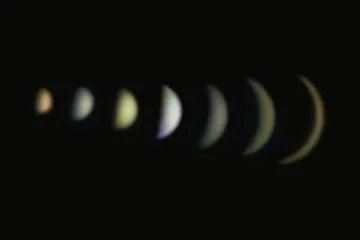
Venus is often the most brilliant object in the sky after the Sun and Moon. [9] Its appearance near the Moon is what prompts many inquiries. Because Venus orbits inside Earth's orbit, we only ever see it close to the Sun's position in the sky, meaning it appears either shortly after sunset (the Evening Star) or just before sunrise (the Morning Star). [9] When it is visible, it shines with an intense, steady, white or sometimes slightly yellowish-white light. [9] Its sheer brightness is usually the biggest clue to its identity.
# Jupiter and Mars
Jupiter is the next contender for the brightest object in these pairings. [1] It generally appears as a bright, steady, pale-yellow or white light. [1] While bright, it rarely achieves the dazzling intensity of Venus.
Mars, on the other hand, is easy to identify thanks to its distinct hue. If the bright object has a clear reddish or orange tint, you are likely seeing Mars. [1] Mars is famous for its color, which is due to iron oxide (rust) on its surface reflecting the sunlight. [1]
Saturn and Mercury can also feature in these conjunctions, but Saturn is noticeably less brilliant than Venus or Jupiter, often appearing as a pale yellow point, while Mercury is always seen quite close to the horizon because its orbit keeps it near the Sun. [1]
Here is a quick visual comparison to help narrow down your celestial neighbor:
| Celestial Body | Typical Appearance Near Moon | Brightness Relative to Other Planets | Frequency of Appearance |
|---|---|---|---|
| Venus | Brilliant, steady white/yellow-white | Highest (can rival the Moon) | Frequent (when correctly positioned relative to the Sun) [9] |
| Jupiter | Bright, steady pale yellow/white | High | Frequent [1] |
| Mars | Noticeable reddish-orange tint | Moderate | Moderate [1] |
| Saturn | Pale yellow, less brilliant | Lower | Moderate [1] |
This constant motion and changing proximity mean that knowing tonight's specific pairing requires checking a current sky guide for your location. [1][7] If you look up tonight and see a dazzling beacon next to the Moon, checking a reliable source confirms whether you’re looking at Venus setting in the west or perhaps Jupiter rising in the east. [7] This dependency on the exact date and time highlights why the answer to "What is it?" is different every few nights.
# Locating Current Events
Since the identity of the bright object is fleeting, you cannot rely on historical observation alone. To definitively answer what is right beside the Moon right now, you need tools that account for that precise moment. Many astronomical resources, including dedicated websites and mobile applications, track the daily positions of the Moon and the five naked-eye planets (Mercury, Venus, Mars, Jupiter, and Saturn). [1][5] These tools use predictive models based on orbital mechanics to tell you exactly which planet is making the close pass. For example, if you see a brilliant object next to a crescent Moon just after sunset in early December, checking a guide for that specific month might confirm it’s Venus putting on a spectacular show before heading below the horizon. [9] These modern astronomy resources essentially replace the need for complex star charts for simple identification tasks. [7]
# The Observer's Advantage
One interesting way to consider this phenomenon relates to where you are observing from. If you are in a very dark location, away from city lights, the stars will look much more numerous, which might actually make the bright planet stand out even more against the dimmer stellar background. [7] However, if you are in a city, the bright planet’s steady light will cut right through the light pollution, making it the undeniable feature next to the Moon, while dimmer stars are completely washed out. This means that urban dwellers often have an easier time isolating the planet as the primary bright object simply because the competition (the background stars) has been suppressed by artificial light. [7] In essence, light pollution can sometimes accidentally enhance the clarity of conjunctions involving the very brightest objects.
#Videos
Venus reaches its greatest brightness near the Moon (21 to 27 April)
Related Questions
#Citations
Visible planets and night sky guide for December - EarthSky
Can anyone tell me why there is a single bright star next to moon ...
What is the name of the bright star near the moon? - Quora
Unusual moon photo with bright star nearby, possibly Venus
Bright “Star” Next to Moon: What Planet Is Near the Moon Tonight?
What is the Star next to the Moon?! #moon #star #venus - YouTube
In the Sky This Month - StarDate Online