What is the bright star in the west after sunset?
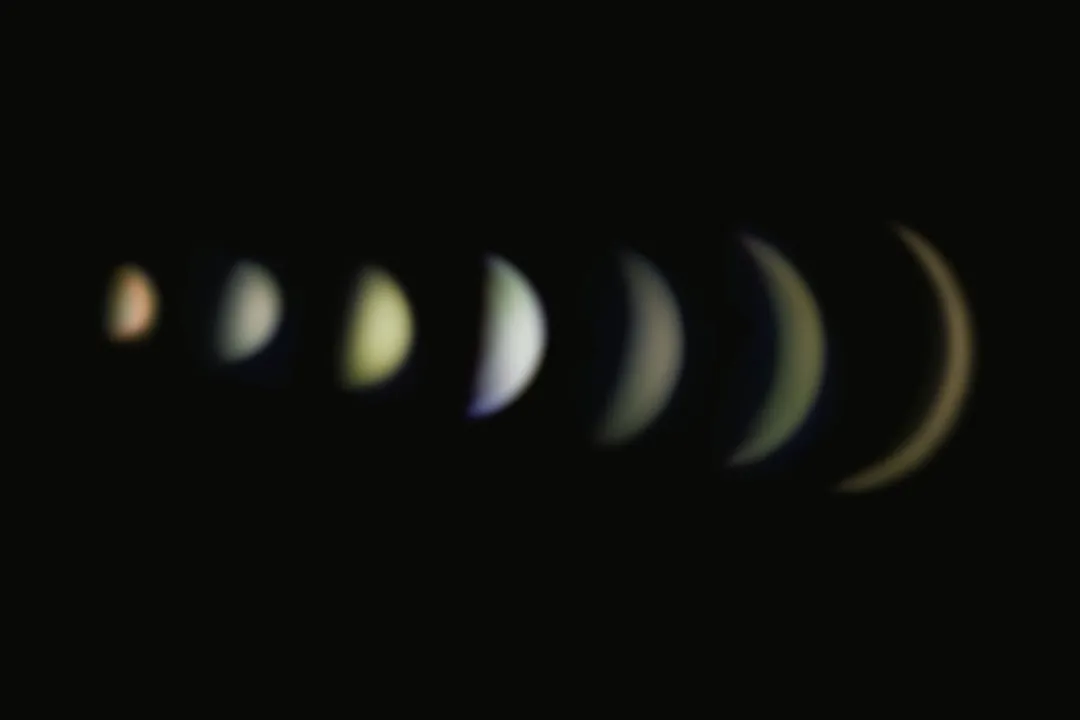
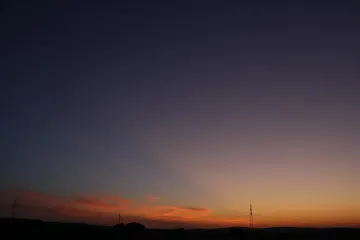
That brilliant pinpoint of light dominating the western horizon shortly after the Sun dips below the edge of the world is one of the most frequently asked about celestial events. While it often fools the eye into thinking it’s the first star to appear, the object in question is almost always a planet, specifically Venus. [2][5][9] It holds the title of the third-brightest natural object visible from Earth, surpassed only by the Sun and the Moon. [3] When seen in this position, shining brightly in the twilight glow, it earns the nickname the Evening Star. [1][5][9]
# Intense Luminosity
The sheer brilliance of Venus is what causes so many observers to mistake it for a particularly dazzling star. This intensity stems from a combination of its proximity to us and the composition of its atmosphere. Venus is the second planet outward from the Sun. [8] While it is not the closest planet to Earth—that title shifts between Venus and Mercury—it frequently comes closer to us than any other planet. [8]
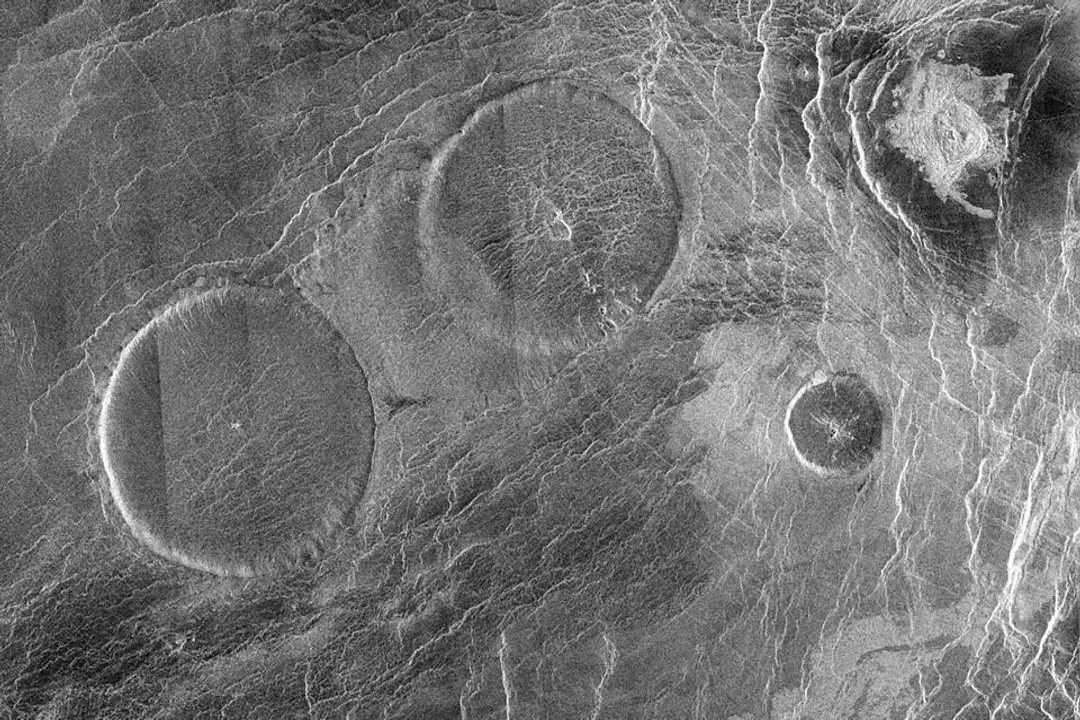
However, distance alone doesn't account for its dazzling appearance. The primary factor is its reflective surface. Venus is shrouded in a thick blanket of clouds made up primarily of sulfuric acid droplets. [3] These clouds are incredibly effective at reflecting sunlight back into space. In fact, Venus reflects about 70% of the sunlight that strikes it. [3] Compare that to Earth, which reflects only about 30% of incoming sunlight, or Mars, which reflects even less. [3] This high albedo, or reflectivity, allows Venus to shine with a magnitude that often dwarfs every true star in the sky, including the familiar Sirius. [3] If you were to see Venus at its peak brightness, it can be so luminous that it might cast a faint shadow on a clear, dark night, a feat no true star can manage. [3]
# Celestial Timing
The appearance of Venus in the west after sunset is not a constant feature of the night sky; it is dependent on its orbital mechanics relative to Earth and the Sun. Venus orbits the Sun inside Earth’s orbit, meaning that from our perspective, it never strays too far from the Sun’s location in the sky. [1]
When Venus is on the side of the Sun opposite Earth in its orbit, it is visible in the east before sunrise—the Morning Star. Conversely, when it is on the side of the Sun closest to Earth in its orbit, it appears in the west after sunset as the Evening Star. [1][5][9]
The longest stretch Venus appears as the Evening Star occurs around the time of its greatest elongation. [1] Elongation is the angular distance between the Sun and another celestial body as seen from Earth. [1] When Venus reaches its greatest elongation west of the Sun, it sets at its latest possible time after the Sun, making it visible for the longest duration after sunset. [1] This configuration shifts over time; the timing and duration of Venus's visibility as the Evening Star cycle roughly every 19 months. [1] If you look up and see a blazing object in the west immediately following dusk, you are witnessing Venus near one of these optimal viewing periods, though it remains quite bright even outside these exact moments. [4]
# Planetary ID
The most common confusion arises because observers naturally default to calling anything bright in the sky a "star." How can you be certain it is Venus and not something else, like a very bright true star or another planet?
The first clue is the location and timing. [2][5] If it is visible low in the west just after sunset, and it’s significantly brighter than everything else, it strongly points to Venus. [2]
A key difference between planets and stars lies in how their light reaches us. Stars are incredibly distant balls of fusing gas, so far away that their light arrives essentially as a single point source, making them appear to twinkle or scintillate due to turbulence in Earth's atmosphere. [2][5] Planets, being much closer, appear as tiny disks, not single points, even if you cannot resolve the disk without aid. [2][5] This means that while atmospheric conditions can dim or blur them, planets generally exhibit a steadier, less twinkling light than true stars. [2][5] If the light remains a sharp, steady beacon even as the sky darkens, it’s far more likely to be a planet like Venus, Jupiter, or even Mercury. [5]
If you happen to notice two extremely bright points of light in the vicinity, the situation requires a slightly closer look. While Venus is usually the brightest, Jupiter is the next contender for sheer magnitude, though it typically doesn't reach Venus's peak brightness. [5][9] Mercury also appears in the same general area as Venus because it orbits inside Earth's path, but Mercury is much dimmer and is only visible for a short time shortly after sunset or before sunrise. [5] If the object you see is significantly fainter than the blinding light of Venus, you might be seeing Mercury, or perhaps Mars or Jupiter depending on where they are in their current orbits. [9]
To confirm your sighting with simple equipment, pointing a pair of binoculars toward the bright object is highly recommended. A true star will remain an unresolved point of light, even through modest binoculars. Venus, being relatively close, will resolve into a distinct, albeit small, disk shape. [2] This direct observation moves the identification from a high-probability guess to a confirmed planetary sighting.
# Observing Tips
For the best experience observing the Evening Star, timing is everything, especially if you want to enjoy it before the sky gets too dark or before it sinks too low. [4] Many people rush out the moment the Sun disappears, but this often means you are looking through the thickest, most turbulent layers of the atmosphere near the horizon, which can slightly distort the image. [2] Waiting perhaps 20 to 30 minutes after the Sun has fully set allows the western sky to develop a richer color, creating a beautiful backdrop, while Venus remains high enough to be clearly seen. [4]
If your goal is purely to confirm it is Venus and not another planet, look at its position relative to the horizon at the same time on subsequent evenings. Because Venus is moving fastest in its orbit relative to the background stars, its position against the backdrop of constellations will change more noticeably night-to-night than that of the outer planets like Jupiter or Saturn. [1] Tracking this movement over a week provides a fascinating demonstration of planetary motion that a distant star simply cannot offer.
It is also interesting to note that the apparent brightness difference between Venus and the next brightest planet, Jupiter, can sometimes be as much as one hundred times in terms of sheer light output when Venus is near its maximum brilliance. [3] This extreme contrast is a powerful aid in identification. If you see a dazzling beacon that looks almost too bright to be a star, remember that this is simply the closest, cloudiest world showing off its reflective power in a fortunate alignment with our viewing position. [3]
# Orbital Mechanics
Understanding the path Venus takes helps explain why it is such a transient sight. As an inferior planet (orbiting inside Earth's orbit), its cycle is complete when it returns to the same spot relative to the Sun and Earth, a period known as its synodic period, which is approximately 584 Earth days. [8] This period governs how long it takes for Venus to go from being the Morning Star to the Evening Star and back again. [1]
When Venus is at its greatest elongation, it appears about 47 degrees away from the Sun in the sky. [1] This angular measurement is significant because it tells us exactly how far into the twilight we need to wait for it to become visible after sunset. [1] Because the Earth's tilt changes the angle of the Sun relative to the horizon throughout the year, the maximum time Venus spends visible above the horizon after sunset also changes seasonally. In the summer months in the Northern Hemisphere, for instance, the Sun sets at a shallower angle, which can sometimes shorten the visible window for the Evening Star compared to winter months when the setting angle is steeper. [1] This dynamic relationship between our planet's rotation and Venus's orbit is why astronomers encourage observers to look up whenever the opportunity arises, as the perfect configuration won't last long. [1]
Related Questions
#Citations
Venus greatest distance from the sun August 14-15, 2026 - EarthSky
What's That Bright White 'Star' In The West After Sunset? - Forbes
Why is Venus so bright in the night sky? - Cool Cosmos
Have You Seem A Bright Star to the West Shortly After Sunsets ...
What is in the sky? There are two star-like objects in the western sky ...
What is the bright star low on the western sky? - Facebook
The bright point of light in the west after sunset is Venus
Venus - Wikipedia
Brightest Planets in August Sky: How to See Them