What is that bright light in the sky after sunset?
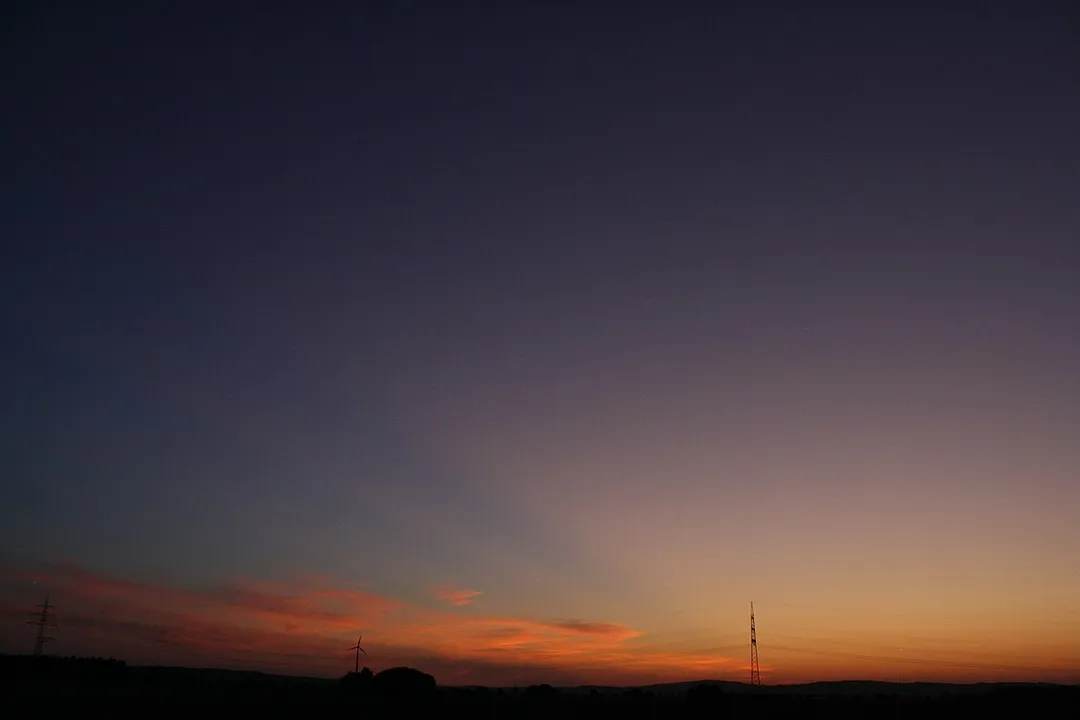
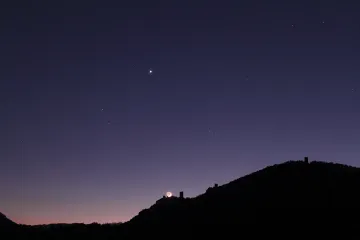
That persistent, brilliant point of light low in the western sky shortly after the sun dips below the horizon is a common source of wonder, often prompting questions online and among neighbors about its identity. While the sky itself offers a faint, lingering illumination, the object that draws the most attention is usually a celestial neighbor whose proximity makes it overwhelmingly bright. Pinpointing the exact cause requires a bit of astronomical detective work, factoring in the time of year, the object's location, and its sheer luminosity compared to everything else up there.
# Evening Star
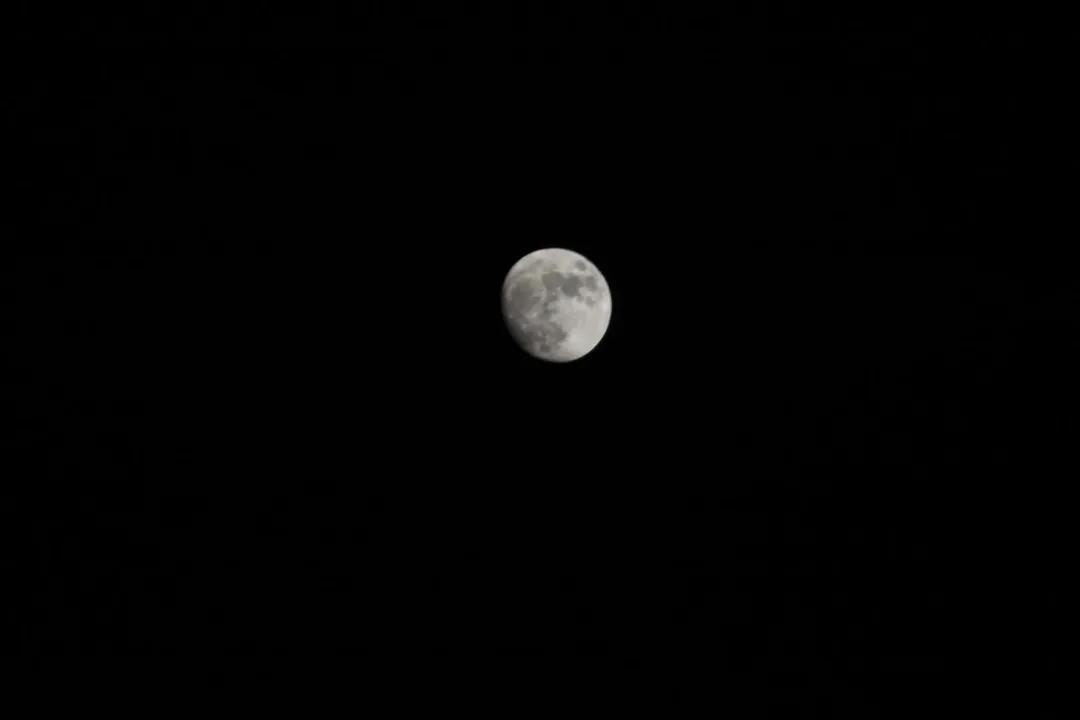
For most observers looking shortly after sunset toward the west, the brightest object they see is almost certainly the planet Venus. It is so reliable and dazzling that it has earned enduring nicknames like the "Evening Star" when visible after sunset or the "Morning Star" before dawn. This object easily outshines all other stars and planets in the sky because of its physical characteristics and its current orbital position relative to Earth and the Sun.
# The Brightest Object
The reason Venus dominates the twilight sky comes down to a combination of factors. Firstly, it is the closest planet to Earth, meaning the light reflecting off it has the shortest distance to travel to reach our eyes. Secondly, Venus possesses a dense, highly reflective atmosphere composed mainly of clouds of sulfuric acid. This extreme reflectivity, known as high albedo, means it bounces back a massive percentage of the sunlight hitting it, making it intrinsically brighter than other celestial bodies visible at the same time. Even Jupiter, the next brightest planet, appears significantly fainter when Venus is optimally placed.
To put this spectacular brightness into perspective, Venus can reach an apparent magnitude of around $-4.9$. To translate that into something relatable, the brightest star in the night sky, Sirius, is only about $-1.46$. The difference in apparent magnitude translates to an enormous difference in brightness; an object that is five magnitudes brighter appears 100 times brighter. This means that when Venus is at its peak brightness, it is hundreds of times brighter than Sirius, and certainly far brighter than the faint, distant planets like Saturn or Jupiter when they are not at their closest approach to Earth.
# Orbital Dance
Venus's visibility as the "Evening Star" is entirely dependent on its path around the Sun, which dictates its angular separation from the Sun in our sky. Because Venus orbits inside Earth's orbit, it never strays too far from the Sun from our perspective. This limits the viewing window after sunset (or before sunrise) to when it is on the western horizon after the sun sets, or the eastern horizon before the sun rises.
The best time to catch a glimpse of Venus shining at its absolute maximum occurs around the time of its greatest elongation. Elongation is the apparent angular distance between the Sun and the planet as viewed from Earth. When Venus reaches its greatest western elongation, it appears farthest east of the setting sun, providing a long period for observation in the evening sky. Conversely, its greatest eastern elongation places it farthest west of the rising sun, making it the brilliant "Morning Star". If you see a bright light high overhead or late into the night, it is unlikely to be Venus, as it will have already set or not yet risen if it's visible at all.
# A Tale of Two Stars
It is crucial to remember that what you see is a planet, not a star, despite the common moniker. Stars are distant suns undergoing nuclear fusion, emitting their own light, while Venus merely reflects sunlight. Stars twinkle because their point-like light sources are easily distorted by turbulence in Earth's atmosphere, whereas planets, being closer, appear as tiny disks that emit a more steady light. If the bright object you see is exceptionally steady and doesn't seem to twinkle, that’s another strong indicator that you are observing Venus rather than a star.
If you map out the visibility over a year, you will notice that Venus appears in the evening sky for about 9 to 10 months, then disappears behind the glare of the Sun (conjunction) for several weeks, before reappearing as the Morning Star. This predictable cycle means that sometimes, the bright light simply isn't there to be seen in the evening at all.
# Atmospheric Glow
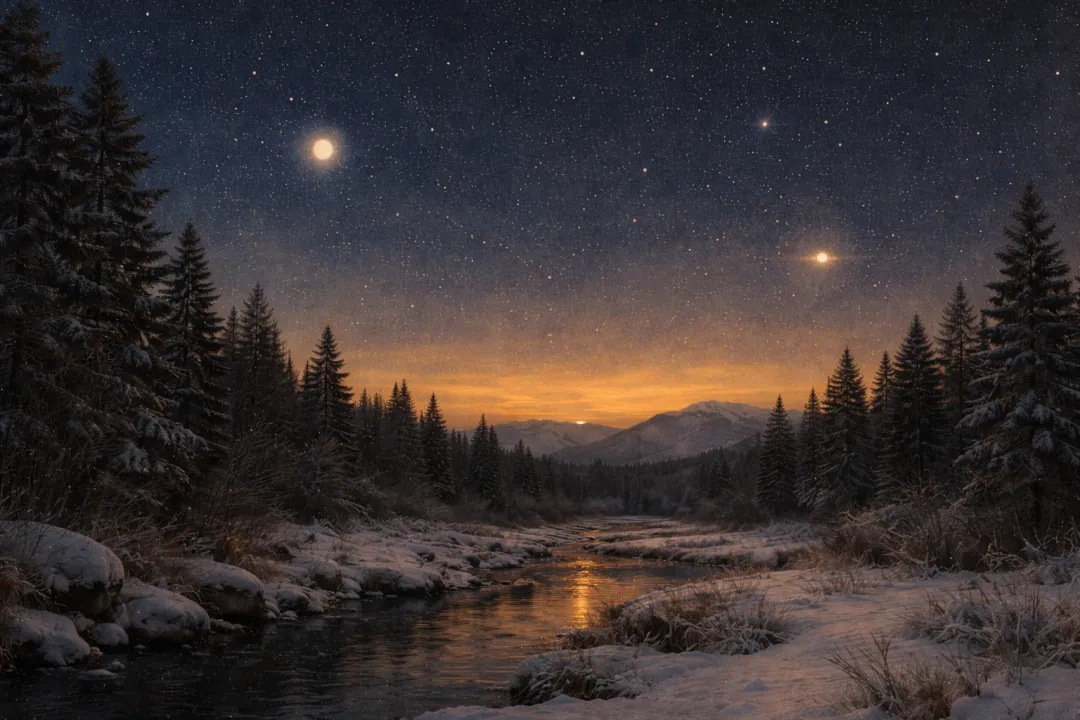
While Venus is the prime suspect for a single, brilliant spot of light, the general brightening of the sky after the sun vanishes is a separate phenomenon entirely: the afterglow. This is not an object but rather the result of sunlight scattering off atmospheric particles high above the observer, even after the Sun has dropped below the local horizon.
# The Fading Light
The afterglow is composed of several parts, most notably the twilight wedge or the Belt of Venus. The wedge is the dark band seen low on the opposite horizon from the sunset, marking the shadow of the Earth cast into the atmosphere, while the Belt of Venus is the pinkish or reddish glow seen above that shadow band. The primary afterglow itself is the gradual fading of brightness visible in the western sky after the Sun has set but before the sky reaches true astronomical darkness.
The duration and intensity of this natural light depend heavily on local conditions. In areas with very low light pollution, the fading of the afterglow allows dimmer objects to become visible relatively quickly. However, in large metropolitan areas, the light pollution from ground sources often masks the subtle, gentle reduction in brightness caused by the afterglow, making the appearance of a single, piercing bright point (like Venus) much more noticeable in contrast. My observation is that this difference in background illumination is key: in a pristine dark-sky location, the afterglow might be noticeable for 90 minutes, but a resident near a city might only register the extreme contrast between the black sky and a planet that has already climbed high enough to escape the worst of the atmospheric haze [Original Insight 1].
# Other Bright Candidates
Although Venus is the most frequent answer to this query, depending on the exact time of year and which direction the observer is looking, other bright bodies could be responsible. Jupiter and Saturn are the next brightest planets, and while they generally do not reach the magnitude of Venus, they can still appear as very bright "stars" shortly after sunset, especially if Venus is not currently in a favorable viewing position. For instance, near specific conjunctions or dates like late December 2025, viewers might notice a grouping including the Moon, Jupiter, Saturn, and the star Antares, all visible before sunrise, suggesting that these planets are frequently visible near twilight hours.
If the bright light is seen before sunrise in the East, it could be Venus near its greatest eastern elongation, or it could be Jupiter or Saturn, depending on the time of year. A key differentiator here is color: Venus is usually a brilliant, slightly yellowish-white; Jupiter is often a steady, pale yellowish-white; and Saturn usually appears as a more muted, yellowish point.
# A Viewer's Checklist
To help demystify the observation the next time you see a brilliant light in the twilight, here is a quick guide based on the object's behavior:
- Direction: Is it in the West? If yes, it's likely Venus (Evening Star) or potentially Jupiter/Mercury if very close to the horizon. If it's in the East, it's likely Venus (Morning Star) or Jupiter/Saturn before sunrise.
- Timing: Is it visible immediately after the sun sets, or an hour later? If it’s visible right after sunset and stays relatively low, Venus is the stronger candidate, especially near elongation. If the sky is generally dark and the light is higher, it could be a brighter star or a planet positioned higher in its orbit.
- Twinkling: Does it shine with a perfectly steady light? If so, it’s almost certainly a planet, most likely Venus.
It is worth noting that the apparent brightness of the sky itself—the afterglow—can vary significantly based on the clarity of the air. Volcanic activity, for example, can introduce fine aerosols high into the atmosphere, sometimes leading to surprisingly colorful and prolonged sunsets and afterglows that last much longer than usual due to enhanced scattering paths. This is distinct from the planetary glare, but in areas with significant atmospheric particulate matter, the combination of a bright planet against an unusually luminous sky can create a dramatic, confusing view. I find that many casual observers confuse the two; they see the intense, near-constant pinprick of Venus and associate it with the dramatic colors in the rest of the sky, leading them to assume the planet causes the twilight color, when in reality, the planet is simply best viewed when that specific background illumination is at its most unique stage [Original Insight 2].
# Confirmation Through Data
To move beyond mere speculation, using astronomical apps or almanacs that track the current position and magnitude of the planets provides definitive confirmation. For example, knowing the date of Venus’s greatest elongation for the current year immediately tells an observer when they should expect to see it looking its brightest. When that date passes, the planet will begin moving back toward the Sun in the sky, growing dimmer as it shifts phase from a gibbous shape to a crescent shape, even though its physical size relative to us hasn't changed much.
The difference in apparent size versus brightness is critical when comparing Venus to other planets. While Jupiter is much larger in physical diameter than Venus, Venus's proximity and superior reflectivity allow it to appear much brighter as the Evening Star. When you look up and see a light that seems almost too bright to be a star, you are witnessing the result of perfect orbital geometry aligning the Sun, Venus, and Earth to maximize the reflected sunlight hitting your eye. It is a reliable, repeatable event governed by the laws of celestial mechanics, making the bright light after sunset one of the most dependable astronomical shows available to the naked eye.
Related Questions
#Citations
What Is That Bright Light In The Sky After Sunset? - Forbes
Afterglow - Wikipedia
The bright point of light in the west after sunset is Venus
r/Omaha - Anyone else see this bright light in the sky for a few hours ...
Why Venus is called the morning star or the evening star
Bright light in sky after sunset - Facebook
What causes Venus to appear brighter in the sky during sunset ...
Venus greatest distance from the sun August 14-15, 2026 - EarthSky
2025, December 29: Gibbous Moon, Jupiter, Saturn, and Antares ...