Why don't stars fall from the sky?
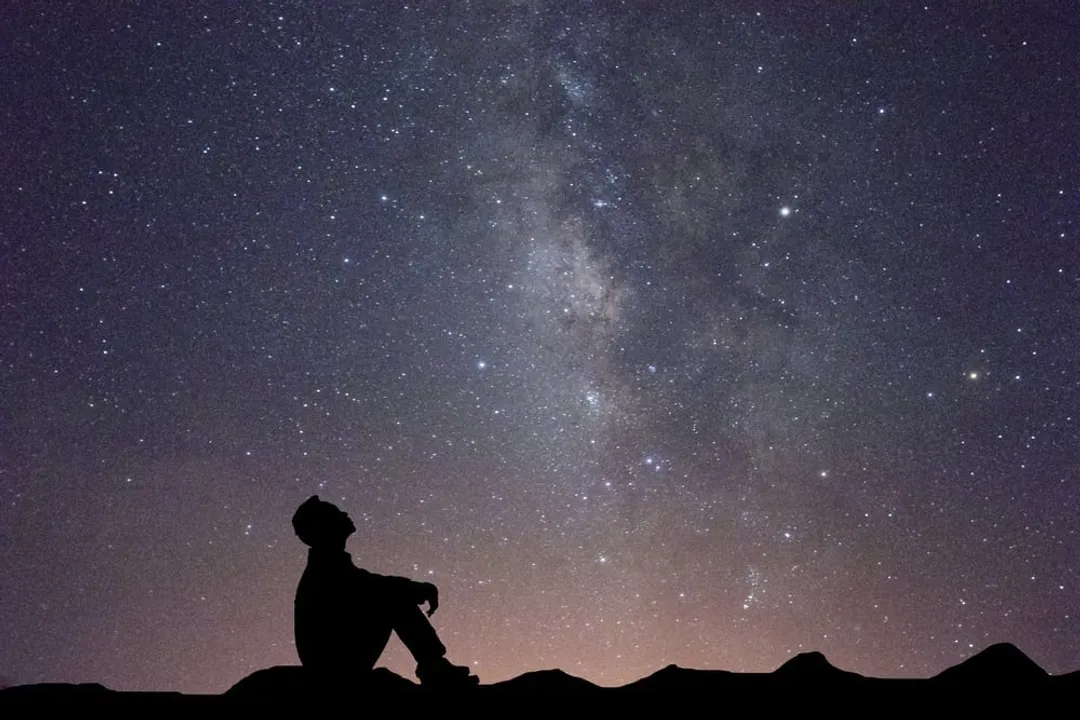
The night sky offers a stunning display of distant suns, seemingly pinned in place against a dark backdrop, which naturally leads to the question of why they never detach and fall toward us. The simple answer involves an overwhelming sense of scale and the fundamental laws of physics governing motion throughout the cosmos. [1][6] These celestial bodies are not objects suspended by invisible strings waiting for tension to break; they are massive, independent stars located unimaginably far away. [3][6]
# Immense Spacing
The most immediate barrier preventing any star from "falling" onto Earth is the sheer gulf of distance separating us from them. [1] When we observe a star, we are looking across distances measured in light-years, not miles or kilometers. [6] To put this into perspective, if the nearest star system, Alpha Centauri, were shrunk down so that our Sun was the size of a standard doorway, the nearest other doorway representing Alpha Centauri would still be several thousand miles away. [1] Given this vast emptiness, the gravitational influence exerted by any single, distant star—even if it were somehow pointed directly at us—is utterly negligible compared to the gravity from our own Sun and the Earth itself. [1][6]
Furthermore, the light we see left that star years, decades, or even millennia ago, meaning the object we are observing is not where it is right now, but where it was when the light began its voyage. [1] The local neighborhood of space, the Sun, and the Earth are all moving, but because the stars are so remote, their movement relative to us is nearly imperceptible on a human timescale. [3] Even the Sun, which dominates our solar system, is essentially a fixed point relative to the more distant stars in terms of stellar collision risk over human lifespans. [5]
# Misleading Terminology
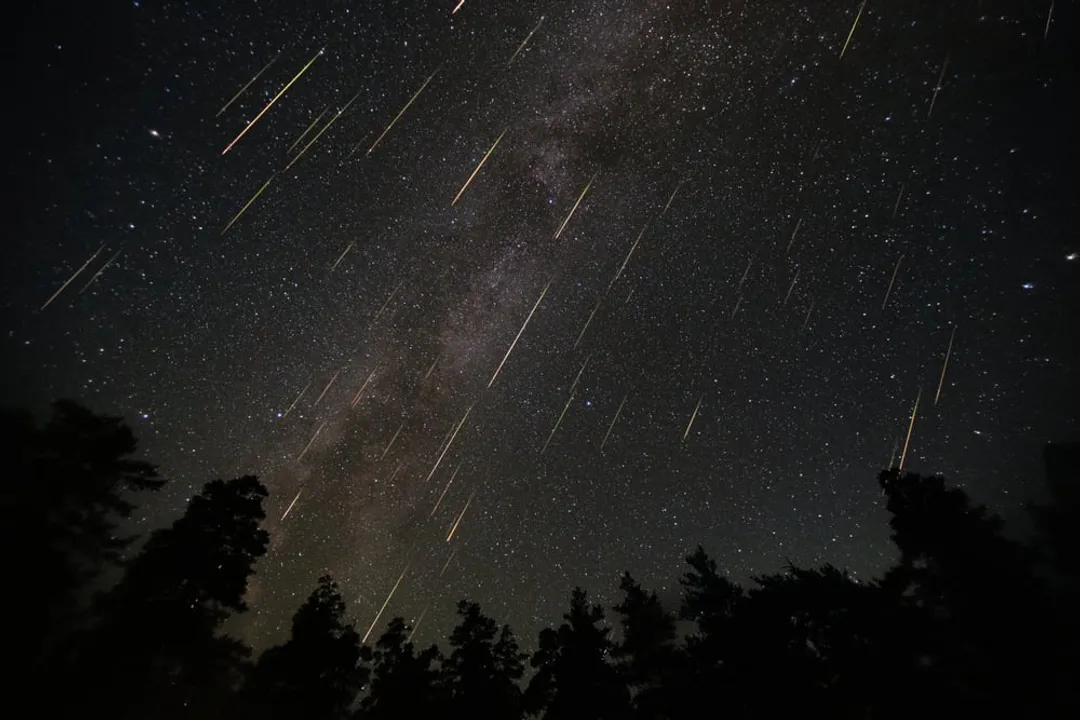
A significant part of the confusion stems from a common linguistic shortcut: referring to a "falling star". [9] What people commonly see streaking across the night sky is not one of the fixed, distant suns, but a much smaller, temporary phenomenon. [5][9] These bright, fast streaks are properly called meteors, or commonly known as shooting stars. [9]
Meteors are tiny fragments of rock or dust, perhaps no larger than a grain of sand or a pebble, that originated from asteroids or comets. [9] When Earth’s orbit intersects a stream of this space debris, these small objects enter our atmosphere at incredible speeds, sometimes exceeding 45 miles per second. [9] The friction generated by slamming into the atmospheric gases causes them to heat up and glow brightly before they vaporize completely. [9][5] This process looks like something falling from the sky, but it is an atmospheric event happening within about 50 to 75 miles of the planet's surface, entirely separate from the distant, true stars. [9] They are effectively falling into our atmosphere, which is why they appear to descend and then vanish. [5]
# Galactic Orbits
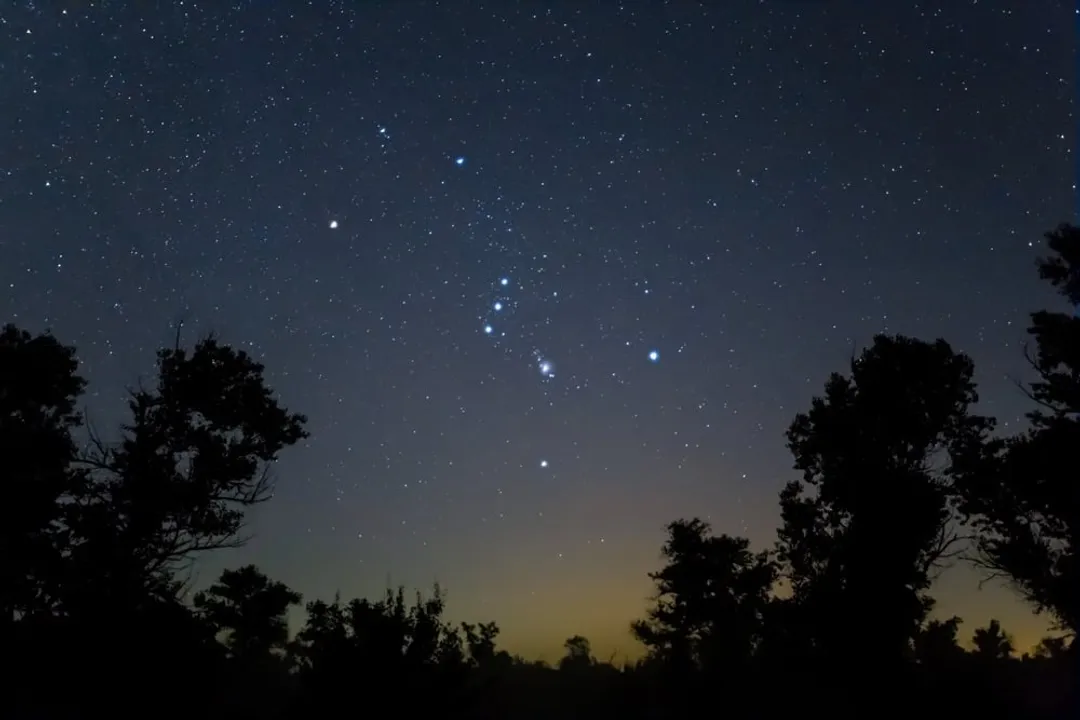
If we consider the stars within our own Milky Way galaxy, they are certainly not fixed in space either; they are all in motion. [3] However, this motion is governed by the massive gravitational pull exerted by the collective mass of the galaxy, centered on the supermassive black hole at the galactic core. [6] Every star, including our Sun, is constantly orbiting this galactic center. [6]
This situation is analogous to the relationship between the Earth and the Sun. [2] The Sun's gravity keeps the Earth—and all the other planets—in a stable, curved path known as an orbit. [2] If the Earth were to suddenly stop moving forward, gravity would cause it to fall directly into the Sun, but because the Earth has a tangential velocity matching the pull of gravity, it maintains a consistent distance. [2] Stars in a galaxy behave similarly; their sideways motion (orbital velocity) perfectly balances the inward pull of the galaxy's mass, keeping them in established paths around the center. [6] Therefore, a star is far more likely to orbit the galactic center for billions of years than it is to randomly "fall" toward another star system, let alone fall through the vast interstellar void directly toward Earth. [6]
# Apparent Fixity
While the stars do possess proper motion—actual movement across the celestial sphere relative to our Sun—this motion is exceptionally slow from our viewpoint. [3] Because they are so far away, that slow physical shift translates to an apparent movement too small for the unaided eye to detect over the span of a human lifetime. [3] This near-immobility across millennia is precisely why ancient civilizations were able to create consistent celestial maps and use stars for navigation. [3] Imagine charting a course across an ocean where the landmarks appeared to shift visibly every night; navigation would be nearly impossible. The stability of the night sky provided a dependable, if illusory, coordinate system that remained true for centuries, allowing cultures to develop complex astronomical tools and calendars based on constellations that seemed utterly permanent. [3]
# Visualizing Descent
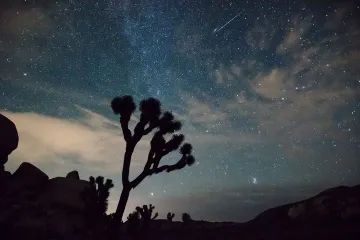
When someone observes a meteor, the perception of a downward trajectory is also heavily influenced by geometry and perspective. [5][8] These fragments typically approach Earth from space, which is effectively "above" the observer in the sky. [5] As the object enters the atmosphere and burns up, the line of sight traces an arc that appears to move down toward the horizon. [5]
It is rare, if not impossible, to perceive a true star moving "up" away from the horizon because the objects we mistake for falling stars are almost always entering our atmosphere from above or obliquely. [8] If we could see an object leaving the atmosphere and accelerating away from Earth into deep space, we might perceive an upward motion, but meteors are decelerating due to drag and burning up rather than accelerating away from our planet's influence. [8] They are falling in, not flying out.
In summary, the stars do not fall because they are too far away to register as a threat on a human scale, they are gravitationally bound in galactic orbits that maintain their spacing, and the celestial phenomena that do fall are merely small bits of cosmic grit burning up harmlessly in our upper atmosphere. [1][5][6]
#Videos
Objects Fall from Space Where There Is No Gravity, Here's Why
Related Questions
#Citations
Why don't stars fall on Earth? - Quora
ELI5: Why do planets orbit the stars and not get dragged into them?
Why are all the stars fixed in space? - West Texas A&M University
Objects Fall from Space Where There Is No Gravity, Here's Why
Why can falling stars only be seen moving down towards horizon not ...
Why don't planets, stars, and everything else just fall and keep ...
Why don't stars fall up? - Straight Dope Message Board
Is A Falling Star Really A Star? - ScienceABC