What were stars before they were stars?
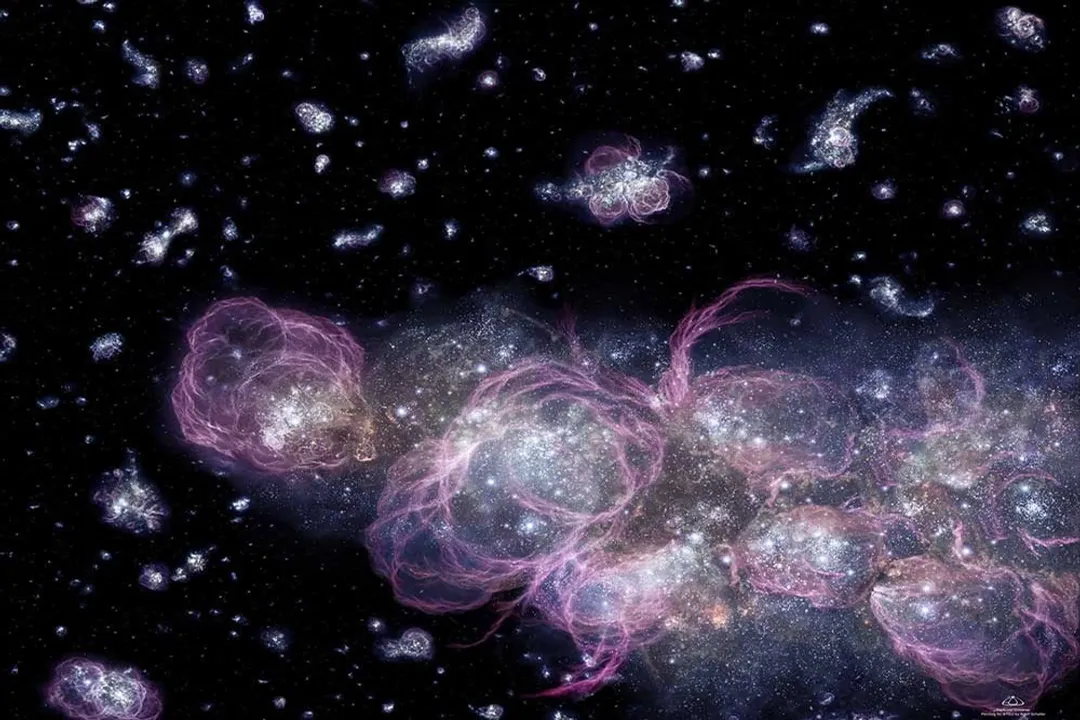
The material that eventually ignited to become the universe’s first stars existed in a state profoundly different from the swirling nebulae we observe today. Before the shining beacons of the modern era—the stars that light our night sky, rich in elements like carbon, oxygen, and iron—there were simply vast, cold, dark clouds of pristine gas. This early cosmic environment, existing mere hundreds of millions of years after the Big Bang, was almost entirely composed of the lightest elements: roughly seventy-five percent hydrogen and twenty-five percent helium, with trace amounts of lithium. [1][2] These clouds, which we now refer to as protostars or, more accurately, the progenitors of Population III stars, were the raw, unrefined ingredients of the cosmos. [3]
# Primordial Cloud State
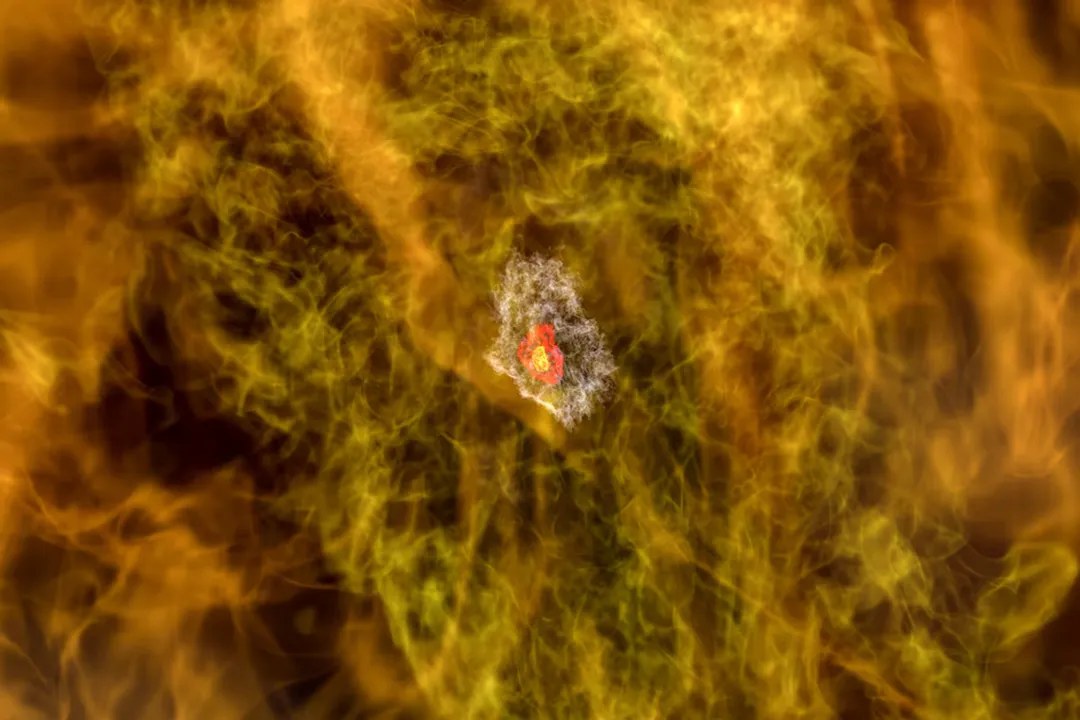
The universe, initially smooth and extremely hot following its birth, had to cool and aggregate matter before any structure could form. [7] Gravity was the sole architect at this stage. Massive clumps of this primordial gas, known as halos, began to form within the dark matter scaffolding of the early universe. [2] These nascent structures were immense, often containing the mass equivalent of many modern solar systems, yet they were incredibly diffuse and dark. [9]
The process hinges on the slow, relentless pull of gravity overcoming the initial pressure within the gas. In a modern stellar nursery, the presence of heavier elements—what astronomers call "metals"—makes a huge difference in the cooling process. Dust grains and complex molecules efficiently radiate away thermal energy, allowing the gas cloud to fragment into many smaller, manageable clumps that eventually form stars like our Sun. [9] However, in the universe's infancy, this cooling mechanism was absent. [3] Without dust, the gas could not shed heat effectively, meaning the entire giant cloud had to contract together as one unit, leading to a fundamentally different outcome for the resulting stars. [3][9]
# Gravitational Infall
The mechanism driving the transformation from inert gas to stellar core is gravitational infall, a process governed by the Jeans instability—the threshold where self-gravity wins over internal gas pressure and turbulence. [6] For these first-generation objects, the conditions meant that the required mass for collapse was extremely high because the gas remained relatively hot for much longer than in metal-rich environments. [9]
Imagine a cloud spanning several light-years, composed only of the simplest atoms. As gravity slowly compresses this mass, the center begins to heat up, but without the efficient radiation paths available today, the entire core must reach a critical density before fusion can ignite. This inability to fragment meant that the resulting "star" inherited a much larger share of the initial cloud's mass. Instead of forming multiple low-mass stars, the massive initial cores were destined to become giants. [3] While the exact physics detailing the final fragmentation of these massive first stars is still an area of active research, the consensus points toward them forming from single, very large collapsing gaseous entities. [9]
# Massive Progenitors
What emerged from this protracted, high-mass collapse were the Population III stars. [1] These were not gentle, yellow dwarfs like the Sun; they were behemoths. Current theoretical models suggest that the first stars were likely hundreds of times the mass of our Sun, perhaps exceeding a thousand solar masses in the most extreme scenarios. [1]
Their existence was dramatic and brief. A star's lifespan is inversely proportional to its mass: the more massive it is, the faster it burns its nuclear fuel. A star perhaps 300 times the Sun's mass would consume its core hydrogen in only a few million years, a mere cosmic blink compared to the Sun's expected 10-billion-year tenure. [1] This spectacular, brief life was essential, however, because these massive stars were the universe's first element factories. [2] They fused the primordial hydrogen and helium into the first "metals"—carbon, oxygen, neon, and so on—which were then violently ejected into space when they died in titanic explosions, seeding the next generation of cosmic structures. [1]
Consider the lifespan difference: if the Sun represents a stable, long-term stellar residence, a Population III star was a fleeting, hyper-energetic bonfire. The Sun will enrich the galaxy over billions of years; the first stars performed the same cosmic alchemy in a fraction of the time, dramatically accelerating the chemical enrichment of the early cosmos. [1]
# Formation Environment Contrast
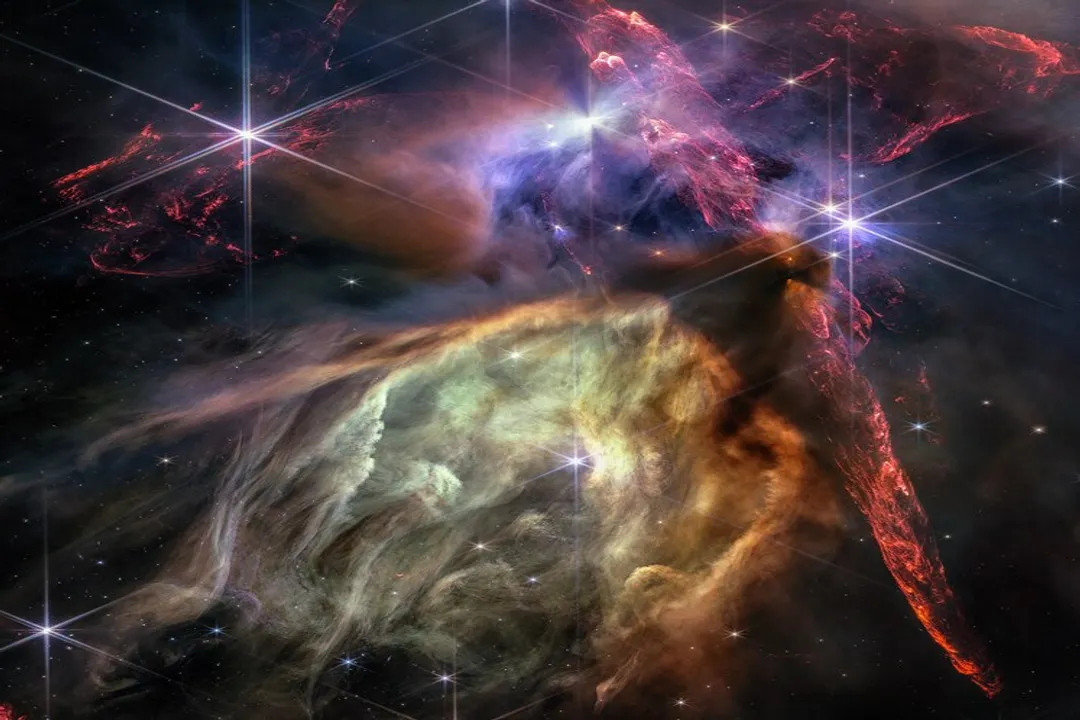
The environment in which the first stars formed also differed structurally from today's stellar nurseries. Modern star formation regions, like the Orion Nebula, are chemically complex, containing silicates, ices, and hydrocarbons that help shield and cool the collapsing pockets of gas. [6] The early universe lacked this chemical complexity.
An interesting point to consider regarding these early conditions is the potential role of magnetic fields. In contemporary star-forming regions, magnetic fields can exert significant pressure, resisting gravitational collapse and promoting fragmentation into smaller objects. [9] In the very early universe, the gas was likely much less magnetized, as the gas itself was the primary source of any field, and there were no previous generations of stars or supernovae to generate strong, widespread magnetic structures. This relative lack of magnetic resistance might have allowed gravity to dominate more completely and quickly on larger scales, further pushing the mass limit upward for the first collapsing cores. [9]
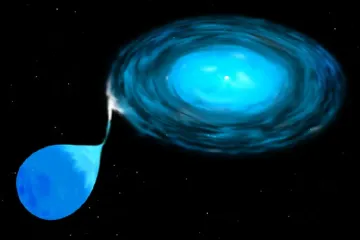
# Stellar Birth Sequence
It is important to place these objects correctly in the cosmic timeline, as the question of whether galaxies or stars formed first has a clear answer based on our current models. Stars, in their initial Population III form, came first. [8] They were the building blocks. These initial, massive stars formed within pockets of primordial gas that were gravitationally collapsing. [7] Only after these massive stars lived and died, enriching the surrounding interstellar medium with heavier elements, could the second generation of stars (Population II, and eventually Population I, like our Sun) begin to form. [1][7]
These explosions also provided the necessary internal pressure and shockwaves to help aggregate the gas into the first small proto-galaxies. [2] The galaxy, as a recognizable structure, is essentially the collective result of many generations of stars living, dying, and the resulting enriched gas clouds collapsing and merging over time. [7][8] Therefore, the pre-star state—the massive, pristine cloud—is the true beginning of structure formation, preceding the first gravitationally bound galaxies.
# Detecting Ancient Light
Because these first stars lived so fast and were so massive, none of the original Population III stars are thought to exist today; they all perished long ago. [1] Detecting them directly is impossible. Instead, astronomers turn to instruments like the James Webb Space Telescope (JWST) to look for their aftermath. [1]
The goal is not to see the star itself, but rather the first small galaxies that formed from the enriched debris of the first stars. [2][5] By observing extremely distant, faint galaxies whose light has traveled for over 13 billion years, scientists are looking for chemical signatures or light profiles indicative of a stellar population born from gas containing virtually no metals. [1] The light from these first stellar objects is incredibly redshifted, pushing their ultraviolet radiation deep into the infrared spectrum, which is precisely what Webb was designed to capture. [1][5]
The information gathered from these faint, ancient beacons allows scientists to reverse-engineer the conditions of the pre-star state—the temperature, density, and initial elemental makeup of the gas clouds from which the very first cosmic lights emerged. [7] What were stars before they were stars? They were gravity taking hold of the universe's simplest, coldest components, destined for a quick, hot life that would forge the building blocks for everything that followed.
Related Questions
#Citations
What Were the First Stars Like? - NASA Science
First Stars and Galaxies
This is what the first stars looked like as they were being born
What were the theories about the nature of stars before we ... - Reddit
How did the first stars form in the universe? - Facebook
Star Formation | Center for Astrophysics | Harvard & Smithsonian
When and how did the first stars and galaxies form? - Quora
Which came first: Galaxies <=> Stars <=> Planets?
[PDF] The First Stars in the Universe - Yale Astronomy