How does a star look closer?
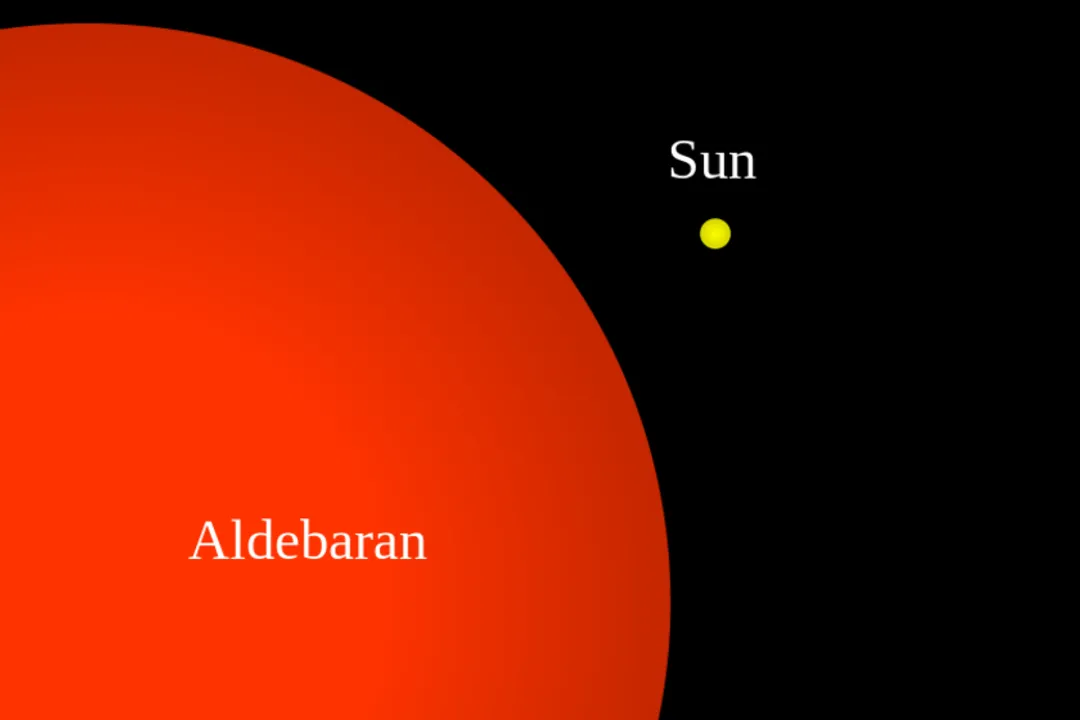
The night sky presents an illusion of order, where countless distant suns appear as mere pinpricks of light scattered across an inky canvas. [5] When we look up at these celestial bodies, the immediate impression is one of tiny, relatively uniform points, maybe blinking differently or boasting varied colors, but always maintaining that signature lack of discernible shape. [3] This perception, however, is profoundly shaped by the sheer, staggering distances separating us from these massive objects. [2] Stars are not truly points; they are immense, incandescent spheres of plasma, many times larger than our own Sun, and the reason they appear as they do has everything to do with scale and our intervening atmosphere. [2][4]
# Distant Points
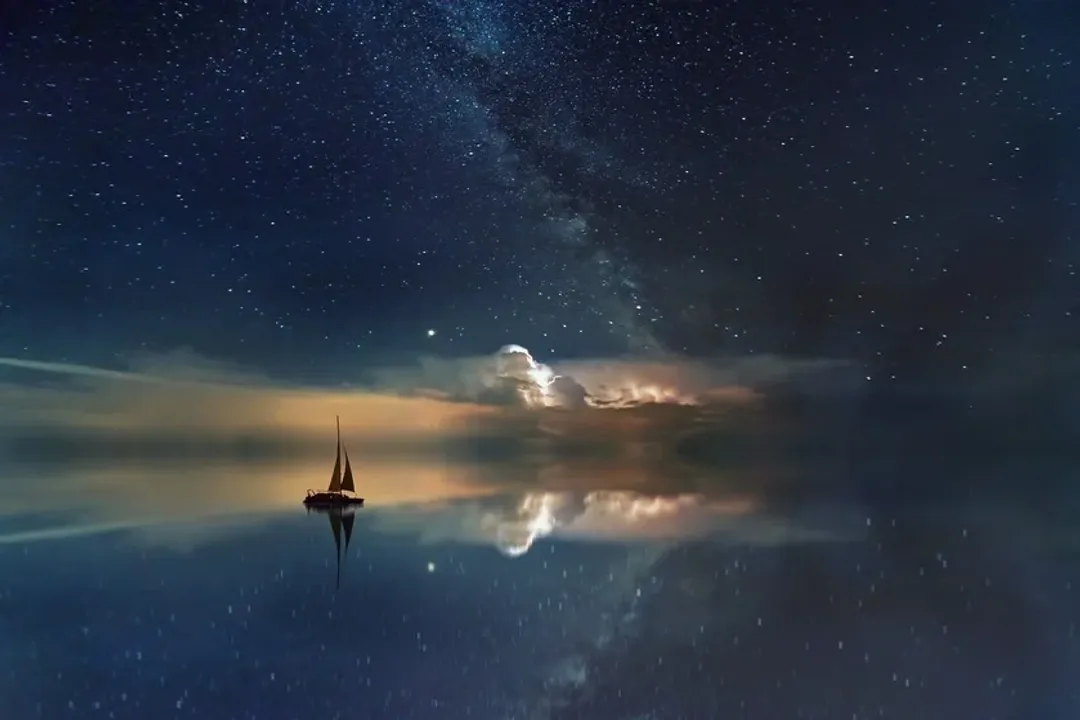
The fundamental reason a star looks like a tiny point source, even to the most powerful telescopes, is the immense gap between it and Earth. [3][7] Consider the Sun; it is a star, and it appears as a massive disk because it is the closest one to us, situated about 93 million miles away. [5] Every other star we see is light-years away, meaning the light we observe has traveled for years, sometimes centuries, to reach our eyes. [2]
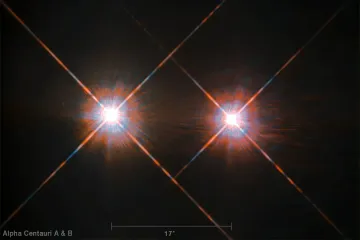
For context, Alpha Centauri A, the closest star system to our own, is over 4.37 light-years away. [4] Because of this vast separation, the angle subtended by even the largest stars becomes vanishingly small when viewed from our vantage point. [3] Even if you were to travel to the orbit of Neptune, the Sun would still appear as a blindingly bright dot, not a disk, because its angular size would remain minuscule—it would just be dimmer. [1] This is true for all stars; they are simply too far away for us to resolve their physical shape from Earth. [2]
Imagine standing at one end of a football field looking at a standard incandescent light bulb on the other end. [5] From that distance, the bulb appears as a simple point of light, even though you know it is a glass sphere housing a filament. The stars are like that light bulb, but instead of being a hundred yards away, they are trillions of miles distant. [4]
# Atmospheric Effects
The twinkling, or scintillation, that so many observers notice is another key feature of a star’s appearance from Earth, and it has absolutely nothing to do with the star itself. [2] This shimmering effect is entirely an artifact of Earth’s atmosphere. [7]
The light from a star travels across the vacuum of space unimpeded, remaining a perfectly coherent beam. [2] However, once that beam enters our atmosphere, it encounters layers of air with different temperatures and densities. These turbulent pockets act like countless tiny, shifting lenses, bending and refracting the star's light slightly in different directions many times per second. [3] This constant, rapid bending causes the star's apparent position and brightness to fluctuate rapidly—that’s the twinkle. [2]
A simple way to appreciate this is to compare it to looking at a distant object, perhaps a traffic light across a hot parking lot on a summer day. [5] You often see the light source wavering or shimmering because the heat rising from the pavement creates localized turbulence in the air, distorting the light path slightly before it reaches your eyes. [2] Stars are experiencing a magnified, night-sky version of this same phenomenon, except the turbulence is due to winds, temperature changes, and the general churning of the air mass between you and space. [3] Stars closer to the horizon are viewed through more of this turbulent atmosphere, which is why they often twinkle more noticeably than stars directly overhead. [5] This is why professional observatories are often built on high mountains—to get above the worst of the atmospheric distortion, allowing for clearer, steadier views of celestial objects. [7]
# Actual Structure
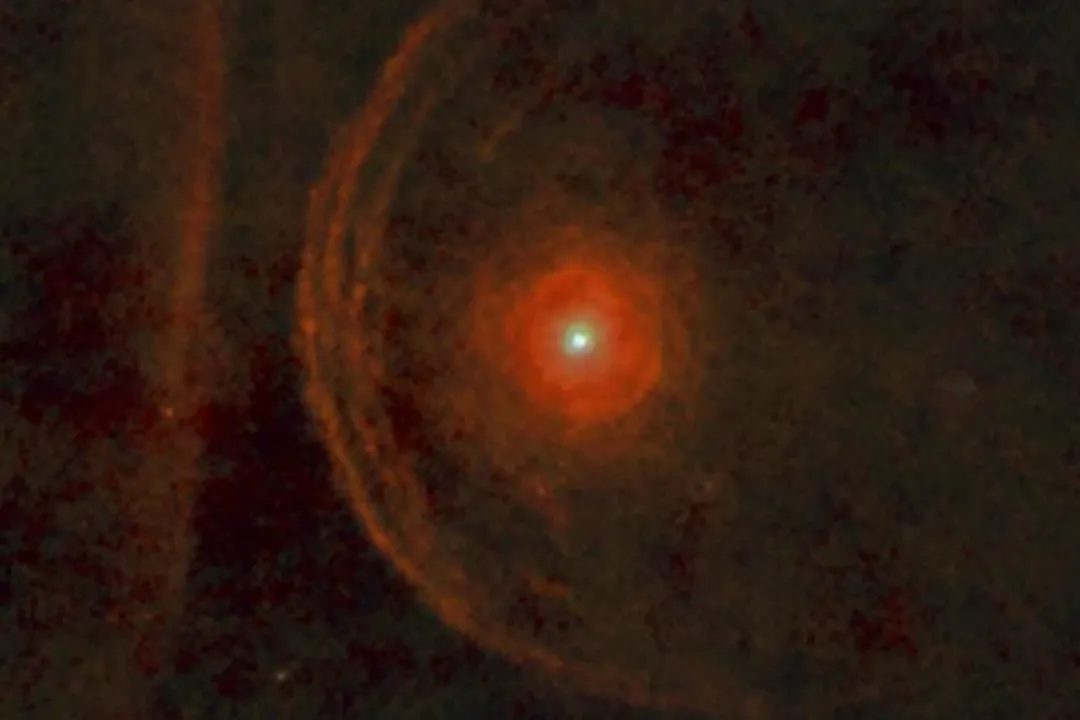
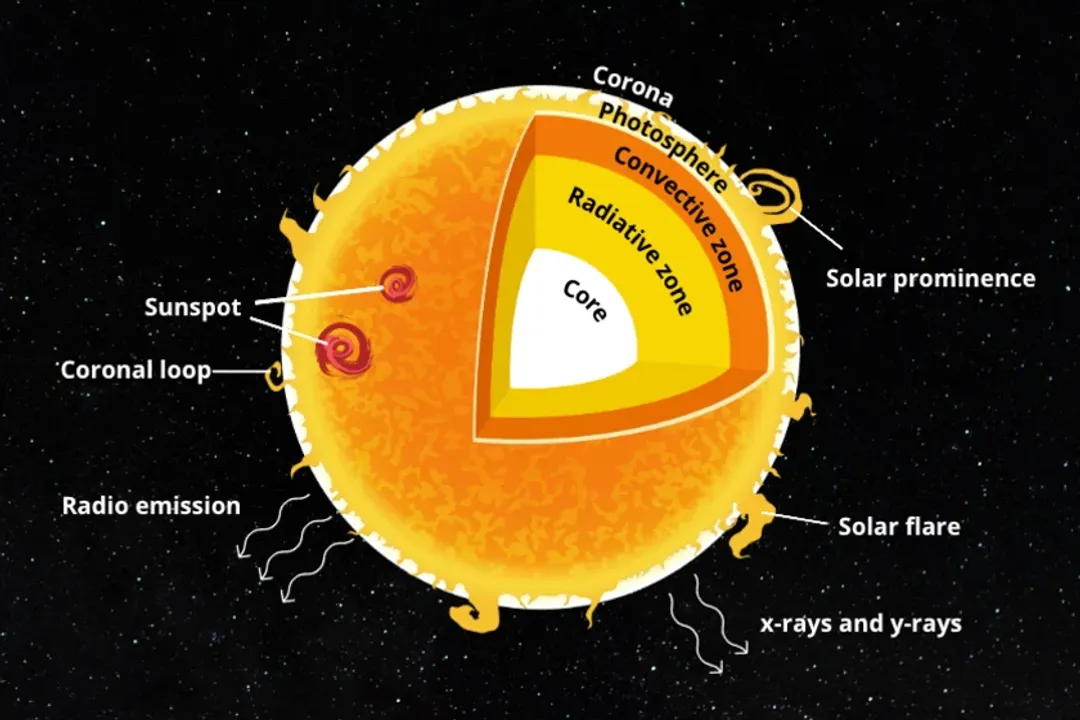
If we could instantly transport ourselves next to a star—say, our own Sun—the view would be dramatically different from the pinprick we see in the sky. [2] Up close, a star is not a solid object but a massive, self-luminous ball of superheated gas, primarily hydrogen and helium, held together by its own immense gravity. [4][5]
# No True Surface
One of the most surprising facts about looking closely at a star is the lack of a definitive "surface" in the way we understand one for Earth or the Moon. [4] Because a star is a ball of gas, it doesn't have a hard shell you could stand on. Instead, it has a gradient of density and temperature. [5] As you approach, the temperature and pressure would increase dramatically until the materials became supercritical plasma. [4] The apparent "surface" we perceive is really just the layer where the gas becomes opaque; this is the photosphere. [4] Before that layer, it’s just thinner, hotter gas blending into the main body of the star. [5]
The view would be one of blinding, continuous light radiating outwards in every direction. [4] From a safe distance just outside the Sun's photosphere, it would fill the entire field of view, a gigantic, overwhelming sphere of incandescent matter. [2]
# Colors and Temperature
While the majority of stars appear white to the naked eye from Earth, this is partly because our eyes are not sensitive enough in low light to distinguish the subtle colors, and partly because the atmosphere diffuses the light. [2] Up close, a star's color is a direct indicator of its surface temperature. [4] Cooler stars glow with a reddish hue, while hotter stars appear brilliant blue or white. [2][4]
For instance, our Sun, which has a surface temperature around 5,780 Kelvin, appears distinctly yellow-white. [4] A red dwarf, a cooler star, would look distinctly orange or red up close. [4] Conversely, a massive, hot star like Rigel in Orion would present an intensely brilliant, almost painful blue-white spectacle. [2]
To put this difference into perspective, consider this conceptual comparison based on stellar classification:
| Star Type (Example) | Approximate Surface Temp (K) | Apparent Color Up Close | Earth Analogy (Heat/Light) |
|---|---|---|---|
| Red Dwarf (e.g., Proxima Centauri) | 2,500 – 3,700 | Deep Orange to Red | A very hot kiln or forge |
| Sun-like Star (e.g., Sun) | 5,000 – 6,000 | Yellow-White | Intense welder’s arc (controlled) |
| Blue Giant (e.g., Sirius A) | 10,000 – 50,000+ | Brilliant Blue-White | The hottest part of an oxy-acetylene torch |
# Internal Dynamics
If one could peer into the star, the spectacle would be one of continuous, violent activity. [4] The interior of a star is where nuclear fusion occurs, converting hydrogen into helium in its core. [4] This process releases the enormous amounts of energy that make the star shine. [1] The light you see at the photosphere is the end product of photons bouncing and scattering their way out from the core over hundreds of thousands of years. [4] Up close, you wouldn't see a calm surface; you would be observing a superheated, churning fluid undergoing extreme pressure gradients, with convection cells driving vast currents of plasma to the surface. [5]
# Stellar Neighbors
One common misconception, perhaps stemming from the way we draw constellations, is that stars in the same constellation are physically near each other. [7] In reality, constellations are simply patterns we project onto the sky based on what we see from our specific, limited vantage point on Earth. [7]
When you look at two stars that appear side-by-side in the Big Dipper, one might be a few dozen light-years away, while the other could be hundreds or even thousands of light-years beyond it. [2] Getting "closer" to a star means crossing the vacuum between solar systems, not just moving from one apparent neighbor to the next. [3]
If you were to travel to the location of one star in a visible constellation, the entire sky map would rearrange itself radically. [7] The familiar shapes would dissolve, and the star you just left would now appear as a nearby, individual point of light, perhaps exhibiting a noticeable disk if you were extremely close, while your old Sun would become just another faint, relatively uniform star in the new celestial panorama. [2]
This realization highlights an important aspect of stellar viewing: the nearest stars, like Proxima Centauri, are still vastly distant and appear as faint, dim dots through standard telescopes, requiring long exposures to capture their true (reddish) color, precisely because they are cool compared to the stars that dominate the winter sky. [2] Our nearest neighbor is significantly dimmer than even the faintest stars visible to the unaided eye from a dark site. [5]
# Viewing Tools
Since getting physically close is impossible, our closest look comes via specialized instruments that overcome the limitations of distance and atmosphere. [2]
# Telescopic Resolution
Telescopes help in two main ways: light-gathering ability and angular resolution. [2]
- Light Gathering: A larger telescope mirror or lens collects far more photons from a faint, distant star than the human eye can, allowing us to perceive its faint light and, over long exposures, capture its color more accurately. [2][5]
- Resolution: While even our best Earth-based telescopes struggle to resolve the shape of any star other than the Sun, advanced techniques like adaptive optics actively measure and correct for the atmospheric distortion (the twinkling) in real time. [2] This process sharpens the image significantly, making the star appear closer to its theoretical point-like limit, reducing the blurring effect. [7] However, for seeing actual disks, we rely on space-based instruments like the Hubble Space Telescope or the James Webb Space Telescope, which operate above the atmospheric interference entirely. [2]
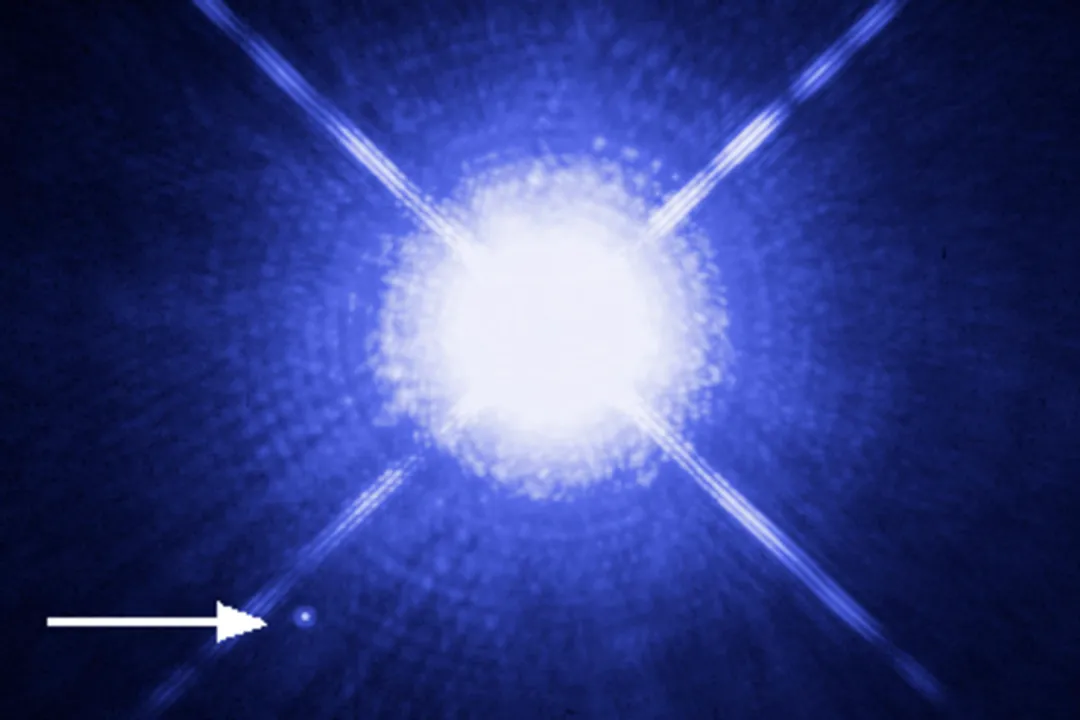
It is worth noting that when astronomers manage to resolve a star into a small disk, they are often looking at a binary or multiple star system, where two stars orbit each other closely, rather than a single star's physical extent. [4] Seeing the true size of a single, isolated star still requires sophisticated modeling or extremely large interferometers, which combine the light from multiple telescopes to simulate an aperture the size of the distance between them. [4]
The transition from the familiar twinkling dot to the imagined reality of a giant plasma sphere is a direct measure of how much physics intervenes between us and the cosmos. The fact that the light takes so long to reach us means we are always viewing the star as it was, not as it is. [1] Every time you look up, you are peering into the past, and the closer you try to mentally project yourself, the more you have to contend with the physics of light, gravity, and atmospheric scattering that shapes our terrestrial experience of the universe. [3] Getting "closer" to a star means mentally traversing light-years of empty space to replace the atmospheric distortion with the overwhelming, blinding reality of a nuclear furnace. [4]
#Videos
What Does A Star Look Like Up Close In Space? - Physics Frontier
Related Questions
#Citations
What Does A Star Look Like Up Close In Space? - Physics Frontier
What do stars look like up close? | BBC Sky at Night Magazine
When you look up at the sky and some stars seem clearly closer ...
What Does a Star Look Like Up Close? - Label Stars
What Do Stars Look Like Up Close? - Little Passports
What Do Stars Look Like Up Close? - TikTok
Why do stars look very near to us? - Quora
Understanding the Optical Illusion of Star Clusters and Vast ...
What do stars actually look like from up close? - Physics Forums