What does the closest star look like?
The star closest to our Sun, the one that holds the title of our nearest stellar neighbor, is Proxima Centauri. [5][9] If you're picturing a brilliant, dazzling beacon in the night sky—perhaps second only to our own Sun—you might be surprised by what the reality entails. At a distance of roughly 4.24 light-years away, [4] Proxima Centauri is incredibly close in astronomical terms, yet it appears deceptively faint to us here on Earth. [5] It is not visible to the unaided eye; seeing it requires optical aid, such as a telescope or strong binoculars. [5]
# Nearest Star
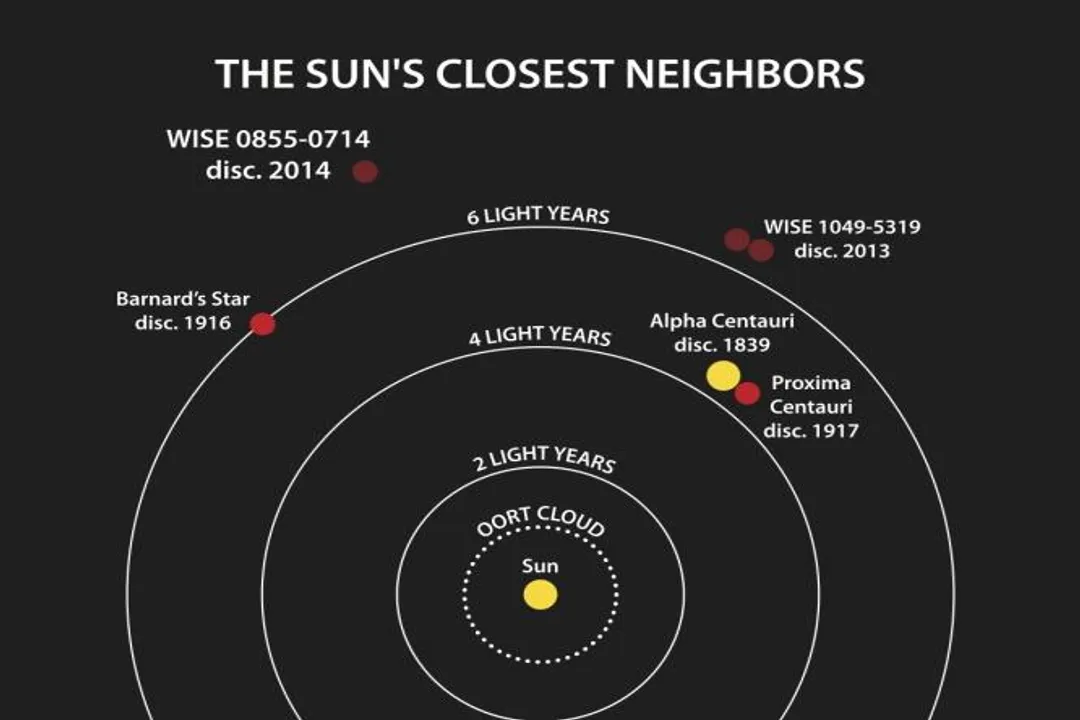
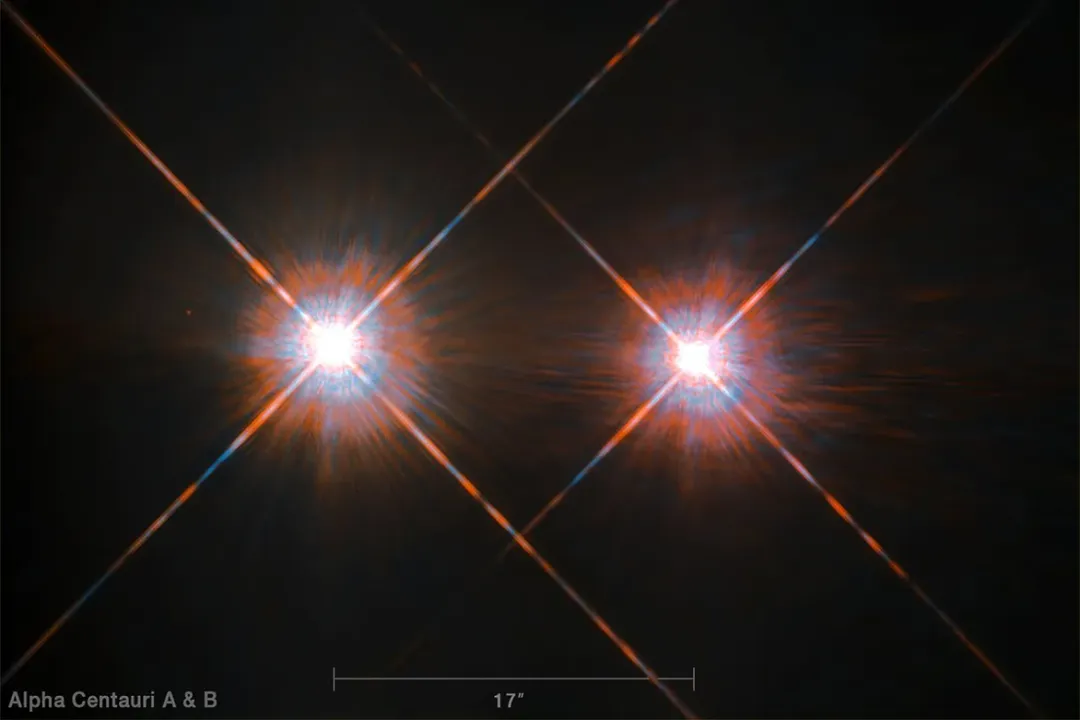
Proxima Centauri forms part of a triple star system, often grouped with the much brighter, more famous pair known as Alpha Centauri A and B. [8] Alpha Centauri A and B are tightly bound binary stars that dominate the system visually, but Proxima orbits them at a considerable separation, sometimes listed as being about two light-years from the main pair. [8] This orbital relationship means that Proxima is gravitationally tied to the other two, but its faintness makes it an often-overlooked member of the nearest stellar neighborhood. [5]
# Dim Dwarf
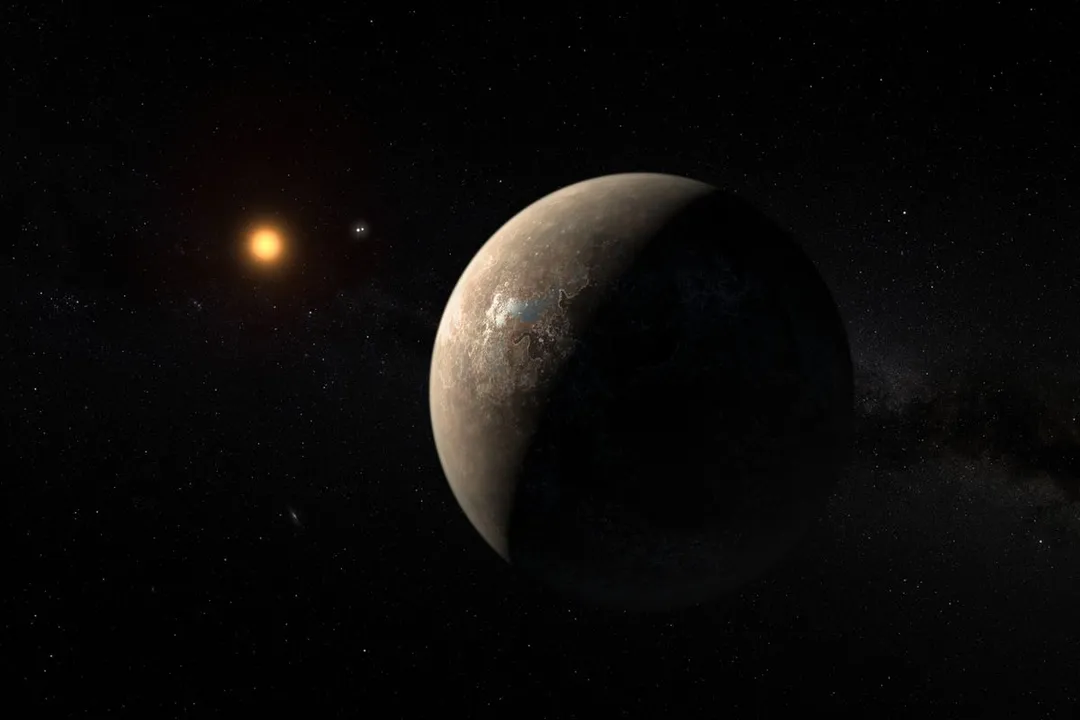
What prevents Proxima Centauri from shining brightly is its fundamental nature. It is classified as a red dwarf star. [4] Red dwarfs are the most common type of star in the Milky Way galaxy, but they are significantly different from our Sun, which is a G-type main-sequence star. [4] Proxima Centauri is much smaller and cooler than the Sun. Its mass is estimated to be only about 8.3 percent of the Sun's mass, or roughly 80 times that of Jupiter. [4] Because it is so much less massive, it burns its fuel much more slowly, leading to a significantly lower luminosity. It shines with only about 0.17 percent of the Sun’s brightness. [4] This dimness is the primary reason it remains invisible to the naked eye, despite its relative proximity. [5]
When we think of "looking" at a star, we often imagine a bright, steady point of light. For Proxima Centauri, the visual impression is far more subdued. To the unaided eye, it is simply absent from our sky. [5] Even through a small telescope, it registers as a very faint, reddish pinprick of light, much less imposing than the dazzling sights of Rigel or Sirius. [5][9]
# Hubble Capture
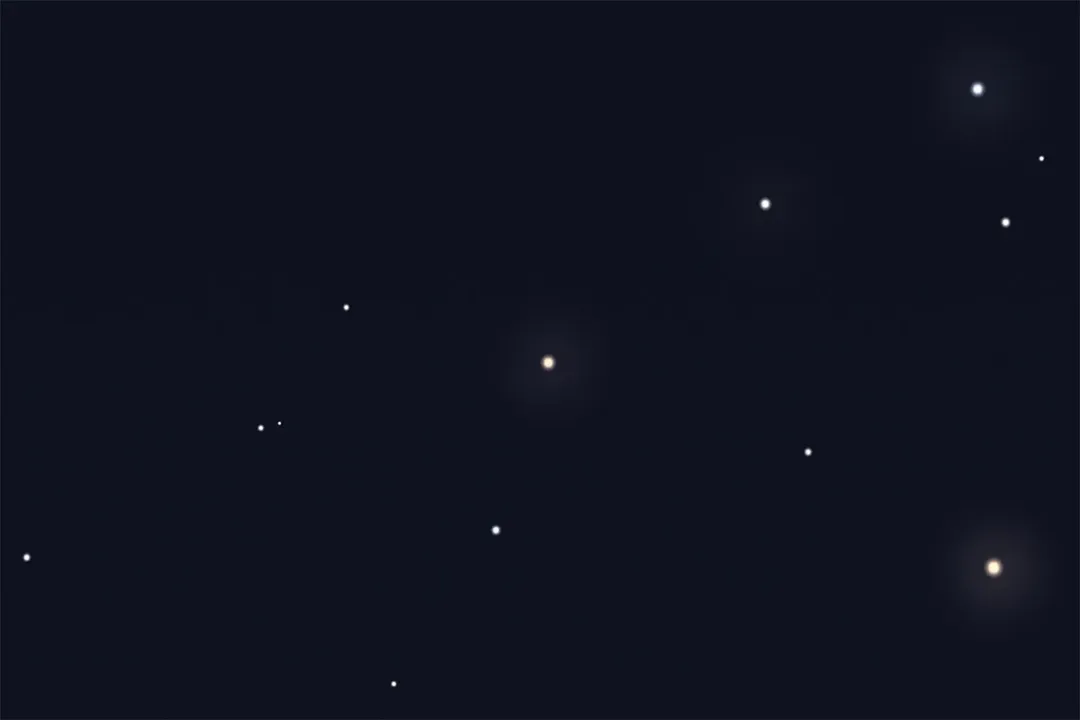
While you cannot take a casual snapshot of Proxima Centauri with a backyard camera and expect a detailed portrait, powerful instruments like the Hubble Space Telescope (HST) have been able to study it closely. [1][3] When looking at images released from the HST, such as those highlighting Proxima Centauri, it’s important to understand what you are seeing. These images are often not a single, direct photograph in the way a picture of the Moon is taken. [1] Instead, they are typically composites or visualizations created using data gathered through specific filters. [1][3] The Hubble image of Proxima Centauri that is often shared is one such representation, perhaps highlighting specific characteristics or comparing its appearance against the background stars it orbits. [1][3] These sophisticated captures reveal the star’s identity, but the star itself remains a single, unresolved point of light even in many advanced telescope views because of the sheer angular distance. [3]
It's an interesting thought exercise to consider the difference in viewing conditions. If a person were somehow standing on the surface of Alpha Centauri B, Proxima would appear as a very dim, small point of light, perhaps only slightly brighter than the faintest stars visible from a dark-sky site on Earth, yet still noticeably dimmer than the main pair A and B would appear to each other. [8] The view from Earth is dominated by its faintness, not its color, as the color is subtle when the light is so weak.
# Light Travel
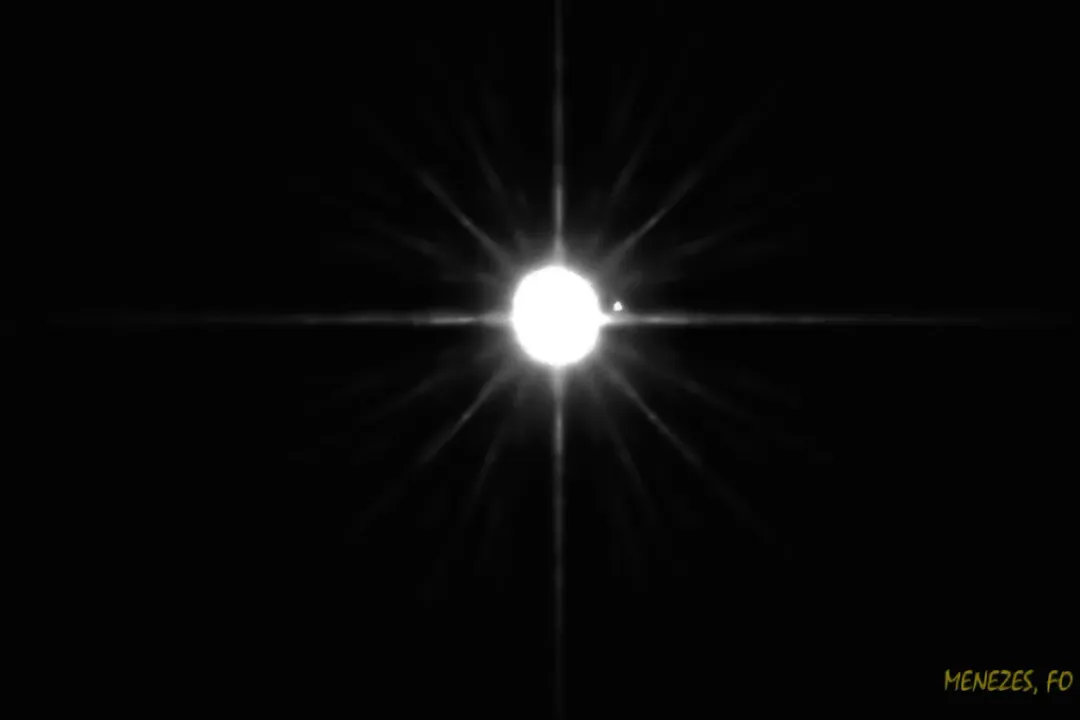
The distance to Proxima Centauri, around 4.24 light-years, [4] means that the light we see from it today actually left the star over four years ago. [4][5] This time lag is a constant factor in observing all celestial objects, but when dealing with our closest neighbor, it offers a unique perspective on stellar dynamics. If Proxima Centauri were to suddenly wink out of existence right now, we wouldn't know about it for more than four years. This immediacy, compared to stars thousands of light-years away, solidifies its status as our most accessible stellar laboratory outside our own system. [4]
To place this proximity in perspective, consider the vastness of the space between stars. If the distance between the Earth and the Sun (one Astronomical Unit, or AU) were scaled down to the width of a single human hair, Proxima Centauri would still be nearly 500 meters away. [5] This comparison helps illustrate why, even though it is the closest star, the scale of interstellar space is immense, and why its light is so diffuse by the time it reaches our telescopes. [5]
Here is a comparison summarizing the key differences between our local stars:
| Feature | The Sun | Proxima Centauri |
|---|---|---|
| Spectral Type | G2V (Yellow Dwarf) | M5.5Ve (Red Dwarf) |
| Distance from Earth | 8.3 light-minutes | light-years |
| Mass (Solar Mass) | $1.0$ | ( of Sun) [4] |
| Luminosity (Solar Units) | $1.0$ | ( of Sun) [4] |
| Visibility to Naked Eye | Yes (Dominant) | No |
# Centauri System
Understanding the Alpha Centauri system helps place Proxima visually. Alpha Centauri A is very similar to our Sun, perhaps slightly larger and hotter, while Alpha Centauri B is a bit smaller and cooler. [8] These two stars orbit each other quite closely, appearing as two brilliant neighbors in the southern sky (though they are visible from many places on Earth at certain times of the year). [8] Because A and B are brighter and closer to each other, they visually overwhelm Proxima. It is only through careful charting that the faint companion, Proxima, is identified as the absolute closest stellar body to us. [8][9] The very slight difference in distance between the A/B pair and Proxima is what earns Proxima the title of "closest". [5]
It is a fascinating phenomenon of perspective that the brightest stars in our local neighborhood—Alpha Centauri A and B—are not actually the closest individual stars. Their combined light means that the Alpha Centauri triple system appears as the third-brightest star in the night sky overall, trailing only Sirius and Canopus, yet the actual closest point of light is the dim, distant dwarf. [9]
# Observing Faintness
The fact that Proxima is a red dwarf has major implications for its potential habitability, although the visual appearance is directly tied to its temperature. Red dwarfs emit most of their radiation in the infrared spectrum, meaning their visible light output is low because they are relatively cool. [4] While the Hubble image processing might adjust colors for scientific presentation, in reality, the light that does reach us is deeply red, if one were close enough to see it visually without being overwhelmed by instrument enhancement. For any potential planets orbiting Proxima, the light they receive would be perpetually dim, leading to a sky dominated by a deep red, perpetually twilight illumination, rather than the bright yellow daylight we experience. [4]
The key takeaway when considering what Proxima Centauri "looks like" is this contrast: it is simultaneously our closest stellar neighbor, providing us with our best look at the most common type of star in the galaxy, yet visually, it is so faint it requires significant technological assistance to even register as a distinct object separate from the background haze of the Milky Way. [1][5] It is a star defined more by its data than by its spectacle.
#Videos
Proxima Centauri, Closest Star to our Sun - YouTube
Related Questions
#Citations
New shot of Proxima Centauri, our nearest neighbour - ESA/Hubble
Proxima Centauri, Closest Star to our Sun - YouTube
Hubble telescope capture of Proxima Centauri, the closest star to ...
The Nearest Neighbor Star - Imagine the Universe! - NASA
Proxima Centauri, the closest star to our sun - EarthSky
10 closest stars to earth | BBC Sky at Night Magazine
Alpha Centauri: Facts about the stars next door - Space
The closest star to our solar system is Proxima Centauri, located ...