Why do stars emit radiation?
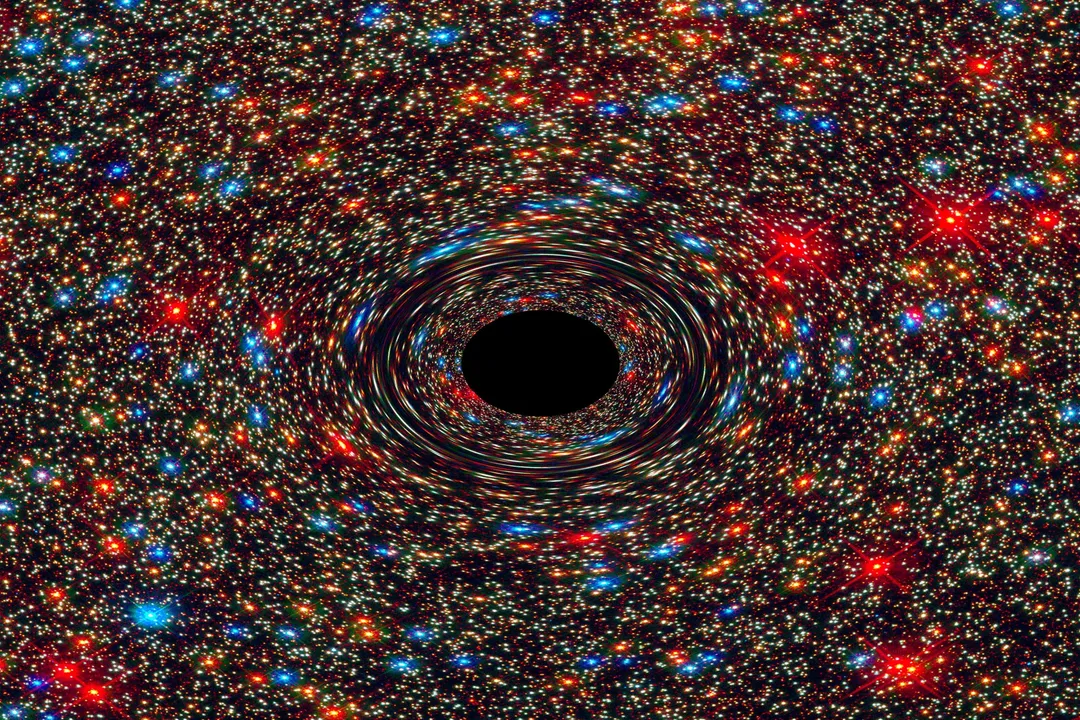
The glow we see when we look up at the night sky is the result of immense, continuous energy generation happening trillions of miles away. Stars emit radiation because they are giant, naturally occurring nuclear reactors, perpetually converting mass into energy deep within their cores. [2][3] This process, known as nuclear fusion, is the fundamental driver behind every photon that travels from a distant sun across the vacuum of space to eventually reach us. [3]
# Stellar Engine
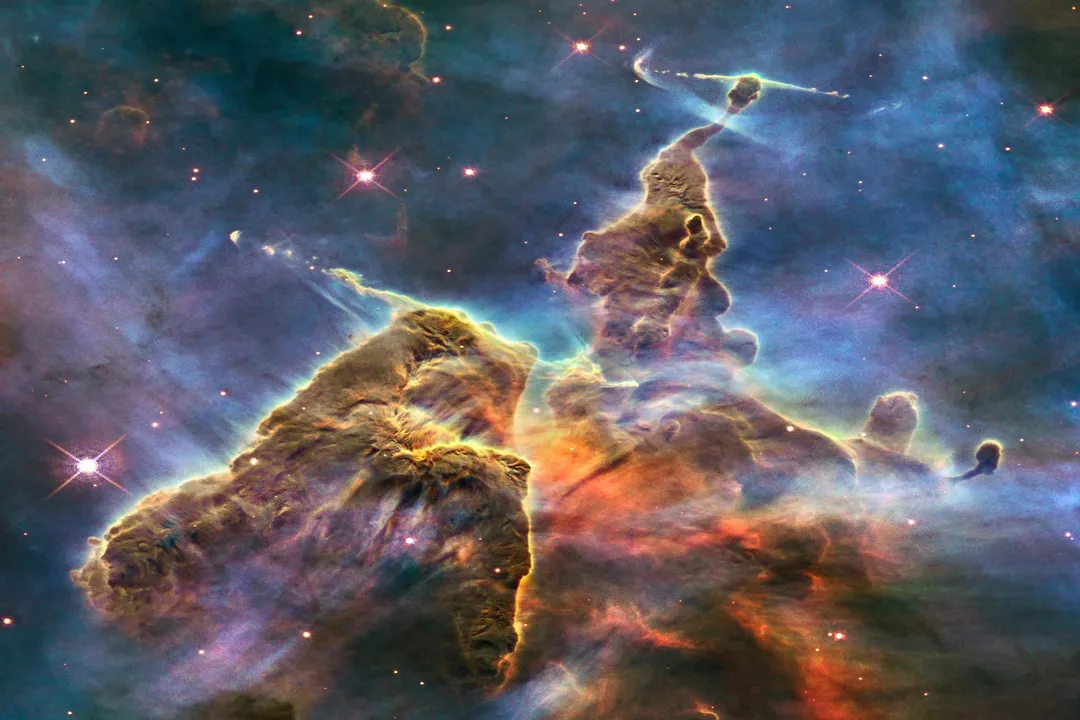
At the heart of every star, intense pressure and temperatures force hydrogen nuclei to fuse together, primarily forming helium. [3] This conversion is not perfect; the resulting helium atom has slightly less mass than the combined mass of the original hydrogen atoms. This missing mass isn't destroyed; rather, it is converted directly into pure energy, governed by Einstein's famous equation, . [3]
This energy is initially produced in the form of high-energy photons, such as gamma rays, right in the stellar core. [3] The star spends an enormous amount of time—often hundreds of thousands of years—as this energy struggles to fight its way outward through the dense stellar plasma. [3] During this journey, the photons interact repeatedly with particles, changing their energy level and wavelength until they finally escape the star's surface, or photosphere. [3]
# Energy Transfer
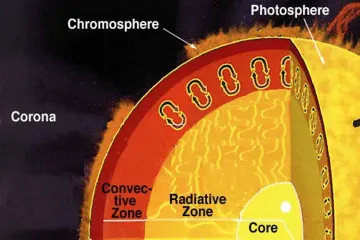
The outward movement of this thermal energy is described as stellar radiation. [2] While convection plays a role in transporting heat in certain layers, the primary mechanism for the energy reaching interstellar space is the emission of electromagnetic radiation. [2][3] Think of it like a continuous, incredibly powerful light bulb that never turns off. The star exists in a state of hydrostatic equilibrium, meaning the outward pressure generated by this escaping radiation perfectly balances the inward crushing force of its own immense gravity. [3]
If the fusion rate momentarily slowed down, the radiation pressure would drop, gravity would win, and the star would contract, heating up until fusion resumed its normal rate. Conversely, if fusion accelerated, the increased radiation pressure would cause the star to expand and cool slightly until equilibrium was restored. [3] This constant, dynamic balance ensures a steady stream of radiation output over billions of years.
# Spectrum Shapes
When this radiation finally leaves the star, it doesn't all look like the white-yellow light we associate with the Sun. Instead, it spans the entire electromagnetic spectrum, from radio waves all the way up to X-rays and gamma rays. [6] The specific distribution of energy across these wavelengths, known as the star's spectrum, is dictated almost entirely by its surface temperature. [4]
The relationship is quite predictable: hotter objects emit radiation that peaks at shorter, higher-energy wavelengths, while cooler objects peak at longer, lower-energy wavelengths. [4] For instance, a very hot, massive blue star might emit most of its energy in the ultraviolet region, with visible light being just a fraction of its total output. [4][6] Conversely, a cooler, smaller red dwarf star peaks in the longer wavelengths, often emitting its most intense radiation in the infrared region, with only a dim glow visible to the naked eye. [1] Our Sun, with a surface temperature around 5,800 Kelvin, has its peak emission squarely in the visible light portion of the spectrum, which is why the light we see is so useful for life on Earth. [1][3]
It is interesting to note that while we often focus on the visible light band—which is a very narrow sliver of the total electromagnetic spectrum [1]—the total energy emitted across all wavelengths is what truly defines the star's output. [6] For a star like the Sun, the energy carried by the visible photons is substantial, but when you sum up the energy flux from the radio waves, infrared, UV, X-rays, and so on, the visible band accounts for only about 40% of the total energy radiated into space. [3]
# Other Waves
The emission of radiation isn't limited to the rainbow we can perceive. Stars are dynamic, active bodies, and their magnetic activity often results in emissions we cannot see directly. [7] For example, many young stars exhibit intense X-ray emission. [7] This high-energy radiation is often linked to superheated gas trapped in strong magnetic fields, sometimes flaring violently. [7]
While high-energy emissions like X-rays are common, stars also radiate across the lower-energy, longer-wavelength side of the spectrum. Every object with a temperature above absolute zero radiates in the infrared, and stars are no exception. [6] Radio waves, the longest wavelengths, are also produced, sometimes through magnetic interactions or particle acceleration near the star. [6] The fact that we can detect these non-visible emissions allows astronomers to probe different physical processes occurring within and around the star that temperature alone cannot explain. [4]
# Reaching Earth
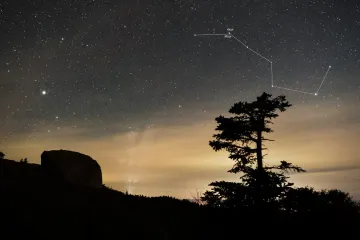
If stars are constantly bathing the universe in radiation, why don't we receive light from every single one of them? [8] There are several reasons, all tied to the distance and the intervening space.
First, the sheer distance plays the dominant role. As radiation travels outward, it spreads out over an ever-increasing sphere. By the time the light from a star many light-years away reaches our little corner of the Milky Way, the intensity has dropped dramatically—it becomes incredibly faint. [8]
Second, the star might not be radiating much energy in the visible band we typically associate with "light." For instance, many stars emit most of their energy in the infrared or ultraviolet regions. [5] If a star's peak emission is entirely outside our visible range, we might not see it with the naked eye, even if it is relatively close, unless specialized equipment is used to detect those specific wavelengths. [5] Some stars are simply too cool to produce much visible light, shining dimly in the infrared instead. [1]
Third, intervening matter can block the signal. While space is largely a vacuum, dense clouds of gas and dust scattered throughout our galaxy can absorb or scatter stellar radiation before it ever reaches Earth. [8] This process is known as extinction. [8] The atmosphere of Earth itself acts as another massive filter, completely blocking most X-rays, gamma rays, and much of the ultraviolet radiation from reaching ground-based telescopes. [6] This necessity forces astronomers to launch specialized instruments like the Hubble Space Telescope or Chandra X-ray Observatory into orbit just to capture the full story of stellar radiation. [6]
This means that studying stellar radiation is less about if a star is radiating, and more about what it is radiating and if our current instruments are capable of detecting that specific energy signature here on Earth. A star that seems dark to our eyes might be blazing brightly in the radio or X-ray domains, waiting for the right instrument to reveal its true power.
#Videos
Why Is Stellar Radiation Crucial For Emission Nebulae? - YouTube
Related Questions
#Citations
Visible light is a very narrow band of the electromagnetic spectrum ...
Stellar Radiation - an overview | ScienceDirect Topics
Stars (article) | EM radiation from the Sun - Khan Academy
Could you explain why stars emit electromagnetic radiation ... - Quora
Can some stars not emit any energy in the visible spectrum?
Wavelengths - NASA Science
X-Ray Emission from Young Stars - Harvard CfA
Why don't we receive light from all the stars in the universe?
Why Is Stellar Radiation Crucial For Emission Nebulae? - YouTube