Are stars with larger magnitude brighter?

The brilliance of a star is measured using a system that often confuses those first learning about the night sky because it operates on a principle that seems entirely backward: stars labeled with smaller magnitude numbers are actually the brighter ones. [2][5] This counter-intuitive scale means that a star with a magnitude of 1 is significantly brighter than a star with a magnitude of 2, and a magnitude 0 object outshines both. [8] For the very brightest celestial objects, the scale dips into the negatives, meaning objects like the full Moon or the Sun have negative magnitudes, signifying extreme brightness. [2][5]
# Historical Roots
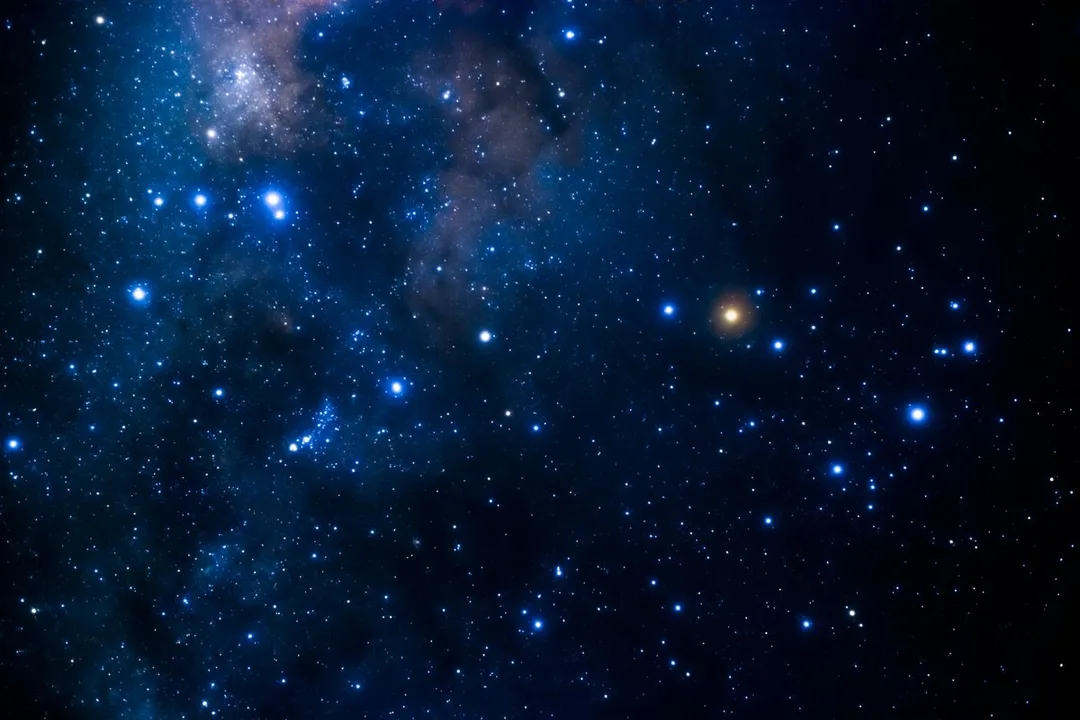
This somewhat quirky measurement system has ancient origins, traced back to the Greek astronomer Hipparchus, who, around the second century BC, categorized the stars he could see with the naked eye into six classes. [3] The brightest stars he cataloged were placed in the first magnitude class, and the faintest visible ones were placed in the sixth class. [3] This initial grouping established the fundamental rule: lower numbers indicated greater observed brightness. [3]
Modern astronomy has refined this system, turning it into a precise, quantitative scale, but the basic historical division remains intact. [3] This refinement involved recognizing that the human eye perceives brightness logarithmically, not linearly. [3][8] When Hipparchus grouped stars into classes, he was likely grouping stars that appeared to his eye to be a certain, fixed ratio brighter than the next group. [3]
# The Logarithmic Step
The relationship between magnitude and actual light received is defined by a specific mathematical ratio. Astronomers standardized the difference between consecutive whole-number magnitudes to represent a fixed factor of light intensity. [3] Specifically, one magnitude step corresponds to a difference in brightness by a factor of approximately 2.512. [3][4]
This means a star of magnitude 1 is about 2.512 times brighter than a star of magnitude 2. [3] A star of magnitude 1 is brighter than a magnitude 3 star by , which is approximately $6.3$ times brighter. [3]
To grasp the power of this system, consider the cumulative effect across several steps. If we compare a relatively bright star at magnitude +2 to one at magnitude +7, the magnitude +2 star is five steps brighter. That translates to a brightness difference of $(2.512)^5$, which is about 99.5 times brighter. [3] To put this into perspective, if you were observing a star that was just visible to the naked eye at magnitude +6.0, a star just one magnitude brighter, at +5.0, would appear nearly 100 times brighter when viewed from the same location, assuming both objects were visible. [7] This demonstrates how quickly the magnitude scale compresses the immense dynamic range of light that our eyes can process, assigning small numbers to the brightest sources. [5]
# Apparent vs. Absolute
When discussing stellar magnitude, it is absolutely essential to distinguish between two related but different concepts: apparent magnitude and absolute magnitude. [4][9]
Apparent magnitude () is exactly what it sounds like: how bright a star appears from Earth. [4][8] This value is affected by two primary factors: the star's intrinsic luminosity (how much light it truly emits) and its distance from us. [8] A faint star very close by might have the same apparent magnitude as an extremely luminous star located very far away. [9] For instance, the Sun, though intrinsically a fairly average star, has an apparent magnitude of approximately -26.74 because it is so incredibly close to us. [2][6]
In contrast, absolute magnitude () is a standardized measure of a star's true or intrinsic brightness. [4][9] To determine absolute magnitude, astronomers calculate how bright a star would appear if it were placed at a fixed, standard distance of 10 parsecs (about 32.6 light-years) from Earth. [9] This allows for a direct comparison of the actual energy output of different stars, irrespective of their current location in the galaxy. [4][9] A star with a very small (or negative) absolute magnitude is a true stellar powerhouse, regardless of how dim it looks from our position. [9]
| Celestial Object | Approximate Apparent Magnitude () |
|---|---|
| Full Moon | $-12.7$ |
| Venus (at brightest) | $-4.6$ |
| Sirius (Brightest star) | $-1.46$ |
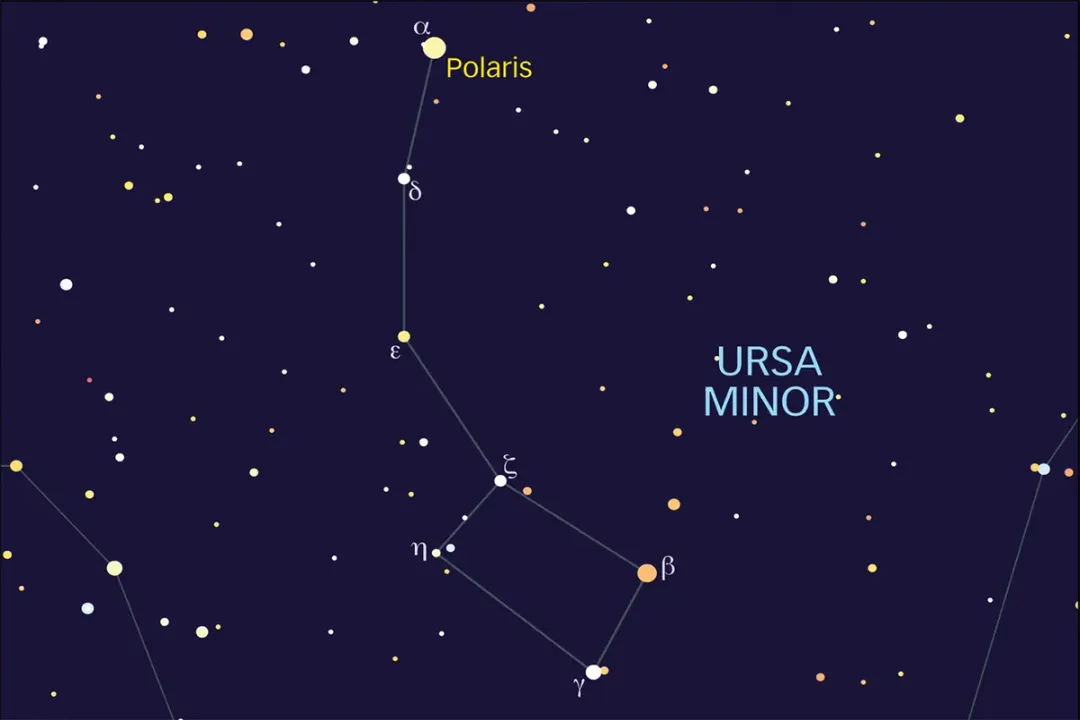
| The North Star (Polaris) | $+1.97$ |
| Faintest naked-eye star limit | to $+6.5$ |
| Brightest globular cluster (M13) | $+5.8$ |
| Hubble Space Telescope limit | |
| Source: Various sources synthesized from data provided [2][6][7] |
# Limits of Observation
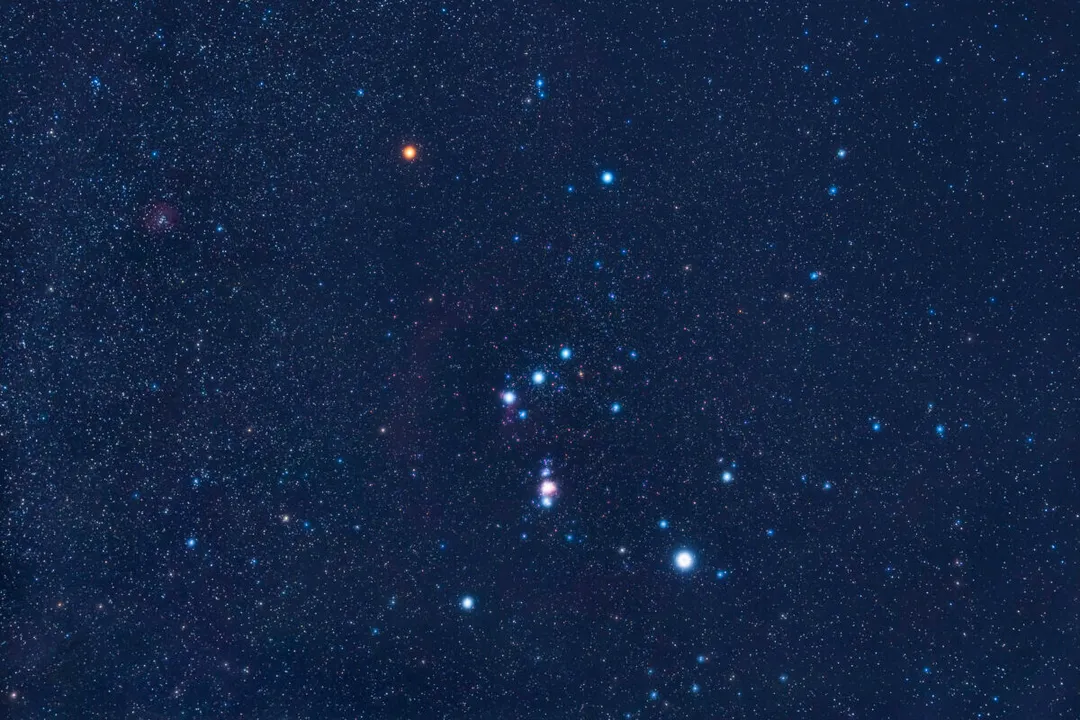
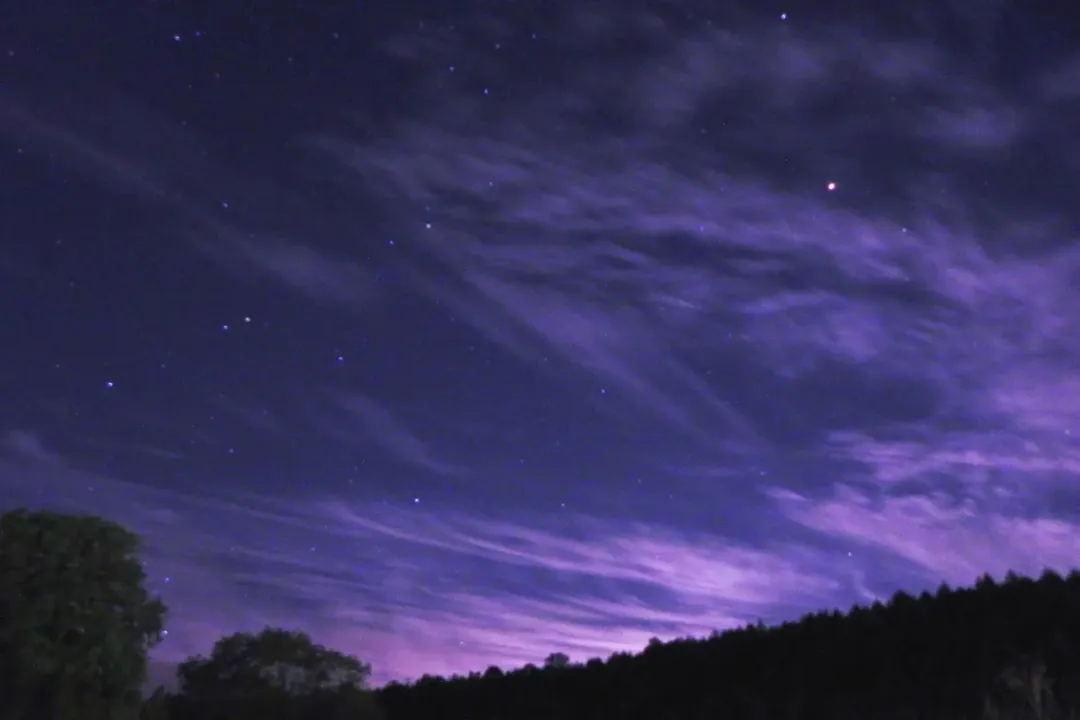
The magnitude scale extends far beyond what the unaided human eye can detect, which provides a useful boundary for casual sky-watching. Under perfectly dark, clear skies far from city lights, the faintest stars visible to a healthy human eye generally hover around magnitude +6.0 or +6.5. [7] For an observer dealing with typical suburban light pollution, this limit might shrink dramatically, perhaps only seeing objects down to magnitude +4 or dimmer. [7]
This practical limit offers a good metric for judging local sky quality. If you can easily spot stars down to magnitude +5, you are likely in a relatively dark location. If you struggle to see anything brighter than magnitude +3, you are probably dealing with significant light trespass from artificial sources, which washes out the fainter background light of the cosmos. [7] Conversely, professional instruments like the Hubble Space Telescope can detect objects nearing magnitude +30, demonstrating the sheer depth the magnitude scale can cover when paired with technology. [2]
It is important to remember that when you are looking at a star listed with an apparent magnitude of +5.5, you are not just seeing a star that is slightly dimmer than one at +4.5; you are seeing an object that emits over 99 times less light reaching your eye at that moment. [3] This vast range, compressed into numbers close to zero or slightly negative for the brightest objects, is the defining characteristic of the astronomical magnitude system.

# Understanding Scale Differences
The system's mathematical underpinning means that a difference of two magnitudes signifies a brightness ratio of times. [3] This logarithmic mapping is key to making sense of the entire observable universe on a single scale. Without it, the difference in brightness between the Sun (magnitude ) and the faintest visible star (magnitude ) would require us to use a linear scale factor in the billions, making everyday reference impractical. [8]
Here is a way to think about the contrast for local viewing. Imagine you find a star at magnitude +1.0—it's quite easy to spot. Now, look for a star at magnitude +3.5. This star is $2.5$ magnitude steps dimmer. Since each step is a factor of $2.512$, the brightness ratio is , which calculates to roughly 15.8 times fainter in light reaching your eye. [3] If you have excellent vision and are under perfect dark skies, you can easily compare a magnitude +1 object to one that is sixteen times dimmer in the same field of view. This shows that the lower number isn't just a little brighter; it's orders of magnitude more dominant in the visual field, which is why the scale was inverted historically—the first class represented the most impressive things seen. [3]
Related Questions
#Citations
[PDF] The Stellar Magnitude Scale - Space Math @ NASA
Apparent magnitude - Wikipedia
Why do astronomers measure stars in magnitudes?
Stellar magnitude, the scale to measure the brightness of stars
Why do stellar magnitudes get smaller, into the negative, as the stars ...
The Magnitude System of Brightness - Absorption and Emission
Magnitudes - Globe At Night
The Brightness of Stars – MCC AST - Maricopa Open Digital Press
Apparent vs. Absolute Magnitude of Stars- Interactive Model