What do astronomers use to measure star masses in binary star systems?
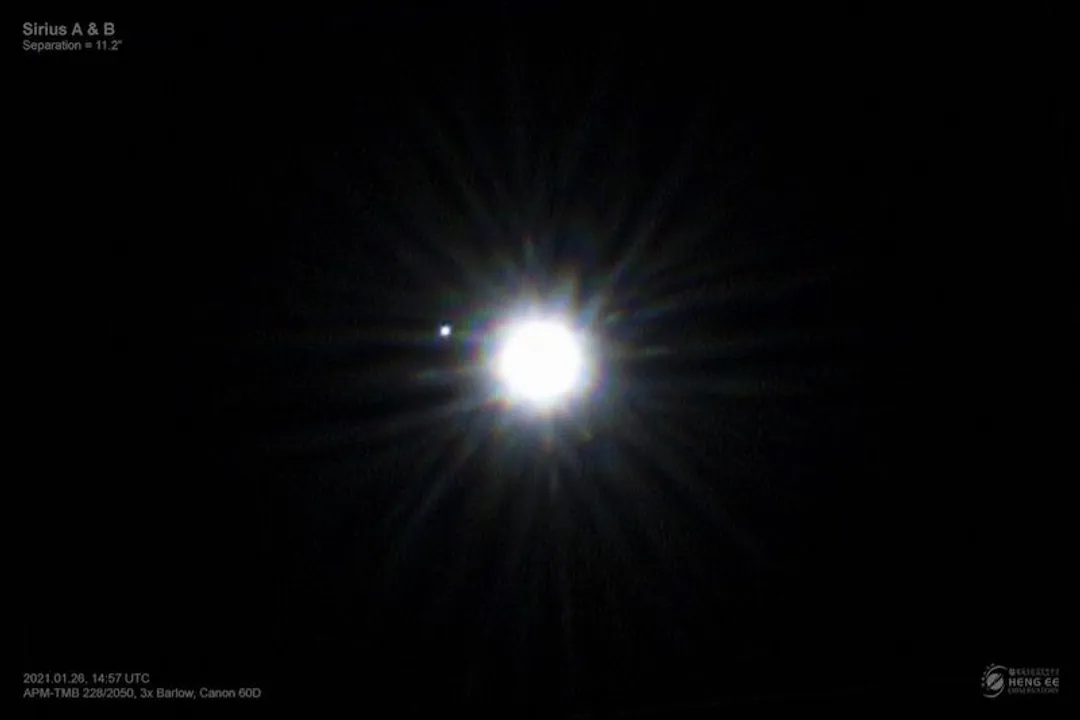
Determining the mass of a star is one of the most fundamental tasks in astrophysics, and for the vast majority of stars, including our own Sun, this determination relies heavily on observing its gravitational effect on a companion. When stars are locked together in a binary system, their orbits become the cosmic measuring tape astronomers need. Since mass dictates the strength of gravity, and gravity dictates the path and speed of the orbit, by meticulously measuring the orbital characteristics, we can apply the laws of motion derived by Newton and Kepler to calculate the masses involved. [3][6][9]
# Orbital Physics

The bedrock of this measurement technique is a refined version of Kepler's Third Law of Planetary Motion. For any two objects orbiting their common center of mass—like two stars—the square of their orbital period () is proportional to the cube of the semi-major axis () of their relative orbit, with the constant of proportionality being inversely related to the sum of their masses (). [3][6][9] Expressed mathematically, the relationship is , where is the gravitational constant. [6]
This equation, when rearranged to solve for the total mass (), looks like this: . [3][6] This formula gives us the total mass of the system. To find the mass of an individual star, we need one more piece of information: the location of the center of mass.
When we observe the relative orbital sizes, the stars orbit their shared center of mass. If and are the semi-major axes of the two stars around the center of mass, then the mass ratio is inversely proportional to the distance ratio: . [3][6][9] Combining the total mass derived from the period/separation equation with the mass ratio derived from the relative separation distances allows astronomers to separate the total mass into and .
# Direct View

The most intuitive method involves observing systems where we can actually see both stars moving across the sky—these are known as visual binaries. [1][6] Astronomers track the positions of the two components over many years, sometimes decades or even centuries, to map out the elliptical paths they trace around their mutual center of mass. [1] By measuring the period () from the time it takes to complete one circuit and the angular separation between the stars, we can plug these values into the mass formula. [1][6]
However, an angular separation measured in arcseconds must be converted into a physical distance in astronomical units (AU) before it can be used in the mass calculation. [1] This conversion requires knowing the distance to the binary system, which is usually determined through stellar parallax measurements. [1] If the system is very far away, or if the orbital period is exceptionally long—perhaps centuries—the observational challenge becomes immense, making the calculation prone to long-term uncertainty or incomplete data. [6] Observing a complete orbit is the gold standard for visual binaries, but often only a fraction of the ellipse is visible during a human lifetime of observation. [1]
# Velocity Shifts
Many binary systems are too far away or too close together to be resolved visually; the two stars appear as a single point of light. In these cases, astronomers turn to spectroscopy, classifying them as spectroscopic binaries. [1][6] This method relies on the Doppler effect. [1][6] As one star moves toward Earth in its orbit, its spectral lines are shifted toward the blue end of the spectrum; as it moves away, the lines shift toward the red. [1]
By measuring these spectral line shifts over time, astronomers can plot a radial velocity curve for each star, showing how fast they are moving toward or away from us along the line of sight. [1][6] This gives us the orbital velocity, . If we have both radial velocity curves, we can determine the mass ratio, , because the ratio of the velocities, , is also equal to the inverse ratio of the masses, . [1][6]
The major limitation of a purely spectroscopic binary measurement, however, is the problem of orbital inclination (). [6] If the orbit is perfectly face-on (), we measure no Doppler shift, and the method fails to reveal the velocity. If the orbit is edge-on (), we measure the full orbital velocity. Since we usually don't know the inclination, the velocity we measure is only the component along our line of sight, . [1] This means the resulting mass calculation is only a minimum mass for the system, expressed as . [1][6] Without knowing , we cannot pin down the true mass, only establish a lower limit. [6]
# Light Curves
When a spectroscopic binary system happens to be oriented nearly edge-on relative to Earth, it becomes an eclipsing binary. [6] In these fortunate orientations, the stars periodically pass in front of one another, causing a measurable dip in the total system brightness recorded by a photometer or telescope. [1][6] The resulting graph of brightness over time is called a light curve. [1]
The analysis of the light curve is incredibly powerful. The timing of the eclipses precisely determines the orbital period (). [1] Furthermore, by measuring how long it takes for one star to completely cover the other, astronomers can relate the orbital speed (derived from spectroscopy) to the physical sizes of the stars themselves. [6] Crucially, because the orbit is edge-on, the inclination is very close to , meaning . This effectively eliminates the major uncertainty present in non-eclipsing spectroscopic binaries. [6] By combining the radial velocity measurements (for velocity/mass ratio) with the light curve analysis (for inclination/period/size), astronomers can calculate the absolute masses ( and ) with a high degree of accuracy. [6]
In practical application, the process often involves a triangulation of information. For instance, if a system is both a visual binary (where we measure and ) and a spectroscopic binary (where we measure ), we can use the observed angular separation and the measured velocity to independently determine the distance and inclination, simultaneously solving for the physical separation and the true masses, even if the orbit is not perfectly edge-on. [1] The combination of techniques provides mutual checks and fills in the missing geometric variables required by the single-method approaches. [1]
An interesting analytical divergence arises here. Consider two systems, System A observed visually and System B observed spectroscopically, both appearing to have the same orbital period, , and both having the same calculated total mass, , based on assumptions about their separation or inclination. System A (visual) requires a direct, parallax-determined physical separation, . System B (spectroscopic) gives us velocities, , but no direct . If System B is nearly face-on ( is small), its true orbital separation, , must be vastly larger than to compensate for the low measured line-of-sight velocity, , while still yielding the same via Kepler's Third Law using the true and . This dependency means that even small errors in measuring the inclination for spectroscopic systems propagate into huge uncertainties in the calculated separation and mass, whereas parallax-based visual measurements, while slow, yield a much more direct physical distance measurement. [1]
# Stellar Components
The measurement techniques described above focus on deriving the properties of the pair as a whole or their relative motion. However, the end goal is often characterizing the individual stellar components. If an eclipsing binary is observed, the difference in the depth of the two eclipses (Primary vs. Secondary) tells us about the relative sizes of the stars, assuming they are spherical. [6] The star causing the deeper dip is the larger one, or the one that is currently blocking more light.
When measuring the mass of a star like the Sun, astronomers rely on its gravitational interaction with the Earth over a known period (one year) and a known distance (one AU). [7] Binary systems offer a significant advantage: they provide internal consistency checks on stellar models. The mass derived from orbital dynamics can be compared against the star's observed luminosity, temperature, and radius, which are estimated using standard stellar structure models. [7] If the dynamically derived mass aligns well with the mass predicted by the star's observable properties (like its color or surface temperature), it builds tremendous confidence in both the measurement technique and our physical understanding of how stars work. [7]
For example, if a spectroscopic binary yields masses of $1.2$ solar masses () and , these values can be cross-referenced with stellar evolution tracks. A star with should have a specific expected luminosity and surface temperature for its age. If the observed light and temperature match the prediction for a star, the measurement is considered highly authoritative. [7] This validation loop is critical, especially for unusual or massive stars where direct mass measurement is one of the few empirical data points available to test theoretical models. [4]
# Data Needs
Regardless of the method employed—be it direct measurement of angular motion, observation of Doppler shifts, or timing of eclipses—successful mass determination requires high-quality, long-term observational data. Modern instruments, from large ground-based telescopes to space observatories like the Hubble Space Telescope, are essential for achieving the necessary precision. [4] The precision of the final mass calculation is fundamentally limited by the precision with which the orbital period (), the semi-major axis (), or the radial velocity () can be measured. [6]
For visual binaries, the stability of the measurement requires patience, often spanning generations of astronomers. [1] For spectroscopic binaries, it requires the sensitivity of a high-resolution spectrograph to capture subtle shifts in spectral lines caused by stellar motion, often requiring repeated observations over several orbital cycles to build a reliable velocity curve. [1] The necessity of gathering data across different observational modalities—position, light, and spectrum—underscores that no single technique is perfect. Astronomers often need to combine data from all available perspectives (e.g., finding an eclipsing binary that is also resolvable visually) to achieve the most precise stellar masses, such as those of nearby systems used as anchors for calibrating masses across the entire galaxy. [4] This multi-faceted approach ensures that the masses determined for these crucial benchmark systems are as reliable as possible.
Related Questions
#Citations
The mass of a star is determined from binary star systems - EarthSky
How do astronomers measure the size and mass of stars?
Lecture 13: Binary Star Systems, Masses of Stars
Astronomers Measure Mass of a Single Star – First Since the Sun
[PDF] ASTROMETRIC STUDY OF BINARY SYSTEMS AND ... - BYU-Idaho
Lecture 10: How Massive is a Star?
Stellar Mass - Teach Astronomy
17.9 Stellar Mass
Measuring the Masses of Stars - PY 123