Are K type stars low-mass?
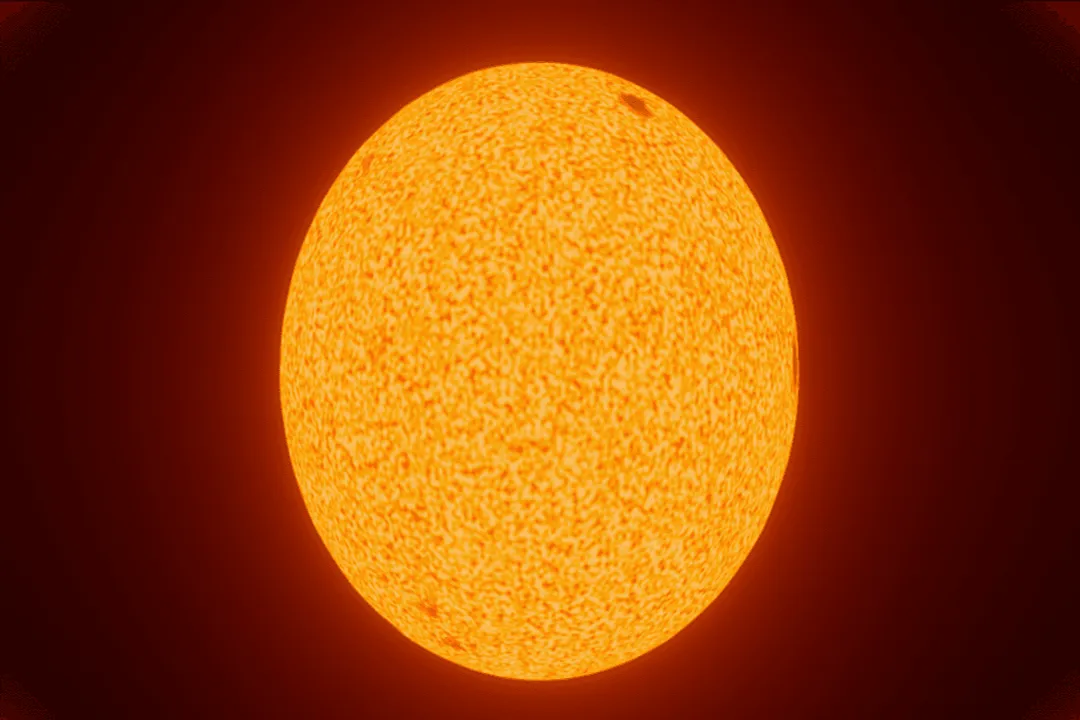
The question of whether K-type stars qualify as low-mass finds its answer nestled quite neatly within the broad spectrum of stellar classifications. These stars, often referred to as orange dwarfs, occupy a specific niche on the Hertzsprung-Russell (H-R) diagram, positioned cooler and less luminous than our own Sun, a G-type star, but distinctly hotter and brighter than the ubiquitous, faint M-type red dwarfs. [5] Their mass, the primary determinant of stellar destiny, places them above the threshold for the lowest mass category but firmly below the mid-range stars like our Sun. [1]
# Classification Basics
K-type main-sequence stars belong to the spectral class K. [4] On the color scale, they appear orange, fitting between the yellow G-type stars and the dimmer red M-type stars. [5] These stars are fusing hydrogen into helium in their cores, meaning they are currently on the main sequence, the longest phase of any star’s life. [1][4] Their effective surface temperatures generally range between approximately and . [1] This temperature range dictates their spectral lines, which show the presence of neutral metals and some molecular bands, distinguishing them from the hotter, earlier classes. [4]
# Mass Spectrum
To definitively categorize K-type stars as "low-mass," we must look at their mass relative to the Sun (). Stellar mass is intrinsically tied to a star's position in the main sequence, dictating its luminosity, temperature, and lifespan. [1] While K-type stars are less massive than solar-type G-stars, they are still considerably more massive than the smallest stars on the main sequence—the M-dwarfs. [1] The main sequence mass range for K-type stars typically begins around $0.5$ solar masses and extends up to roughly $0.8$ solar masses. [1] Stars below are usually classified as M-type, meaning K-stars are low-mass when compared to the Sun () or brighter stars, but they are mid-to-high-mass when compared to the most common, smallest stars in the galaxy. [1][5]
# Size Temperature
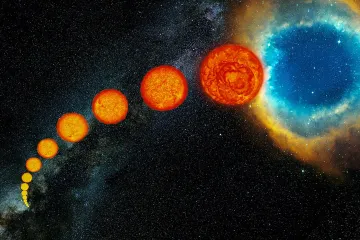
The physical dimensions of these orange dwarfs follow their mass progression. The diameter range for K-type stars varies, but they are generally smaller than the Sun. [6] For instance, the Sun has a diameter of about $1.39$ million kilometers, while a K-type star might exhibit a radius perhaps 60 to 85 percent of the solar radius, depending on its exact spectral subtype and age. [6] Comparing the extreme ends of the main sequence helps put this into perspective. A star like the Sun sits near the upper limit of the mass range that allows for exceptionally long lives, whereas K-type stars operate at a slightly reduced output. Considering that a star's total energy output scales very steeply with mass—often to the fourth or fifth power—a star with only emits significantly less energy than a star, simply because it has less material available to fuse and a lower core pressure driving the reaction rate. [1] This difference in sustained energy release is the crucial physical factor underpinning their longevity.
# Long Lives
The most celebrated characteristic of K-type stars, especially for astrobiologists and science fiction writers, is their remarkable lifespan. Because their mass is lower than the Sun's, their core fusion proceeds much more slowly and conservatively. [7] While our Sun is expected to maintain stability on the main sequence for about $10$ billion years, K-type stars can last significantly longer—often estimated in the range of 40 to 70 billion years, or even longer for the very lowest mass K-types. [7] This vast temporal window provides an entirely different context for the evolution of orbiting planets. If we consider the timeline for complex life to emerge on Earth, which took several billion years following planetary formation, a K-star’s duration offers ample buffer room. [7] Where the Sun provides a solid, but comparatively brief, window of stability, a K-star offers an extended period of relatively gentle stellar conditions, potentially allowing biological systems more time to overcome local crises or achieve advanced complexity before the star finally exhausts its core hydrogen. [7]

# System Examples
K-type stars are not rare; they are quite abundant throughout the galaxy, though they are less luminous than the brighter F and G stars, making them harder to spot from great distances. [9] They represent a common, stable stellar type, making them excellent candidates for long-term study and perhaps even future interstellar colonization targets, given their predicted stability. [8] While not as common as the fainter M-dwarfs, which make up the vast majority of the galaxy's stars, K-type stars provide a "Goldilocks" scenario for many systems: more massive and hotter than M-dwarfs, which often present issues with tidal locking and severe flaring, but far longer-lived and more stable than high-mass A or F stars. [1][5] The presence of these orange dwarfs across the galaxy confirms that while they are not the least massive stars, they are indeed representatives of the lower-mass population that dominates the long-term galactic census. [9]
Related Questions
#Citations
K-type main-sequence star - Wikipedia
Class K star | Verse and Dimensions Wikia - Fandom
Are Main-Sequence K-type Stars the "Goldilocks" Stars for Hosting ...
K-type main-sequence star - Grokipedia
Type K Stars - William (Bill) Hillyard
What's the size range of K-type stars (Orange Dwarves)? - Quora
'K' stars (orange dwarfs) last much longer than stars like our Sun ...
Encyclopedia Galactica - K-type Star - Orion's Arm
K stars within 100 light-years - Sol Station