Is a nebula high or low-mass?
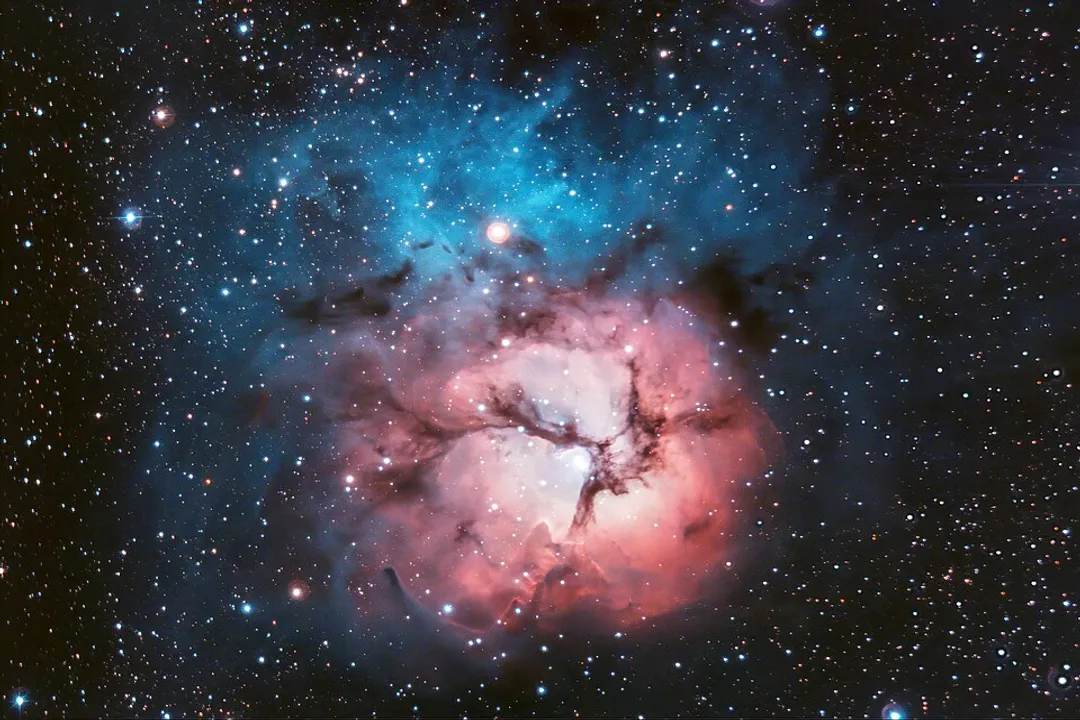
The question of whether a nebula is high or low mass finds its answer in a simple astronomical reality: the term "nebula" covers an extraordinarily diverse range of cosmic structures, spanning from objects containing the raw material for thousands of suns to the delicate, fleeting shells cast off by a single aging star. At its most fundamental, a nebula is an interstellar cloud of dust, hydrogen, helium, and other ionized gases. [7] Because this definition encompasses everything from the colossal nurseries of future stars to the faint exhalations of dying ones, a nebula can be among the most massive objects in the galaxy or, comparatively speaking, quite small. [6][7]
# Stellar Nurseries
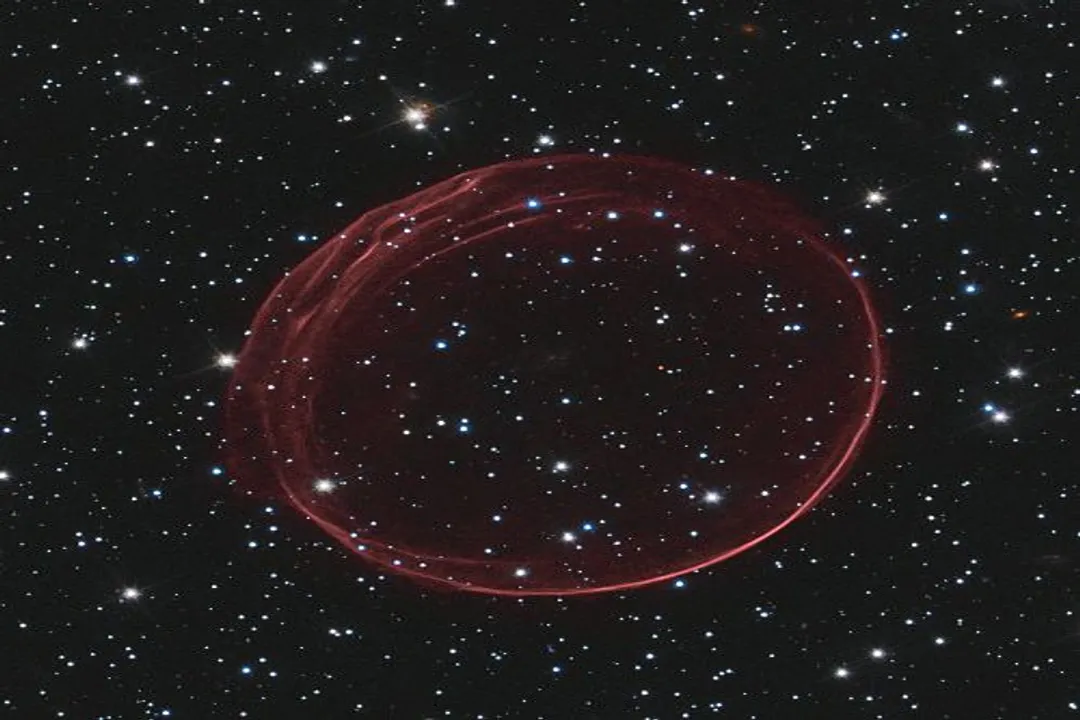
When astronomers speak of the highest mass nebulae, they are typically referring to Giant Molecular Clouds (GMCs). These are the cradles of star formation. [4] These clouds are immense reservoirs of cold gas and dust, providing the necessary ingredients for generating entire stellar populations. [7] Within these vast structures, gravity works to pull pockets of material together, eventually leading to the birth of new stars and sometimes even entire star clusters. [4]
The sheer scale of these star-forming regions is difficult to overstate. While the sources don't provide a specific upper mass limit for a GMC, the context suggests they are inherently high-mass systems, representing the largest gravitationally bound structures in the Milky Way, short of the galaxy itself. [6] They are not defined by the death of a star but by the potential for birth, holding masses that can vastly exceed the mass of the Sun by factors of millions. [4] These are the dynamic, dark regions that obscure the light of stars behind them, sometimes reflecting the light of nearby bright stars, creating what we observe as a reflection nebula. [2] Conversely, if the gas within these clouds is energized by nearby hot, young stars, they glow brightly, forming an emission nebula. [2] In both cases, the initial material is drawn from an object of substantial collective mass.
# Planetary Remnants
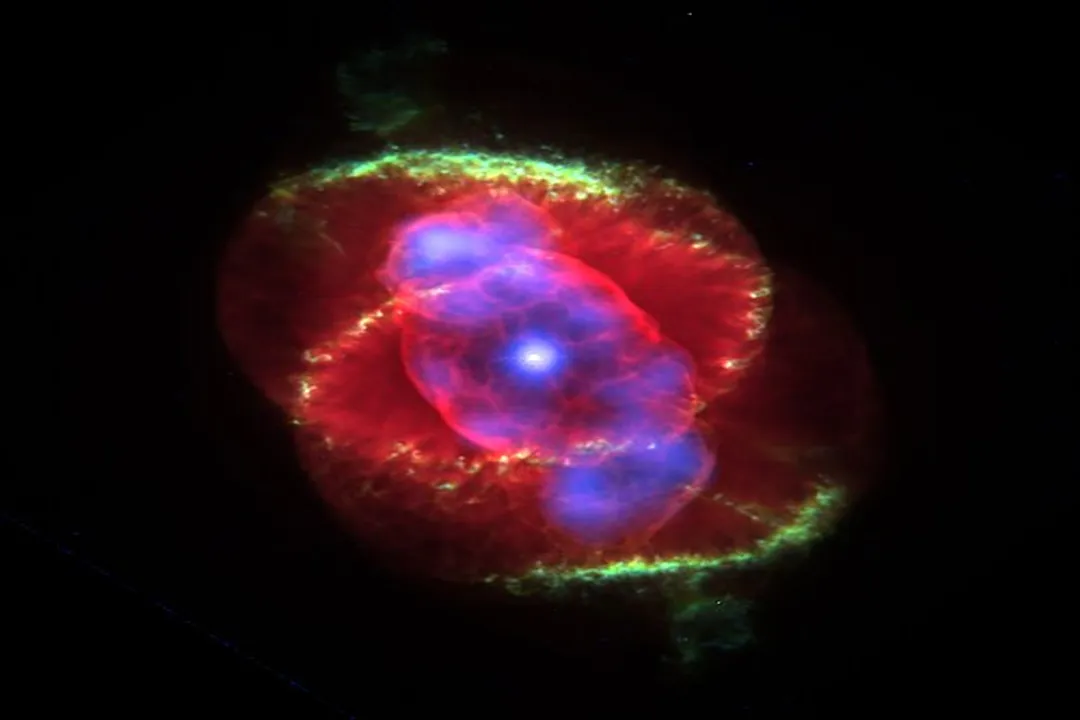
The context shifts dramatically when discussing planetary nebulae. These objects represent the low-mass end of the spectrum, though the term "low-mass" is relative when discussing stellar death. [1] A planetary nebula is not a nebula that creates planets; rather, it is the glowing shell of gas and plasma ejected by a dying, low- or intermediate-mass star—one roughly up to about eight times the mass of our Sun—as it transitions into a white dwarf. [1][8]
Do all stars the size of the Sun form one? The consensus points toward yes; stars like our Sun are destined to shed their outer layers to form these structures. [8] This outflowing material, expanding into space, is what we see as the nebula. [1] The mass shed by the star into the nebula is only a fraction of its original mass, perhaps equivalent to the mass of Mars or Earth, which is tiny compared to the molecular clouds that birthed the star. [1][4] They represent the final, luminous stage before the stellar core fades away. [4] Images from instruments like the Hubble Space Telescope vividly capture the intricate, often beautiful structures formed by this relatively small amount of expelled gas. [2][3]
# Mass Disparity
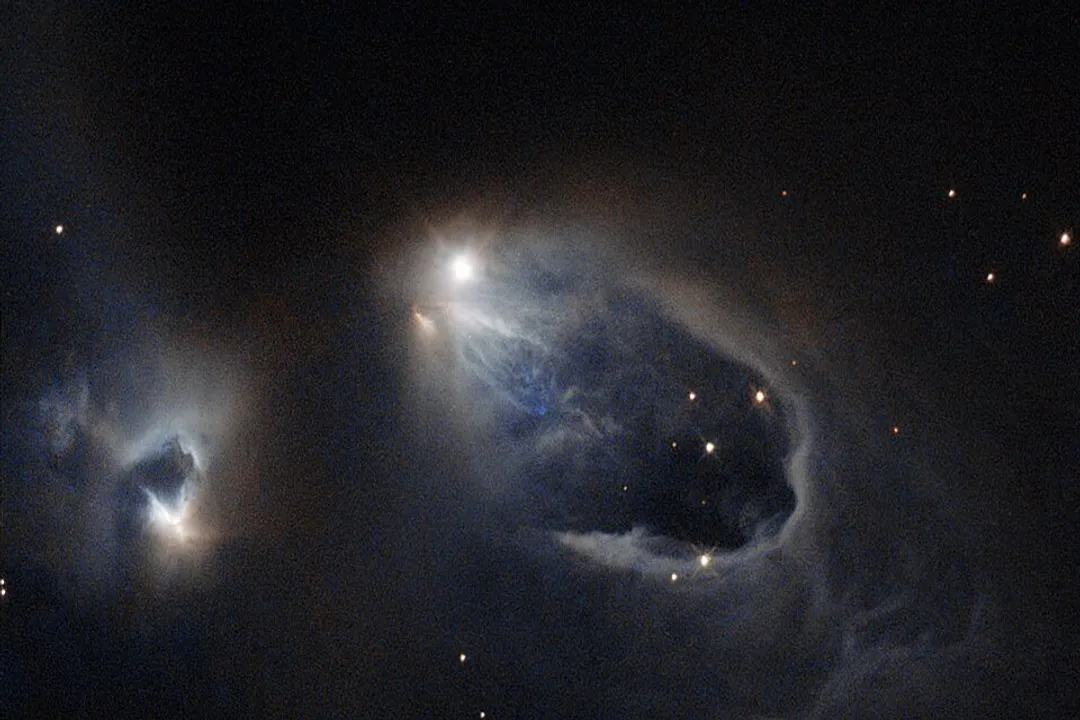
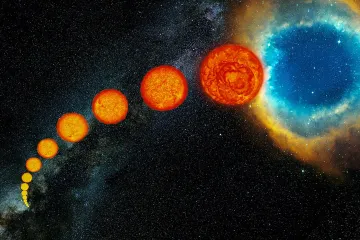
The difference between a stellar nursery and a planetary nebula is not just a matter of classification; it is a difference of orders of magnitude in mass. Consider the Sun, a star of average mass. If the Sun were to eventually eject its outer layers to form a planetary nebula, the nebula itself might contain only a fraction of a solar mass worth of material. [1] By contrast, a large GMC, a high-mass nebula, can contain millions of solar masses of gas and dust, capable of spawning thousands of stars, each potentially larger than the Sun. [4]
To put this in perspective, imagine a vast, continental-sized cloud in the sky—that might represent a small portion of the material available in a typical GMC. [6] Now imagine that same continental cloud shrinking down until it’s just the size of a single house, and that house is made of glowing, transient gas—that, conceptually, is the scale of the material contained within a planetary nebula. [1][3] This vast disparity highlights that the mass of a nebula is directly tied to its origin: creation versus destruction. [4]
An interesting consideration for cataloging astronomical objects is that the classification often refers to the process rather than the physical size or mass. A "planetary nebula," despite its name referring to a planetary system's vicinity, is defined entirely by the evolutionary stage of its central star, irrespective of whether it's actually larger or more massive than some very diffuse, unlit background molecular cloud that happens to be poorly cataloged. [1]
# Dynamics and Longevity
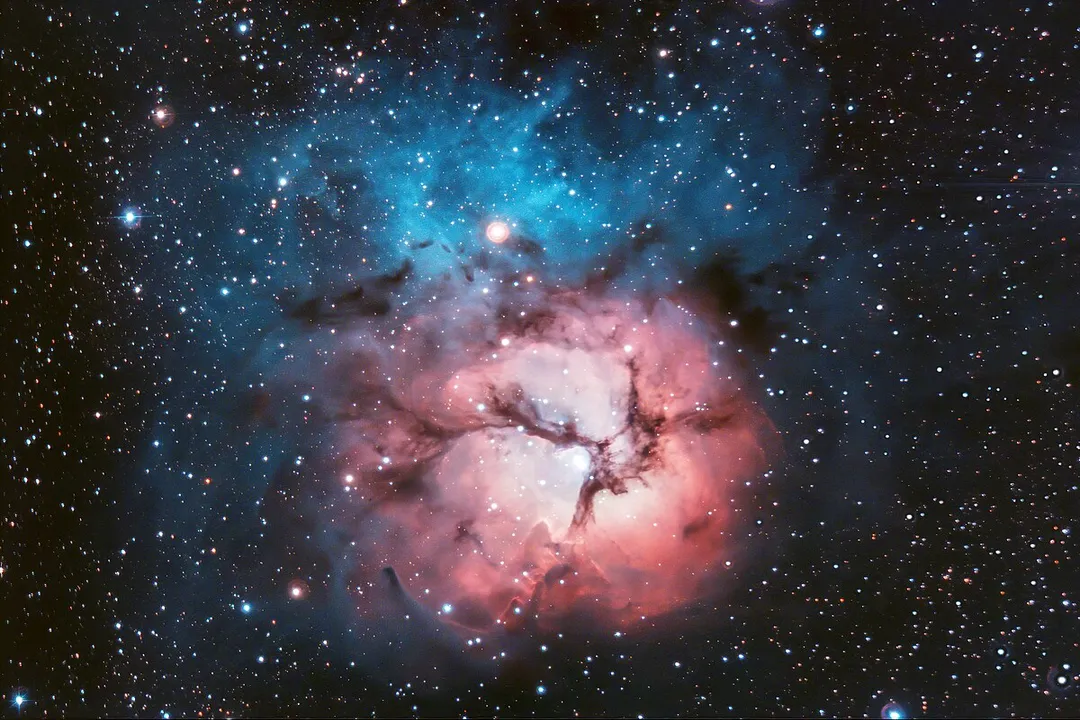
The mass dictates the dynamics and lifespan of these nebulae. High-mass nebulae, the GMCs, are characterized by slow, gravitational collapse occurring over millions of years, forming stars in the process. [4] They are relatively stable until triggered into collapse.
Planetary nebulae, however, are explosions of matter driven by rapid stellar expansion. [9] Once ejected, the gas expands rapidly outwards, meaning these beautiful, detailed structures are incredibly short-lived in cosmic terms, often only existing for a few tens of thousands of years before dissipating into the interstellar medium. [1][9] The central star, now a white dwarf, determines the lighting and morphology through its intense ultraviolet radiation, which causes the ejected material to glow. [1] The expansion velocity of these shells can be quite high, sometimes reaching 20 to 30 kilometers per second. [9]
# Fate of Orbits
A final, fascinating distinction arises when considering the environment surrounding the nebula-forming star. Since planetary nebulae are the remnants of stars that did not end their lives violently (like supernovae), the planetary systems that orbited them may survive the ejection process, at least initially. [8]
For stars like the Sun, which form planetary nebulae, the fate of the planets is an active area of interest. While the initial mass-loss event is powerful, it is generally not energetic enough to immediately eject or vaporize all orbiting bodies, especially those in wide orbits. [5] Planets farther out from the star might remain in orbit around the remaining white dwarf, though they will certainly face intense, changing radiation fields from the hot, exposed stellar core. [5] This contrasts sharply with the massive nebulae where stars are forming; in those high-mass environments, the formation process itself means that planets are just beginning their own accretion and evolution, rather than dealing with the expulsion of their star's outer atmosphere. [4]
It is worth noting that the term "low-mass nebula" associated with planetary nebulae is misleading when considering the initial star. A star that creates a planetary nebula is still quite significant—it has already lived a full life, fusing hydrogen and likely helium, processes requiring substantial mass, far more than the tiny fraction it later expels. [8] The "low-mass" designation truly applies only to the ejected shell compared to a GMC, not the progenitor star compared to the smallest possible interstellar dust cloud.
In summary, the mass of a nebula is not a single characteristic but a spectrum defined by its role in the cosmos. It is either a high-mass factory for stars, comprising millions of solar masses of gas and dust, or a low-mass ghost, representing the thin, luminous wrapper shed by a single, sun-like star nearing the end of its life. [1][4][7]
Related Questions
#Citations
Planetary nebula - Wikipedia
Hubble's Nebulae - NASA Science
2MASS Atlas Image Gallery: Planetary Nebulae - IPAC/Caltech
Stellar Evolution - | The Schools' Observatory
What happens to the planets orbiting a low mass star when it forms a ...
How big can a nebula be? - Worldbuilding Stack Exchange
Do all stars of the same size of the sun form a planetary nebula after ...
Planetary nebulae abundances and stellar evolution II