Which stars are low-mass?
The stars we see twinkling in the night sky belong to a vast spectrum of sizes and masses, but a significant portion of the stellar population falls into the category of low-mass stars. Determining which stars fit this description hinges on one primary characteristic: their mass relative to our Sun. Generally, astronomers classify a star as low-mass if its mass is less than about eight times the mass of the Sun (). This upper limit separates them from intermediate-mass and high-mass stars, which evolve much more dramatically.
However, the lower boundary is just as crucial. A celestial body must possess enough mass to sustain stable hydrogen fusion in its core to officially qualify as a star. This critical threshold is approximately $0.08$ times the mass of the Sun, or about $80$ times the mass of Jupiter. Anything below this mass range falls into the category of brown dwarfs, which are often called "failed stars" because they never ignite sustained hydrogen fusion. Thus, the accepted range for a low-mass star begins around and extends up to . While this range seems broad, it encompasses the most numerous stars in the Milky Way galaxy.
# Prevalence and Type
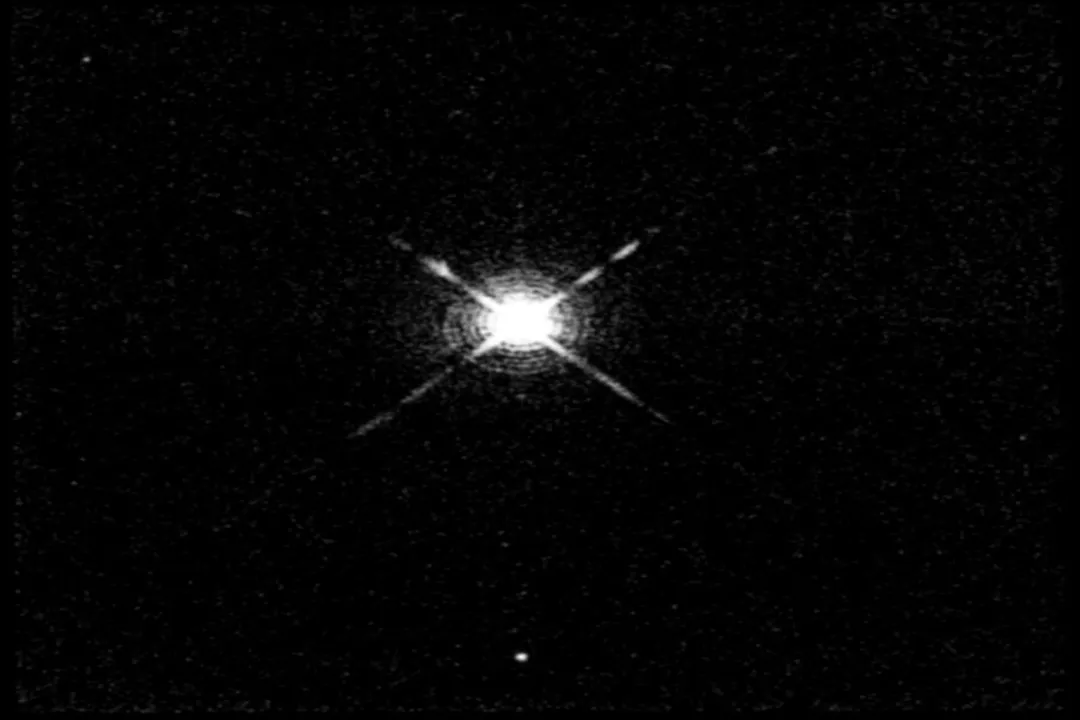
The sheer abundance of low-mass stars is one of their defining features. They are, by a large margin, the most common type of star in our galaxy. Within this broad category, the smallest and coolest ones, known as Red Dwarfs, are exceptionally common. These faint, long-lived objects can have masses as low as . Because they are so dim, even though they are numerous, they are often difficult to spot from Earth without specialized equipment, unlike the brighter, more massive stars which dominate our nighttime view.
If we look at the very bottom of the stellar scale, the smallest known stars are indeed red dwarfs. For instance, stars like EBLM J0555-57Ab, which is just slightly larger than the planet Saturn, represent the absolute lower limit for a true star. This highlights a fascinating area where stellar objects blur the line with giant planets, making precise mass determination essential for classification.
# Core Physics

The internal engine of a low-mass star dictates its lifespan and evolutionary path, setting it apart from its much heftier cousins. Stars above about $1.3$ solar masses typically generate energy primarily through the CNO cycle (Carbon-Nitrogen-Oxygen cycle), which is a highly efficient process dependent on trace amounts of heavier elements. In contrast, stars like our Sun, and certainly those at the lower end of the low-mass spectrum, rely predominantly on the Proton-Proton (P-P) chain to convert hydrogen into helium in their cores. The P-P chain is a slower, less temperature-sensitive fusion process.
This difference in fusion mechanism directly translates to longevity. High-mass stars burn through their fuel at a furious rate, leading to spectacular, short lives. Low-mass stars, however, are incredibly frugal with their hydrogen supply. Because they fuse hydrogen more slowly, their lifespans are measured in hundreds of billions, or even trillions, of years. Consider a star at the very low-mass end, say around $0.1$ solar masses. While our Sun has a main-sequence lifetime of about 10 billion years, a star this small might remain stable for ten trillion years. This incredible endurance means that virtually every red dwarf that has ever formed is still burning hydrogen today, as the universe is only about 13.8 billion years old.
# Stellar Evolution
The way a low-mass star meets its end is characteristically gentle, especially when compared to the explosive deaths of massive stars that end their lives as supernovae.
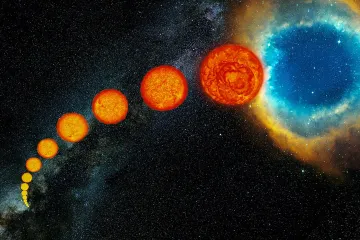
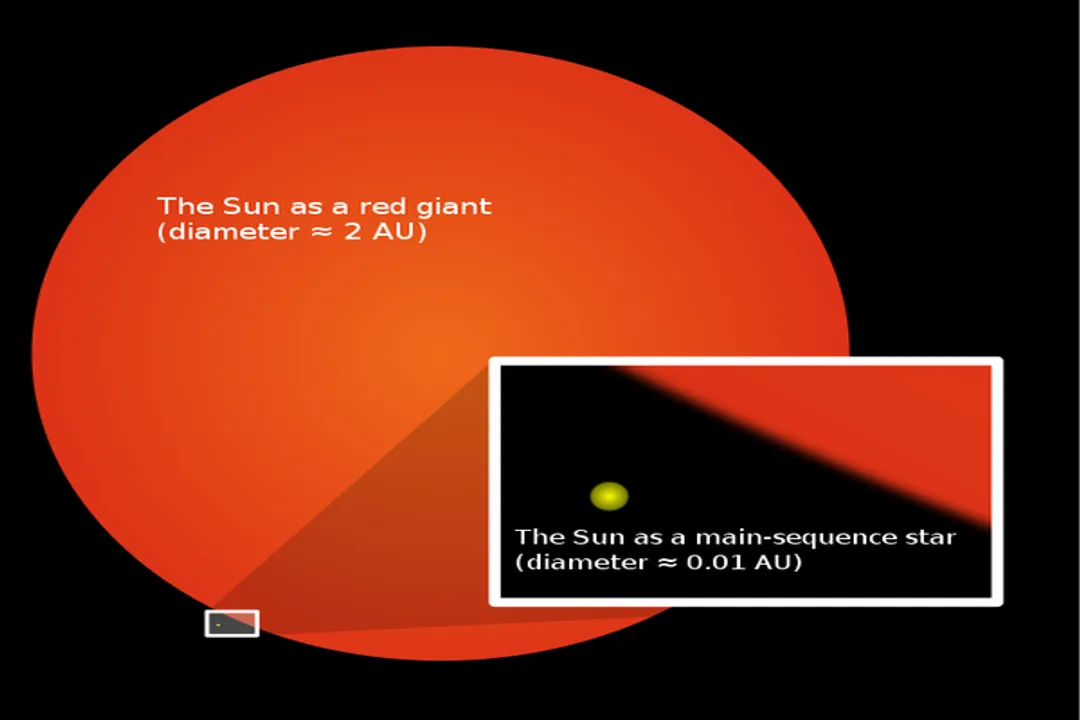
For a star in the lower half of the low-mass range, such as the Sun, the process is predictable. Once the hydrogen fuel in the core is exhausted, the core contracts and heats up, causing the outer layers to swell enormously, turning the star into a Red Giant. During this phase, a shell of hydrogen surrounding the now-helium core ignites, providing the energy for the expansion. After exhausting the core fuel, the star may briefly fuse helium into carbon and oxygen, but it lacks the necessary mass to achieve the temperatures required to fuse carbon.
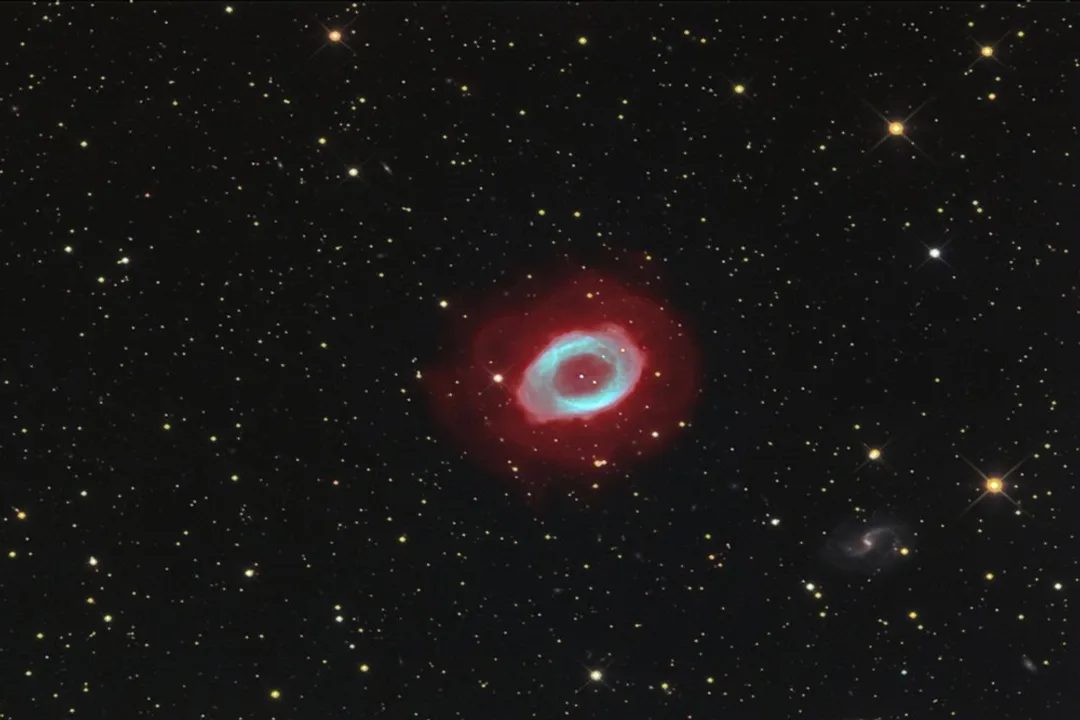
The star then sheds its outer layers, creating a beautiful, expanding cloud of gas known as a planetary nebula. What remains at the center is the hot, dense, inert core—a White Dwarf. This stellar remnant will slowly cool and fade over eons, eventually becoming a cold, dark Black Dwarf. Stars at the very low-mass end, the red dwarfs, may not even reach the Red Giant phase in the same manner. Theoretical models suggest that the smallest red dwarfs will simply burn through all their hydrogen over their vast lifespans, contract slightly, and slowly dim directly into a White Dwarf without a significant expansion phase.
To appreciate the timescale difference, imagine looking at a star that formed 10 billion years ago. If it were a high-mass star, it would likely already be a supernova remnant or a neutron star. If it were a low-mass star like the Sun, it would be roughly halfway through its main sequence life. If it were a tiny red dwarf, it would have barely started its life, having consumed only a minuscule fraction of its available fuel.
# Habitable Zones and Planets
The characteristics of low-mass stars profoundly influence the potential for life on any orbiting planets. Because low-mass stars, particularly red dwarfs, emit much less energy than the Sun, the Habitable Zone—the region where liquid water could exist on a planet's surface—is located much closer to the star.
This proximity creates several unique scenarios for any worlds residing in that zone. One significant effect is tidal locking. Because the gravitational forces are much stronger at closer distances, an orbiting planet is likely to become tidally locked, meaning one side perpetually faces the star (experiencing eternal day) while the other faces away (experiencing eternal night). While this sounds hostile, advanced climate modeling suggests that a sufficiently thick atmosphere could redistribute heat, allowing for a temperate band between the blazing hot and frozen zones where liquid water, and potentially life, could thrive.
However, an active area of discussion revolves around the initial conditions and ongoing stability of planets around these faint stars. While low-mass stars offer immense longevity, which is a boon for the slow evolution of life, they also present challenges. Younger red dwarfs, in particular, are known for powerful stellar flares. These energetic eruptions can strip away the atmospheres of closely orbiting planets, posing a significant threat to any developing biosphere. The likelihood of a planet retaining its atmosphere over trillions of years, despite repeated intense flaring events, is a major point of consideration when assessing the long-term viability of worlds orbiting these common stars. The fact that planets around low-mass stars could orbit for perhaps years—a timescale vastly longer than the Sun’s entire main-sequence lifetime—is a compelling argument for their long-term potential, provided they can survive the early, volatile years.
When considering the search for life, one might develop a mental filter: a planet orbiting a star significantly dimmer than the Sun needs a much tighter orbit to stay warm, potentially making it vulnerable to tidal locking and severe radiation events during the star's infancy, but it will also enjoy a stable energy source for a timeframe that dwarfs the current age of the universe as we know it.

# Categorizing the Spectrum
To better visualize where different stars fall, we can construct a simplified classification based on mass boundaries, using the Sun () as our benchmark:
| Stellar Category | Mass Range (Solar Masses, ) | Primary Fusion Chain | Approximate Lifespan |
|---|---|---|---|
| High-Mass Stars | CNO Cycle | Millions of years | |
| Low-Mass Stars (Sun-like to Giants) | P-P Chain / CNO Mix | Billions of years | |
| Low-Mass Stars (Red Dwarfs) | Proton-Proton Chain | Trillions of years | |
| Sub-Stellar Objects | None (Brown Dwarfs) | N/A | |
| [5][6][1][3] |
This table illustrates that the term "low-mass star" actually covers two distinct evolutionary paths: the Sun-like stars heading toward Red Giant expansion and the cooler, dimmer red dwarfs that burn slowly and steadily. The distinction between the two sub-groups is often set around , where stars begin to exhibit full internal convection, allowing them to consume nearly all their fuel instead of just the core hydrogen, which further extends their already immense lifespans.
The historical study of these objects, even in the mid-20th century, focused heavily on understanding the structure and evolution of these main-sequence stars based on their mass and internal physics, often resulting in theoretical models describing the relationship between luminosity, mass, and core conditions. Today, observing these faint, abundant stars through improved technology allows us to confirm these theoretical expectations and refine our understanding of galactic demographics.
#Videos
Low Mass Stars: Crash Course Astronomy #29 - YouTube
Related Questions
#Citations
Low mass star - Las Cumbres Observatory
Low Mass Stars: Crash Course Astronomy #29 - YouTube
Low-Mass Stars – Introduction to Astronomy
List of smallest known stars - Wikipedia
Lecture 17: Evolution of Low Mass Stars
Low-Mass Stars | AMNH
The Structure of Stars of Very Low Mass. - NASA ADS
What happens to the planets orbiting a low mass star when it forms a ...