Are red dwarfs the lowest mass stars?
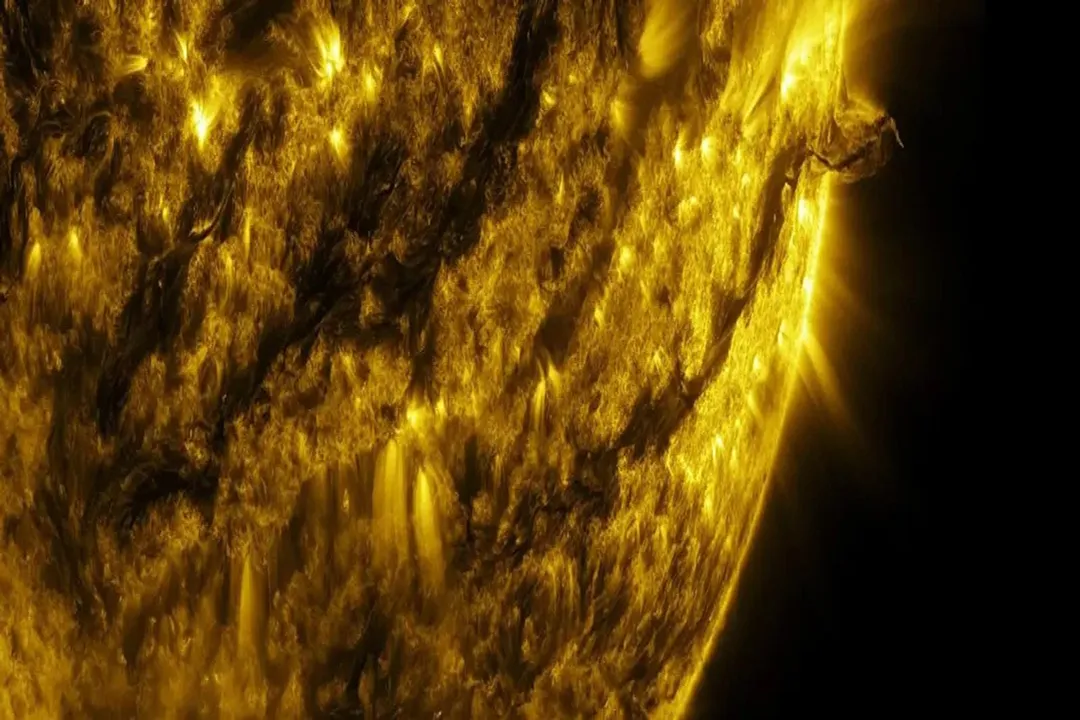
The most common inhabitants of the Milky Way galaxy are not giants like our Sun, but rather the small, cool, and dim stars known as red dwarfs. These objects inhabit the lower end of the stellar mass spectrum, leading directly to the question of where their line of descent ends and what truly defines the smallest star. They are classified primarily by spectral types M and K, radiating significantly less energy than our G-type Sun. [2][1]
# Fusion Threshold
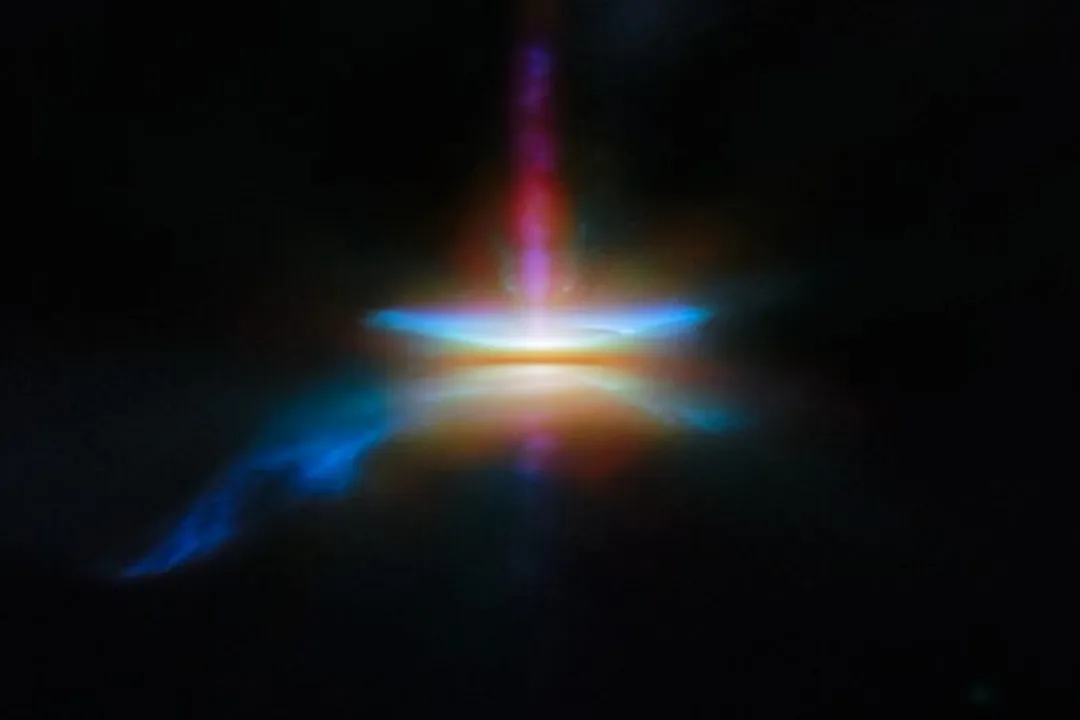
To definitively answer whether red dwarfs hold the title of lowest mass stars, one must first establish what qualifies an object as a true star. In astronomical terms, a star is defined by its ability to sustain nuclear fusion of hydrogen into helium in its core through gravitational pressure. [6] This process releases the energy that allows the object to shine stably for billions of years.
# Minimum Mass
This requirement for sustained hydrogen fusion sets a strict lower boundary on stellar mass. Any object below this critical mass threshold will fail to ignite and maintain the necessary core temperatures and pressures. Astronomers place this lower limit at approximately $0.075$ to $0.08$ times the mass of the Sun (). [1][6] Below this point, the object is classified as a brown dwarf, sometimes referred to as a "failed star" because its core is hot enough only to fuse deuterium briefly, if at all, rather than standard hydrogen. [7] Therefore, in the category of objects that are bona fide stars, the red dwarfs occupy the lowest rung of the ladder. [1]
# Upper Limits
While their lower limit is sharply defined by the onset of hydrogen fusion, the upper limit for a red dwarf is more gradual and based on their temperature and luminosity profile. Generally, red dwarfs are considered stars with masses up to about . [1] Objects significantly more massive than this—like our Sun, which is —are classified as other types, such as orange dwarfs (K-type) or yellow dwarfs (G-type). [2] The line between a heavy red dwarf and a lighter K-type star can be somewhat fuzzy, depending on the specific classification scheme used, but the barrier is firm for the bottom end.
# Interior Structure
What makes these low-mass configurations so interesting is their internal physics, which differs markedly from solar-type stars. In stars like our Sun, there is a distinct radiative zone surrounding the core, and an outer convective zone that mixes material near the surface. [3] Red dwarfs, particularly those on the lower end of the mass scale (below about ), are thought to be fully convective. [3][1]
This means the plasma throughout the entire interior is constantly churning and mixing, like a pot of boiling water. [3] This convective process is fascinating because it continuously cycles the hydrogen fuel from the outer layers down into the core where fusion occurs. This complete mixing prevents the buildup of an inert helium ash core, which plagues Sun-like stars, forcing them to shed their outer layers later in life.
For a low-mass red dwarf, the ability to access nearly all of its stored hydrogen fuel, rather than just what is near the core, translates directly into an astonishingly long potential lifespan.

# Extreme Longevity
This internal efficiency has a profound consequence for their existence. Because they burn their fuel so slowly and can access almost all of it, red dwarfs have lifespans that dwarf the current age of the universe. While our Sun has an estimated lifespan of about 10 billion years, the smallest red dwarfs are calculated to burn for trillions of years. [1] Even a moderate-sized red dwarf might persist for hundreds of billions of years. [3] From our current perspective, these stars are virtually eternal; their entire evolutionary track, from main sequence to eventual white dwarf, has not yet even begun for the vast majority of them. [1] This fact means that every red dwarf currently visible has existed since the early universe and will exist long after our solar system is gone.
# Compact Nature
When we consider their low mass, we might expect them to be large, diffuse objects, but the opposite is often true due to the intense pressure generated by their small size. A red dwarf with about (slightly more massive than the minimum limit) can have a radius comparable to Jupiter, yet possess over 100 times the mass of Jupiter. [1] This leads to remarkably high densities. While our Sun has an average density close to that of water, calculations suggest that low-mass red dwarfs can achieve densities tens or even hundreds of times greater than the Sun. [9] Imagine an object packing the mass of many Jupiters into a space no bigger than the solar system's largest planet; it must be incredibly compressed. [9]
# Abundance and Observation
Red dwarfs are not just theoretical oddities; they represent the overwhelming majority of stars in the galaxy. Estimates suggest that between 70% and 80% of all stars are of this type. [1] This abundance is why they are so critical to understanding galactic structure, even though they are incredibly faint.
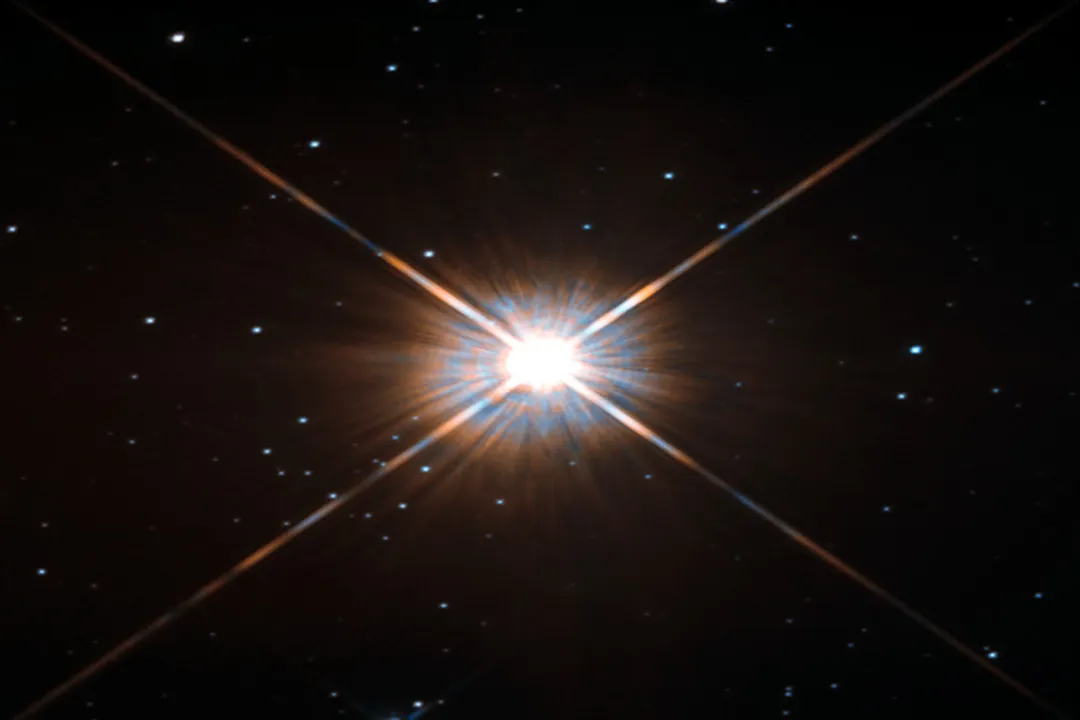
Their low luminosity means that even the closest red dwarfs are often invisible to the naked eye. Proxima Centauri, the closest known star to our Sun, is a red dwarf (specifically, a red dwarf star of spectral type M5.5Ve) and remains undetectable without a telescope. [1] Observing them requires specialized, highly sensitive instruments, which is part of why they were studied in less detail historically compared to brighter, more massive stars.
# Variations on the Theme
The classification covers a range of properties. They span spectral types from late G and K to the M types, with surface temperatures generally ranging from about $2,000$ K to $3,500$ K. [1] This is significantly cooler than the Sun's surface temperature of nearly $6,000$ K. [2]
To see how these stellar properties scale, consider a few generalized examples based on the mass range:
| Stellar Property | Example 1: Near Lower Limit () | Example 2: Mid-Range () | Our Sun () |
|---|---|---|---|
| Surface Temperature (K) | |||
| Luminosity (Sun = 1) | $1.0$ | ||
| Spectral Type | Late M | Mid M | G2V |
| Internal Structure | Fully Convective | Fully Convective | Radiative Core/Convective Envelope |
It is important to note that while these stars are stable for vast timescales, they are not entirely placid. Many red dwarfs exhibit intense magnetic activity, resulting in powerful stellar flares, which can dramatically alter their brightness for short periods. [1] For any planet orbiting in the habitable zone of a red dwarf, these flares present a significant environmental challenge, blasting the planetary surface with intense radiation bursts. [3]
The continuing study of these objects provides key insights into stellar evolution, revealing the vast diversity possible when the primary constraint on a star's life—its initial mass—is set to its lowest possible value. [1] They are the standard candle by which astronomers measure the true stellar population of the cosmos.
#Videos
The Smallest Stars in the Universe - Red Dwarfs - YouTube
Related Questions
#Citations
Red dwarf - Wikipedia
Star Types - NASA Science
A deep dive into the interior of red dwarfs
The Smallest Stars in the Universe - Red Dwarfs - YouTube
Red Dwarf Stars and Their Life Cycle - Facebook
What is the minimum and maximum mass for red dwarf stars? - Quora
Are red dwarfs heavier than brown because they are filled per km ...
Red dwarf star | Definition, Facts, & Temperature | Britannica
Are red dwarfs really 30-100 times our Sun's density?