Is a supernova a high or low-mass star?
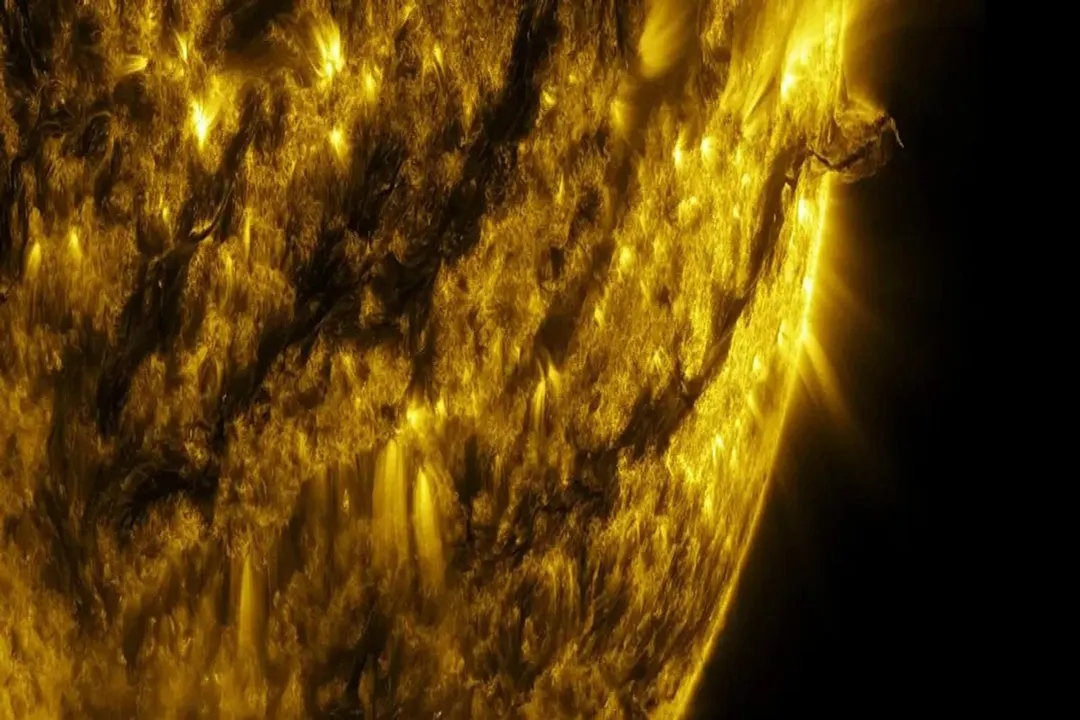
The spectacular detonation we call a supernova represents one of the most energetic events in the cosmos, marking the violent final moments of a star’s life. When astronomers consider whether a supernova originates from a high-mass or a low-mass star, the answer isn't a simple binary choice; rather, it depends entirely on which type of supernova we are discussing. Generally, the process is overwhelmingly associated with the death of stars possessing significant mass, far exceeding that of our own Sun. [1][6] However, there is a distinct class of supernova that involves stars that were once low-mass but gain mass through a secondary process.
# Cosmic Firepower
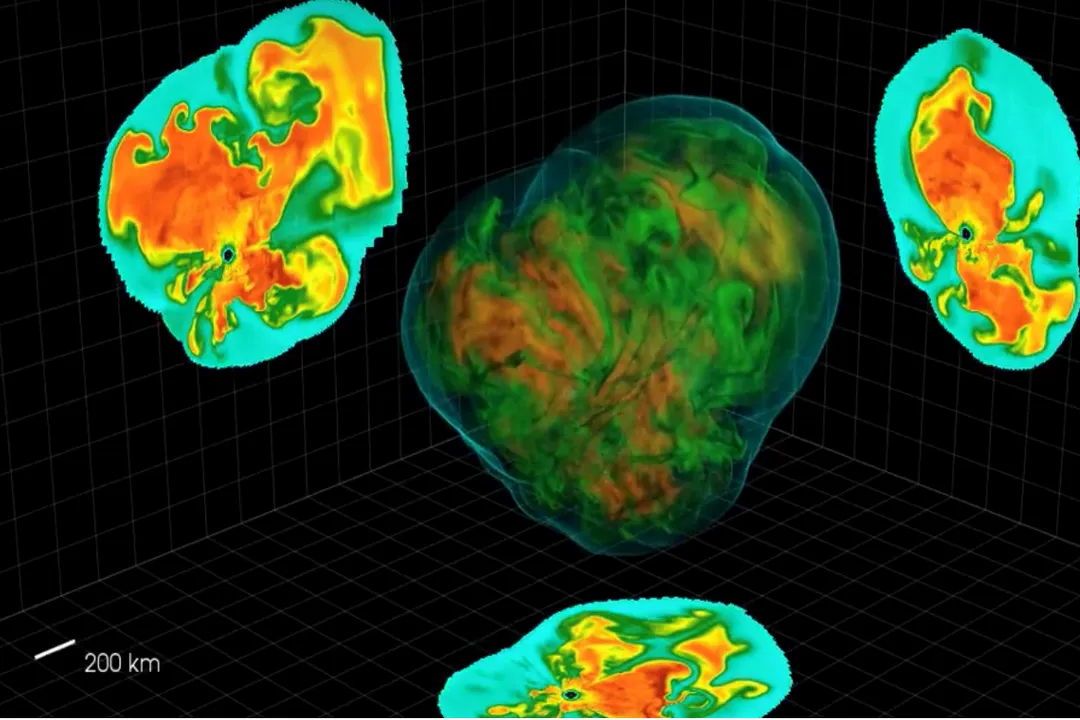
A supernova explosion releases an immense amount of energy, briefly outshining entire galaxies. [4][6] This stellar catastrophe fundamentally alters the interstellar medium, scattering heavy elements forged within the star across space, making subsequent generations of stars and planets possible. [6] Understanding the mechanics of this event requires looking at the star’s initial endowment—its mass—as this dictates its entire evolutionary path and ultimate demise. [7]
# Massive Star End
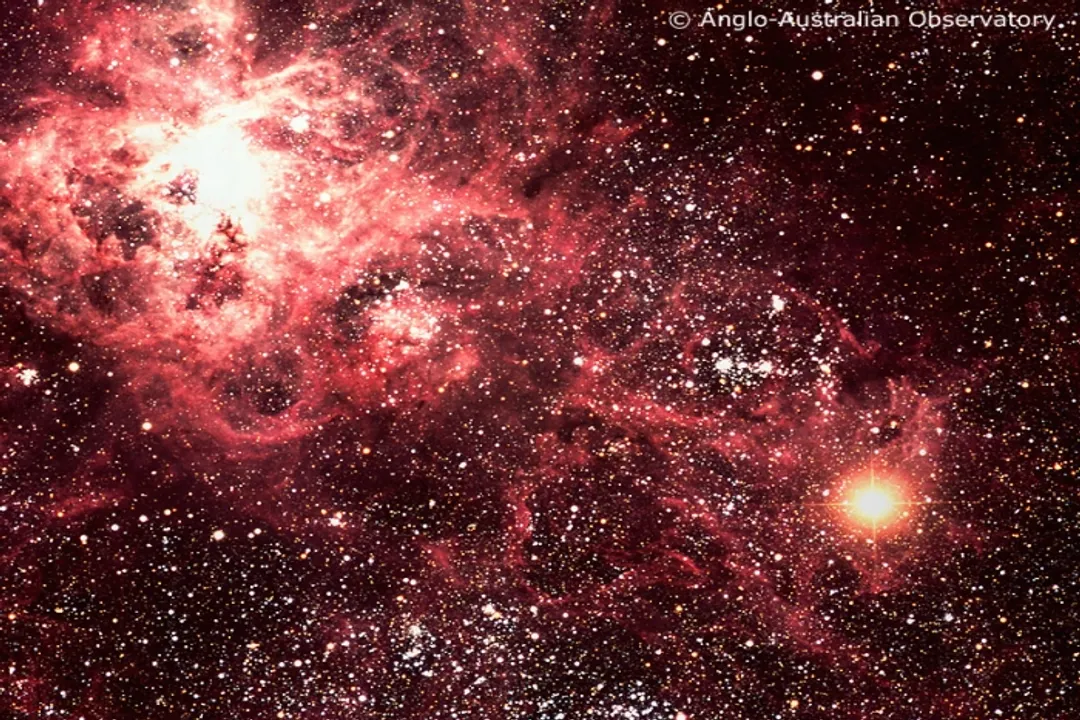
The most straightforward association with a supernova involves stars that begin their lives with an initial mass significantly greater than the Sun, often cited as being more than eight times the Sun’s mass (). [7] These stars live fast and die young, burning through their nuclear fuel at an prodigious rate. [7] When such a massive star exhausts the nuclear fuel in its core, the outward pressure generated by fusion can no longer counteract the inward pull of gravity. [6] This leads directly to a core-collapse supernova. [6]
The gravitational collapse in these high-mass progenitors is catastrophic. The core rapidly shrinks until it reaches nuclear density, creating an incredibly stiff core that momentarily halts the implosion. [6] The outer layers of the star, still rushing inward, then slam into this rigid core, rebounding in a powerful shockwave that tears the star apart. [6] These events are classified as Type II, Type Ib, or Type Ic supernovae, depending on whether the star retained its outer hydrogen and helium layers before exploding. [7]
# Core Collapse Physics
The physics behind the core collapse dictates that the progenitor must be massive to initiate the chain of events leading to the iron core, which is the igniter for the explosion. [6] Stars with less mass simply cannot generate the internal temperatures and pressures required to fuse elements up to iron. If a star is below this critical threshold, it avoids the violent implosion that characterizes a core-collapse event. [2]
If we look at the general population of stars, the vast majority are low-mass stars, like red dwarfs, or stars similar to the Sun. [3] Because the high-mass stars necessary for core-collapse supernovae are statistically rarer, the event itself is not an everyday occurrence in any given galaxy, though it happens frequently on a cosmic scale. [3] Imagine a galaxy the size of the Milky Way; these high-mass explosions might occur once every few decades. [3] The key factor here is the initial state: high mass leads to this specific type of supernova.
For perspective on the sheer scale difference, a star like our Sun, which is considered a low-mass star in this context, will swell into a red giant, shed its outer layers as a planetary nebula, and shrink down to become a white dwarf, completely skipping the supernova stage. [7] Its fate is quiet, not cataclysmic.
# White Dwarf Trigger
The "high-mass vs. low-mass" debate gets complicated when we consider Type Ia supernovae. These explosions do not result from the death of a single, massive star. Instead, they occur when a white dwarf—the dense, Earth-sized remnant of a dead, low-to-intermediate mass star—is involved in a binary system. [4]
In this scenario, the white dwarf slowly siphons, or accretes, material from its companion star. [4] As it gains mass, it approaches a critical tipping point known as the Chandrasekhar limit, which is approximately $1.4$ times the mass of the Sun. [5] Once this limit is breached, the increased pressure and temperature ignite runaway carbon fusion throughout the white dwarf almost instantaneously, leading to a thermonuclear explosion that obliterates the star entirely. [4][5]
This means that a Type Ia supernova is caused by a star that started as low-to-intermediate mass (the white dwarf), but the mechanism that triggers the explosion requires that star to achieve a high mass again, albeit temporarily and through external addition, pushing it past that threshold. [5]
# Mass Threshold Comparison
To clearly distinguish the two primary pathways to a supernova, it helps to compare the required conditions:
| Supernova Type | Progenitor Star(s) | Trigger Mechanism | Mass Requirement |
|---|---|---|---|
| Core-Collapse (Type II, Ib, Ic) | Single star, high initial mass () | Gravitational collapse of an iron core | Very high mass initially [7] |
| Thermonuclear (Type Ia) | White dwarf in a binary system | Accretion pushing mass past the limit | High mass () achieved [5] |
This highlights an interesting nuance: both paths require the central object involved in the final explosion to possess a high mass relative to a standard stellar remnant, whether that mass was intrinsic (core-collapse) or acquired (Type Ia). [5]
While the core-collapse supernovae involve the death of intrinsically massive stars, the Type Ia events are noteworthy because they offer a consistent luminosity standard across the universe, as the limit is extremely consistent. [4] This consistency is a direct consequence of the physics dictating the mass limit for carbon ignition in a degenerate star.
It is interesting to consider the timescale implication for the originating star. A star destined for a core-collapse supernova burns through its fuel rapidly, perhaps in mere millions of years, meaning its death is relatively swift once fusion ceases. [7] In contrast, the white dwarf involved in a Type Ia event might have taken billions of years to evolve from its initial main-sequence star phase, and then potentially billions more years orbiting a companion while accreting mass to reach that final critical density. [4] The mechanism of the explosion is rapid, but the setup time is significantly longer for the white dwarf scenario.
# Low Mass Fate
The fate of stars in the low-mass category—those born with masses between about $0.5$ and $8$ times the mass of the Sun, or those that lose significant mass before their death—is definitively not a supernova of either type. [2][7] For stars like our Sun, they simply cannot muster the internal pressure to fuse carbon and heavier elements once the helium burning phase ends. [2] They become quiescent remnants. Even the more massive end of this non-supernova spectrum results in a stable white dwarf supported by electron degeneracy pressure, rather than a catastrophic explosion. [7] Stars below about $0.5$ solar masses might never even become red giants, simply fading away very slowly over trillions of years. [7]
Therefore, in the most direct sense, a supernova is the result of a high-mass star (core-collapse) or a stellar remnant that has achieved a high mass (Type Ia). The low-mass star is defined by its inability to reach the mass threshold necessary to trigger the runaway nuclear reactions or gravitational instability required for that final, universe-illuminating blast. [2]
Related Questions
#Citations
Supernova explosions - Las Cumbres Observatory
Why do smaller stars not supernova? - Quora
What percentage of stars are Supernova? : r/askastronomy - Reddit
Supernovae - Cosmic Distance Ladder - NAAP - UNL Astronomy
How massive does a main sequence star need to be to go type 1 ...
DOE Explains...Supernovae - Department of Energy
Star Types - NASA Science
Field Guide to X-ray Sources :: Supernovas & Supernova Remnants
The Evolution of Massive Stars and Type II Supernovae | ASTRO 801