What makes a high mass star collapse?
The dramatic end of a truly massive star is one of the universe's most violent events, culminating in a collapse that often outshines entire galaxies for a brief period. Understanding what triggers this spectacular demise requires looking closely at the delicate, perpetual struggle happening within the star's core throughout its life: the battle between gravity trying to crush everything inward and the immense outward pressure generated by nuclear fusion. [2][3][9]
# Stellar Balance
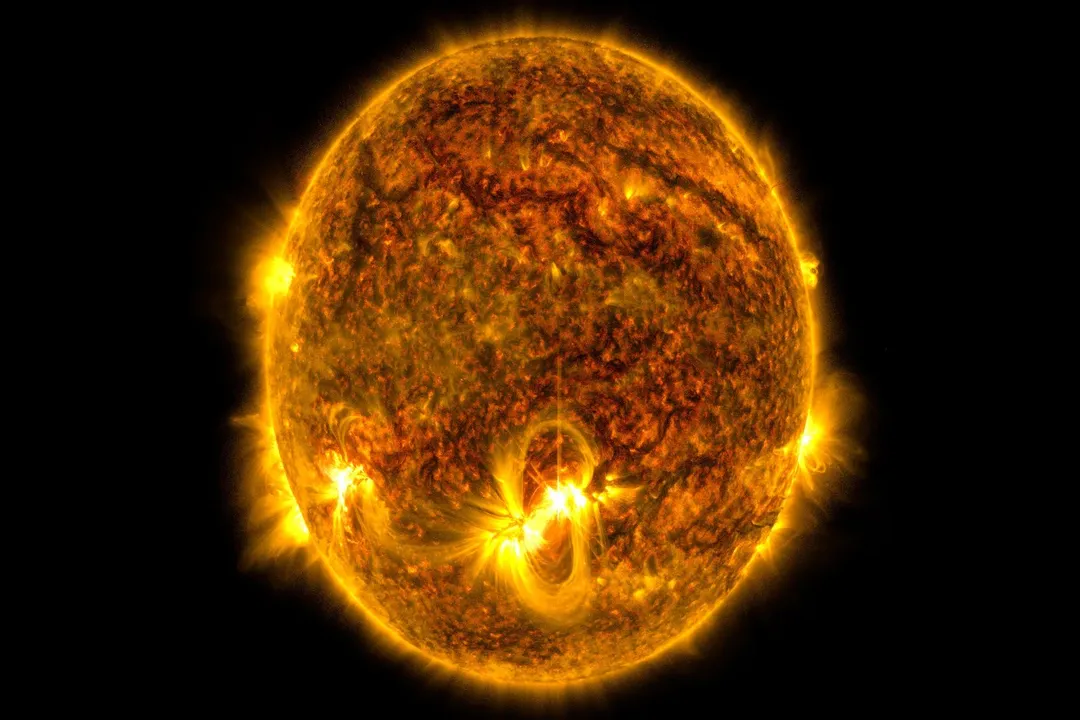
For the vast majority of a star's existence, this internal war remains in equilibrium. In the core, lighter elements are smashed together under extreme heat and pressure to form heavier ones, releasing vast amounts of energy in the process. [3] This energy creates an outward thermal pressure that perfectly counteracts the inward tug of the star’s own enormous mass. [9] This pressure support is what keeps the star inflated and stable against gravitational collapse. [4] Stars begin this process by fusing hydrogen into helium, which is the main sequence phase familiar to our own Sun. [3]
# Onion Layers
High-mass stars—those significantly heavier than the Sun—live fast and burn furiously. Because their gravity is so much stronger, the pressure and temperature in their cores are far greater than in smaller stars. [2] This allows them to initiate fusion reactions with elements heavier than hydrogen much sooner and at higher rates. [9] Once the core runs out of hydrogen, it contracts until it gets hot enough to fuse helium into carbon and oxygen. [1] This cycle repeats, creating successive shells of different burning fuel around the core, leading to an 'onion-like' structure. [1][9] The star progressively fuses heavier and heavier elements: carbon into neon, neon into oxygen, oxygen into silicon. [1] Each subsequent fuel source burns faster and hotter than the last, meaning the star's life shortens dramatically as it climbs the fusion ladder. [2]
# Iron Dead
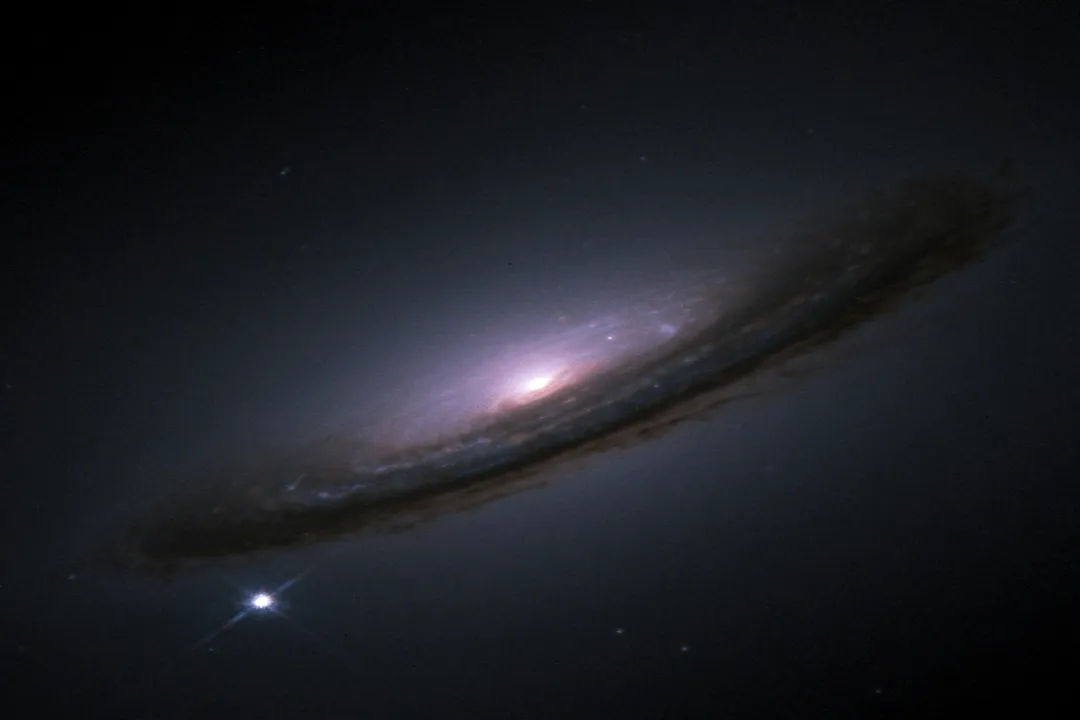
The process of building heavier elements stops abruptly at iron. When silicon fuses, it produces an iron core. [1][5][9] Iron is fundamentally different from everything that came before it in this sequence. Fusing lighter elements releases energy, which sustains the star against gravity. [5] However, iron sits at a unique stability point; fusing iron does not release energy. Instead, it consumes energy (it is an endothermic reaction). [1][5][8] When the massive star’s core turns to iron, it has reached a dead end for energy production. It's as if the central furnace, which has been pouring energy out for millions of years, instantly turns into a massive energy vacuum cleaner. [1] Suddenly, there is no longer an outward thermal pressure pushing against the overwhelming force of gravity. [5]
# Core Implosion
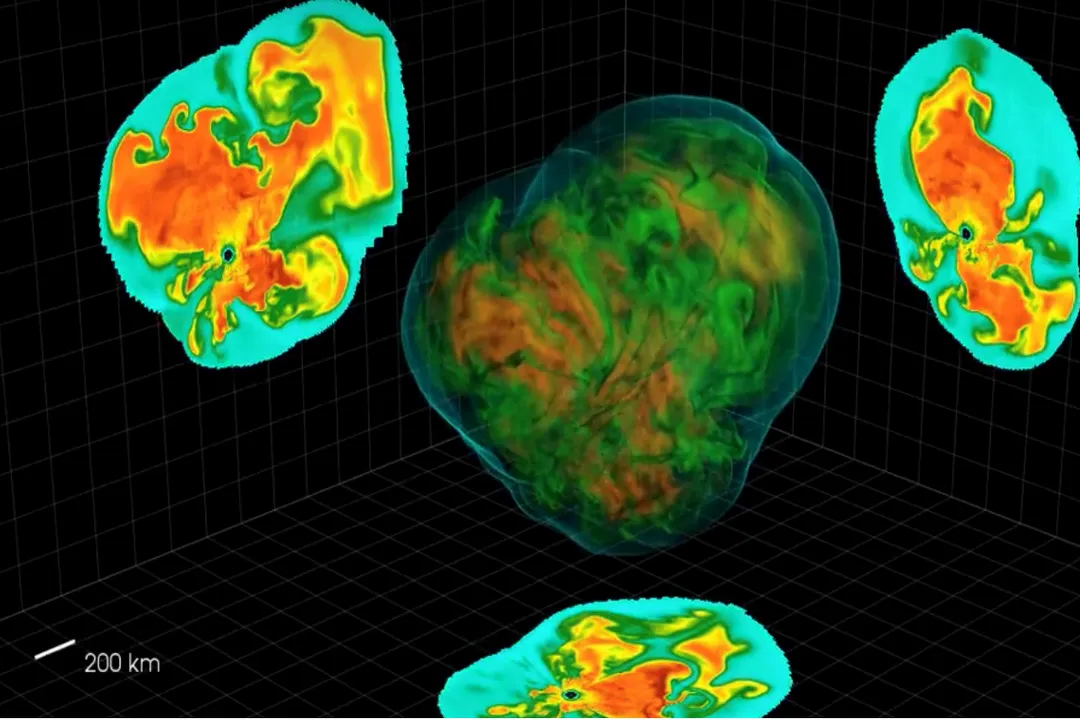
Once the energy generation ceases, gravity wins the eternal struggle with devastating speed. The iron core, which might be about the size of Earth, has no means of supporting its own weight against the mass of the layers above it. [8] In less than a second, the core collapses catastrophically, shrinking from roughly the size of the Earth to about 10 to 20 kilometers in radius. [1] During this incredible implosion, the density skyrockets to levels beyond comprehension. [4][8] The gravitational pressure is so immense that it forces electrons to merge with protons, a process called electron capture. [1][8] This reaction transforms the core material into a super-dense ball composed almost entirely of neutrons. [1][8]
The material created during this collapse is essentially nuclear matter compressed to its absolute limit. Think about the difference between a feather and a lead weight of the same size; the neutron core is like trying to compress that lead weight until every single atom's nucleus is jammed against every other nucleus possible, creating a substance that is far denser than anything else in the known universe. [1]
# Shock Rebound
The collapse doesn't continue indefinitely. It halts when the neutrons, now packed incredibly tightly, exert a repulsive force known as neutron degeneracy pressure. [1][8] This pressure is so strong that it can resist the continued gravitational infall, causing the core to suddenly stiffen and stop moving inward. [1] However, the vast amount of overlying stellar material—the outer layers of silicon, oxygen, and so on—is still falling inward at tremendous speeds, often reaching 70,000 kilometers per second. [1]
When these infalling outer layers slam into the newly formed, incredibly rigid neutron core, they "bounce" off it, generating a powerful shockwave. [1][5][10] This shockwave rips outward through the star. For the explosion to succeed and become a visible supernova, the shockwave must be successfully re-energized as it passes through the remaining layers of the star. [2] The successful propagation of this shockwave is the hallmark of a core-collapse supernova, tearing the star apart in a glorious explosion. [5][10]
# Stellar Remnants
What remains after the spectacular fireworks depend critically on the initial mass of the progenitor star and, more accurately, the mass remaining in the core after the explosion ejects the outer layers. [6] If the core remnant is less than about three times the mass of our Sun (the Tolman-Oppenheimer-Volkoff limit), the neutron degeneracy pressure holds firm, and the object stabilizes as a neutron star. [1][8] These remnants are tiny, city-sized objects packed with an entire star's worth of mass. [2]
If the remaining core mass exceeds this threshold, even the incredible stiffness of neutron degeneracy pressure cannot overcome the overwhelming gravity. [1] In this much rarer, heavier scenario, the core continues to collapse past the neutron star stage, forming a black hole, an object whose gravity is so intense that nothing, not even light, can escape its event horizon. [1] The difference between forming a neutron star and a black hole is just a sliver of mass, illustrating how sensitive the final outcome is to the star’s initial conditions and the precise physics governing that final second of collapse. [6]
#Videos
High Mass Stars: Crash Course Astronomy #31 - YouTube
Related Questions
#Citations
Supernova - Wikipedia
High mass star - Las Cumbres Observatory
Star Basics - NASA Science
ELI5: Can someone explain how a star can collapse in on itself, and ...
DOE Explains...Supernovae - Department of Energy
Why do medium mass stars collapse to form supernovae while more ...
High Mass Stars: Crash Course Astronomy #31 - YouTube
Why does the core of a massive star collapse? - Quora
Star Life Cycle - ASPIRE
Core Collapse Supernovae - gravitationalwaves – Syracuse University