Is a supernova a low-mass star?

The sheer power of a supernova explosion, briefly outshining entire galaxies, stands as one of the most dramatic events in the cosmos. When we picture this stellar demise, it is easy to assume that any star, given enough time, might simply burn itself out in this brilliant finale. However, the reality of stellar evolution dictates a much more rigid set of rules, governed almost entirely by a star's initial mass. In fact, the vast majority of stars, including those we might casually label as "low-mass," never achieve the conditions necessary for such a catastrophic detonation. The stellar remnant path for smaller stars is far more serene than the violent end reserved for their giants.
# Mass Determines Fate
A star’s life and death are sealed the moment it forms, dictated by the mass it manages to collect from its surrounding nebula. This initial mass sets the temperature and pressure in the core, controlling the nuclear fuel it can access and the timescale of its existence. Astronomers often divide stars into broad categories, though the precise cutoffs can vary slightly depending on the context, such as whether we are discussing the main sequence or the remnant state.
For the purpose of ending in a massive explosion, we are primarily concerned with stars significantly more massive than our own Sun, which clocks in at one solar mass (). Stars that are considered low-mass—those comparable to or less than about eight solar masses—are simply incapable of creating the necessary conditions for a core-collapse supernova. They lack the gravitational leverage to compress their cores sufficiently after exhausting their hydrogen and helium fuel reserves.
To illustrate this difference simply, imagine a line drawn in the cosmic sand: if a star forms above the threshold of approximately eight solar masses, it has the potential for a dramatic, core-collapse end. If it forms below that threshold, its destiny is much quieter. Our Sun falls squarely into the lower category, destined for a vastly different conclusion than the massive blue giants observed elsewhere in the universe.
# The Quiet Endings
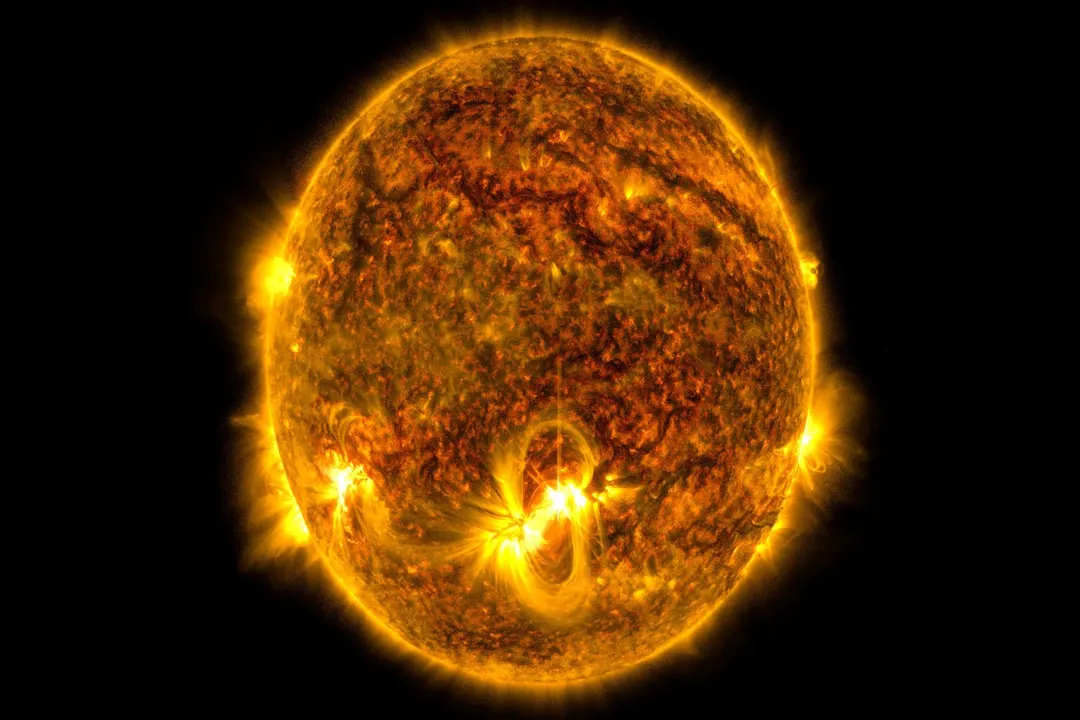
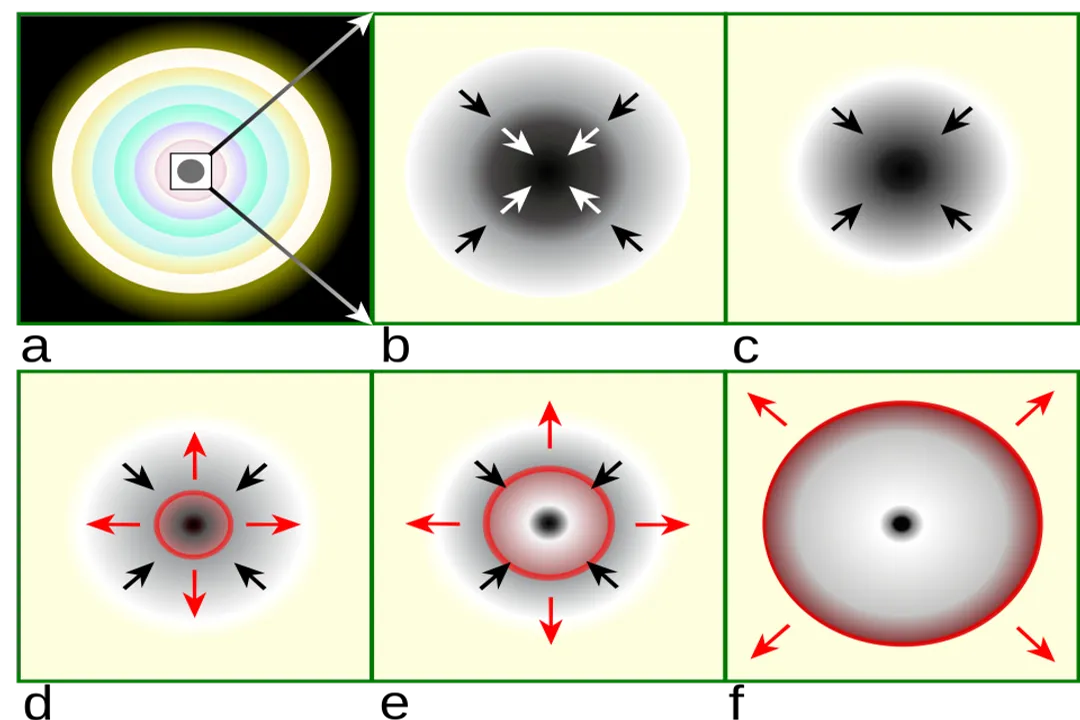
Stars similar to the Sun, or somewhat larger up to about , live out their lives fusing lighter elements into heavier ones. When the core runs out of fusion fuel, the outward pressure generated by that fusion can no longer balance the inward crush of gravity. In a massive star, this collapse is unstoppable, leading to a catastrophic implosion. In a lower-mass star, however, gravity eventually meets a firm resistance.
This resistance comes from a quantum mechanical effect known as electron degeneracy pressure. As the core contracts, electrons are squeezed so tightly together that they resist further compression, effectively halting the collapse before the core becomes dense enough to ignite the runaway fusion that characterizes a supernova.
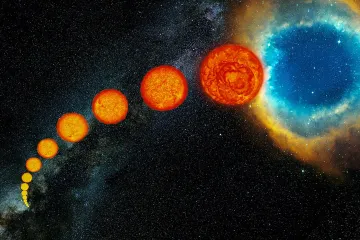
The result of this successful resistance is the formation of a white dwarf. This stellar corpse, composed primarily of carbon and oxygen, is incredibly dense—a teaspoon of white dwarf material could weigh several tons—but it is stabilized by that degeneracy pressure, not by ongoing fusion. The star sheds its outer layers, often creating a beautiful planetary nebula in the process, and then begins the long, slow fade into a theoretical black dwarf over trillions of years. This is the fate of the vast majority of stars in the Milky Way, including our Sun.
# Massive Stars Collapse

The spectacular events known as core-collapse supernovae (classified as Type II, Ib, or Ic) are exclusively the domain of high-mass stars, typically those starting with more than eight solar masses. These behemoths can sustain fusion further up the elemental chain, burning through fuel faster and hotter. They eventually develop an iron core. Iron is the ultimate dead-end for stellar fusion; fusing iron consumes energy rather than releasing it.
Once the iron core forms, there is no pressure source left to fight gravity. The core collapses in milliseconds, achieving unbelievable densities and causing a massive shockwave to rebound outwards, blowing the star apart. This is the quintessential supernova explosion that scatters heavy elements, like the iron in our blood or the gold in our jewelry, back into the interstellar medium.
This violent process is fundamentally impossible for a low-mass star because its gravity is never strong enough to overcome electron degeneracy pressure to form an iron core in the first place.
# Type Ia Explosions
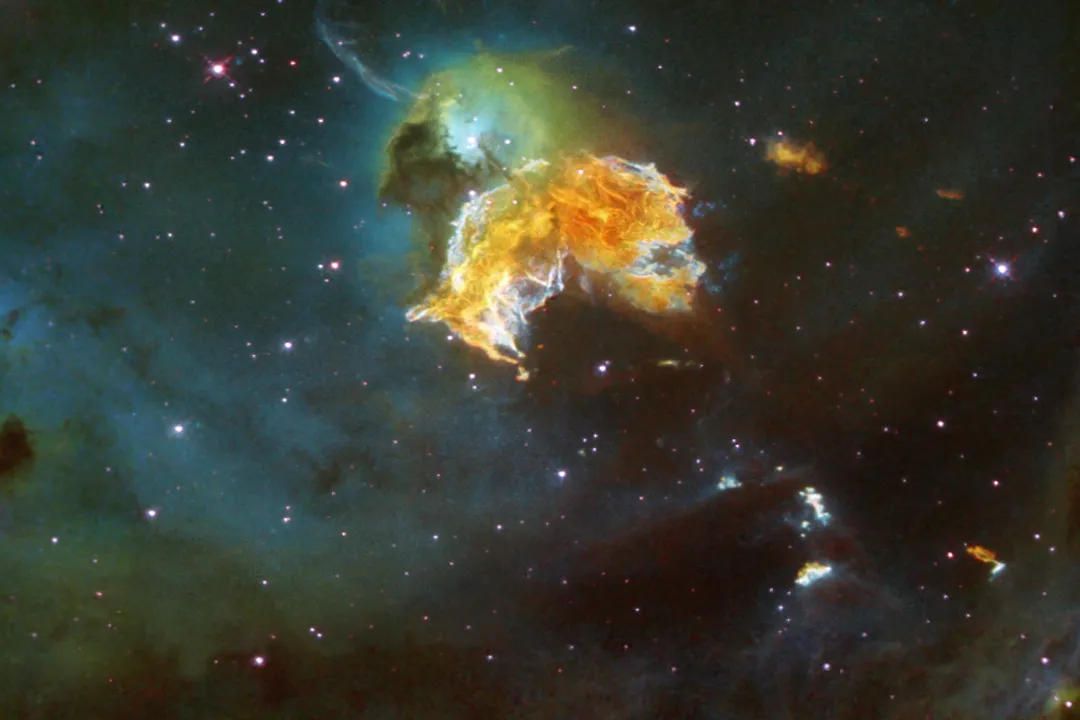
While low-mass stars themselves do not explode as supernovae, there is one major class of supernova explosion that originates from a white dwarf—the stable remnant of a low-to-intermediate mass star: Type Ia supernovae. This mechanism provides the only avenue for a star that wasn't massive enough to become a core-collapse progenitor to end its life violently.
This scenario requires a special setup: the white dwarf must exist in a binary star system. Over millions or billions of years, the white dwarf siphons material, primarily hydrogen and helium, from its companion star. As it accretes this mass, the white dwarf grows heavier.
The critical point is reached when the white dwarf's mass approaches the Chandrasekhar Limit, which is approximately $1.4$ times the mass of the Sun. Once this limit is breached, the electron degeneracy pressure can no longer support the star against its own immense gravity. The pressure initiates runaway thermonuclear fusion of carbon and oxygen throughout the white dwarf's interior simultaneously. The resulting explosion completely obliterates the white dwarf, leaving behind no remnant.
It is a crucial point of distinction: the star that exploded was the white dwarf, which had a defined mass limit (), but the original star that formed the white dwarf was not massive enough to go core-collapse. Therefore, even in this explosive scenario, the original star was not a high-mass star in the sense required for the core-collapse event.
# Standard Candles of the Cosmos
The distinction between the two main supernova types is vital for astronomers because Type Ia events serve as standard candles. Because Type Ia supernovae all explode when they reach nearly the exact same critical mass (the Chandrasekhar Limit), they all reach nearly the same peak intrinsic brightness. This consistent peak luminosity allows scientists to use them as cosmic yardsticks. By comparing how bright the explosion appears to how bright we know it must be, researchers can accurately calculate the vast distances to their host galaxies. Core-collapse supernovae (Types II, Ib, Ic) are far less predictable in their initial energy release, making them less reliable as distance markers.
If we visualize the total energy budget of stellar death, the Sun’s gentle puffing off of its outer layers is equivalent to a single flickering candle, while a core-collapse event represents an explosion that temporarily illuminates a city. The Type Ia event, while less energetic than a core-collapse supernova, is still incredibly bright—brighter than the entire galaxy it resides in, though dimmer than the most powerful core-collapse events.
A helpful way to frame the mass thresholds involved is to consider the relative gravitational stress. A star like our Sun will achieve a core density where electron degeneracy pressure kicks in well before it can compress the core enough to ignite iron fusion. If we could somehow place the Sun next to a star of , the difference in core pressure during their final moments would be immense, one being stabilized by quantum effects and the other collapsing due to overwhelming self-gravity.
When we analyze observations, such as those showing distant, uniform bursts of light across the sky, we are looking at the fingerprints of white dwarfs meeting the ceiling, not the death throes of a star that began life as a true giant. The universe strictly separates stellar deaths based on the initial endowment of mass, ensuring that low-mass stars, after a long and stable main-sequence existence, retire quietly rather than ending in spectacular, galaxy-spanning light shows.
Related Questions
#Citations
Supernova - Wikipedia
This image baffles me, Can someone explain? : r/astrophysics - Reddit
Why do smaller stars not supernova? - Quora
Supernovae - Cosmic Distance Ladder - NAAP - UNL Astronomy
Why don't less massive stars explode in form of supernovas?
Types of Supernovae - | The Schools' Observatory
Star Basics - NASA Science
How massive does a main sequence star need to be to go type 1 ...
DOE Explains...Supernovae - Department of Energy