What is the main reason for the low star formation in elliptical galaxies?
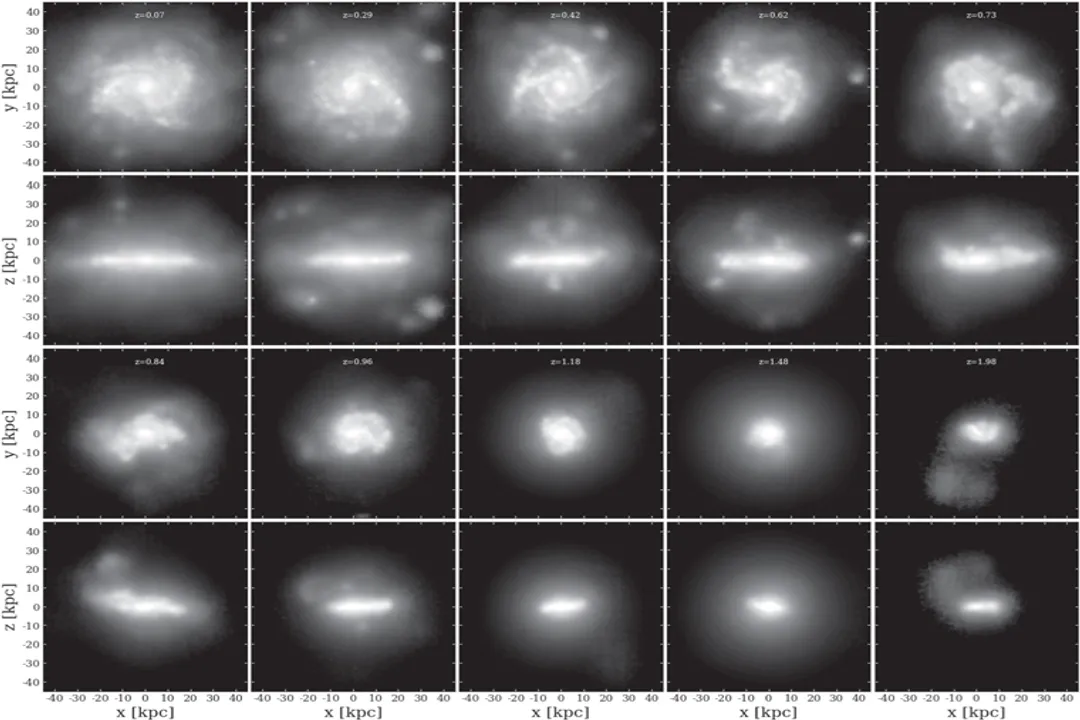
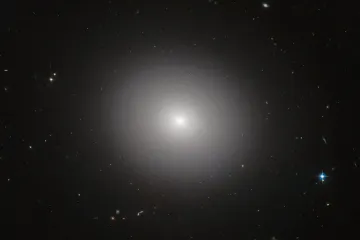
The silent grandeur of elliptical galaxies often belies a long and dramatic history. Unlike their spiral cousins, which continuously churn out new stars, ellipticals are generally characterized by their reddish hue and remarkably low current rates of star formation, earning them the moniker "red and dead" in astronomical parlance. [9] The central mystery surrounding these giants is precisely why they have ceased making stars, a process astronomers call quenching. The main reason boils down to the catastrophic exhaustion or expulsion of their cold, molecular gas reservoirs—the essential fuel for stellar nurseries. [3]
# Quiescent Nature
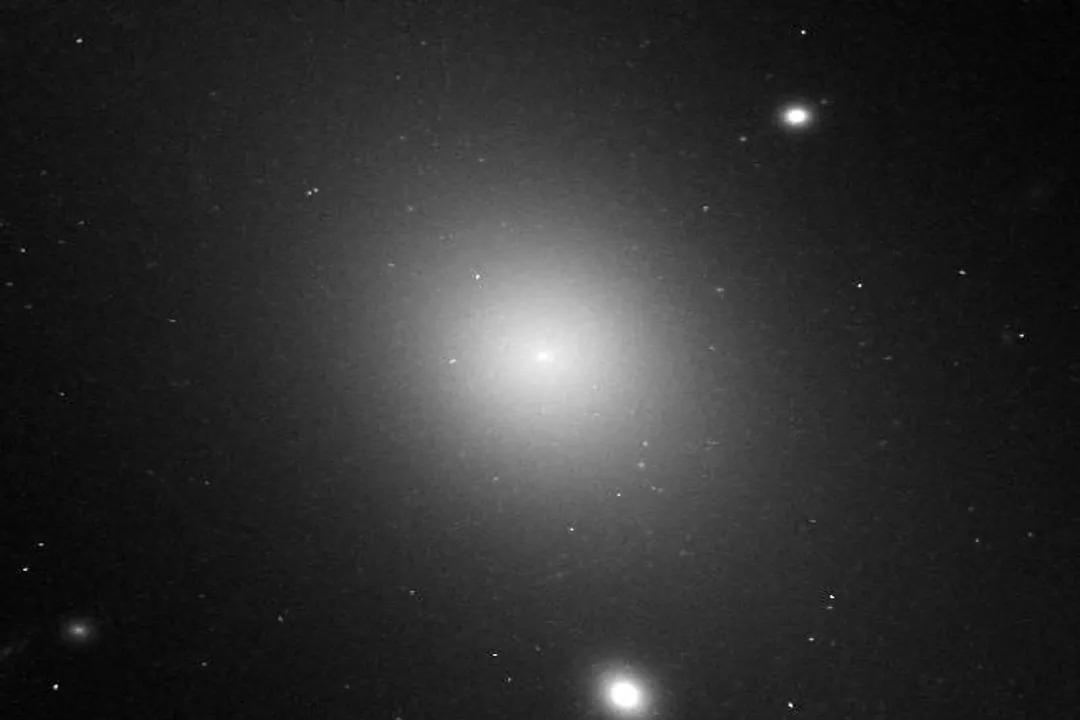
Elliptical galaxies represent a diverse class of stellar systems, ranging from small dwarf ellipticals to massive central cluster galaxies that can contain trillions of stars. [9] Structurally, they lack the prominent disks, spiral arms, and active star-forming regions seen in spiral galaxies. [9] Their stellar populations are overwhelmingly old, meaning the vast majority of the stars they possess formed billions of years ago. [7]
The fundamental building block for star formation is cold gas, primarily in the form of molecular hydrogen clouds. In spiral galaxies, this gas settles into a thin, rotating disk where it remains relatively cool and dense enough to collapse under gravity. [3] In contrast, elliptical galaxies simply do not retain enough of this cool fuel to sustain significant star birth over cosmic timescales. [3] This depletion is not a slow fading; it is often attributed to dramatic, high-energy events linked to the galaxy’s violent formation history.
# Gas Depletion Mechanisms
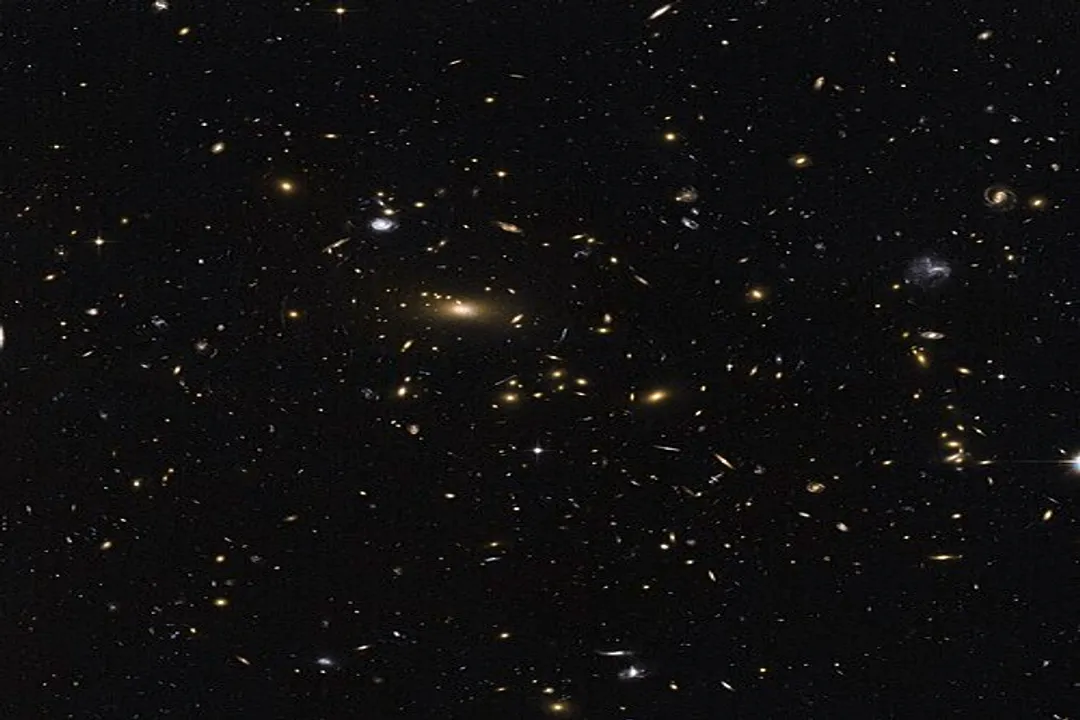
The lack of star-forming material in ellipticals is not uniform across all mass scales or environments, but the end result—quenched star formation—is a defining feature. [4] Several powerful processes are believed to work in concert to strip away or heat up the available gas, rendering it unable to cool and collapse into new stars.
# Mergers and Shocks
One of the most widely accepted pathways leading to the formation of massive ellipticals involves major galaxy mergers. [9] When two spiral galaxies collide, the subsequent gravitational disturbance is far from gentle. The merging process can trigger intense bursts of star formation—sometimes called a "starburst"—as gas clouds are violently compressed. [7]
However, this burst is often short-lived. The merger itself can rapidly convert most of the available cold gas into stars or heat it up so significantly that it becomes too hot to condense. Furthermore, the resulting single, large galaxy settles into a more spherical, pressure-supported structure, rather than a rotationally supported disk, making it less efficient at cooling down residual gas over the long term. [7]
If we think of a spiral galaxy as a steady, self-regulating production line, a major merger is like a complete shutdown and system overload event. The energy dumped into the interstellar medium during the collision elevates the temperature of the gas, pushing it well above the critical threshold required for molecular cloud formation.
# Active Galactic Nuclei Feedback
A crucial, self-regulating mechanism preventing renewed star formation, even if some gas remains, involves the supermassive black hole (SMBH) residing at the center of nearly every massive galaxy. [5] When gas falls toward this central engine, it can power an Active Galactic Nucleus (AGN), releasing colossal amounts of energy. [5]
This energy is vented into the galaxy's extended halo of hot gas, known as the circumgalactic medium (CGM) or hot halo, through powerful outflows or jets. [5] This AGN feedback acts like a cosmic thermostat. If enough gas starts to cool and sink toward the center, the AGN brightens, heats the surrounding gas reservoir, and effectively "pumps the brakes" on star formation by preventing that gas from ever reaching the cold, dense state needed for collapse. [5] This mechanism can maintain a galaxy in a quenched state for extended periods. The energy from these AGN-driven outflows can be so significant that they are capable of completely ejecting the gas from the galaxy into the surrounding intergalactic medium. [3]
# Environmental Stripping
For galaxies residing in dense galaxy clusters, the environment itself becomes an active participant in gas removal. As a galaxy moves rapidly through the cluster's hot, diffuse medium, the ram pressure exerted by this medium acts like a cosmic wind, physically sweeping the galaxy's cool gas away from its disk or halo. [3] This process, known as ram-pressure stripping, can efficiently drain a galaxy of its star-forming fuel in relatively short cosmic timescales, especially for gas that is not tightly bound to the galaxy's gravitational center. [3]
# Metallicity Context
The study of the chemical composition, or metallicity, of elliptical galaxies offers a subtle clue to their formation history, though it doesn't directly explain the lack of current star formation. Metallicity refers to the abundance of elements heavier than hydrogen and helium, which are forged inside stars and dispersed through supernovae.
One observation suggests that the metallicity distribution in some elliptical galaxies can be relatively low compared to what might be expected based solely on their total stellar mass. [1] This can hint at several scenarios: perhaps a significant portion of their mass originated from less chemically enriched gas in the early universe, or the chemical enrichment process was inefficient or interrupted early on. [1] If the star formation was very rapid and short-lived (a massive early starburst), the resulting galaxy might have expelled its metal-rich, hot gas phase before it could be fully enriched by multiple generations of supernovae, leaving a relatively metal-poor, yet massive, stellar population today. [1] This contrasts with spiral galaxies, which maintain a continuous, slower enrichment process across their disk over billions of years. [1]
# Contrast with Spirals
Understanding why ellipticals stop forming stars is illuminated by contrasting them with the ongoing activity in spirals. Spiral galaxies, like our Milky Way, maintain their star formation by cycling gas through several phases: cold molecular clouds form stars; the resultant hot gas and supernovae remnants are eventually pushed back into the cool phases via magnetic fields or turbulent motions within the disk; and importantly, they actively accrete fresh, cold gas from the cosmic web over time. [3]
Elliptical galaxies, especially the most massive ones, seem to have shut down this accretion mechanism or lost their internal reservoir entirely. [3] While a spiral's gravity tends to concentrate gas into a cool, rotating plane, the relaxed, pressure-dominated structure of an elliptical galaxy allows the hot gas in its halo to remain too hot to cool efficiently, or allows AGN feedback to continually re-heat any gas that tries to settle. [5]
Consider a hypothetical scenario: If we could instantaneously inject several billion solar masses of pristine, cold hydrogen gas into the central region of a massive, quenched elliptical galaxy today, the outcome would likely be disappointing for stargazers. Because the galaxy is no longer a cool, rotating disk but a hot, turbulent sphere, the gas would likely be immediately heated by the pre-existing hot halo or stripped by ambient cluster gas before it could settle and cool again. [3] The structure shaped by the violent past prevents future productivity, even if the fuel is added. This highlights that the mechanism for quenching involves both gas removal and the destruction of the factory structure itself.
# Evolution and Environment
The final state of an elliptical galaxy—its lack of star formation—is strongly tied to its birthplace. Giant ellipticals are almost exclusively found in the centers of dense galaxy clusters. [9] This implies that the cluster environment plays a decisive role in accelerating the gas depletion process through phenomena like ram-pressure stripping or by forcing frequent, destructive mergers that fuel the central AGN. [3]
For galaxies that were once spirals, the transition to a "red and dead" elliptical is a dramatic phase change. It is not simply a gradual dimming; it is an evolutionary cutoff. The main reason they stop forming stars is the long-term failure to replenish their cold gas supply while simultaneously heating or expelling what they once held. [3] The physical processes that define the elliptical morphology—a pressure-supported, spheroidal system—are intrinsically linked to the physical conditions (high velocity dispersion, hot halo) that inhibit the necessary cooling for future star production.
# Observation Clues
Even the presence or absence of cold dust provides hints about this history. Observations from facilities like the Herschel Space Observatory have been instrumental in measuring the cold dust content in galaxies. [2] Dust is intrinsically linked to molecular gas, as it is the primary component onto which molecular hydrogen forms. A lack of detectable cold dust in massive ellipticals strongly corroborates the picture of a galaxy that has used up or lost its cold molecular fuel supply, rather than one that merely has cold gas that is unusually hard to detect. [2] When comparing the cold gas reservoir of a massive elliptical to a star-forming spiral of similar stellar mass, the contrast in cold gas fraction is often stark, clearly demonstrating the severity of the depletion. [2]
If we were to chart the typical gas fraction () against galaxy mass, spirals show a general trend where more massive spirals hold more gas, while massive ellipticals sit near the bottom of that graph, showing negligible cold gas fractions. [4] This reinforces the notion that the quenching process is intrinsically tied to the total mass and the merger history that builds up massive galaxies.
The sheer diversity in the metallicity gradient across different galaxy types is another area where expertise in analysis shines. If a galaxy assembled its stars slowly, retaining its gas through slow accretion, we might expect a smooth chemical gradient. Ellipticals, formed by rapid, violent mergers, often exhibit less pronounced or randomized gradients because the mixing of chemically different gas components happens catastrophically in the early phases. [1] This chemical signature further supports the rapid exhaustion model over a slow fade-out model.
# Stellar Population Ageing
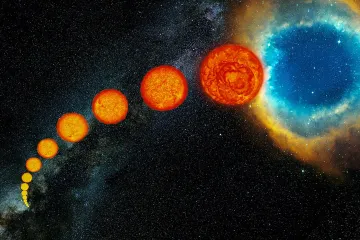
A simple, yet crucial, point that underpins the visual appearance of ellipticals is the effect of time itself. Once the star formation stops, the existing stellar population ages. Blue, massive, short-lived stars die out quickly, leaving behind only lower-mass, long-lived stars, which evolve into red giant stars. This natural stellar evolution sequence, acting on a population that formed billions of years ago and then shut down, explains the characteristic red color observed today. [9] If star formation were merely paused for a short time, the galaxy would still retain a significant population of hotter, bluer stars; the deep red color confirms the long-term cessation of any significant blue star creation.
In summary, the primary driver for the low star formation in elliptical galaxies is the effective removal or permanent heating of the cold molecular gas fuel through a combination of violent gravitational mergers, powerful feedback from the central supermassive black hole, and environmental stripping in dense clusters. [3][5] The structure they evolve into—spheroidal and dynamically hot—is also fundamentally less conducive to gathering and cooling new gas than the cool, thin disks of spiral galaxies. [7] The resultant galaxy is thus quenched both by lack of fuel and an unfavorable physical environment for refueling.
Related Questions
#Citations
Why is the metallicity of elliptical galaxies low?
Bullying Black Holes Force Galaxies to Stay Red and Dead
Why do elliptical galaxies lack gas for star formation? - Quora
The formation history of elliptical galaxies - Oxford Academic
On the Decline of Star Formation during the Evolution of Galaxies
What caused massive elliptical galaxies to stop forming stars?
Galaxy structure, evolution, and distribution (age vs appearance)
ASTRO 101 Ch. 16 HMW Flashcards - Quizlet
Elliptical galaxy - Wikipedia