What kind of evidence suggests that there is not much star formation happening in elliptical galaxies?
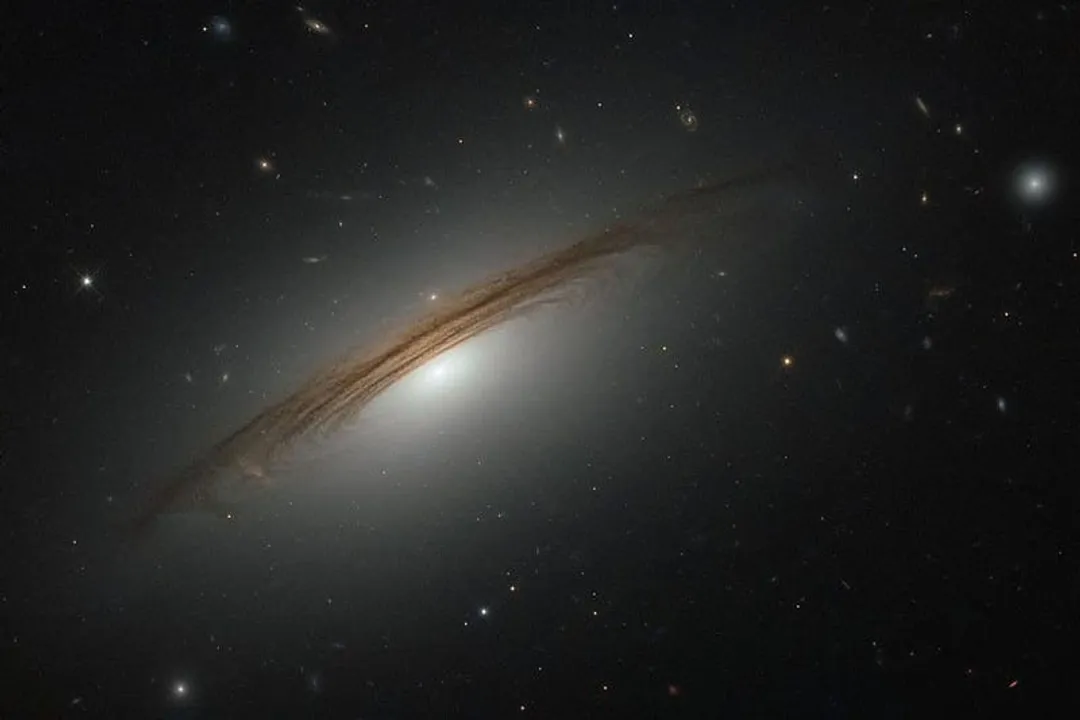
The visual contrast between different galaxy types immediately suggests differences in their current activity levels. Spiral galaxies, like our own Milky Way, are often characterized by their bright blue hues and distinct spiral arms, features strongly associated with ongoing, active star birth. Elliptical galaxies, conversely, tend to present a much more uniform, reddish-yellow appearance. This lack of vibrant blue light is the first major clue—the observational signature—that very little, if any, new star formation is occurring within them today. [2][4]
# Fuel Shortage
The fundamental requirement for a star to be born is a reservoir of cold, dense molecular gas and dust. [2][8] Stars cannot form from diffuse, hot gas; they require cool clouds that can collapse under their own gravity. The primary line of evidence against contemporary star formation in ellipticals is their profound lack of this essential fuel source. [4][9] While spiral galaxies actively circulate and maintain reservoirs of cool gas within their disks, massive elliptical galaxies are generally known to be extremely poor in cold gas. [8] This deficiency means the raw material for stellar nurseries is simply unavailable in sufficient quantities or the right state to initiate the birth of new solar systems. [2]
Some of the gas that is present in these massive systems tends to be much hotter, perhaps due to past energetic events or the gravitational environment. [9] Hot gas possesses too much internal pressure to collapse gravitationally, effectively acting as a barrier to star formation rather than a catalyst. [6] This state of being gas-starved is a hallmark of the older, more evolved elliptical population. [4]
# Stellar Age
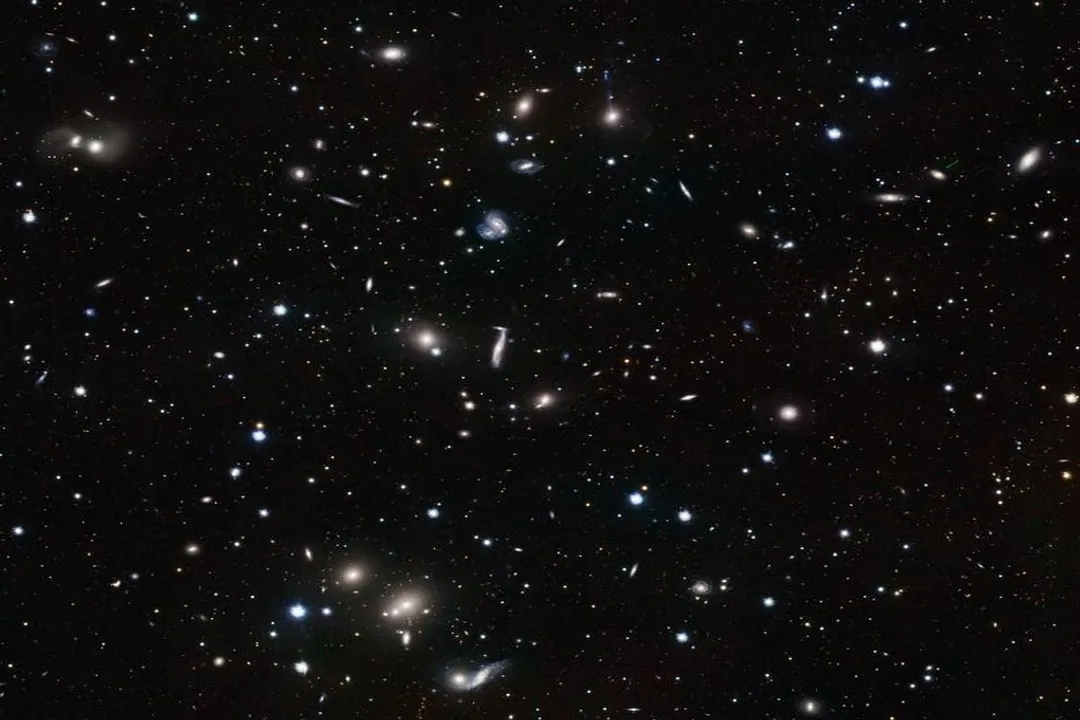
Beyond the missing fuel, the "population census" of an elliptical galaxy speaks volumes about its history. Astronomers study the color and spectral characteristics of the light coming from these galaxies to determine the average age of their constituent stars. [4] Ellipticals are overwhelmingly dominated by older, lower-mass stars, which emit light predominantly in the red and yellow ends of the spectrum. [2] The absence of hot, massive, short-lived blue stars—the very stars that would indicate recent or ongoing stellar birth—is striking. [2]
If a large elliptical galaxy were actively forming stars at the rate of a moderate spiral, we would expect to see detectable populations of these massive, short-lived blue stars sprinkled throughout its volume, causing a noticeable shift toward bluer light overall. [4] The fact that their light profile remains consistently red and smooth strongly implies that the epoch of significant star formation ended billions of years ago. [4] They are, in astronomical parlance, "red and dead". [4]
# Merger Quenching
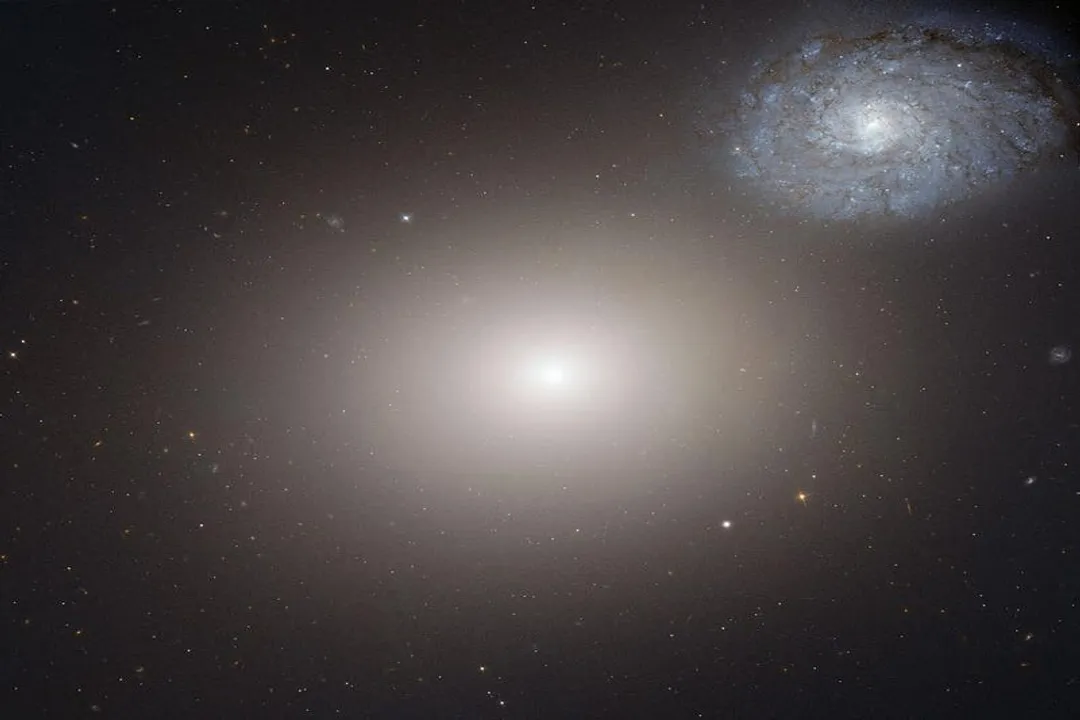
Understanding why the gas is missing or too hot leads directly to the prevailing theory about elliptical galaxy formation: catastrophic mergers. [7][8] Unlike spirals, which often evolve slowly, massive ellipticals are thought to be the result of one or more major mergers between similarly sized galaxies, often spirals. [8] These violent gravitational interactions have profound consequences for the gas supply.
When two large galaxies collide violently, the gravitational forces and shockwaves can rapidly heat the vast reserves of cold gas, pushing it above the temperatures needed for collapse. [6] Alternatively, the merger process can physically eject much of the cold gas and dust out of the galaxy entirely, stripping it away into the surrounding intergalactic medium. [9] Yale research has pointed out that when large galaxies collide, the resulting star formation effectively ceases because of this process of gas heating and removal. [6] The massive elliptical galaxy that results from this merger settles into a quiescent state because its ability to refuel its star formation pipeline has been destroyed in the collision. [5][7]
It is interesting to consider that while a merger can initially trigger a very brief, intense burst of star formation—a "starburst"—this phase is short-lived. The ensuing elliptical structure is the long-term consequence, defined by the quenching of that activity and the dissipation or heating of the gas reservoir. [5]
If we consider star formation rate (SFR) versus total stellar mass (), the distinction becomes stark. A typical spiral might have an SFR of , whereas a massive elliptical exceeding might have an SFR effectively approaching zero, perhaps or less, making their current output almost negligible on cosmological timescales. [2][4] This low residual activity often requires very sensitive, long-exposure observations to even detect, unlike the bright, blue knots of star formation easily spotted in spirals.
# Environmental Context
The location of an elliptical galaxy also plays a part in maintaining its "dead" status. Ellipticals are disproportionately found residing in the centers of dense galaxy clusters. [4] While the initial quenching mechanism is likely the merger that built the galaxy, the dense cluster environment can act as a persistent suppressor. [4] As the elliptical galaxy plunges through the hot, pervasive gas within the cluster—a process known as ram-pressure stripping—any remaining cool gas or pockets of dust can be swept away, preventing future replenishment. [4] This ongoing environmental pressure ensures that any small pockets of gas that might reform are rapidly removed, locking the galaxy into its quiescent state.
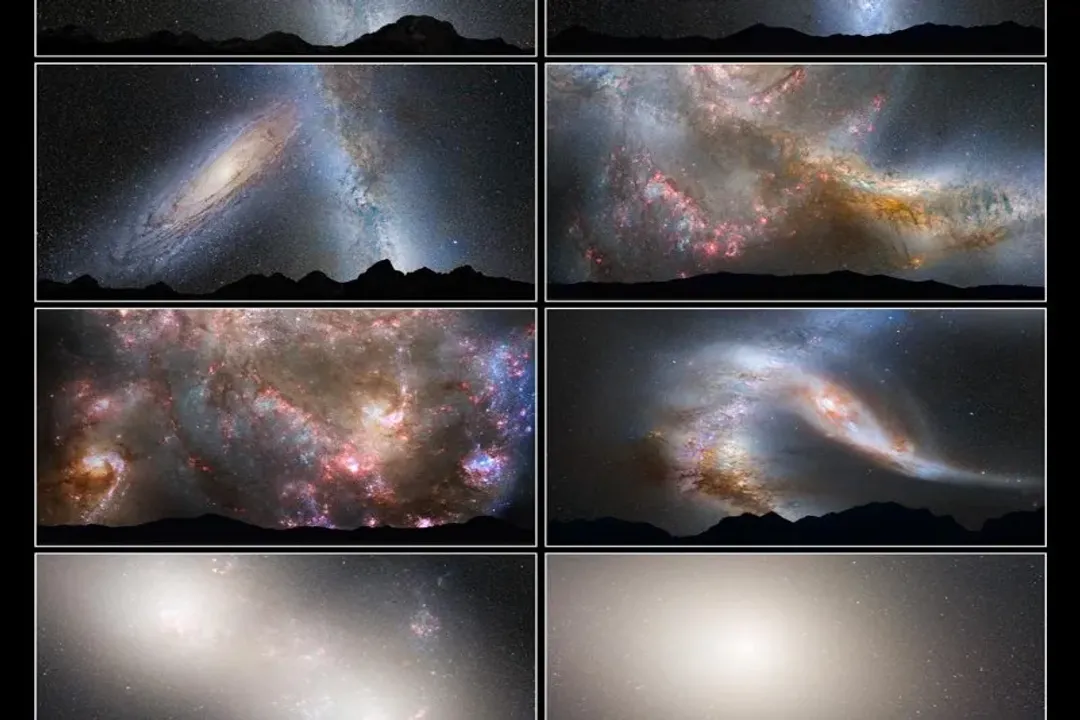
Historically, some astronomical surveys characterized elliptical galaxies as typical for the early universe, suggesting they went through their rapid growth and star-forming phases quickly before settling down. [1] This contrasts with the slow, steady accretion and disk growth characteristic of modern spirals like the Milky Way, which may continue forming stars for many more billions of years. [5][7] The Milky Way, for instance, is on a collision course with Andromeda, which will likely result in a new, massive elliptical galaxy, but the exact dynamics of that future system and whether it perfectly mirrors the "red and dead" population currently observed is still a subject of modeling and study. [5][7]
Imagine trying to build a house. A spiral galaxy is actively importing lumber (cold gas) and constantly building new wings on its foundation. An elliptical is a fully finished structure where the doors are locked, and the remaining material is aged stone (old stars). The evidence suggests that the construction phase ended abruptly for the ellipticals, likely due to the catastrophic loss of the raw building material during their formation event. [6][8] This sharp termination of star formation, driven by the consumption or expulsion of cold gas via major mergers, is the conclusive argument for why these galaxies are not actively forming new stars today.
#Videos
New Clues About Formation of Giant Galaxies but Something Doesn ...
Related Questions
#Citations
Solved What kind of evidence suggests that there is not much - Chegg
quiz 5 mc Flashcards - Quizlet
New Clues About Formation of Giant Galaxies but Something Doesn ...
Star Formation in Irregular Galaxies
The Milky Way Might Never Become An Elliptical Galaxy - Medium
Stars Stop Forming When Big Galaxies Collide | Yale News
The Milky Way Might Never Become An Elliptical Galaxy - Big Think
Cosmic Evolution - Epoch 2
Theoretically, wouldn't giant elliptical galaxies be the most likely ...