What are the evidences of star formation?
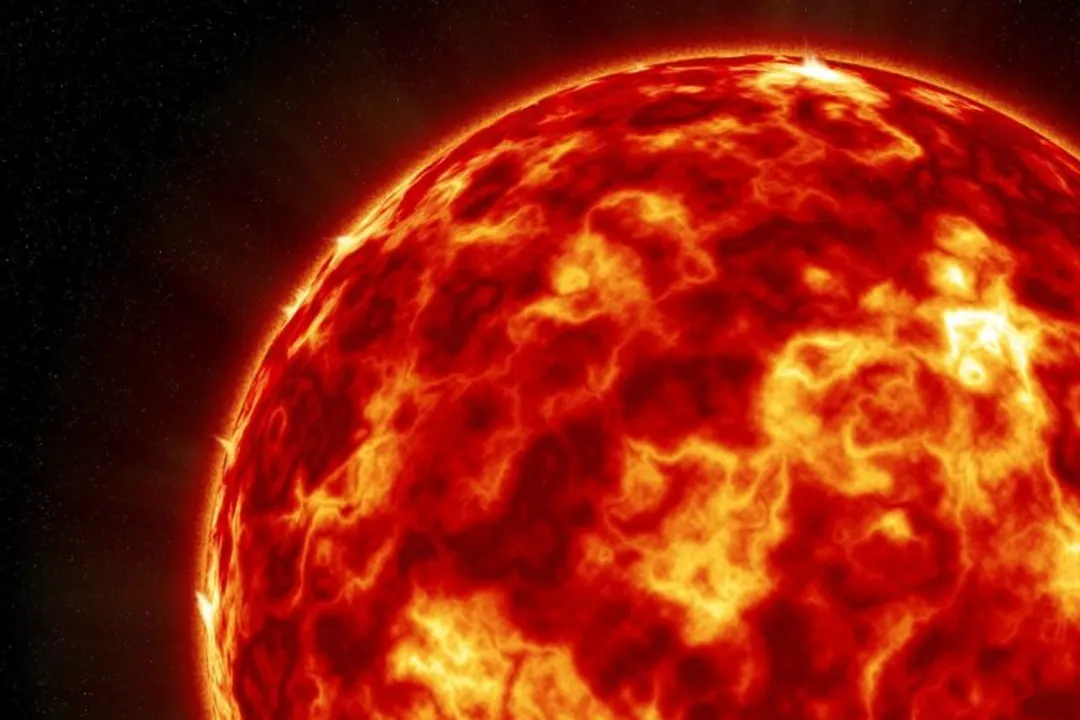
The process by which stars are born is one of the most fundamental occurrences in the cosmos, yet observing the actual birth—a process that can take millions of years—requires looking for telltale signs imprinted on the interstellar medium. We cannot simply watch a cloud of gas become a star in real-time; instead, astronomers must piece together a puzzle using a variety of electromagnetic fingerprints left behind by these dynamic events. [1][5] The evidence is not a single smoking gun but a collection of correlated observations across the electromagnetic spectrum, ranging from the coldest, darkest reservoirs of gas to the fiery outflows blasting away surrounding material. [9][4]
Evidence of star formation hinges on identifying regions where gravity has successfully begun to overpower the internal pressure of gas and dust clouds, leading to dense concentrations of matter that eventually ignite nuclear fusion. [2] Astronomers look for specific physical conditions and observable phenomena that mark the distinct stages along this evolutionary path, from quiescent molecular cores to active protostars and finally, the main sequence star. [8]
# Cold Nurseries
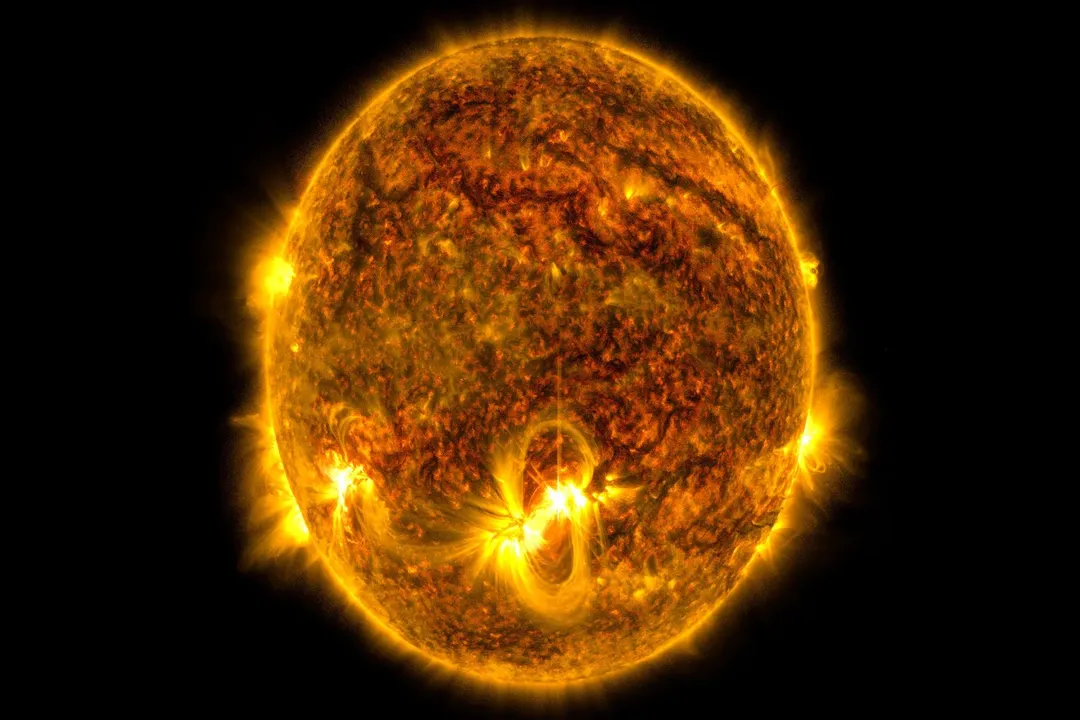
The starting point for any star is a vast, cold, and dense region known as a Giant Molecular Cloud (GMC). [1][2] While the cloud itself isn't the star, its existence and structure provide the primary, necessary evidence that star formation can occur locally. These clouds are primarily composed of molecular hydrogen, though dust grains are crucial for blocking visible light and allowing these cold cores to form. [5]
One piece of compelling evidence is the sheer quantity of cold material concentrated in these areas. Observations in the radio and microwave parts of the spectrum reveal characteristic emission lines from molecules like carbon monoxide (), which acts as a tracer for the invisible molecular hydrogen. [9] When astronomers map these cloud complexes, they find areas where the density is high enough—often $10^4$ to $10^6$ times denser than the average interstellar medium—and the temperature is extremely low, typically below $100$ Kelvin. [8]
A comparison between the size and mass of these clouds versus the density required for gravitational collapse offers early validation. For gravity to win, a clump must exceed a critical mass, known as the Jeans Mass, for its temperature and density profile. Finding clouds that are not only massive but also exhibit internal clumping and density enhancements—clumps within the larger cloud—serves as observational proof that the process of gravitational fragmentation is underway. [2] These denser regions are often referred to as cores, which are the direct precursors to individual stars or small star systems. [8]
# Core Dynamics
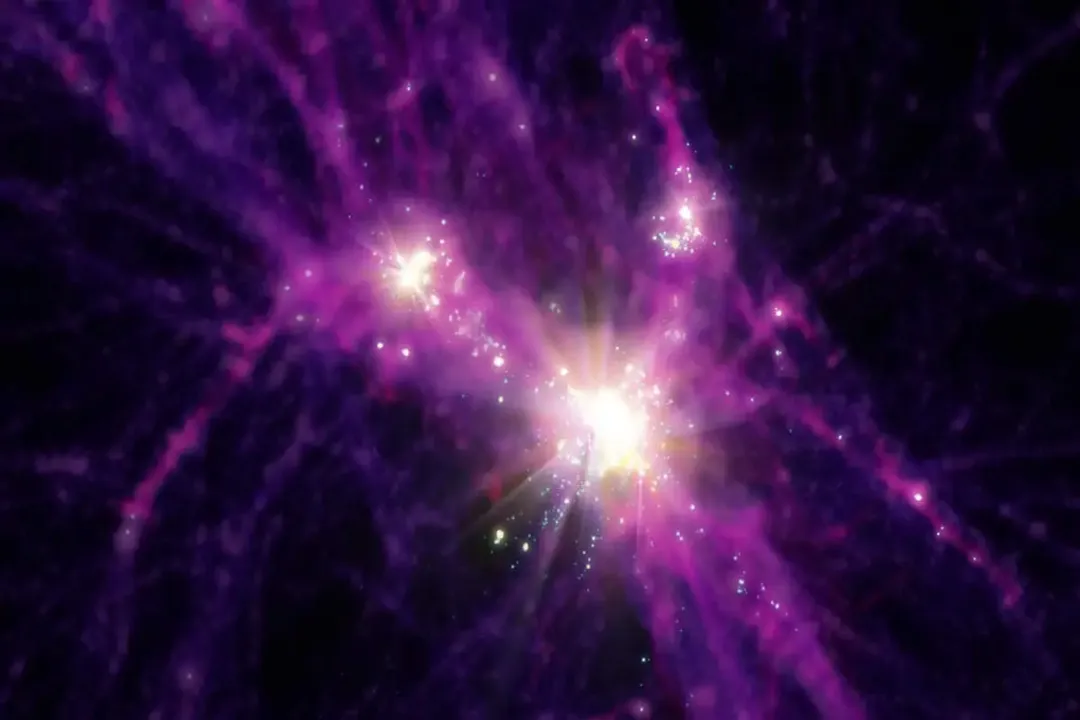
Once a sufficiently dense core is identified within a GMC, the next layer of evidence involves observing the dynamics that confirm collapse is active. This requires looking for motions—infall and rotation—that indicate gravitational dominance. [1]
# Infall Signatures
Direct evidence of a core collapsing onto itself is sought through spectral line analysis. As material falls inward toward the center of the core, the movement causes a characteristic asymmetry in the observed spectral lines of molecules within the gas. [2] For example, observers look for a "blue-shifted" component in the line profile, indicating gas moving toward the observer (and thus toward the center of the forming star), alongside the main, stationary spectral line. [8] This infall signature, often observed using millimeter-wave telescopes like ALMA, is a direct indicator of matter actively feeding the potential new star. [9]
# Rotational Evidence
In addition to falling in, the material rarely falls straight down; conservation of angular momentum causes the gas to flatten into a rotating structure. Observing the velocity gradient across the core—faster speeds on one side compared to the other in the line-of-sight velocity measurements—provides evidence of rotation. [5] This rotation directly leads to the formation of an accretion disk around the central object, which is a crucial piece of evidence that we will discuss next. [2]
It is interesting to consider that the very act of observing infall in a molecular core is an observation constrained by time. If we were to examine a core that had already settled into hydrostatic equilibrium, or one that had completely dispersed its surrounding envelope, we would lose the distinct infall signature. Thus, the presence of these blue-shifted components is evidence not just of formation, but of ongoing formation within that specific timescale. [1]
# Protostellar Emission
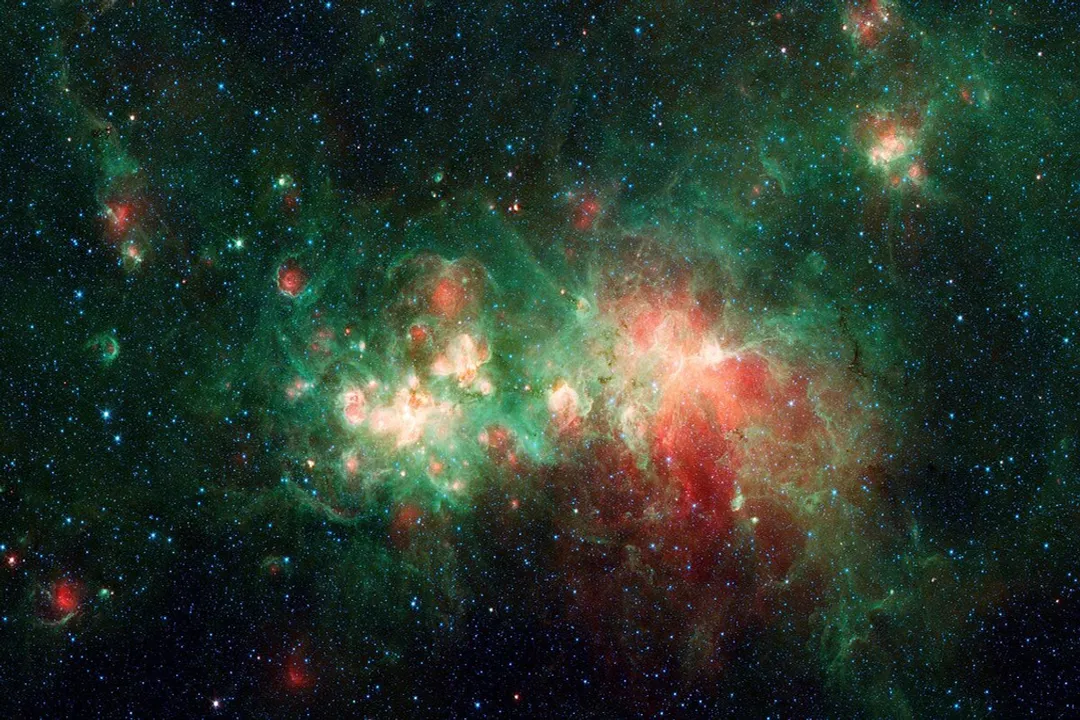
As the central mass accumulates, it heats up due to the conversion of gravitational potential energy into thermal energy. This heat is initially trapped by the surrounding cocoon of dust, making the object invisible in optical light—the classic protostar phase. [4][5] The evidence here shifts from radio/millimeter astronomy (cold gas) to infrared astronomy.
# The Infrared Glow
The definitive evidence for a newly formed star hiding in a dark cloud is the detection of strong infrared (IR) emission. [4][5] The dust envelope, heated by the central object, re-radiates that energy at longer wavelengths. By comparing observations in visible light (where the region appears dark) with those in the mid- to far-infrared, astronomers can confirm the presence of a luminous, deeply embedded source. [8] The Hubble Space Telescope, while famous for visible light, has been instrumental in peering into these dusty regions using near-infrared capabilities to resolve structures close to the nascent star. [5]
# Disks and Jets
The formation process is inherently messy, characterized by structures designed to manage the infalling material and the excess angular momentum. Two key morphological pieces of evidence that accompany the IR glow are the accretion disk and bipolar outflows. [2]
Accretion Disks: These flattened structures feed material onto the growing star. Evidence for these disks comes from high-resolution observations, like those from ALMA, which can resolve the warm, dense material orbiting the central protostar. [9] Disks are not just theoretical; they are directly imaged as structures where dust and gas swirl inward, a necessary precursor to planet formation. [2]
Bipolar Outflows and Jets: To shed the excess angular momentum brought in by the infalling gas, protostars often launch high-speed outflows perpendicular to the accretion disk. [5] These outflows are seen as jets of highly collimated, energetic material shooting out from the poles of the system. [8] These jets are incredibly fast, sometimes reaching speeds of hundreds of kilometers per second, and they carve out visible lobes or cavities in the surrounding molecular cloud material over time. [1] Detecting these energetic, opposing streams of gas provides strong, unambiguous evidence that a young stellar object is actively accreting mass. [9]
# Stellar Birth Scale
The observational evidence isn't limited to nearby, low-mass star formation; it extends to the very origins of the universe and the edges of galaxies. Astronomers have found compelling evidence for the formation of exceptionally massive stars, sometimes called "monster stars," in the early universe. [3][6]
# Distant and Massive Stars
Studying these early epochs requires looking incredibly far away, meaning we are observing light that has traveled for billions of years, capturing the event as it happened in the cosmic dawn. [3] One piece of evidence for these early monsters is the identification of extremely bright, yet highly redshifted, infrared sources. These objects possess luminosity far exceeding what typical solar-mass stars can produce, suggesting the formation of stars tens or even hundreds of times the mass of our Sun. [6] The very existence of these incredibly luminous, redshifted objects implies an efficient, high-mass star formation mode operating under conditions very different from the present day. [3]
# Galactic Edges
Further broadening the scope of evidence, recent observations have shown star formation occurring in unexpected places, such as the far outer edges of spiral galaxies. [10] Finding young, massive stars and the associated molecular gas far from the galactic center or spiral arms provides evidence that the conditions required for collapse—namely, sufficient gas density—can be met even in the relatively quiescent environments near a galaxy's periphery. [10] This observation challenges simpler models that might restrict intense star formation only to the dense spiral lanes or nuclear regions. [10]
If we imagine a hypothetical data table summarizing the primary observational evidence across evolutionary stages, it might look something like this, noting the required observational technique:
| Evolutionary Stage | Key Evidence Observed | Primary Wavelength/Tool |
|---|---|---|
| Pre-Collapse Core | High Density / Concentration | Radio/Millimeter (ALMA) [9] |
| Infall/Accretion | Asymmetric Spectral Lines (Blue-shift) | Radio/Millimeter (ALMA) [9][8] |
| Protostar Formation | Strong Mid- to Far-Infrared Emission | Infrared Telescopes [5][4] |
| Active Accretion | Resolved Orbital Structures (Disks) | Sub-millimeter Interferometry [9] |
| Mass Ejection | High-Velocity Bipolar Jets/Outflows | Radio, Optical Imaging (Hubble) [1][5] |
Considering the context of the expanding universe, the very fact that stars are forming now is an observation against a backdrop of ever-increasing cosmic isolation. [7] The evidence for ongoing star formation throughout cosmic history confirms that gravitational processes have been powerful enough to overcome the Hubble flow on local, galactic scales, allowing matter to concentrate and condense rather than simply spread apart. [7] The observational signatures we capture today—the infrared glow, the jets, the dense cores—are concrete proof that this gravitational victory is continually being won across countless molecular clouds in galaxies throughout the universe. [1] Observing these myriad pieces of evidence together, rather than in isolation, builds the authoritative case for stellar birth.
Related Questions
#Citations
Star Formation | Center for Astrophysics | Harvard & Smithsonian
Star formation - Wikipedia
Astronomers Find the First Compelling Evidence of "Monster Stars ...
Star Basics - NASA Science
The formation of stars - ESA/Hubble
Astronomers see monster stars from the cosmic dawn - EarthSky
Ask Ethan: Can stars form within the expanding Universe? - Big Think
Story of Star Formation
Star and planet formation | ALMA Observatory
New Astronomy Finding Uncovers the Mystery of Star Formation at ...