Do spiral galaxies have star formation?
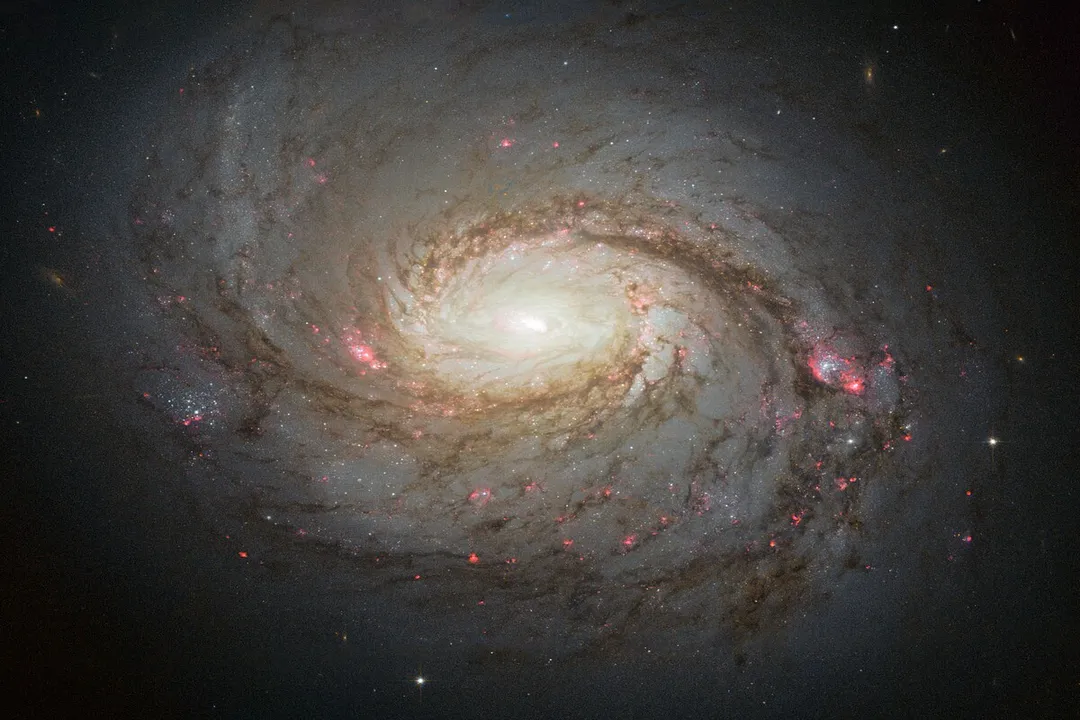
The structures we observe when looking at magnificent spiral galaxies are intrinsically linked to the creation of new stars. These grand, rotating systems, famous for their flattened disks and sweeping arms, are cosmic factories where the raw materials of the universe are continuously molded into suns. It is not just that they have star formation; it is that the very pattern that defines them—the spiral arms—is a structure created by and for the process of stellar birth. [1][2]
# Galactic Anatomy
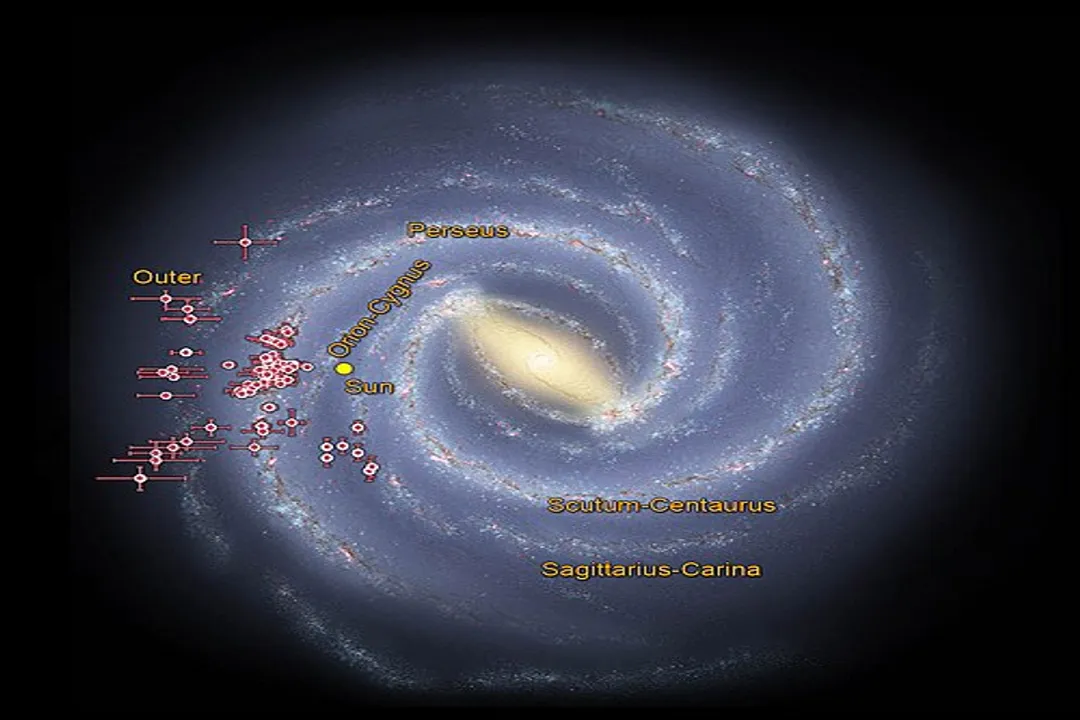
Spiral galaxies possess a distinct architecture, typically featuring a central bulge of older stars, a flat, rotating disk, and the prominent, winding spiral arms extending outwards. [1] Within this disk lies the essential fuel: vast reservoirs of cold gas and dust. [9] The Hubble classification system categorizes these galaxies, distinguishing them based on the tightness of their spiral patterns and the relative size of their central bulge, ranging from tightly wound Sa types to loosely wound Sc types. [7] This visual structure provides the stage for stellar nurseries.
# Star Nurseries
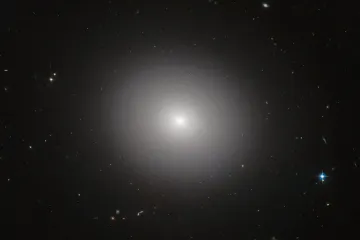
Star formation does not occur randomly across the entire disk of a spiral galaxy; rather, it is heavily concentrated in the spiral arms themselves. [2] This preference is one of the key features differentiating active spirals from other galaxy types, such as ellipticals, which generally contain much less cold gas and dust, having either consumed their supply or having it stripped away long ago. [9] For a star to be born, massive clouds of molecular hydrogen gas must collapse under their own gravity, and the environment within the arms seems perfectly tuned to initiate this collapse. [2]
# Density Waves
The reason the arms serve as such effective nurseries is tied to a physical phenomenon known as the density wave theory. [2] The spiral pattern itself is not a static collection of the same stars forever; instead, it's a wave—an area of slightly higher density—that propagates through the galactic disk, much like a traffic jam moving through lanes of cars on a highway. [2] This wave moves at a different speed than the stars and gas within the disk. [3]
As a massive, cold molecular cloud, which ordinarily drifts peacefully through the lower-density inter-arm space, encounters this leading edge of a density wave, it is physically squeezed. This compression is the critical trigger. The density increases sharply, forcing the gas cloud to shrink until gravity overcomes the internal pressure, leading to the fragmentation and collapse necessary to ignite nuclear fusion—the birth of a star. [2][5] The stars themselves are born within the wave, and then they move out of the dense region into the lower-density space behind it as they age. [2]
# Color and Age
The visual distinction between the arms and the areas between them is a direct signature of this ongoing birth cycle. Newly formed stars are massive, hot, and incredibly luminous, appearing intensely blue. [7] Because these massive blue stars burn through their fuel quickly, they do not live long enough to travel far from their birthplace in the compressed arm region before exploding as supernovae. [2] Consequently, the spiral arms glow brightly with the light of these young, short-lived stellar populations. [7] The regions between the arms contain older, more evolved stars, which emit light skewed towards the redder and yellower ends of the spectrum, giving the inter-arm space a dimmer, more mature appearance. [9]
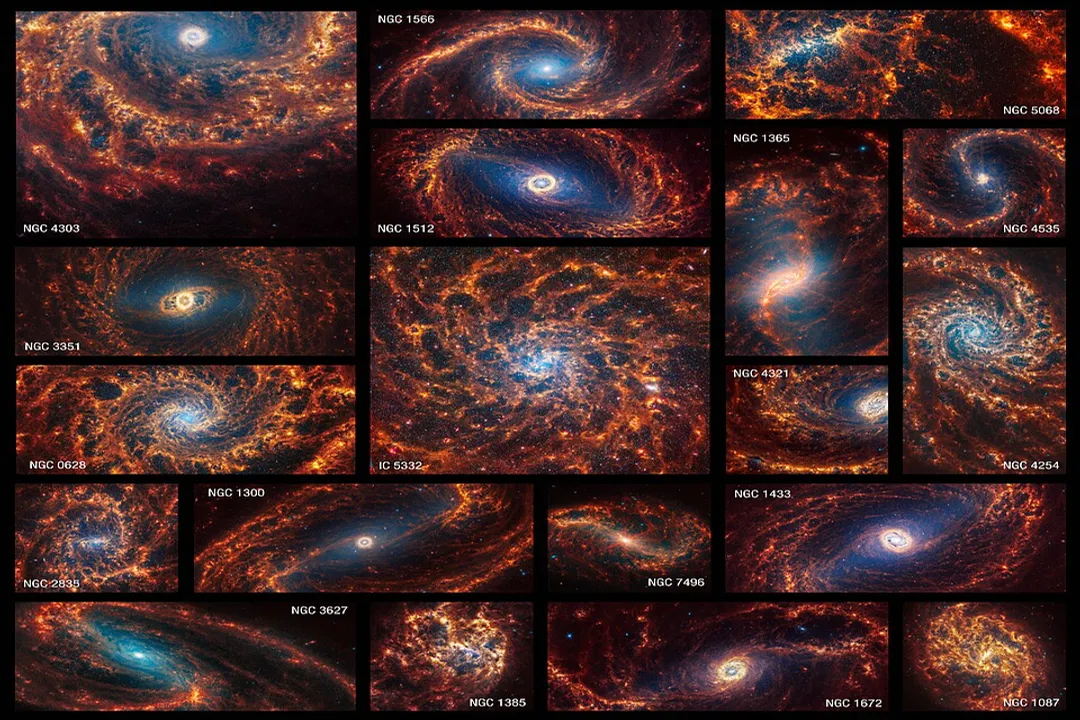
When you look at images captured by instruments like the Hubble Space Telescope, the striking blue patches tracing the winding lines are tangible evidence of current or very recent star formation events happening right now in that galactic neighborhood. [7] Deeper study, such as that provided by the James Webb Space Telescope, allows astronomers to peer into the dust lanes that obscure the very first stages of this process, revealing the dust-enshrouded protostars before they fully illuminate their surroundings. [8]
# The Efficiency of Concentration
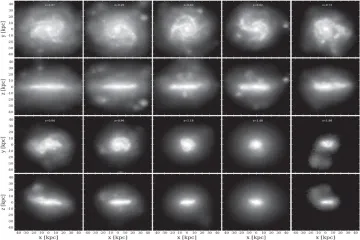
It's fascinating to consider the sheer efficiency of this mechanism. While the spiral arms might only occupy a small fraction of the total area of the galactic disk—perhaps making up only 10% to 20% of the space by volume—they are responsible for generating the overwhelming majority of the galaxy's new starlight. [2] If star formation were spread uniformly across the entire disk, the arms would not appear nearly as bright or blue as they do. This uneven, localized triggering mechanism means that spiral galaxies are not just forming stars; they are concentrating their stellar nurseries into visually dramatic linear features. [2]
This concentration effect is so strong that one can often estimate the relative star formation rate of a spiral galaxy simply by assessing how "flocculent" (patchy) or "grand design" (tightly wound) its arms are, as both types are actively forming stars, though perhaps with different efficiencies based on gas supply and interaction history. [3][7]
# Drivers of Spirality
The very existence of the density waves, and therefore the preferred zones of star formation, is often attributed to two primary causes: internal dynamics or external interactions. In many large spirals, the pattern is sustained internally through the galaxy's own rotation, known as the Density Wave Theory. [3] In other cases, especially for smaller or more irregular-looking spirals, the structure can be induced or dramatically altered by gravitational tugs—tidal forces—exerted by nearby companion galaxies. [3] Even these gravitational disturbances create transient density enhancements that sweep through the disk, momentarily increasing the pressure on gas clouds and initiating bursts of star formation in their wake. [9] Understanding the source of the wave—whether it's a stable internal feature or an external perturbation—can help predict the galaxy's future evolutionary path regarding its gas supply. [3][5]
# Comparing Star-Forming Efficiency
When we compare the star formation rate (SFR) across different galactic environments, the story becomes clearer. A galaxy's total SFR is fundamentally limited by its supply of cold, dense gas. Elliptical galaxies, having mostly dispersed or heated their gas, are often characterized by very low SFRs—they are "red and dead" in terms of star birth. [9] In contrast, a large spiral like our Milky Way is continuously converting its available molecular clouds into new stars at a steady rate, often estimated to be a few solar masses per year. [5]
The key difference is how they use that gas. A spiral galaxy efficiently channels its cold gas into the arms for immediate collapse, maximizing the use of its current supply. An irregular galaxy might have plenty of gas, but lack the organized density waves to trigger widespread, efficient collapse, leading to star formation that is more patchy and less organized than in a grand-design spiral. [9] If you were to map the current star formation hotspots across the disk of a typical spiral, you would find that the inter-arm regions have an almost negligible rate compared to the bright bands of the arms themselves, illustrating the powerful organizational role of the density wave in triggering collapse. [2]
# Insights from Observation
Looking closely at the relationship between the structure and the stars reveals an important consequence for galactic evolution. If a spiral galaxy were to suddenly lose its rotation or its gas supply, the spiral arms would quickly dissipate, and the star formation would cease or become chaotic. This means the persistence of the spiral pattern, sustained by the density waves, is directly responsible for the sustained nature of star formation over billions of years in these systems. [3][7] The spiral structure is not just a snapshot of star formation; it is the engine that guarantees its continuation by constantly sweeping up and compressing the available fuel. [2]
If you ever get the chance to examine astronomical data or high-resolution images of a spiral galaxy, try this mental exercise: locate the darkest dust lanes. These lanes often lie just ahead of the brightest blue star-forming regions. [5] This visually represents the "traffic jam" in action—the dust and gas are piled up, waiting for the density wave to move them just slightly further inward or compress them just a tiny bit more so that gravity can take over and ignite the next generation of stars. This immediate spatial correlation between dark dust lanes and brilliant blue star clusters is the most direct visual proof of the density wave's role in shaping stellar populations. [2][8]
# Future State
As spirals age, they continue to consume their gas. Eventually, the gas reservoir will be depleted, the density waves may become less pronounced due to internal dynamical changes or external mergers, and the galaxy will transition into an elliptical-like state where star formation effectively grinds to a halt. [8] Until that time, however, the spiral arms remain the preferred, most active, and most beautiful stellar birthplaces in the local universe.
Related Questions
#Citations
Spiral galaxy - Wikipedia
Why Do Stars Form Preferentially in Spiral Arms?
What causes spiral galaxies to be spiral, not evenly distributed like a ...
Do spiral arms enhance star formation efficiency?
Galaxies, Spiral, Structure
Characteristics of spiral galaxies - Facebook
Hubble's Galaxies - NASA Science
JWST reveals spiral galaxies' life cycles, from dust to stars - Big Think
Why are spiral galaxies havens for star formation (as opposed to ...