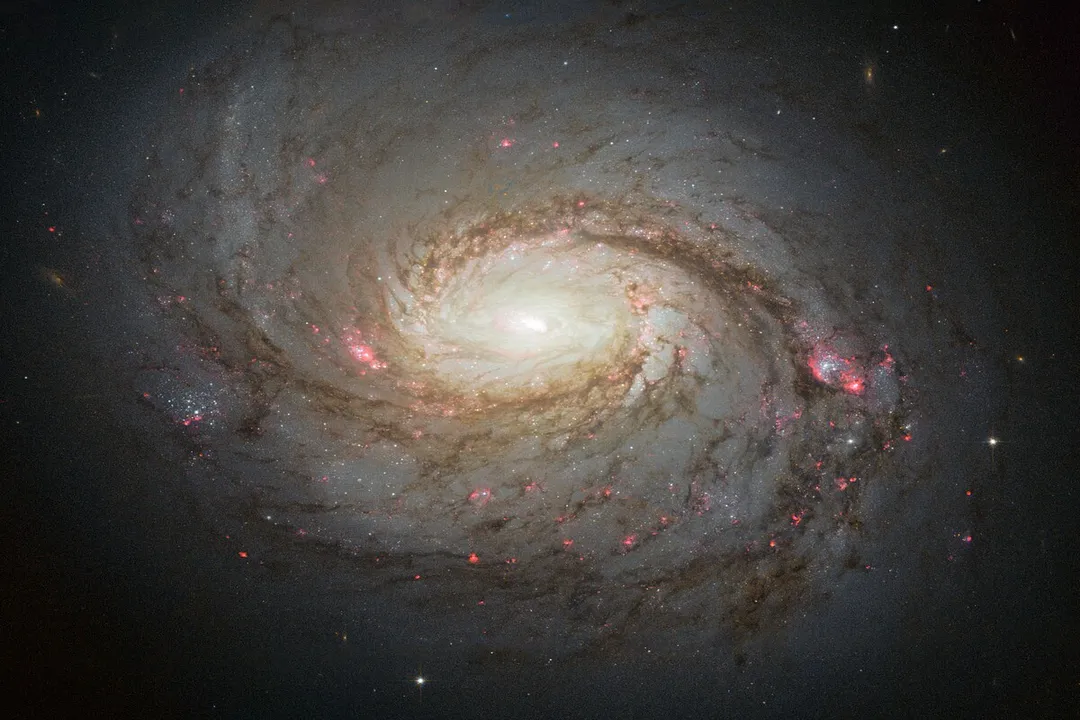
Why do massive blue stars not travel far from their birthplace in the compressed arm region before exploding?
They burn through their fuel quickly and have short lifespans
The proximity of massive, hot, blue stars to the spiral arms is a direct consequence of stellar evolution timescales. These stars, which are the most luminous indicators of current star formation, possess immense mass, which results in an extremely high rate of fuel consumption. Consequently, their total lifespan is very short, often just a few million years. This short lifetime ensures that they do not live long enough to exhaust their fuel and explode as supernovae significantly far away from the high-density region where the necessary gas compression initiated their birth. This failure to travel far before death locks the signature of star birth firmly within the bright band of the spiral arm.