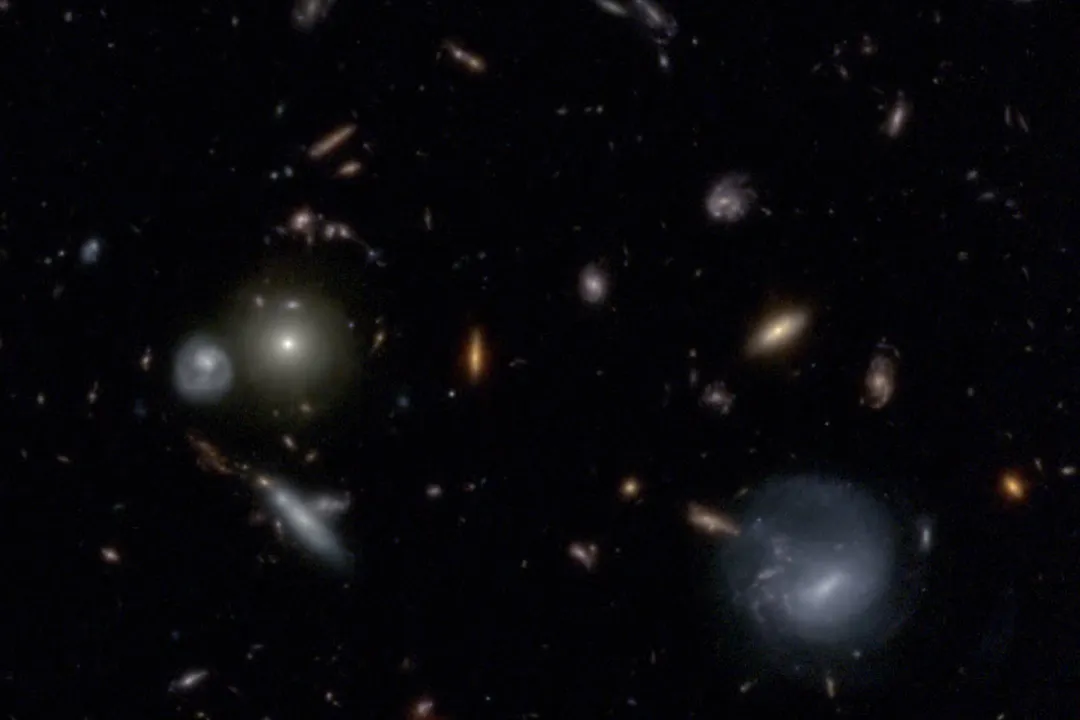
How must the James Webb Space Telescope (JWST) capture the light from high-redshift early galaxies?
By capturing the ancient light shifted into the infrared spectrum
The expansion of the universe stretches the wavelengths of light emitted by distant objects, a phenomenon known as redshift. For the most ancient, distant galaxies, this stretching shifts the radiation emitted originally in shorter, bluer wavelengths all the way into the longer, lower-energy infrared spectrum. Telescopes like the James Webb Space Telescope (JWST) are specifically engineered with large mirrors and highly sensitive infrared instruments to detect this extremely faint, redshifted light. This infrared capability is essential because it allows JWST to resolve structures and capture the radiation that would otherwise be completely invisible to telescopes optimized for visible light, thus granting sharper views of the very early universe.