Why can it be difficult for astronomers to make observations of distant galaxies?
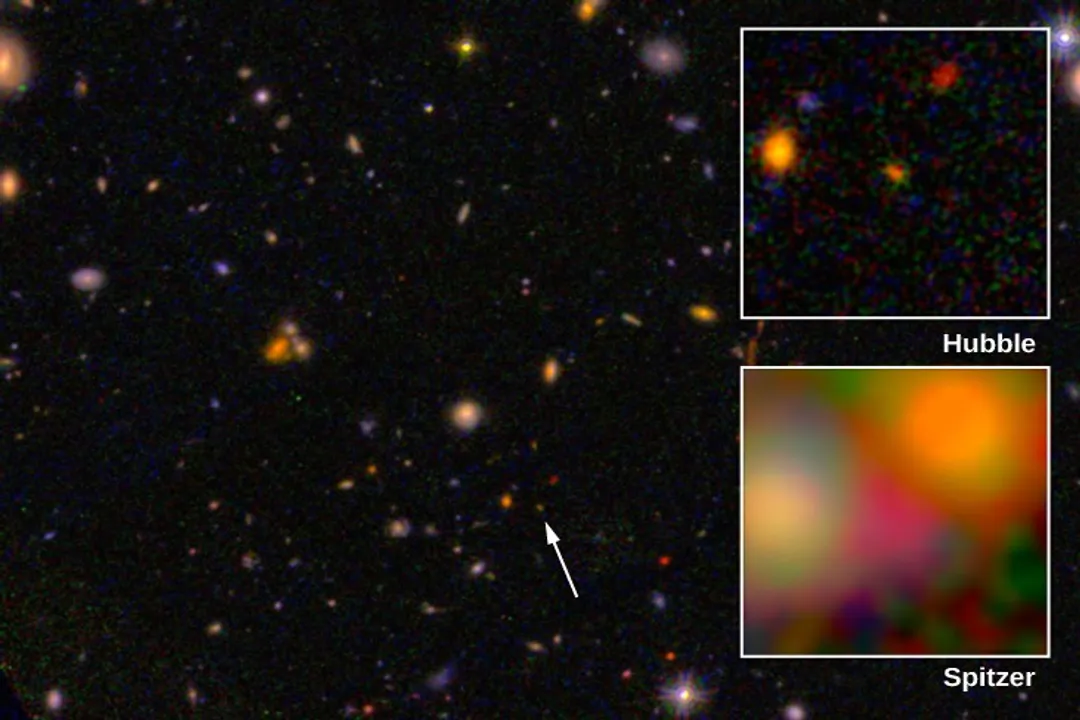
The sheer act of capturing light from a galaxy billions of light-years away feels like a triumph of engineering and science, yet that success often masks the immense difficulties astronomers face in truly understanding what they see. Seeing a distant galaxy is one thing; making an observation that yields clear, unambiguous data about its composition, structure, or history is quite another. The primary hurdles stem from the vastness of space, the physics of light traveling across cosmic distances, and the inherent limitations of our current observational tools.[3][5]
# Faintness Light Speed
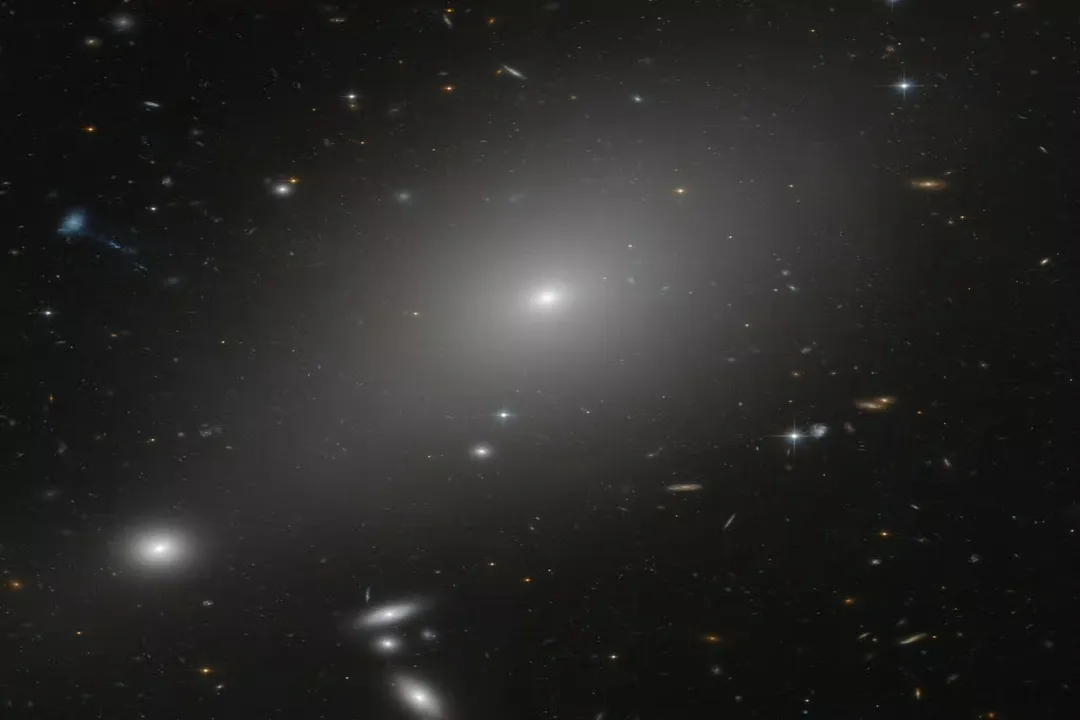
The most immediate challenge is faintness. Light intensity diminishes rapidly as the distance between the source and the observer increases, following the inverse square law. When a galaxy is hundreds of millions or billions of light-years away, the amount of light energy—the photons—that actually reaches a telescope mirror on Earth is minuscule. [3] Telescopes like the Hubble Space Telescope or ground-based giants have vast mirrors to collect as much of this sparse light as possible, but even then, gathering enough signal to create a detailed image requires extremely long exposure times. [3]
This difficulty in gathering sufficient light is compounded by the fact that we are not just looking at a faint object; we are looking at an object as it existed in the distant past. The light we observe from a galaxy 13 billion light-years away began its trek when the universe was still very young. [5] Our observation is therefore a snapshot of a fundamentally different cosmic environment. If the galaxy is faint now, it was likely much, much fainter when it was actively forming stars in the early universe, making the original light signal even weaker by the time it reaches us. [1]
Consider that the light from a nearby object, perhaps a nebula in our own Milky Way, takes mere thousands of years to reach us, offering a relatively recent view. In contrast, the light from a high-redshift galaxy offers a glimpse into a time when the chemical makeup of the universe, the types of stars forming, and the overall density of matter were dramatically different from today. [5] This means that to interpret the data correctly, astronomers must constantly correct for evolutionary changes that occurred over eons, in addition to correcting for distance itself. [1]
# Wavelength Stretching
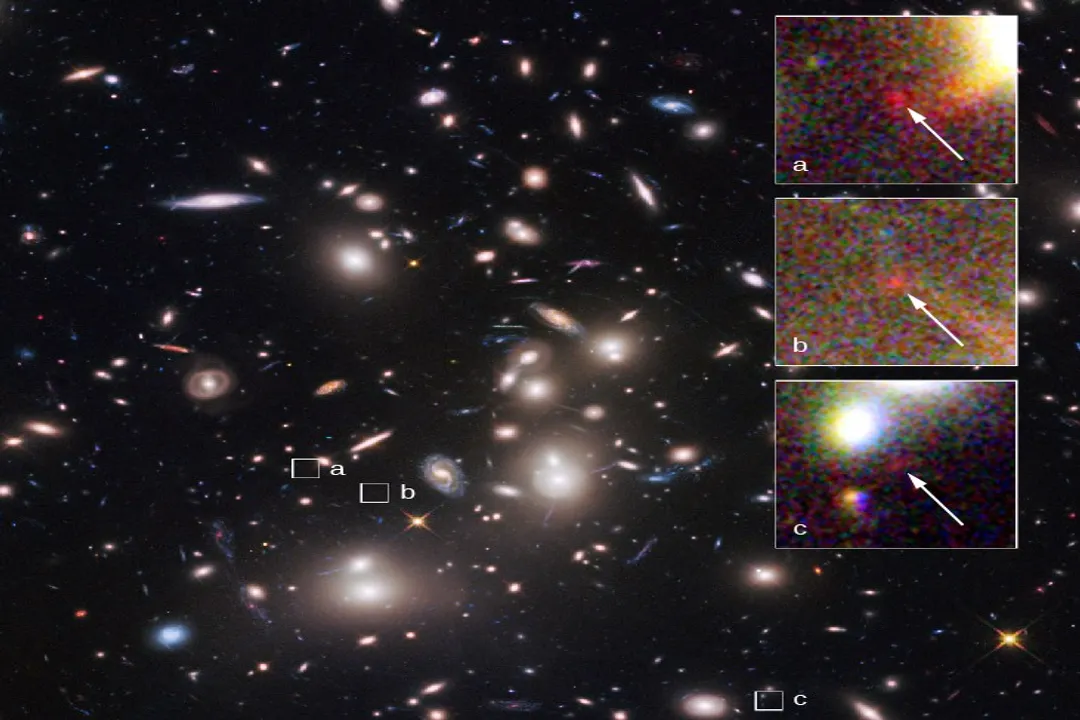
Beyond simple loss of brightness, the expansion of the universe itself alters the light we receive, introducing the phenomenon known as cosmological redshift. [4] As the space between the distant galaxy and us stretches during the light's journey, the wavelengths of that light are stretched out as well. [5]
This stretching has a critical effect on observation: light that was originally emitted as visible light—say, blue or green light from hot, young stars—is shifted so far toward the red end of the spectrum that it often ends up in the infrared band by the time it reaches Earth. [4][5] This is why studying the most distant galaxies often requires instruments specifically designed to see in the infrared. While ground-based telescopes can observe some infrared light, much of it is blocked by Earth's atmosphere, which is itself warm and emits infrared radiation.
Observatories like the Herschel Space Telescope were specifically designed to operate in space, far from the thermal noise of the Earth, to effectively capture this stretched, faint infrared radiation. [8] If an astronomer were to point an optical telescope at one of these extremely distant objects, they might see nothing at all, or only the very faintest, reddest components that managed to stay within the visible range, leading to an incomplete and biased picture of the galaxy's activity. [5] The calculation of the redshift itself becomes a crucial, yet sometimes uncertain, piece of information needed just to know where to look in the electromagnetic spectrum. [4]

# Image Clarity
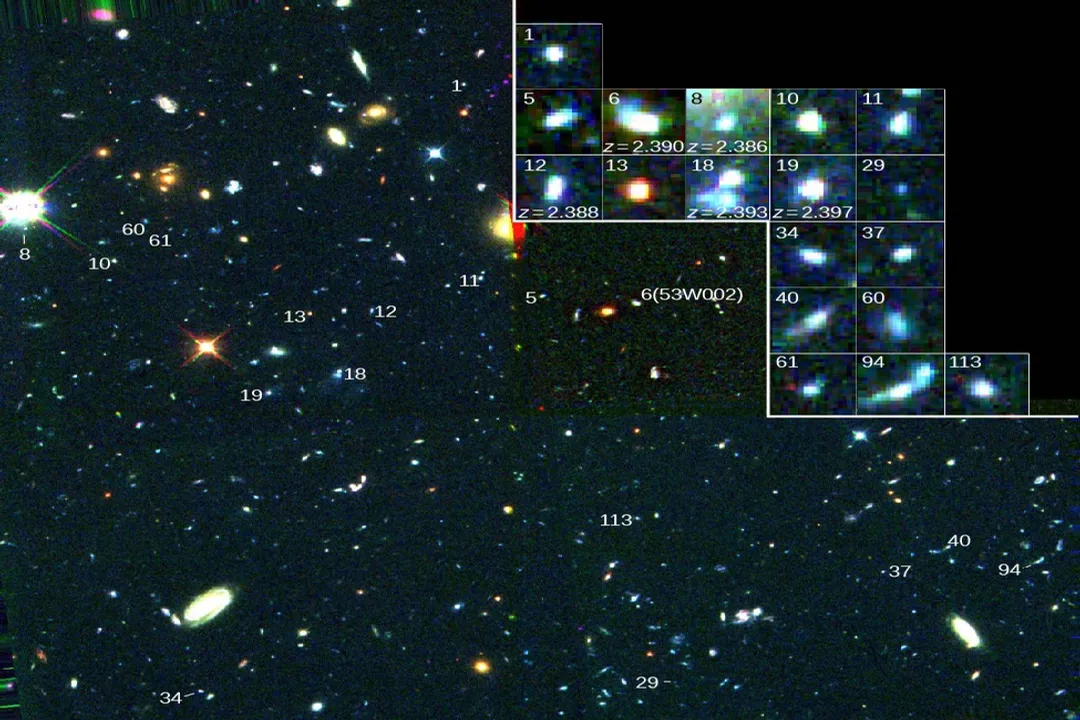
Even when enough photons are collected to register a signal, achieving a sharp image presents another hurdle. Resolving fine details—the structures of spiral arms, the locations of individual star-forming regions, or the morphology of smaller satellite galaxies—becomes exceptionally difficult due to the sheer scale involved. [2]
There is a common misconception that if a telescope is powerful enough to see a galaxy billions of light-years away, it should be able to resolve features within it clearly. However, the required angular resolution is extreme. An object that is physically very large, like a galaxy, subtends a tiny angle in the sky when viewed from cosmological distances. [2] Even with the largest ground-based telescopes operating above the blurring effects of the atmosphere (using adaptive optics), or space telescopes, distinguishing between two closely spaced features within a galaxy billions of light-years away can be nearly impossible. [2]
This is fundamentally different from looking at objects within our own solar system. For instance, a probe orbiting Mars might be resolved clearly because it is relatively close, meaning its angular size is large. A distant galaxy, even one the size of the Milky Way, appears as a faint, smeared patch of light because the angle it subtends is so small, making the separation of internal components a significant observational challenge. [2] If one is trying to study, say, the merger rate of small clumps in the very early universe, the apparent merging of those clumps due to poor angular resolution can lead to misinterpretations of the physical processes occurring. [1]
# Measurement Uncertainty
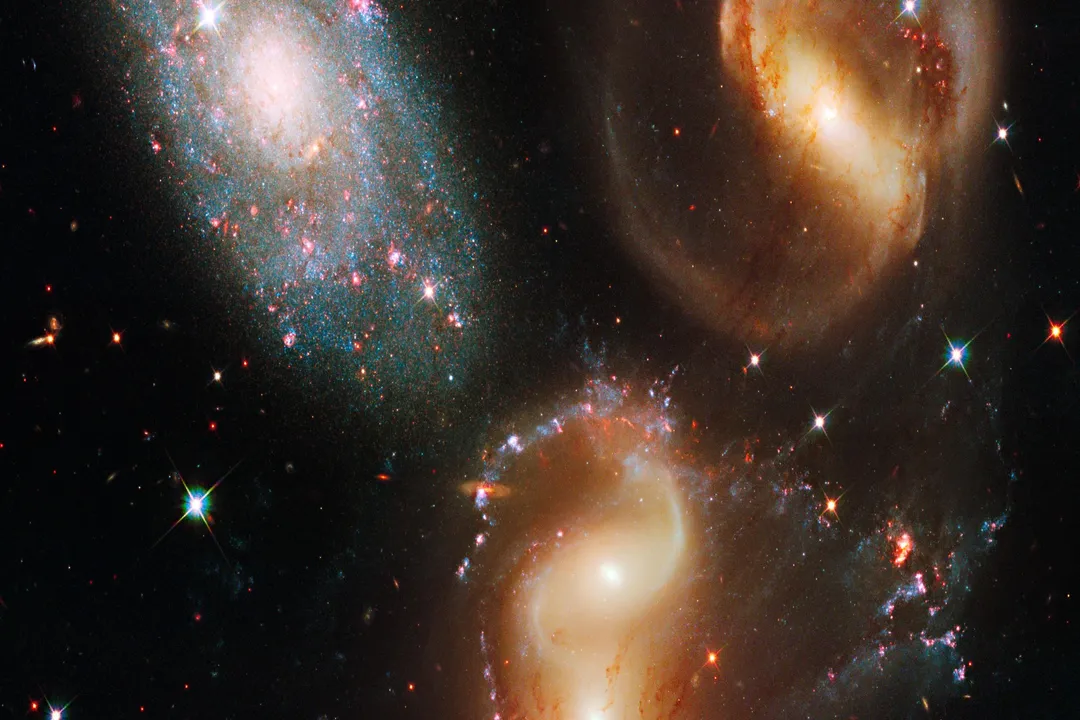
Knowing the exact distance to a galaxy is foundational to all cosmological study, yet it is rarely a direct measurement. Astronomers rely on a "cosmic distance ladder," which involves several steps, each carrying an associated degree of uncertainty. [7] For the very farthest objects, redshift analysis forms the basis, relying on a model of the expanding universe that includes parameters like the Hubble constant, which itself has ongoing refinement. [7]
If the initial assumptions about the expansion rate or the precise nature of the cosmological model are slightly off, the calculated distance—and therefore the inferred luminosity, size, and age—will also be systematically incorrect. [7] This uncertainty is a persistent background issue for all extragalactic astronomy. [9]
Furthermore, there is the challenge of object identification itself, a problem that requires expertise in differentiating what is truly far away from what might simply be a local phenomenon masquerading as a distant object. How do we confirm that a faint, fuzzy object is indeed a whole galaxy rather than, say, a relatively close, small star cluster or a background object in our own galactic foreground? Confirmation usually involves obtaining a spectrum to measure the redshift accurately, a process that demands collecting enough light—tying back to the faintness problem. [6]
One way astronomers build confidence in these distances is through consistency checks. If an analysis of a distant object suggests it is forming stars at an impossible rate based on its apparent brightness and calculated distance, it often prompts a re-examination of either the distance estimate or the underlying assumptions about star formation physics in that era. [1][7]
To illustrate the compounding effect of distance uncertainty, imagine two potential distance measurements for a galaxy: one suggests it is 10 billion light-years away, and the other suggests 12 billion light-years away. The difference in lookback time is only 2 billion years, but the inferred absolute luminosity (how intrinsically bright it is) changes significantly, perhaps by a factor of more than two, because luminosity depends on the square of the distance. This means a small error in the distance estimate translates directly into a large error in judging the galaxy's true power output [Self-analysis based on the relationship between distance and luminosity, a core concept in astronomy that relies heavily on the uncertain distance measurements noted in [7]].
# Model Revision
The ultimate difficulty arises when the observed data contradicts established ideas. Observations of very distant galaxies have repeatedly provided data points that challenge the existing paradigms of galaxy evolution and star formation. [1] For instance, finding massive, mature galaxies very early in cosmic history suggests that stars formed much more rapidly and efficiently in the primordial universe than previously modeled.
Astronomers must then reconcile these observations—which are subject to the faintness, redshift, and resolution issues described above—with theoretical models. If the data holds up after rigorous checks (ruling out foreground contamination or measurement errors [6]), the models must change. This constant friction between what we can observe and what we thought was possible defines the cutting edge of extragalactic astronomy. [9]
The need for specialized tools designed for infrared observation, like those used by the Herschel mission, underscores the difficulty. [8] Because the cosmic expansion is constantly shifting the signature light into a different part of the spectrum, astronomers must always be prepared to build new instruments capable of seeing light that was previously inaccessible. This iterative process of observation, challenge, and model adjustment is inherent to the study of the far universe. [5]
Related Questions
#Citations
Study of distant galaxies challenges our understanding of how stars ...
How come telescopes can see galaxies impossible distances away ...
Far, Far Away: Just How Distant Is That Galaxy?
When astronomers refer to distances between galaxies, do they ...
Observations of Distant Galaxies | - Lumen Learning
How do astronomers know that distant galaxies aren't actually ...
Challenges and Innovations in Measuring Distances to Celestial ...
Galaxy formation and evolution - Herschel Space Observatory
Extragalactic Astronomy | Center for Astrophysics | Harvard ...