What materials make the solar system?

The materials that comprise our solar world are vastly different depending on whether we are discussing the cosmic neighborhood of planets, moons, and stars, or the modern technology designed to harness the Sun's output. When considering the sheer scale of the astronomical system, we look toward immense bodies composed primarily of hydrogen and helium, like the Sun, which makes up the vast majority of the mass in the Solar System. [8] The planets range from the terrestrial worlds dominated by silicates and metals—like Earth, Mars, and Venus—to the gas giants such as Jupiter and Saturn, which are predominantly light elements wrapped around smaller cores. [8]
However, the term often refers to the sophisticated components within modern solar photovoltaic (PV) systems, which capture that stellar energy right here on Earth. These systems are assemblies of specialized materials chosen for their unique electrical and physical properties, designed to last for decades under harsh environmental conditions. [1] The journey to generate electricity from sunlight starts with the semiconductor, the true workhorse of the entire apparatus. [5]
# Silicon Core
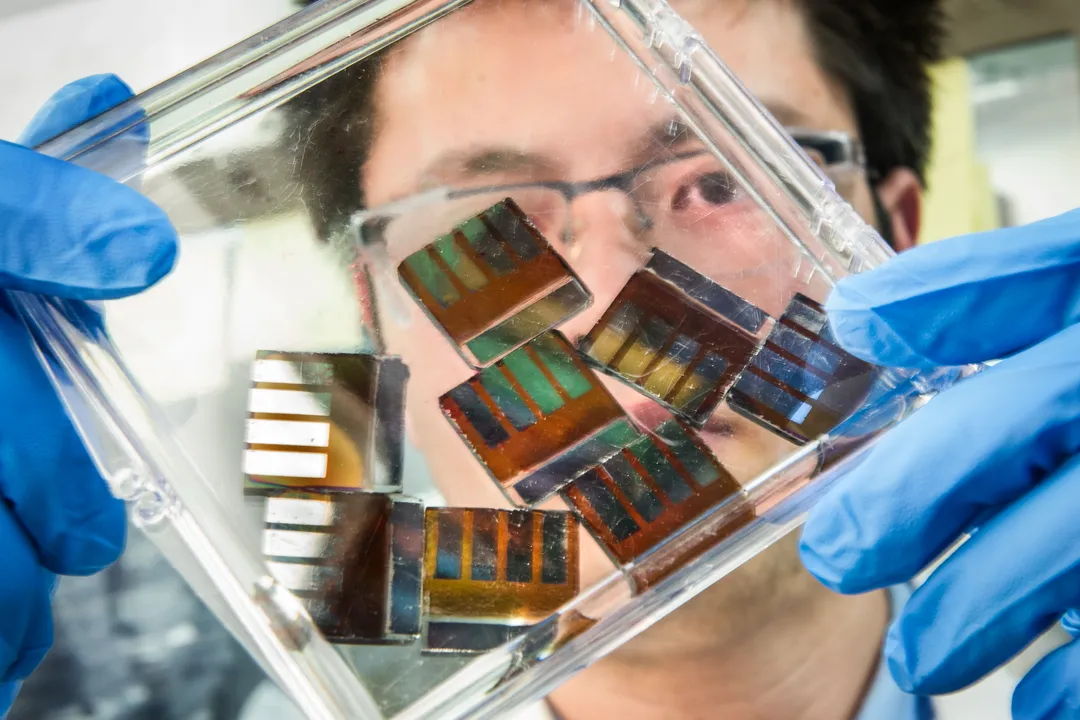
The overwhelming majority of commercial solar panels rely on silicon. [10] This element is favored because it is a semiconductor, meaning it has electrical conductivity between that of a conductor and an insulator. [5][10] When light hits the silicon, it excites electrons, creating an electric current—the photovoltaic effect. [2][5]
Silicon is processed into wafers, which form the actual photovoltaic cell. [1] The purity required for solar-grade silicon is remarkably high; while general technical grade silicon might be around 98% pure, the semiconductor industry demands purity levels often quoted around 99.9999% to ensure efficient electron flow. [5]
There are two primary forms in which this silicon is utilized: monocrystalline and polycrystalline. [1] Monocrystalline cells are cut from a single, continuous crystal structure, offering higher efficiency because the electrons face fewer barriers to movement. Polycrystalline cells are made from multiple silicon crystals melted together, which is generally less expensive to produce but results in slightly lower overall efficiency. [1] The base material, silicon dioxide (silica), is the second most abundant element in the Earth's crust, making it an abundant starting point for this technology. [4]
# Cell Encapsulation
While silicon performs the conversion, it cannot function exposed to the elements. The cells must be carefully layered and protected by several other material classes. [1][7]
The front layer is typically made of glass. [7] This is not ordinary window glass; it is usually tempered, low-iron, high-transmission glass. [1] The low-iron content maximizes the amount of sunlight that passes through to the silicon, while tempering adds necessary strength to withstand hail, snow loads, and wind shear over a lifespan that can easily exceed twenty-five years. [7]
The cells themselves are surrounded by an encapsulant material, often Ethylene Vinyl Acetate (EVA). [1] This clear polymer seals the delicate cell structure against moisture ingress and bonds the glass to the cells and the rear layer. [7] Any moisture intrusion can lead to corrosion or electrical failure, making this sealing process vital. [7]

# Structural Support
The entire assembly needs a rigid exterior to maintain its shape and allow for mounting. This is typically achieved using an aluminum frame. [1][7] Aluminum is chosen because it is lightweight, making installation easier, and highly resistant to corrosion, which is essential given that panels are continuously exposed to weather. [7] The frame locks the entire laminate structure together securely. [1]
On the backside of the panel is the backsheet, usually a durable polymer film. [1] Its job is insulation and protection from environmental degradation, particularly UV exposure and moisture from behind. [7] Internally, thin ribbons and busbars—the wiring that collects the generated current—are often made of copper or silver. [3][4] While copper is common, silver is sometimes used in specialized applications due to its superior conductivity, though this presents an interesting cost-to-performance calculation when building panels measured in megawatts. [3] A material trade-off often occurs here: engineers balance the necessity of high-speed electron collection (favoring silver) against the significantly lower cost of copper, which is perfectly adequate for standard commercial power output. [4]
# Storage Materials
For a truly functional energy system, the electricity generated must often be stored for use when the sun isn't shining. This brings in battery chemistry, which introduces an entirely new set of elements, often including lithium, cobalt, nickel, and graphite in modern lithium-ion battery packs. [6] The cathode and anode materials dictate the battery’s capacity and lifespan, drawing on a completely different supply chain than the PV module itself. [6] The selection of these battery components—often involving rare or geographically concentrated elements—presents a different set of material sourcing challenges compared to the silicon-dominated panel market. [6]

# Planetary Matter
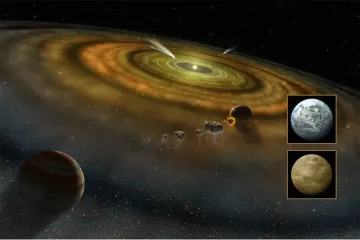
Shifting focus entirely away from human-made technology to the Solar System itself, the composition breakdown is staggering in scale and difference. [8] The Sun, which dictates the energy for all the worlds, is nearly all hydrogen () and helium (), held together by immense gravitational pressure. [8]
The inner, rocky planets—Mercury, Venus, Earth, and Mars—are rich in silicates (compounds involving silicon and oxygen) and metals like iron and nickel, forming dense cores. [8] Contrast this with the outer Solar System. Jupiter and Saturn are massive primarily composed of hydrogen and helium, but under high pressure, the hydrogen likely becomes a dense, liquid metallic state. [8] Uranus and Neptune, often called ice giants, contain higher proportions of elements heavier than hydrogen and helium, such as oxygen, carbon, nitrogen, and sulfur, mostly locked up in various forms of ices. [8]
When we look at the terrestrial planets, the sheer abundance of elements like oxygen and silicon (forming rock) contrasts sharply with the composition of our solar panels, which must use highly refined, separated, and chemically altered silicon to function electrically. [4][8] Our panels require about 100 grams of processed silicon per square meter, whereas the Earth's crust is composed of materials like silicon dioxide, an insulator, not a semiconductor. [4]
# Material Synergy Insight
It's worth noting how materials science converges across these fields. For instance, the glass protecting a solar panel must be highly transparent to visible light, yet durable enough to withstand thermal stress across wide temperature swings—a requirement not unlike the need for highly specific spectral transmission properties in instruments designed to study distant planets. [1] Furthermore, while the Sun is made of plasma, the PV cell relies on the solid-state physics of crystalline silicon to mimic the behavior of charged particles interacting with electromagnetic radiation, demonstrating an elegant analogy between cosmic and terrestrial energy capture at the atomic level. [5][2]
# Longevity and Environment
For system longevity, the materials chosen must resist specific degradation vectors. For example, if installing a solar array near the ocean, the primary failure mode shifts from purely thermal or mechanical stress to electrochemical corrosion. [1] In this scenario, the choice of frame material—ensuring the aluminum alloy used has sufficient corrosion resistance—becomes as critical as the purity of the silicon wafer itself. A system installed in a humid, salty environment might prematurely fail not due to a faulty cell, but due to creeping oxidation along the aluminum frame or wiring junctions, highlighting that the assembly materials are as crucial as the active material. [7] Selecting materials based on their known performance under specific geographic conditions—like using high-quality polymer backsheets resistant to saltwater aerosol—is a material selection process that goes far beyond just initial electrical output specifications. [7]
Related Questions
#Citations
What Are Solar Panels Made Of and How Are They Made?
How does solar power work? | National Grid
What materials are in the solar system? : r/scifiwriting - Reddit
8 Major Raw Materials Used for Making Solar Panels
Solar Photovoltaic Cell Basics | Department of Energy
What Minerals Are in Solar Panels and Solar Batteries?
How are Solar Panels Made? What are they made of? Solar Calculator
Solar System - Wikipedia
How Are Solar Panels Made? - LGCY Power
What materials are solar panels made from? Why is silicon used to ...