What holds solar systems together?
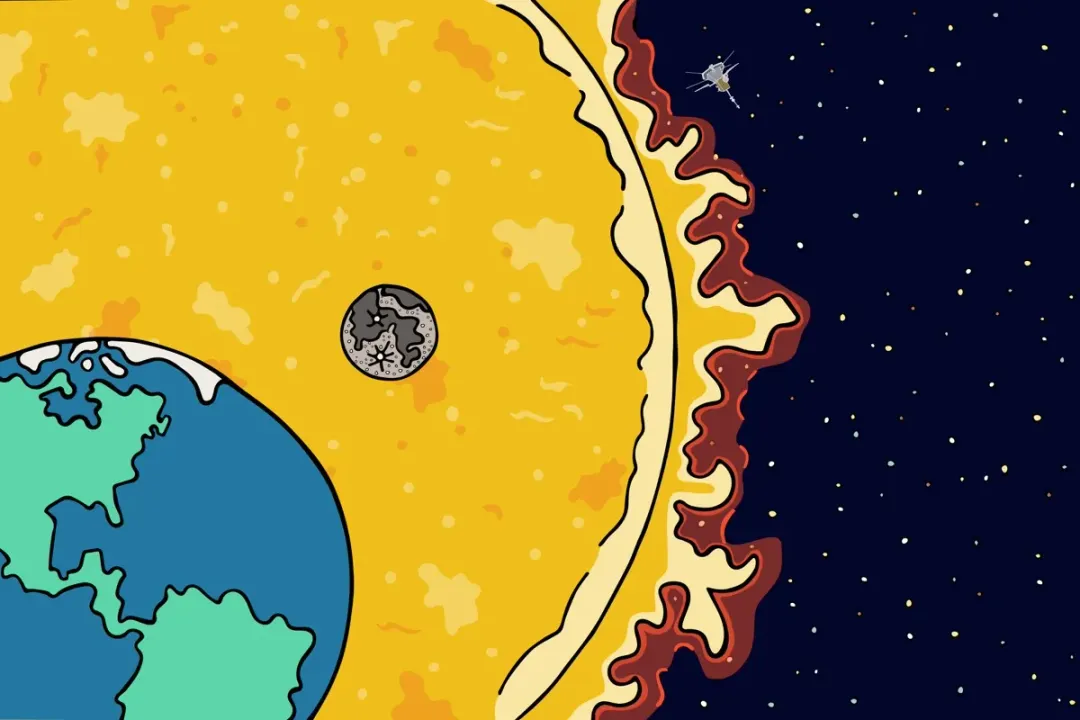
The fundamental answer to what keeps everything in our solar system—from the smallest asteroid fragment to the largest gas giant—from simply drifting away into the blackness of space boils down to one primary, pervasive force: gravity. It is the cosmic glue, the mechanism that dictates structure and motion across immense distances. If you look up at the night sky, every light you see, including our own Sun, is governed by this interaction between mass and distance.
# The Mass Anchor
At the heart of our local neighborhood sits the Sun, and its sheer size is the key to the entire arrangement. The Sun accounts for about 99.8% of the total mass of the entire solar system. This massive concentration of matter creates an incredibly powerful gravitational field that dominates the space around it. Think of it as an anchor holding a fleet of ships in a specific area. While the planets are certainly moving incredibly fast, their movement is relative to this central, massive body.
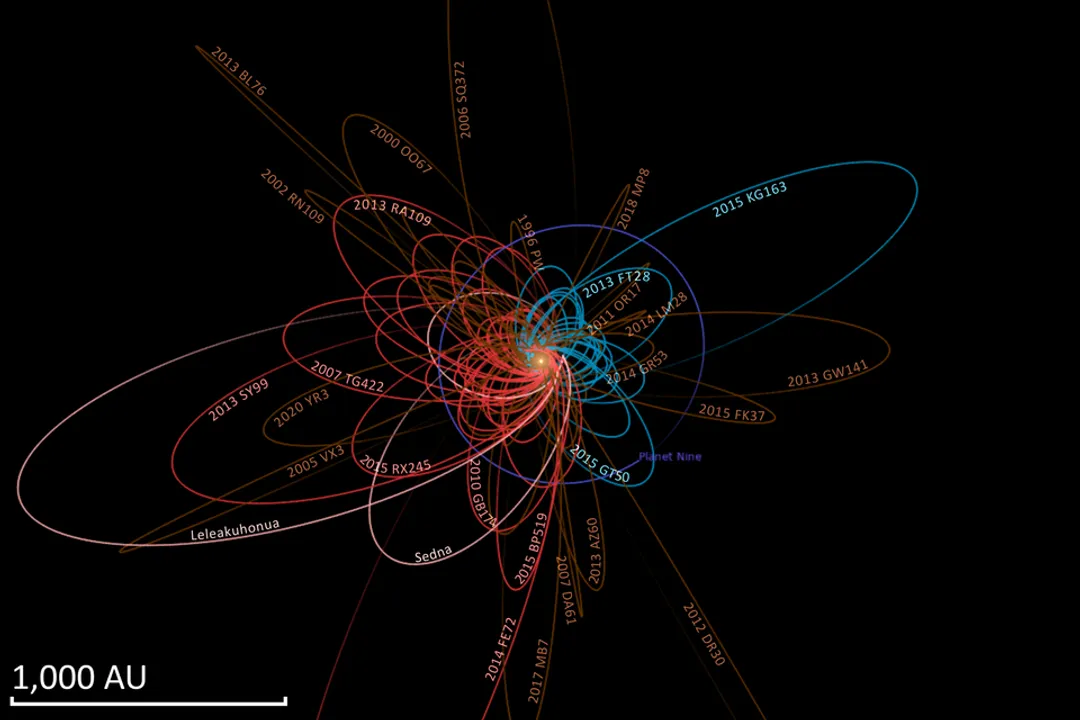
The strength of gravity isn't arbitrary; it follows specific rules related to mass and distance. An object with more mass exerts a stronger gravitational pull on other objects. Because the Sun is so much heavier than everything else combined, its gravitational influence reaches far out, encompassing even the distant Kuiper Belt objects and the theoretical Oort cloud.
If we were to compare the Sun's dominance to something more immediate, consider this: if you took all the mass of Earth, Jupiter, Saturn, Uranus, Neptune, and every single moon, asteroid, and comet, and then added the mass of the Sun, the Sun would still constitute over 300 times the remaining mass. That incredible imbalance is why the system is stable around it, rather than some hypothetical center point between the Sun and Jupiter, for example.
# The Balance Point
While gravity is the attractive force pulling everything inward toward the Sun, an equally important factor is the sideways motion or velocity of the planets. If the planets were simply placed in space without any initial velocity, they would fall directly into the Sun in a straight line. Conversely, if the Sun's gravity vanished, the planets would continue moving in a straight line, tangential to their current path, shooting off into interstellar space.
What we observe—the stable, predictable orbits—is a perpetual, dynamic balance between these two factors: the inward tug of gravity and the outward tendency of inertia. This balance is often described as a constant state of "falling around" the central body. A planet is perpetually accelerating toward the Sun due to gravity, but its forward momentum is always carrying it slightly past the star before gravity can pull it all the way in. This continuous near-miss results in an elliptical path.
# Orbits Defined
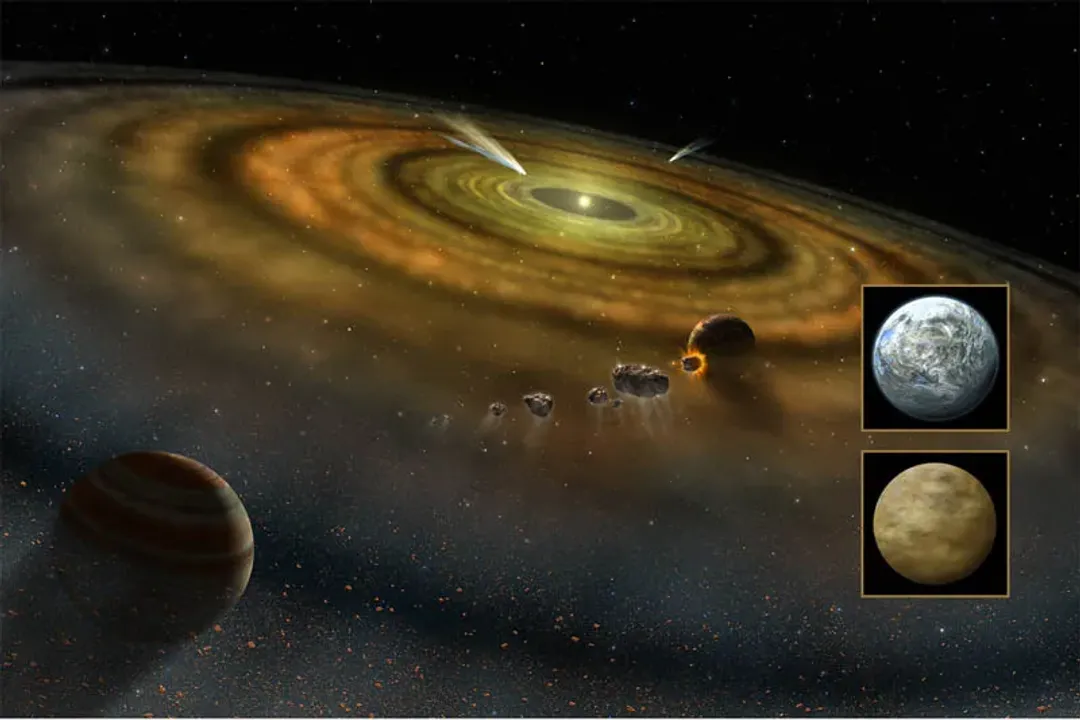
The paths these celestial bodies trace are not perfect circles; they are ellipses. This means the distance between a planet and the Sun changes over the course of its year. When the planet is closest to the Sun, it moves faster; when it is farthest away, it slows down. This relationship between distance and speed is a direct consequence of the conservation of angular momentum, a key concept in gravitational dynamics.
The general rules governing these orbits were laid out centuries ago by Kepler, and they perfectly describe the architecture of the solar system. The closer a body is to the Sun, the shorter its orbital period must be to maintain equilibrium with the Sun's pull. For instance, Mercury zips around the Sun in just 88 Earth days, whereas Neptune takes nearly 165 Earth years to complete one circuit. This disparity highlights how the required balancing velocity changes dramatically with distance from the primary mass.
# Gravitational Dynamics
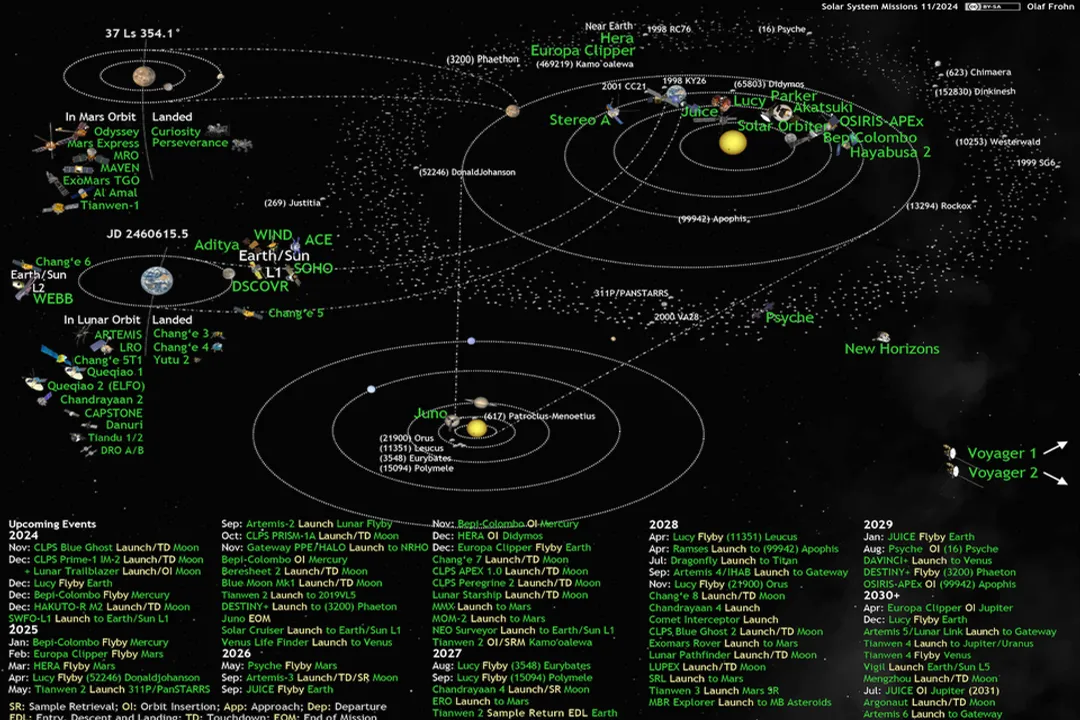
The field of study dedicated to these interactions is often called gravitational dynamics, and it deals with how objects move under the influence of gravity, especially when more than two bodies are involved. While the two-body problem (Sun and one planet) is relatively simple and perfectly predictable, the real solar system involves many interacting masses—the pull of Jupiter subtly affects Mars, which subtly affects Earth, and so on.
For the most part, the solar system is dynamically stable over billions of years because the planets are far enough apart and their orbits are relatively undisturbed by minor perturbations. The major planets stay in their lanes, but the smaller bodies, like asteroids, are often found in specific resonance zones where the gravitational nudges from the larger planets significantly shape their paths. For example, the Kirkwood Gaps in the asteroid belt represent regions where asteroids, if they had an orbit that matched a simple whole-number ratio of Jupiter's orbital period, would be repeatedly nudged at the same point in their orbit, eventually ejecting them from that region.
When examining this on an even larger scale, such as how entire galaxies are held together, the principle remains the same—gravity is the binding agent—but the dominant mass is no longer a single star, but rather billions of stars, gas, dust, and perhaps most significantly, dark matter. This shows that gravity operates consistently across every scale of the cosmos, from a planet orbiting a star to a star orbiting the galactic center.
# Constructing Stability
It can be helpful to visualize the stability not just as a balance, but as a series of nested, non-intersecting pathways. Imagine several runners on a circular track, all running at different speeds but maintaining their lanes. If one runner suddenly slows down too much, they might veer into the path of a faster runner, causing a collision or a chaotic change in trajectory.
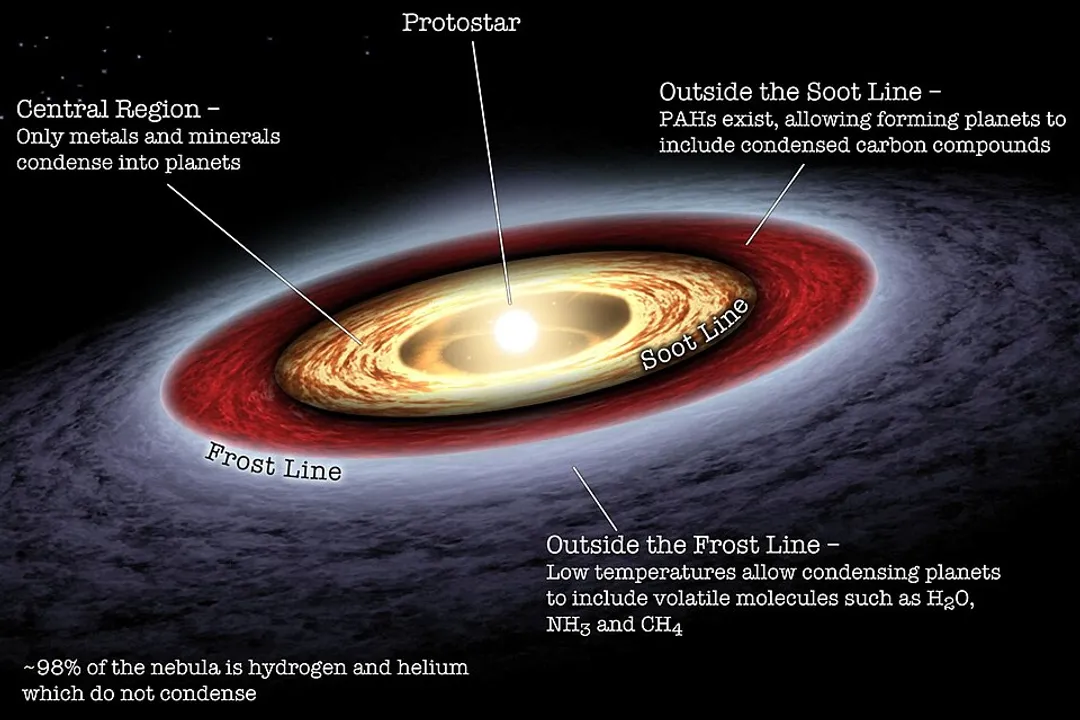
In the solar system, the orbits are so well-spaced that these chaotic encounters are extremely rare. The orbits themselves are relatively flat, lying close to the plane established by the Sun's initial formation—this flatness aids stability by keeping interactions predictable and two-dimensional for the most part.
If we were to look at the effect of distance on stability in a practical way, consider the inner vs. outer planets. Mercury, being so close to the Sun, experiences the strongest gravitational field, requiring the highest velocity to stay in its tight orbit. Earth, further out, requires less velocity to maintain its wider loop. An interesting thought experiment for understanding this is realizing that if you instantaneously stopped the Earth in its orbit—a truly impossible event—it would take roughly 64 days for it to fall to the Sun's surface, demonstrating that even with no forward speed, the fall is not instantaneous across the vast distance. The orbital velocity is what keeps it off that direct path.
# Gravitational Fields Visualized
To truly appreciate the holding power, it helps to step away from the two-dimensional view of an orbit and consider the three-dimensional field radiating from the Sun. This field is what defines the gravitational "well" that every object resides within. It is not just a line pulling inward; it is a curved space around the Sun.
Think of it like a bowling ball placed on a stretched rubber sheet. The sheet curves downward. Any marbles (planets) rolled near the ball will curve inward, tracing orbits around the depression created by the bowling ball. The deeper the curve (the more massive the Sun), the more tightly held the marbles are. This curvature of spacetime, as described by Einstein's general relativity, is the modern way we understand gravity, though Newton's inverse-square law still provides an exceptionally accurate description of the result of that force for everyday solar system calculations. The depth of the curve is what keeps things "in one dimension" relative to the star, meaning they orbit within a defined space rather than floating off randomly in three dimensions.
The solar system is not a fixed, rigid structure; it is a fluid, constantly adjusting system where gravity acts as the manager, enforcing the laws of motion while maintaining the overall shape established during its formation billions of years ago. It’s a continuous, precise calibration between motion and attraction that defines our stable cosmic home.
#Videos
The Solar System - What Holds It All Together? - YouTube
Related Questions
#Citations
How does the Sun's gravity hold the entire solar system together, but ...
The Solar System - What Holds It All Together? - YouTube
Flexi answers - What holds the solar system together? - CK-12
Solar System - Wikipedia
Gravitational Dynamics | Center for Astrophysics | Harvard ...
How does gravitational force hold the solar system together? - Quora
Gravity And Centripetal Force In Our Solar System - Science Friday
What is holding things like the Earth and the Sun in one dimension?
Galaxies and gravity (video) | Khan Academy