Is our Solar System in the Sagittarius Arm?
The question of exactly where our Sun and its planetary entourage reside within the vast expanse of the Milky Way galaxy frequently causes confusion, often leading to the specific mention of the Sagittarius Arm. While the Solar System is certainly nestled within one of the galaxy's spiral features, modern astronomical consensus places it in a much smaller, more local structure rather than one of the four main galactic arms. [2][7][9] It is easy to see why the Sagittarius Arm comes up in discussions; it is a prominent structure, and older or less precise maps might place us within its sphere of influence, or at least adjacent to it. [4]
# Galactic Anatomy
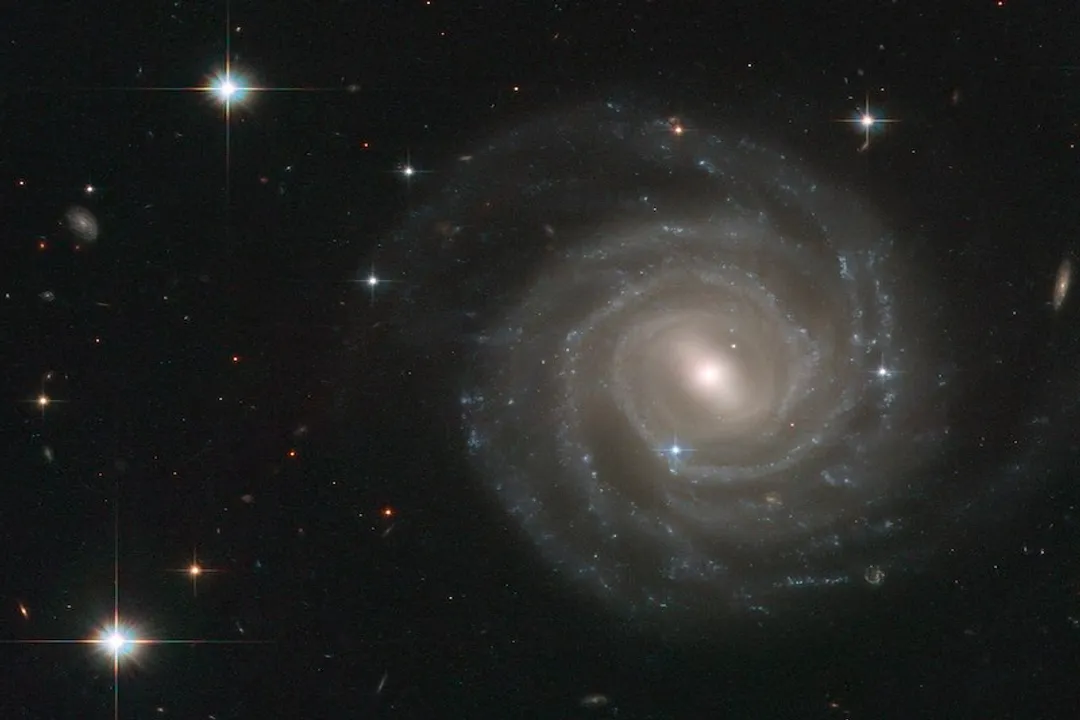
To appreciate our location, one must first visualize the Milky Way's architecture. Our galaxy is a barred spiral galaxy, meaning it possesses a central bar structure from which its spiral arms extend. [4] Astronomers generally delineate four primary spiral arms: Perseus, Sagittarius, Scutum-Centaurus, and Norma. [2][4] These arms are not rigid structures but rather density waves where star formation is concentrated, meaning they are regions where gas and dust are compressed, leading to the birth of new stars. [2]
Our Solar System orbits the galactic center, a journey that takes about 225 to 250 million years to complete. [7] During this orbit, we pass through various parts of the galaxy’s disk, which is relatively thin compared to its diameter. [7] Our distance from the heart of the galaxy, the supermassive black hole known as Sagittarius A*, is substantial—approximately 25,000 to 27,000 light-years away. [2][4][7] This places us roughly halfway between the Galactic Center and the outer edge of the visible galactic disk. [7]
# Arm Versus Spur
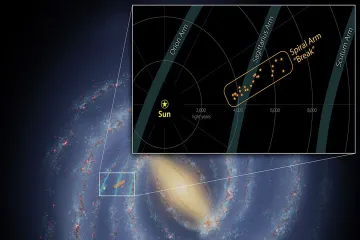
The key distinction in pinpointing our home is the difference between a major arm and a spur. While the major arms are expansive, gravitationally significant features that sweep across large sections of the disk, the Solar System is situated within a smaller, less defined feature called the Orion Spur or Orion Arm. [2][4][7][9]
The Orion Spur is often described as a minor feature, essentially a local bridge or offshoot situated between the major Perseus Arm and the Sagittarius Arm. [2][7] If the Milky Way were mapped like a vast, ancient road system, the four major arms would be the interstate highways, and the Orion Spur would be a quiet local street branching off one of those interstates, though which major arm it connects to most directly is sometimes a point of debate among models. [2][9]
The idea that we reside within the main Sagittarius Arm appears to stem from early models or perhaps an older interpretation of our position relative to that prominent structure. [4] However, the current, more refined mapping clearly separates our local neighborhood—the Orion Spur—from the main body of the Sagittarius Arm. [7][9] This means that when stargazers look toward the center of the galaxy, they are generally looking towards the direction of the Sagittarius Arm, but we are physically located between it and the next major arm out, Perseus. [2]
# Local Environment
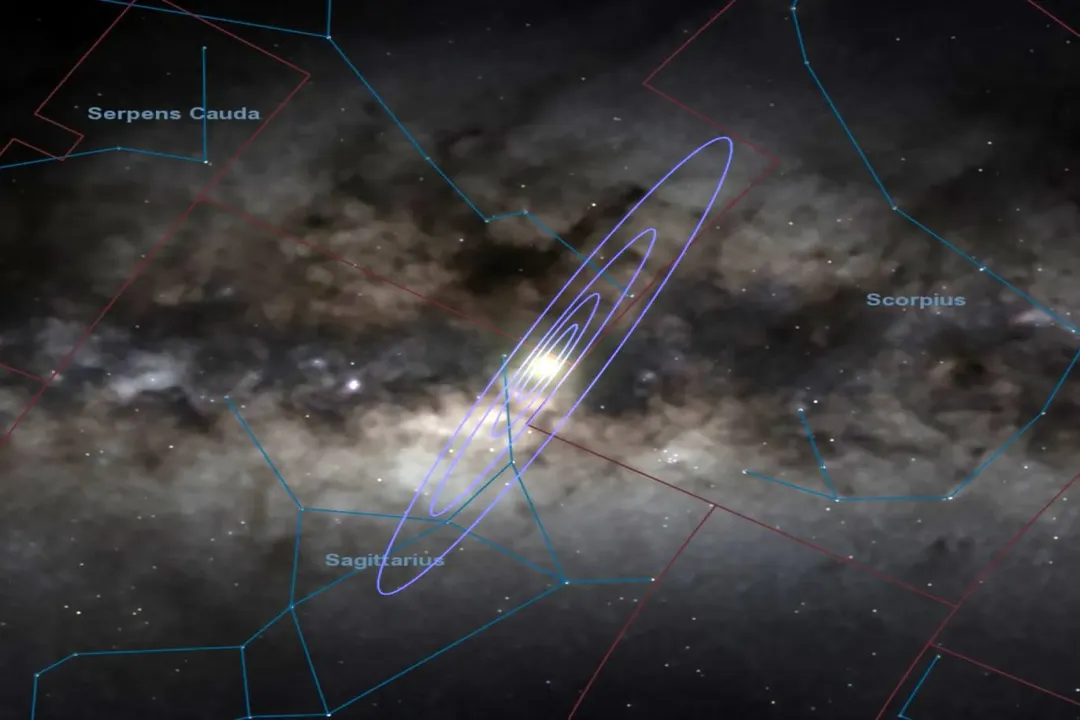
Being situated in the Orion Spur rather than a major star-forming arm has tangible effects on our local cosmic environment. Major arms are characterized by intense new star formation, meaning they are rich in massive, hot, short-lived blue stars and vast clouds of nebulae. [2] While the Orion Spur certainly contains star-forming regions—the famous Orion Nebula is a prime example—it is generally less densely packed with young, luminous stars than the core of the Sagittarius or Perseus Arms. [7]
This location in a less dense area provides a certain stability and clarity for our Solar System. For us, living in this spur means we orbit the galactic core at a relatively steady pace without frequently plunging into the most turbulent, dust-choked zones where new stars are being violently born and dying. [9]
Consider the view from Earth. When we look outward toward the center of the Milky Way, we see the bright, concentrated band of light where most of the galaxy's stars reside. Being 25,000 light-years out, we are looking across roughly half the galactic disk towards the core. [7] If we were inside the Sagittarius Arm, our view in that direction would likely be more obscured by the very dust and gas clouds that define that arm, making it harder to resolve the galaxy's structure beyond it. Our placement in the quieter Orion Spur allows for a relatively clearer line of sight in many directions, though the galactic plane itself remains a source of dust extinction. [9]
# Mapping Coordinates
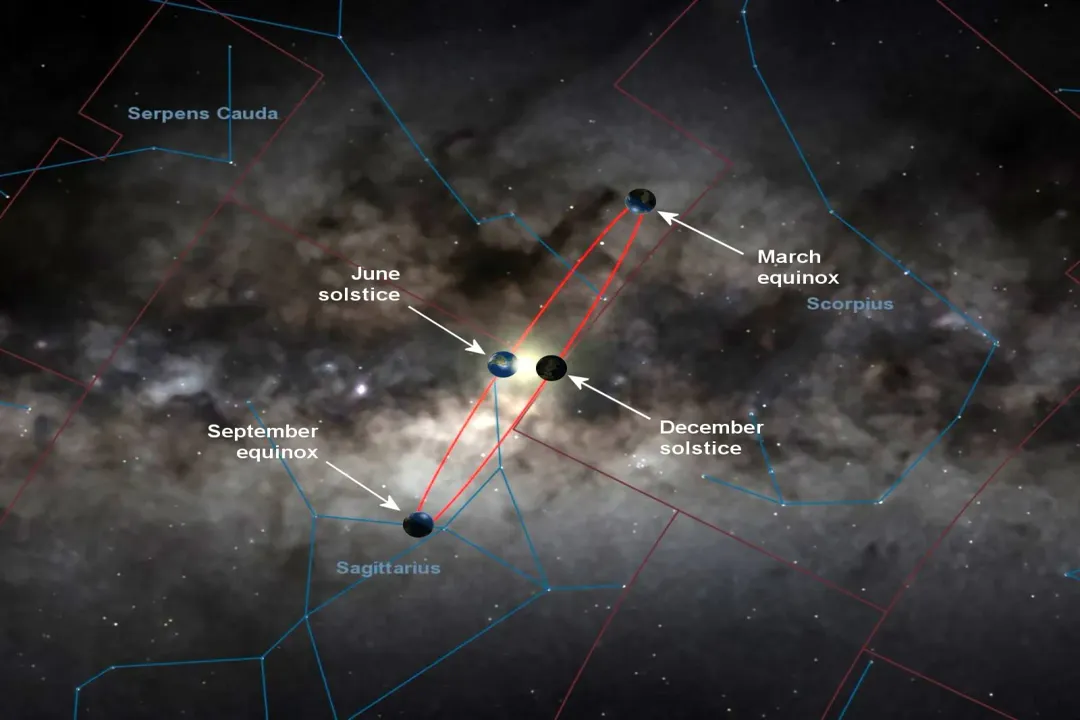
To anchor our position more precisely, astronomers use coordinates relative to the Galactic Center. While the measurement is ongoing and subject to refinement, a general consensus exists for our neighborhood:
| Feature | Approximate Distance from Galactic Center | Relative Position |
|---|---|---|
| Galactic Center (Sgr A*) | 0 light-years | Reference Point |
| Solar System (Sun) | 26,000 light-years | Located on the inner edge of the Orion Spur [2][7] |
| Sagittarius Arm | Closer to the Galactic Center than the Sun [9] | Major Spiral Feature |
| Perseus Arm | Further from the Galactic Center than the Sun [2] | Major Spiral Feature |
This table clearly illustrates the hierarchical nature of galactic features. The Sagittarius Arm is a major feature closer to the core, whereas our location is an appendage off the main structure. [2][9] The Sun is not just near an arm; it resides within a local grouping of stars and clouds often designated as the Local Arm or Spur. [4][7]
# Observational Context
The Sun’s position within the Orion Spur offers a unique observational baseline. Imagine the entire galaxy is a gigantic, spinning vinyl record. The major arms are deeply grooved sections on that record. Our Solar System isn't in one of the deep grooves; it’s situated on a small, shallow ridge between two of those main grooves. [2]
This local context is important for how we perceive the galaxy from our vantage point. When we observe distant nebulae or star clusters, we are seeing light that has traveled thousands of light-years, but we are not necessarily looking across the full width of a major density wave. [9] This subtle difference in perspective means that mapping the Sagittarius Arm accurately from our relatively quiet perch requires careful subtraction of foreground objects that are actually much closer to us within the Spur itself. The local stellar density directly influences how we calibrate measurements for structures thousands of light-years further out.
# Galactic Motion
Our membership in the Orion Spur dictates not only our static position but also our dynamic path. The local spiral structure influences the long-term gravitational environment around the Sun. [2] As we circle the galaxy, we are constantly moving in and out of the galactic plane slightly, a consequence of the entire disk's complex gravitational field, which is influenced by the mass distribution of the major arms. [7]
While the Sagittarius Arm is a significant gravitational landmark in the overall galaxy, being situated in the Orion Spur means the Sun is subject to the gravitational tidal effects associated with that local density enhancement, rather than the dominant tidal forces exerted by the Sagittarius Arm itself. [4] For the Earth, this difference is negligible on human timescales, but it is fundamental to understanding the long-term stability of the Solar System's trajectory around the galactic center over eons. Our current address in this minor spur is simply where the Sun happened to be when the spiral density wave pattern dictated a relatively clear patch of space for planetary formation billions of years ago. [9]
Related Questions
#Citations
Location of our solar system : r/Astronomy - Reddit
Does the Sun move around the Milky Way?? - StarChild - NASA
The Solar System's Place In The Milky Way: Part 1 - The Oikofuge
Is our solar system situated within the arm of the Milky Way galaxy?
What is the location of our solar system within the universe?
Solar system sits within a major spiral arm of the Milky Way
The Milky Way Galaxy - Zoom Astronomy - Enchanted Learning
Where does our solar system exist inside the Milky Way? Is ... - Quora
Which Milky Way spiral arm is ours? - EarthSky