Are we in the Sagittarius Arm?
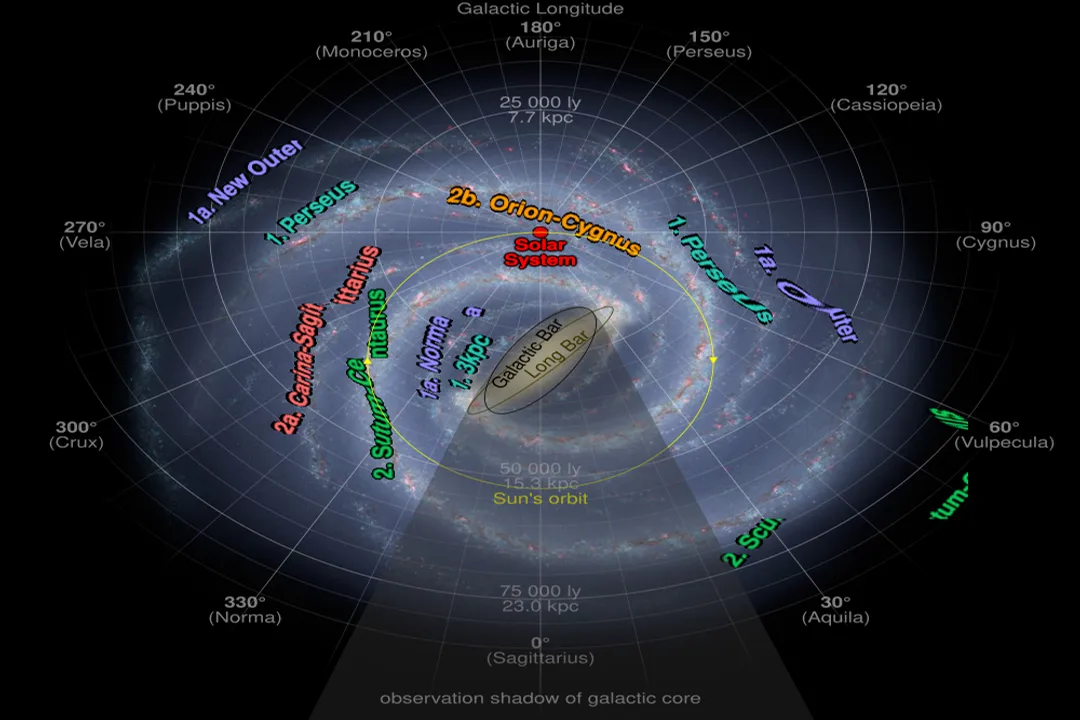
The common understanding of our location within the Milky Way galaxy is often clearer in recollection than in current astronomical mapping, leading to discussions about whether our Sun resides within the prominent Sagittarius Arm. The reality, based on current models, places our solar system in a much smaller feature located between the two largest structures, giving rise to some fascinating discrepancies in collective memory. [1][2]
# Galactic Placement
The Milky Way galaxy is a barred spiral galaxy, a vast collection of stars, gas, and dust organized into distinct structures, primarily defined by its main spiral arms. [3] When astronomers map these structures, they identify a few massive arms, such as the Perseus Arm and the Sagittarius Arm. [9] Our own Sun, however, is not situated within either of these major groupings. [9] Instead, the Solar System occupies a relatively minor feature known as the Local Arm or the Orion Spur. [2][9]
This Local Arm is situated in the space between the larger Perseus Arm (further out from the galactic center) and the Sagittarius Arm (closer to the center). [9] One way to visualize this is by thinking of the galaxy as a city with major expressways (the main arms) and smaller residential streets connecting them—we live on one of those connecting streets, the Orion Spur, not the main expressway. [9] The Sagittarius Arm itself is recognized as a significant component of the galaxy's overall shape, contributing substantially to the stellar population visible in certain directions. [3][5]
# Spiral Structure
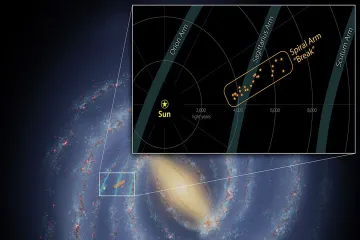
The larger arms, like the Sagittarius Arm, are massive, sprawling areas of concentrated star formation and density waves circling the galactic core. [3] Studies, including radio observations, help map these regions, sometimes revealing complex structures like breaks or gaps within them, as captured in observations relating to the Sagittarius Arm specifically. [8] The Carina–Sagittarius Arm is sometimes referred to in combined terms, emphasizing its scale and presence in the galactic disk. [3]
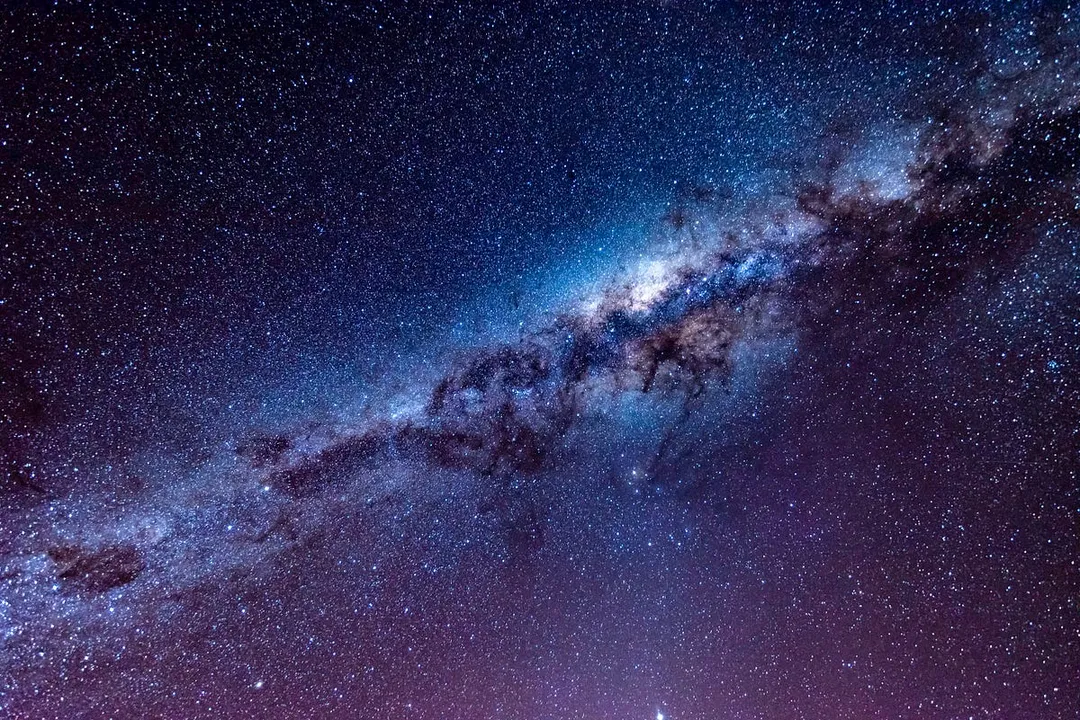
When we look up at the Milky Way from Earth, what we are actually seeing is the plane of our galaxy—the flat disk where most of the stars reside. [4] Because we are situated within this disk, our view is necessarily obscured and layered. [4] We see light from stars that are closer to the galactic center, which includes light passing through or originating from the Sagittarius Arm, as well as light from objects in our local neighborhood. [4] This visual experience of looking through a dense field of stars might contribute to the confusion about precise location, as the sheer volume of visible material suggests proximity to something substantial. [4]
# Memory Discrepancies
The point of common divergence often centers on the recollection of being physically located in the Sagittarius Arm. [1] Many people recall a time, perhaps through memory traces or educational materials, where our position was definitively stated as being within that major arm. [2] This particular geographical shift concerning the galaxy is frequently cited as an example of the Mandela Effect, where a large group shares a specific, incorrect memory. [1][2] It is a fascinating case where the objective astronomical fact—our location in the small Local Arm—contradicts a deeply held, shared memory of being in the larger Sagittarius structure. [2]
If we consider the scale, the Local Arm or Spur is relatively minor compared to the massive, well-defined Sagittarius Arm. [9] It is understandable that a memory associated with the larger, more famous structure would feel more significant or "correct" than recalling residency in an unheralded spur of dust and younger stars located between two giants. The memory might anchor to the nearest large known structure rather than the precise, smaller subdivision. [9]
# A Cosmic Viewpoint
To put this into perspective, imagine an observer located somewhere within the actual Sagittarius Arm, assuming that arm was as densely populated as our local region for a moment of comparison. That observer would be looking out toward the center of the galaxy and out toward the edge, seeing a different distribution of foreground stars and dust clouds than we see now. [4] The specific star fields we associate with the summer sky, for example, are largely defined by what lies in our immediate vicinity within the Orion Spur. [9]
From our vantage point in the Local Arm, we are about two-thirds of the way out from the galactic center. [9] If we were truly situated in the Sagittarius Arm, we would be closer to the central bulge, and the visual experience of the Milky Way band overhead would likely be dominated by different foreground structures, possibly appearing brighter or more obscured due to the increased density of stars toward the core region. [4] The fact that we can see features like nebulas and star clusters associated with the Sagittarius Arm as objects we are looking toward, rather than objects we are surrounded by, confirms our displacement from it. [3]
The precision of these measurements, often derived from mapping distant radio sources and observing shifts in stellar populations, shows a high degree of confidence in the Local Arm designation. [9] Yet, the persistent memory of the Sagittarius Arm remains a compelling reminder of how easily our spatial anchors—even those on a galactic scale—can shift in the collective consciousness. [1][2]
#Videos
What Is That Spiral Arm In The Center Of The Milky Way? - YouTube
Related Questions
#Citations
The Sagittarius Arm : r/MandelaEffect - Reddit
The Mandela Effect: The Changing Geography of the Galaxy - Medium
Carina–Sagittarius Arm - Wikipedia
When we look up and see the Milky Way, are we seeing an arm of ...
Sagittarius Arm | After Earth Wiki | Fandom
What specific parts of the Milky Way do we see when we look up?
What Is That Spiral Arm In The Center Of The Milky Way? - YouTube
A Break in the Milky Way's Sagittarius Arm
Earth's Milky Way Neighborhood Gets More Respect