What's in the Orion Arm?
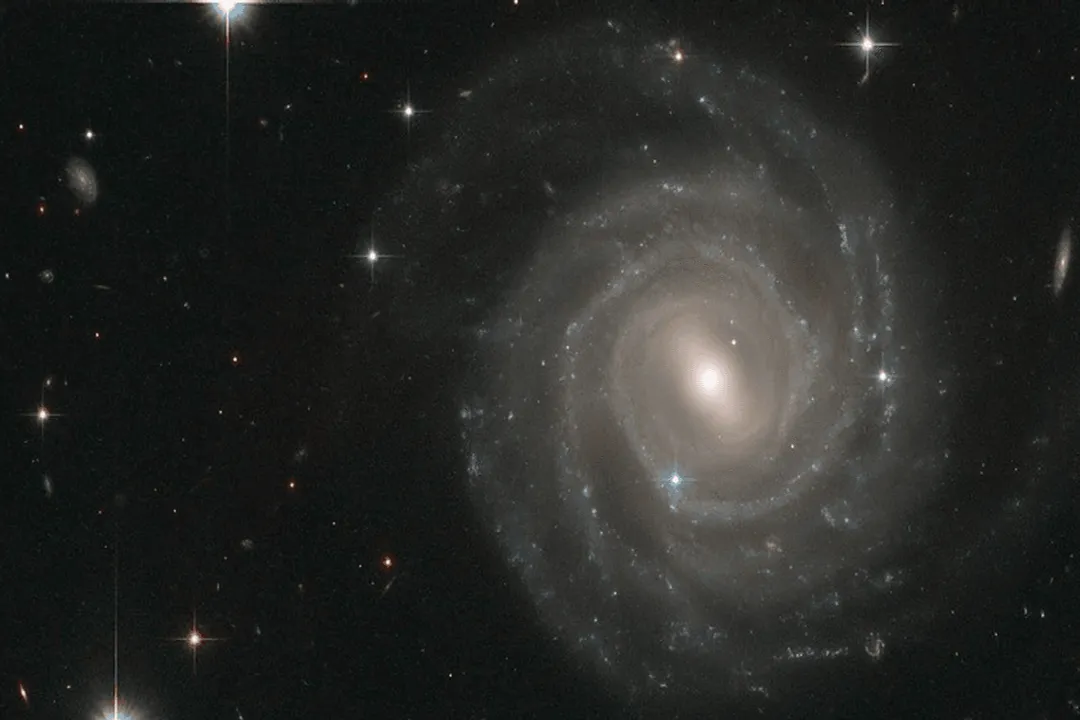
The region our Solar System calls home within the colossal structure of the Milky Way galaxy is known formally as the Orion Arm, or sometimes, perhaps more accurately, the Orion Spur. [1][7] This designation places us in a specific neighborhood of the galaxy, one that is situated between two of the Milky Way's more prominent, major structures: the Perseus Arm and the Sagittarius Arm. [1][4][6] Far from being a grand, sweeping feature, the Orion Arm is generally considered a relatively minor appendage or offshoot originating from one of the galaxy's principal arms. [7][1]
# Galactic Context
The Milky Way is a barred spiral galaxy, meaning it possesses a central bar structure composed of stars, gas, and dust, from which its main spiral arms emerge. [1] Astronomers identify four primary spiral arms—the Scutum-Centaurus, Perseus, Sagittarius, and Norma arms—though the exact count and definition of these features are still subjects of active research. [1][7] The Orion Arm fits into this architecture as a localized feature containing billions of stars. [7]
Our Sun, the Earth, and our immediate stellar neighbors reside firmly within this structure. [1][6] While some early models of the galaxy simply depicted a few major arms, modern observations, often aided by radio astronomy mapping of neutral hydrogen gas, have revealed a more intricate structure, solidifying the placement of the Orion Spur as a distinct, albeit smaller, component. [2] The general consensus in astronomy confirms that the Sun orbits the Galactic Center from within the Orion Arm. [2][6]
# Local Neighborhood
What exactly populates this arm? Like any region of the galaxy containing active star formation, the Orion Arm is rich in molecular clouds, gas, dust, and young star clusters. [7] Because the Sun is located here, we benefit from a perspective that allows us to observe the galaxy in a way that is profoundly different from an observer situated deep within a major arm.
If the Solar System were deeply embedded within a massive arm, like the Sagittarius Arm, our view of the sky would be dominated by the bright, dense concentration of stars, gas, and nebulae that define that arm, making distant observations extremely difficult due to obscuration. [4] Being in the relatively sparser Orion Spur offers a slightly clearer vantage point, even though we still look through significant quantities of interstellar material when we gaze toward the Galactic Center. [1][4]
The arm itself is estimated to be tens of thousands of light-years long, extending outward from the main structure of the galaxy. [4] It is not a tightly wound feature like the major arms but rather a more diffuse extension of stellar neighborhoods. [7]
# Scale Comparison
To truly appreciate the Orion Arm’s status, it helps to compare its scale to its galactic neighbors. The Perseus Arm wraps around the outer regions of the galaxy, while the Sagittarius Arm loops closer to the core than our position. [4][7] These major arms are vast structures, containing immense reservoirs of gas and undergoing significant star formation across their lengths. [1]
If we consider the Milky Way’s diameter to be roughly 100,000 light-years, the major arms represent the primary highways of stellar populations. [3] The Orion Spur, by contrast, is a significant, but secondary, structure. A hypothetical traversal across the entire length of the Orion Spur would cover a substantial distance, yet it is dwarfed by the path one would trace along the main Perseus or Sagittarius arms. [3] This difference in scale translates directly into the density and frequency of massive star-forming regions we encounter as we orbit the galaxy. Being in the spur means we generally pass through fewer concentrated nurseries of O and B-type stars during a single Galactic orbit compared to a system situated in the heart of a main arm. [1]
| Galactic Feature | Approximate Classification | Position Relative to Sun | Typical Density of Young Stars |
|---|---|---|---|
| Perseus Arm | Major Spiral Arm | Outer Side | High |
| Sagittarius Arm | Major Spiral Arm | Inner Side | High |
| Orion Arm (Spur) | Minor Spur/Arm | Localized Feature | Moderate |
This localized positioning means that while we are certainly part of the galaxy’s spiral population, we occupy a quieter subdivision, perhaps akin to living in a suburban cul-de-sac rather than a main downtown thoroughfare. [7]
# Home Galaxy
The distance of the Solar System from the Galactic Center is estimated to be around 25,000 to 27,000 light-years, placing us about 5,000 to 7,000 light-years outside the main plane of the Sagittarius Arm. [4] This specific placement within the Orion Spur is critical for our existence and our ability to study the cosmos.
When astronomers discuss the Orion Arm, they are often referencing the area that encompasses the local interstellar medium—the bubble of gas and dust immediately surrounding our Sun. [6] This local environment has been shaped by the historical activity within this spur, including supernovae and stellar winds from nearby massive stars that formed in the region. [7] This local context is important because the motion and distribution of stars in this region are influenced by the gravitational interactions between the major arms as they pass by, causing the spur to warp and twist slightly relative to the galactic disk. [1]
Our relatively peaceful location within this spur is often cited as a favorable condition for the long-term evolution of life on Earth, as we are distant enough from the intense radiation and high frequency of supernova events associated with the denser regions of the major spiral arms. [4] While the Orion Spur still has its share of dynamic stellar activity, it offers a degree of stability over the billions of years required for complex life to develop. [2]
# Observational Viewpoint
The reality of our location in the Orion Spur creates an interesting observational bias when we look toward the heart of the Milky Way. [4] If we aim our telescopes inward, toward Sagittarius, we are looking across the Orion Spur and into the denser territory of the Sagittarius Arm and the central bulge. [1] This means the material we see is a combination of our immediate local environment and the distant, concentrated populations further in.
Conversely, looking outward, toward the Perseus Arm, we are looking across the relatively empty gap that separates the Spur from the larger Perseus structure. [7] This arrangement means that our "map" of the Milky Way is inherently biased by our own coordinates; we see the galaxy like a resident on the edge of a major metropolitan area viewing the downtown core from a quieter suburb. [4] The structure we call the Orion Arm is, therefore, as much a description of our address within the galaxy as it is a description of a massive, independent stellar flow like the Perseus Arm. [2] Understanding this local context allows astronomers to better model the true overall structure of our galactic home. [1]
#Videos
What Is The Orion Arm Of The Milky Way? - Physics Frontier - YouTube
Related Questions
#Citations
Orion Arm - Simple English Wikipedia, the free encyclopedia
Is it still widely accepted that the Sol system resides in the Orion Arm ...
What Is The Orion Arm Of The Milky Way? - Physics Frontier - YouTube
The Universe within 5000 Light Years - The Orion Arm
Orion Arm | Halo Alpha - Fandom
What is the Orion Arm in astronomy? - Quora
Orion Arm Facts for Kids
Orion Arm - Universe Wiki | Dawn of Victory 2289 - Champlain Group
Where Is Our Home In The Galaxy? Meet The Orion Arm - IFLScience