What is the light from Orion's belt?
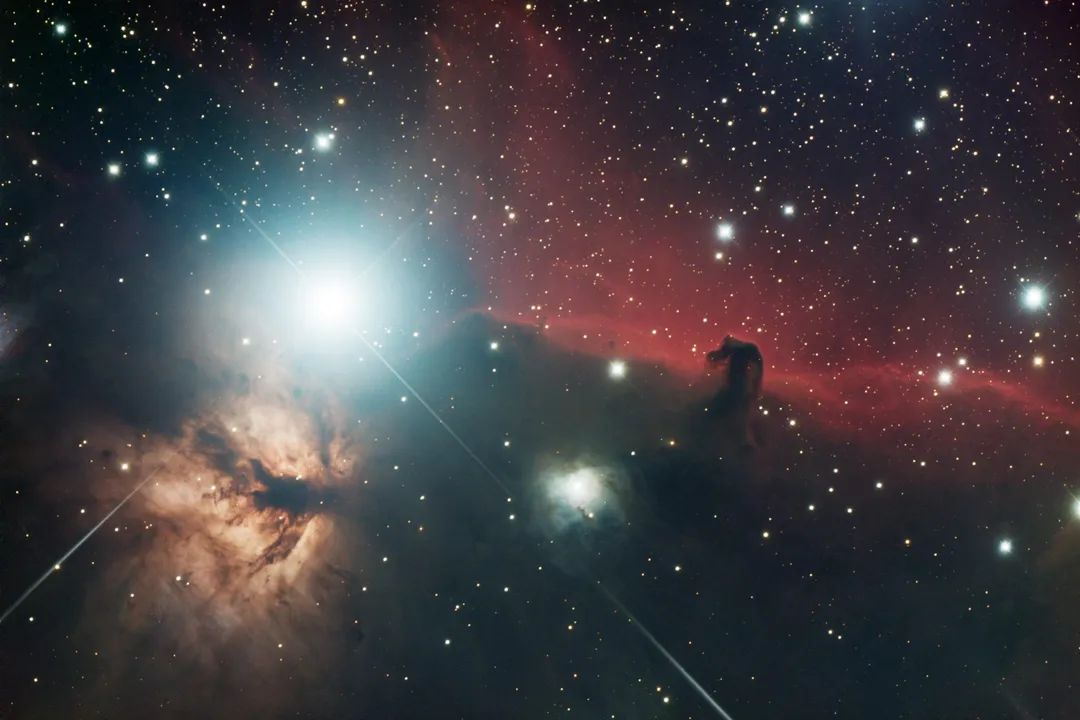
The light emanating from the region surrounding Orion's Belt is not a single phenomenon but a collection of brilliant stellar emissions, vast clouds of glowing gas, and regions of profound cosmic shadow. The three bright stars that form this famous asterism—Alnitak, Alnilam, and Mintaka—serve as convenient pointers to some of the most dramatic celestial objects visible from Earth, making this area a favorite target for both casual sky-gazers and professional astronomers alike.
# Star Alignment
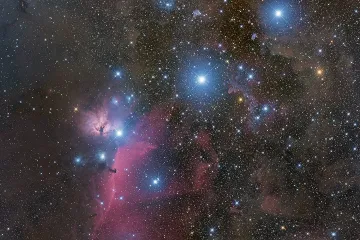
The belt itself is an asterism, a recognizable pattern of stars that isn't necessarily a physically bound group. The individual stars making up Orion's Belt are at significantly different distances from us, though they appear nearly aligned in the sky. This alignment is what gives the belt its recognizable, straight appearance night after night. When we look at the light from this region, we are witnessing light that has traveled vastly different amounts of time to reach our eyes.
# Nebulae Brightness
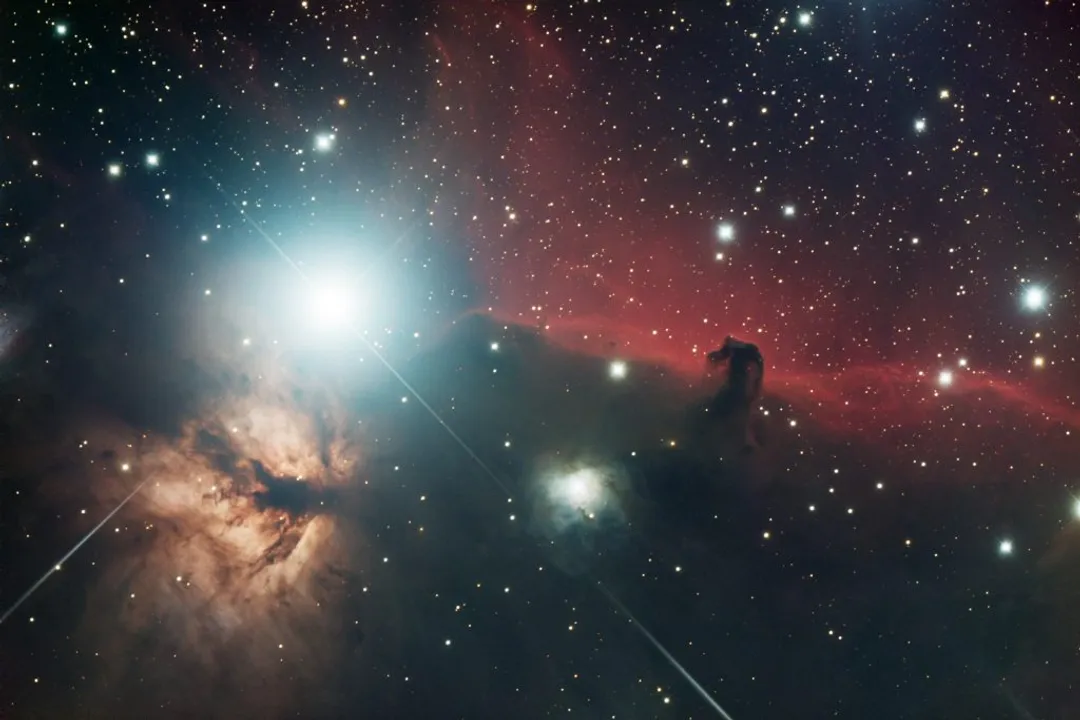
The light that draws the most immediate attention near the belt originates from massive clouds of interstellar gas and dust. Chief among these is the Flame Nebula, formally cataloged as NGC 2024. This object is famous for its dramatic appearance, often seen alongside the nearby Horsehead Nebula. The light we perceive from the Flame Nebula is largely the result of bright, hot stars within or near the cloud energizing the surrounding gas. Specifically, one of the brightest stars involved, Alnitak, the easternmost star of the Belt, illuminates the nebula, causing its hydrogen gas to glow brightly. The complex structure within the Flame Nebula means that certain regions appear dark because dense dust clouds block the background light, creating the characteristic flame-like appearance.
Another common visual element associated with the Belt is the faint nebulosity that sometimes appears around the stars themselves. While the Flame Nebula is a distinct target, the entire region is rich in star-forming activity, meaning the light observed is young, energetic, and varied in origin.
When observing objects like the Flame Nebula, it’s helpful to recall the immense scale involved. If you can find the belt stars in your local sky, you are looking hundreds of light-years into space. If you consider the apparent angular size of the Flame Nebula—how much sky it covers visually—it spans less than a degree across. However, its actual physical size is estimated to be around 4 light-years across, meaning the light you capture in your eyepiece represents a colossal structure shaped by stellar winds and radiation. For practical stargazing, a simple trick is to use the middle star of the belt, Alnilam, as a reference point; the Horsehead Nebula lies just south of Alnitak, often requiring a high-contrast view or specialized filters to tease out against the background glow, while the Flame Nebula is physically associated with Alnitak.
# Dark Patches
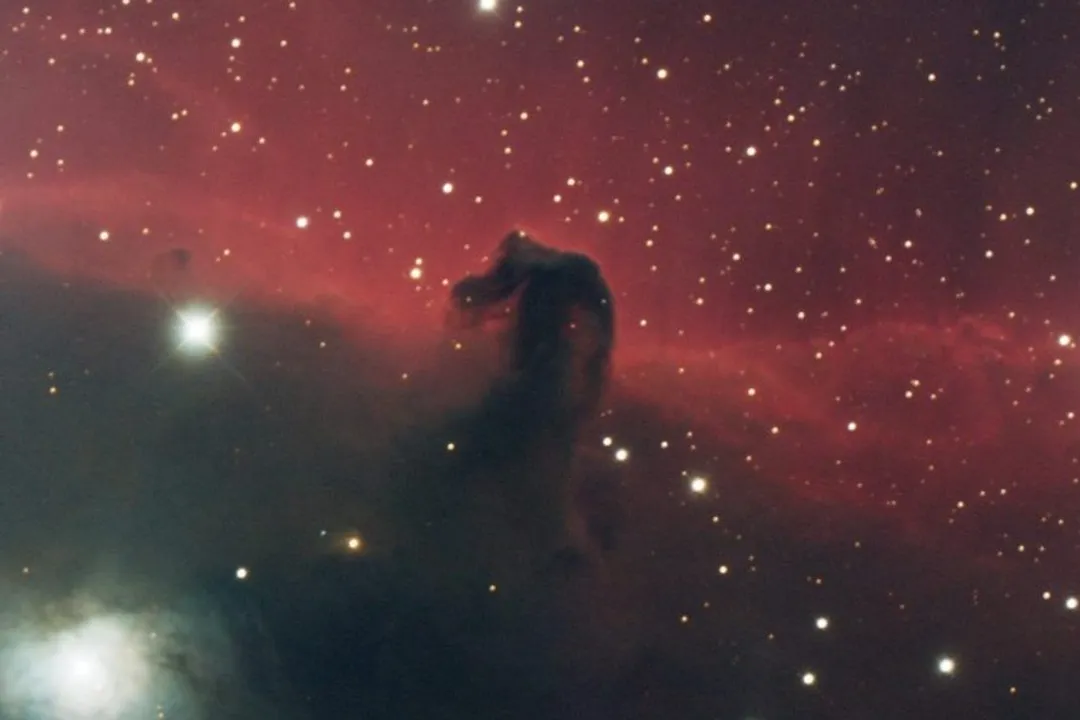
Not all the light from Orion's Belt involves emission or reflection; sometimes, the most striking features are absences of light. Directly associated with this stellar region is a significant structure known as a dark nebula. This is fundamentally different from a bright nebula; it is a dense concentration of interstellar dust that is so opaque it effectively blocks the light from the stars and nebulae lying behind it. This obscuring cloud is sometimes referred to as Barnard 33.
The contrast between the glowing gases, like those in the Flame Nebula, and these dark dust lanes creates the dramatic visual contrast that makes the Orion complex so compelling. The dust responsible for blocking the light is composed of microscopic particles, often silicate or carbon-based, which effectively absorb and scatter visible light waves, rendering the background invisible to our eyes unless illuminated from an angle.
# Radio Emission
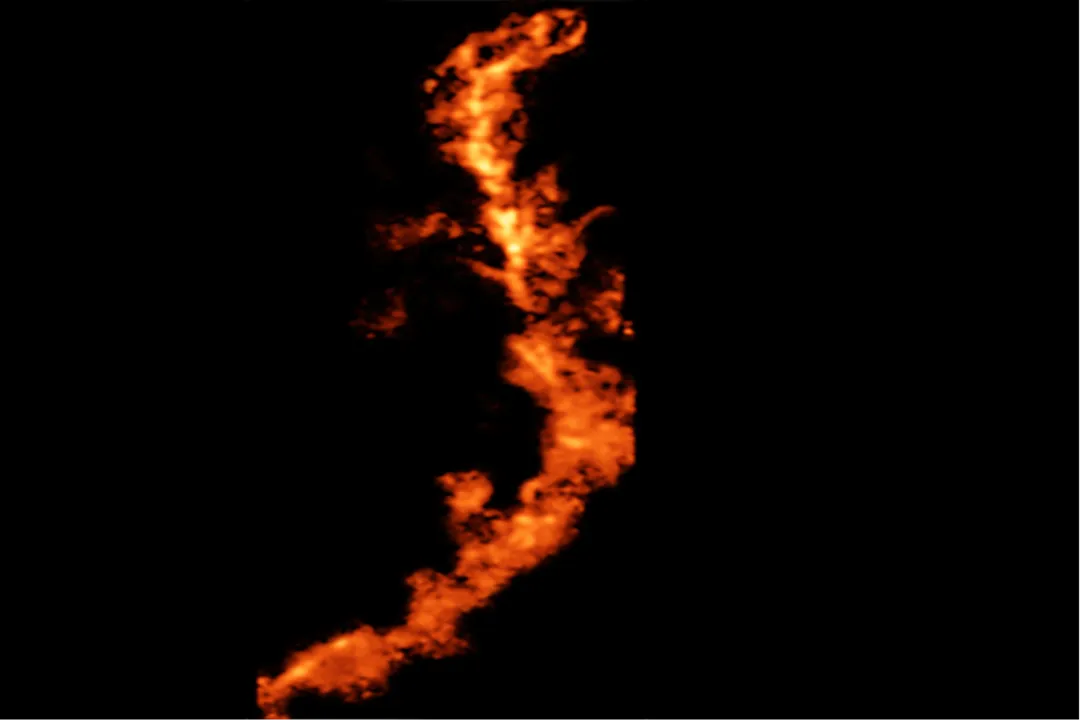
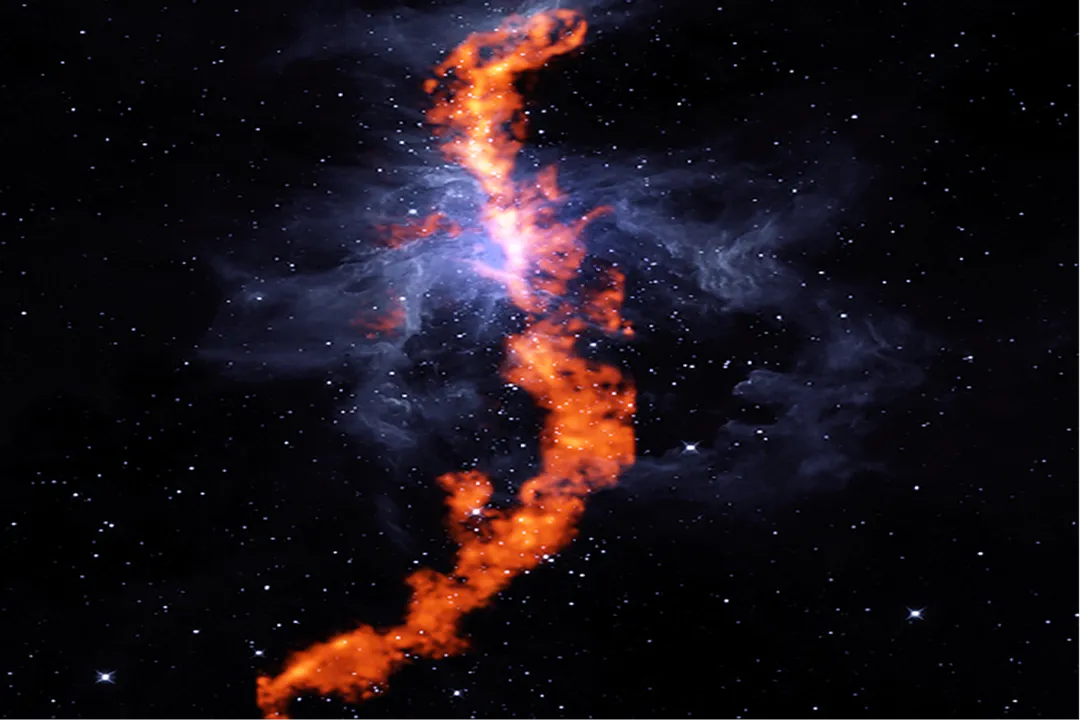
The light observed by the naked eye or a standard telescope is only a small part of the story. Modern instruments can detect radiation from this area across the entire electromagnetic spectrum. For instance, the Green Bank Telescope (GBT) has been used to capture the radio light emanating from the Orion region.
Radio observations reveal a different picture of the energetic processes occurring there. Instead of glowing hydrogen visible to our eyes, radio telescopes detect synchrotron radiation and thermal emission from different components, such as shockwaves created by newborn stars or the structure of the molecular clouds that serve as stellar nurseries. This radio light passes through the obscuring dust clouds that block visible light, offering astronomers a way to map the internal structure of the nebula that would otherwise remain hidden.
It is fascinating to compare the visible and radio light from this single region. What appears to us as a bright, glowing nebula near the Belt is, when viewed in radio wavelengths, revealed to be overlaid with structures of cool gas and energetic particles that are completely invisible in optical light. This suggests that the total energy output of Orion's cloud complex, measured across all wavelengths, is far greater than what our optical instruments alone can convey. To truly grasp the activity here, one must look at multi-wavelength data, essentially seeing the environment through different "senses" to piece together the full structure of the star-forming region.
# Reported Flashes
For amateur observers, the steady light of the stars and nebulae is sometimes interrupted by seemingly transient phenomena near Orion's Belt. Reports frequently surface from observers who witness a light near the Belt that appears to be flashing, blinking, or changing color over the course of a few seconds or minutes. These reports often generate concern or curiosity, with observers noting unusual sequences like a light blinking every 90 seconds or shifting between red, blue, white, and yellow.
It is crucial to recognize that the stars forming Orion's Belt are vast, distant suns, and their light does not flicker on human timescales. The light from a true star is incredibly steady. Therefore, any rapidly changing, multi-colored light near the Belt is almost certainly an object much closer to Earth. Such observations are commonly attributed to artificial satellites, aircraft flying at high altitudes reflecting sunlight, or even distant high-flying balloons. For example, one specific observation described a stationary light flashing rhythmically, which is characteristic behavior for an artificial object reflecting sunlight towards the observer as it orbits.
This distinction between steady stellar light and variable foreground light is an important skill for any stargazer. If a light source appears to change color dramatically (red, blue, white, yellow) or pulses or blinks over seconds, it is not the ancient light from the star itself but rather a local, nearby reflection, as the light from the actual stars in Orion has been traveling for hundreds of years.
# Contextualizing Observation
The Orion complex, framed by the Belt, offers a perfect case study in astronomical observation, moving from the easily visible to the barely perceptible. The stars themselves are easily located, guiding the eye toward the much fainter, extended light of the nebulae.
If you are setting out to view this region, understanding the relative brightness is key. The main stars are first magnitude or brighter, making them shine intensely even through light pollution. In contrast, the nebulae require darker skies or filters because their light is spread thinly over a large area. For instance, when the Green Bank Telescope captures radio emission, it reveals density variations within the clouds themselves, which dictates how much visible light gets blocked versus how much is illuminated.
A helpful piece of practical advice for locating the fainter structures is to use averted vision. When looking for the faint glow of the nebulae, try looking slightly beside the object rather than directly at it. Your eye’s peripheral vision is more sensitive to low levels of light than the central part of your retina, allowing you to sometimes perceive the faint structure of the Flame Nebula or the dark silhouette of the Horsehead Nebula that is otherwise lost when staring directly. This technique capitalizes on the eye’s inherent strengths when dealing with diffuse light sources such as the glow from ionized gas hundreds of light-years away.
Related Questions
#Citations
A Flame in Orion's Belt | NASA Jet Propulsion Laboratory (JPL)
A seemingly stationary light flashing every 90 seconds over Eastern LI.
The Horsehead and Flame Nebulas I tracked this dramatic area in ...
GBT Captures Orion Blazing Bright in Radio Light
Why is a star close to Orion blinking red, blue, white and yellow at ...
Flame Nebula - Wikipedia
Just Off of Orion's Belt | Dyer Observatory | Vanderbilt University
The Dark Nebula under the Orion's Belt « Curator's Blog