Where are Kuiper Belt objects?
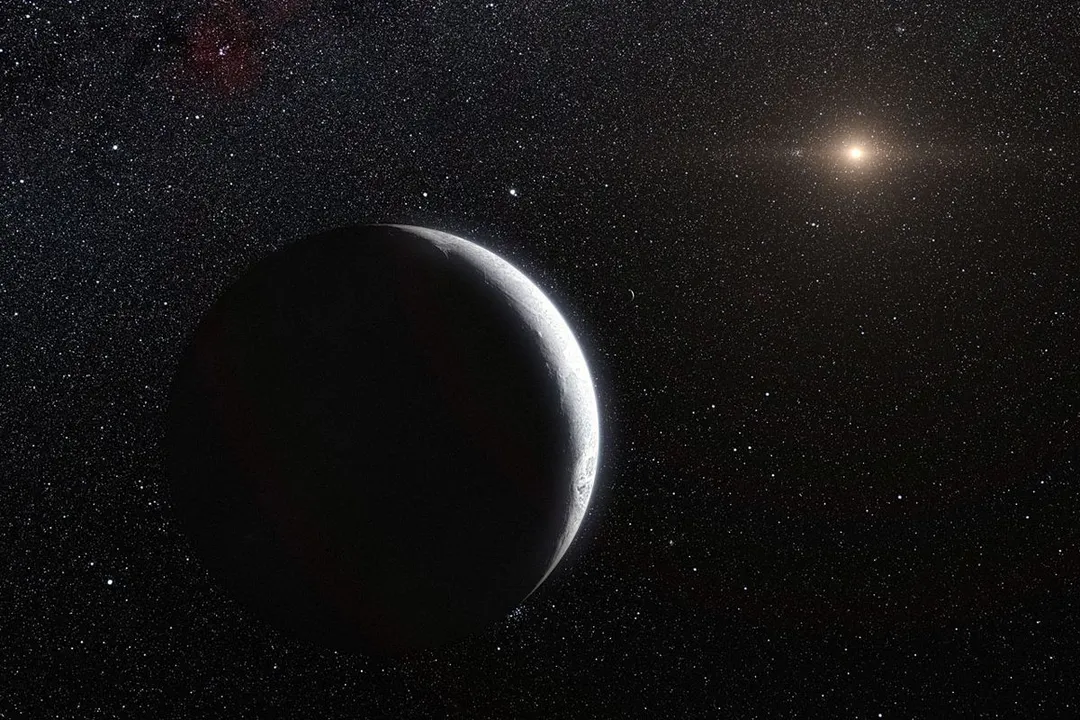
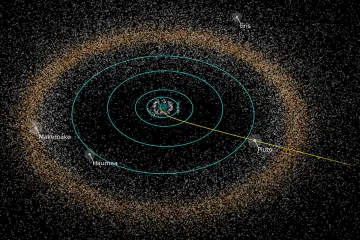
The population of icy bodies known as Kuiper Belt Objects resides far beyond the familiar orbits of the planets in our solar system ()(). This region, often abbreviated as the KBO zone, exists as a vast, doughnut-shaped reservoir of primordial material left over from the solar system's formation ()(). To pinpoint their location, one must travel past the orbit of Neptune, the farthest recognized major planet ()().
# Outer Reaches
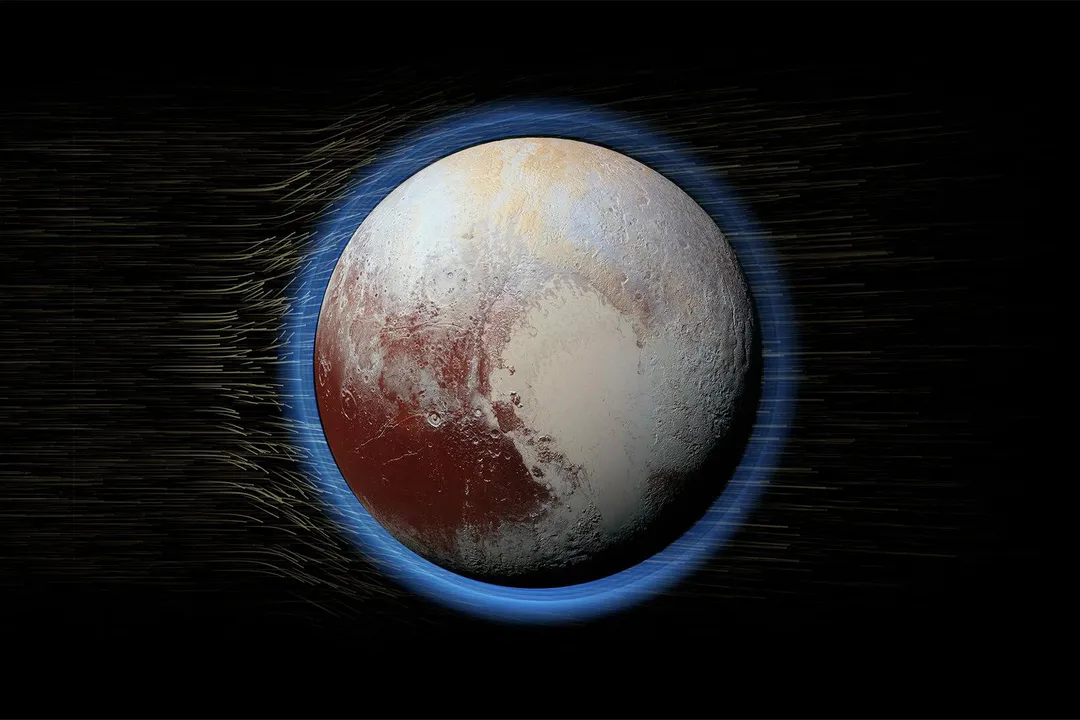
This expansive belt begins roughly at 30 astronomical units (AU) from the Sun and extends outward to about 50 AU (). For context, Earth orbits at 1 AU, meaning the Kuiper Belt starts where the major planet orbits effectively end, and stretches out a distance comparable to the orbital path of Pluto itself (). Unlike the spherical halo believed to surround the solar system far beyond this region, the Kuiper Belt is relatively flat, tracing a similar plane to the orbits of the eight planets (). This disc-like arrangement makes it easier for robotic explorers, like New Horizons, to conduct flybys, as they don't have to drastically alter their vertical trajectory to encounter these distant worlds ().
Considering the inner solar system—where the distance from the Sun to Jupiter is about 5 AU—the Kuiper Belt occupies a vast, cold outer shell where the Sun's thermal influence is greatly diminished. This low-energy environment allows volatile ices like methane and ammonia to remain permanently frozen alongside water ice ()(). The objects found here are technically classified as Trans-Neptunian Objects (TNOs) ().
# Belt Structure
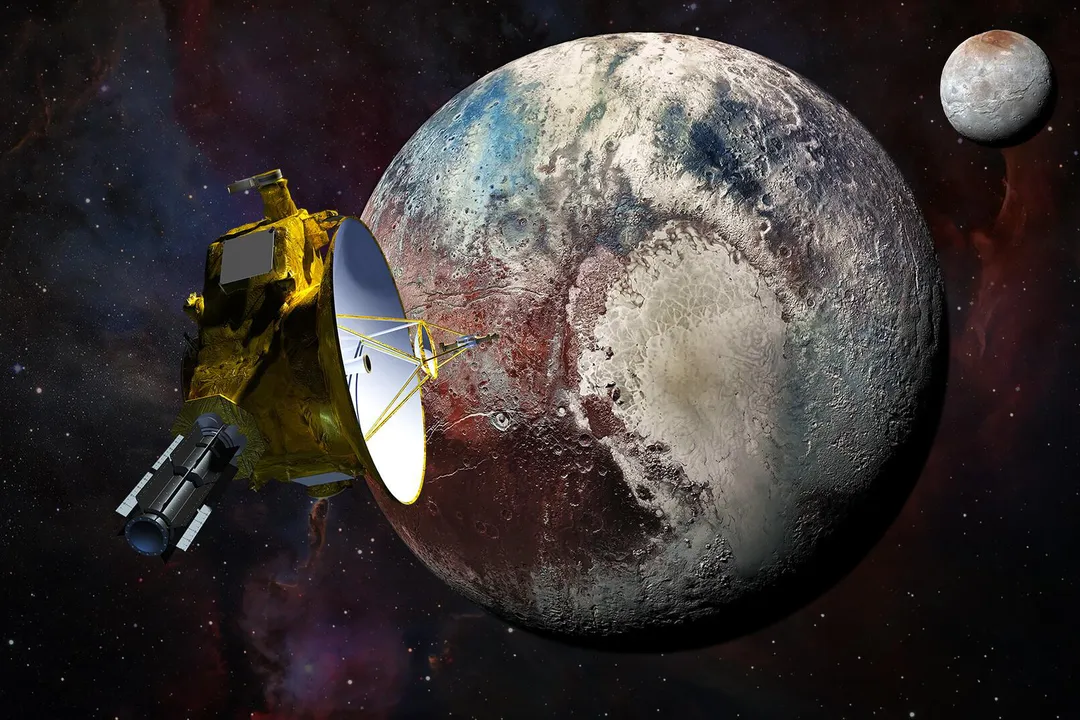
While we speak of the Kuiper Belt as a single location, it actually houses distinct populations defined by their orbital dynamics, particularly their relationship with Neptune (). The main population consists of Classical Kuiper Belt Objects (CKBOs), which maintain relatively circular, low-inclination orbits, much like the planets themselves ()(). Pluto is the most famous member of this group, though it specifically belongs to the Plutinos, a subset that shares a 2:3 orbital resonance with Neptune (). This means Neptune exerts a regular, predictable gravitational tug on a Plutino exactly twice for every three orbits the object completes around the Sun, locking them into their specific orbital pattern ().
Further out, or existing on more eccentric and inclined paths, are the Scattered Disk Objects (SDOs) (). These bodies have been gravitationally flung into elongated or steeply tilted orbits, likely due to past close encounters or gravitational scattering involving Neptune or even Uranus ()(). This gravitational sculpting by the giant planets is fundamental to understanding where these objects ended up; their current location often reflects a violent migration history rather than their original birthplace (). The existence of Cold Classical objects, which have remained largely unperturbed since the solar system's early days, suggests that pockets of pristine, original material still exist in these stable outer zones ().
# Beyond Neptune
A frequent source of confusion is the relationship between the Kuiper Belt and the Oort Cloud (). The Kuiper Belt is a relatively confined, disk-shaped region extending perhaps 20 AU past Neptune’s path ()(). The objects residing there are generally considered the source region for short-period comets, which are those that return to the inner solar system on orbits under 200 years ().
The Oort Cloud, by contrast, is hypothesized to be a massive, spherical shell of icy bodies that begins much farther out, possibly starting around 2,000 to 5,000 AU, and extending perhaps as far as 100,000 AU from the Sun (). Therefore, the Kuiper Belt is the local icy storage area, while the Oort Cloud is the distant, deep-space reservoir, separated by a vast gulf of mostly empty space (). While both regions contain icy debris, the current location of a KBO dictates its potential fate; a classical KBO might stay in the belt for eons, whereas an SDO is already gravitationally unstable and more likely to eventually plunge toward the inner system ().
# Icy Remnants
The primary characteristic defining the location of KBOs—being so far from the Sun—is that it keeps them incredibly cold, preserving their original chemical makeup (). These objects are essentially cosmic snowballs, composed of rock mixed with frozen volatiles like water, methane, and ammonia ices ()(). Because they formed in the cold outer regions and have not migrated significantly inward (like some SDOs), the classical bodies are seen as time capsules. Their orbital stability means their composition likely reflects the conditions of the protoplanetary disk where they coalesced billions of years ago ().
Their sheer number is also staggering; estimates suggest there could be billions or even trillions of objects larger than 100 kilometers across populating the disk (). When any of these icy worlds are nudged out of their stable orbits—perhaps by a passing star or simply through chaotic gravitational interactions within the belt itself—they begin an inward migration. As they approach the warmer inner system, the ices sublimate, releasing gas and dust, transforming the distant KBO into a visible, temporary comet (). Thus, asking where the Kuiper Belt Objects are is also asking where the solar system’s long-term supply of comets originates.
Related Questions
#Citations
Kuiper belt - Wikipedia
Kuiper Belt: Facts - NASA Science
Kuiper Belt Objects | COSMOS
What is the Kuiper Belt? - Space Center Houston
Where are the big Kuiper belt objects? | The Planetary Society
Pluto, Kuiper Belt Objects, and Comets - Johns Hopkins APL
Is the Kuiper belt part of the Oort Cloud, or is it a separate thing? : r ...
Cold Classical Kuiper Belt Objects | Center for Astrophysics
What is the Kuiper Belt? | Space