Why do you think that the Galilean moons were the first objects to be discovered?
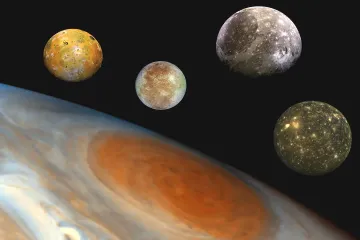
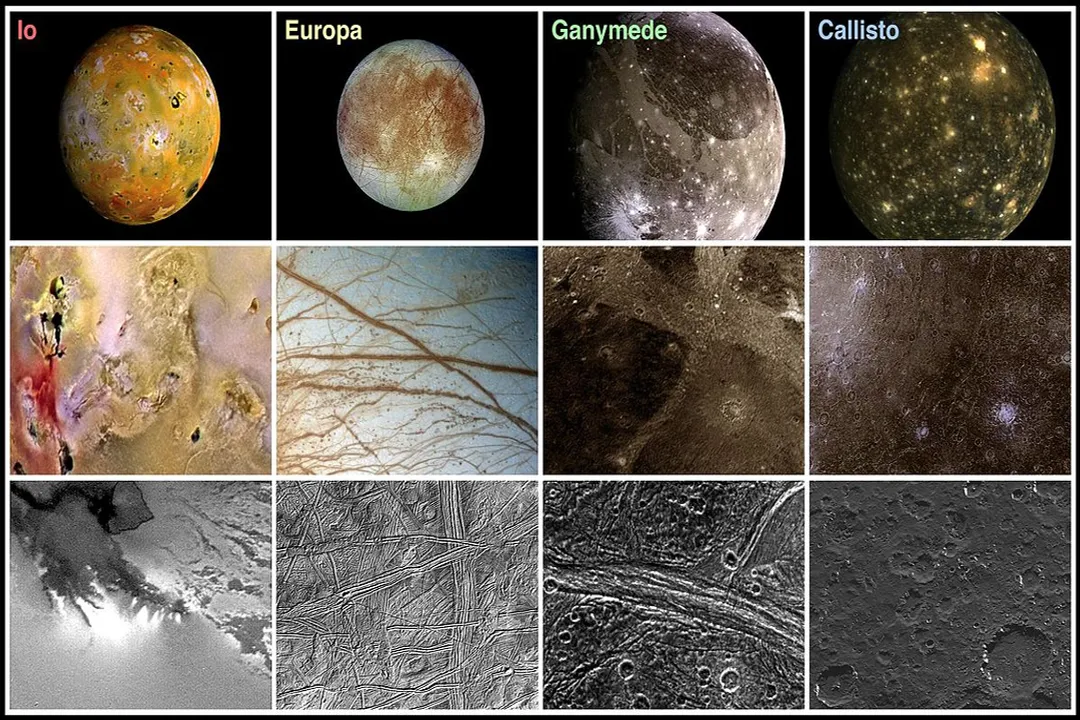
The realization that Jupiter possessed its own orbiting retinue of satellites fundamentally changed humanity's view of the cosmos. When Galileo Galilei first turned his improved telescope toward the heavens in early 1610, he wasn't searching for moons; he was observing the planet Jupiter, expecting perhaps to see a more detailed surface than the naked eye or crude instruments allowed. What he actually documented—four small, star-like objects clustered near Jupiter—was unprecedented, marking the first time objects were documented orbiting another world besides Earth. [2][3] This event is often framed as the moment these moons were "discovered," but the question implies why they were the first of this kind ever noted. The answer lies not in the moons themselves being inherently easier to see than, say, a hypothetical moon of Mars, but in a precise alignment of technology, timing, and observational intent that had never existed before. [9]
# Enabling Instrument

The single most crucial factor enabling the discovery of the Galilean moons—Io, Europa, Ganymede, and Callisto—was the telescope. [7] Before Galileo’s refinement of the Dutch spyglass technology, these objects were simply invisible to the human eye, regardless of atmospheric conditions or the observer's acuity. [9] While ancient astronomers meticulously charted the visible planets and stars, the best naked-eye observation could not resolve objects orbiting another world hundreds of millions of miles away. Galileo's instrument, which he improved to magnifications of about 20x or 30x, was just powerful enough to resolve the faint pinpricks of light near Jupiter as distinct objects separate from the planet itself. [2][3]
It is important to note that while Galileo gets the primary credit, he was not the first human to see Jupiter and its surrounding points of light. Records suggest that others, including astronomers like Thomas Harriot in England and even Chinese observers centuries prior, may have glimpsed the moons accidentally. [4] However, they lacked the systematic tracking capability or the conceptual framework to realize what they were seeing was a miniature solar system in action. [9] Harriot, for instance, recorded observations close to Galileo's, but his notes did not show the sustained, recognizable pattern that convinced Galileo. [4] The difference was documentation and interpretation. [3] Galileo didn't just see them once; he tracked their positions night after night, noting how they moved with Jupiter, appearing and disappearing from view due to Jupiter's glare or occultation, confirming their orbital relationship. [2][7] This systematic approach transforms a fleeting observation into a scientific discovery.
# Jupiter's Visibility

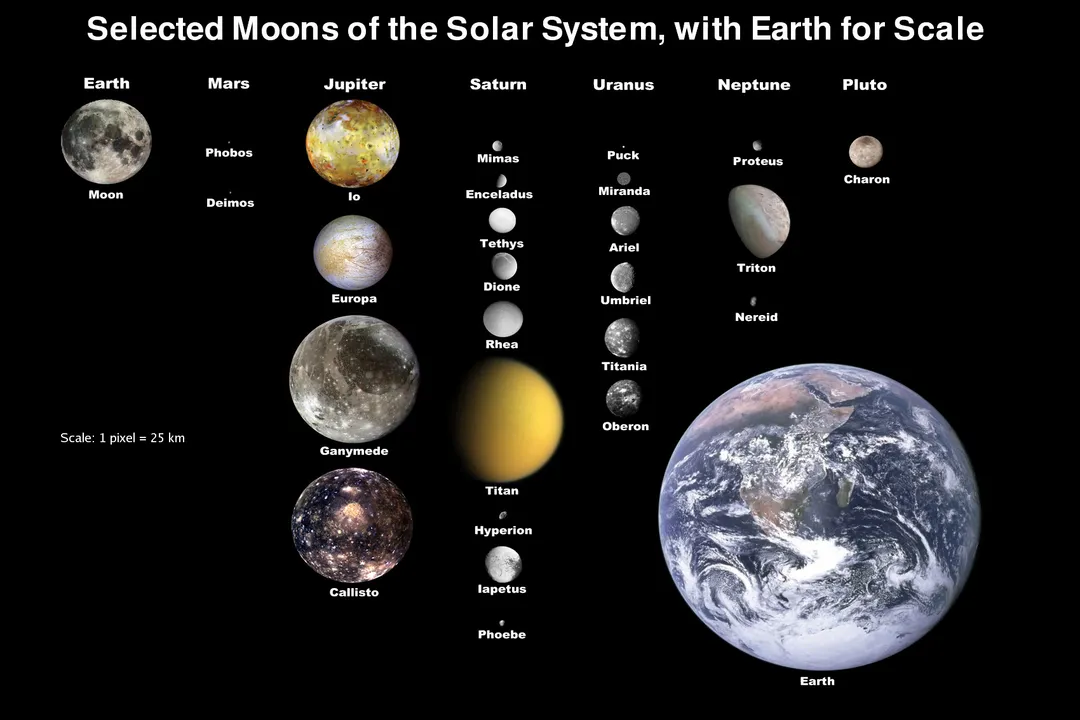
The specific target—Jupiter—also played a significant role. Jupiter is the brightest planet after Venus, making it an obvious and tempting target for early telescopic observers. [3] Furthermore, the moons themselves, while faint, are relatively large compared to potential inner moons of other planets. Ganymede, for example, is larger than the planet Mercury. [1] While the moons are dim, the sheer brightness of Jupiter provided a strong background against which Galileo could calibrate his instrument and confirm the background stars weren't simply artifacts of his lens. [2]
Consider the relative visibility based on distance. Mars, being closer to the inner solar system, would have presented a much more difficult challenge for early telescopes. Its moons, Phobos and Deimos, are tiny and orbit extremely close to the planet's limb, making them virtually impossible to distinguish from the planet's glare even with much more advanced early 17th-century optics. [9] Jupiter, being further out, allows its moons to occupy slightly larger apparent separation angles from the planet over time, granting a small but critical advantage for early telescopic detection. [2]
This leads to an interesting analytical point regarding detection thresholds. If we look at the orbital period versus apparent separation, Jupiter’s moons, especially the outermost one, Callisto, have significantly longer orbital periods than, say, those of Saturn (which were discovered much later by Huygens). [1] The inner three Galilean moons orbit Jupiter in just over one to seven Earth days. [1] This rapid movement was essential for Galileo to prove they were orbiting the planet and not being obscured by clouds or being distant stars. [7] Had the first discovered moons been as slow-moving as, say, Neptune’s Triton (which orbits in 5.9 days but is far dimmer and orbiting a fainter host planet), the proof of concept might have taken years longer to solidify, potentially delaying broader acceptance. The quick, obvious dance of the four closest Galilean moons provided immediate, compelling evidence.
# Intellectual Context
The 'why first' question also has a profound intellectual component tied to the dominant astronomical model of the time. Before Galileo, the widely accepted Ptolemaic system held that everything in the heavens orbited the Earth. [3][7] Observations of Jupiter’s moons provided concrete, observable proof that at least one body existed that did not orbit our planet. [2][9] This direct contradiction was what made the discovery so explosive and scientifically potent, forcing astronomers to confront the possibility of a Sun-centered (Copernican) model. [3][7]
It’s easy to overlook that an observation remains just an anomaly unless it challenges an existing paradigm. Had an observer in the 1500s seen the moons, they might have dismissed them as optical flaws or simply recorded them as four random, non-moving stars that happened to be near Jupiter on that particular night, because the idea of other planetary orbits was scientifically disallowed or simply unbelievable. [9] Galileo’s discovery succeeded partly because he was living in a moment where the intellectual ground was shifting, and he was bold enough to connect the observation to the Copernican hypothesis, even if he initially presented his findings cautiously. [7] The discovery was significant because it mattered immediately to the biggest scientific debate of the era.
# Disputes and Nomenclature
While Galileo is credited with the discovery, he was not without controversy regarding priority. [4] Simon Marius, a German astronomer, is sometimes credited with observing the moons around the same time, and it was Marius who suggested the names Io, Europa, Ganymede, and Callisto, which eventually stuck, supplanting Galileo's initial designation of the "Medicean Stars" in honor of his patron. [1] Even today, discussions persist regarding who saw what first, as evidenced by historical forums dedicated to resolving such mysteries. [4] However, Marius’s observations were less detailed or less rapidly published than Galileo's, which is why Galileo retains the primary historical standing. [4]
To illustrate the difference in the historical impact versus potential prior sightings, consider this comparison:
| Observer | Year (Approx.) | Observation Detail | Scientific Impact |
|---|---|---|---|
| Chinese Astronomers | ~364 BC | Possibly noted as "stars" near Jupiter | None recorded; no tracking or interpretation |
| Thomas Harriot | 1610 | Recorded close observations | Limited circulation; unclear interpretation |
| Galileo Galilei | Jan 1610 | Systematic tracking over weeks | Direct proof of non-Earth-centric orbits |
This table underscores that "discovery" in a scientific context requires more than mere sight; it demands proof of orbit. [3]
Another analytical facet worth considering is the institutional reception. Why did Galileo's find immediately gain traction where perhaps others might have faded? Galileo was associated with the University of Padua and wrote in Italian rather than purely Latin, making his findings accessible to a wider, though still elite, audience. [2] This public presentation—including demonstrations for influential figures—helped establish an authority around the observation that might have been lacking in more isolated or private findings. [5] The rapid dissemination via print solidified the discovery in the scientific record almost instantly.

# Lasting Visibility
The Galilean moons are not just "easy to see" in 1610; they remain among the most observable planetary satellites in our entire solar system today. [1] They are large enough that even modern, small backyard telescopes can resolve them as distinct bright points near Jupiter. [6] This inherent brightness and size mean that unlike the fainter satellites of Mars, Uranus, or Neptune, they are always the primary target for any observer gaining access to a modest telescope pointed at Jupiter. They represent the highest "signal-to-noise ratio" among known multi-moon systems in the early days of telescopic astronomy.
In essence, the Galilean moons were the first objects of their kind discovered because they occupied a unique intersection of historical circumstance: an inventive genius (Galileo) with a novel, functional tool (the telescope), pointed at a bright, well-positioned target (Jupiter), at an intellectual moment (the transition from Ptolemaic to Copernican thought) where such evidence was desperately needed and would be immediately recognized as world-altering. They were the first to be verified as satellites orbiting another world, not just the first to be glimpsed. [9]
#Videos
Why Was Galileo's Discovery Of Jupiter's Moons So Groundbreaking?
Related Questions
#Citations
Galilean moons - Wikipedia
415 Years Ago: Astronomer Galileo Discovers Jupiter's Moons - NASA
Galileo Discovers Jupiter's Moons - National Geographic Education
Was Galileo Really the First to Discover Jupiter Had Moons - Reddit
Galileo's Discovery of Jupiter's Moons - Facebook
The Galilean Moons - A Closer Look - Stellarium Labs
Galileo: Discovering Jupiter's Moons | PBS LearningMedia
Why Was Galileo's Discovery Of Jupiter's Moons So Groundbreaking?
Could someone have discovered the moons of Jupiter before Galileo?