How do astronomers think the four Galilean moons of Jupiter formed?
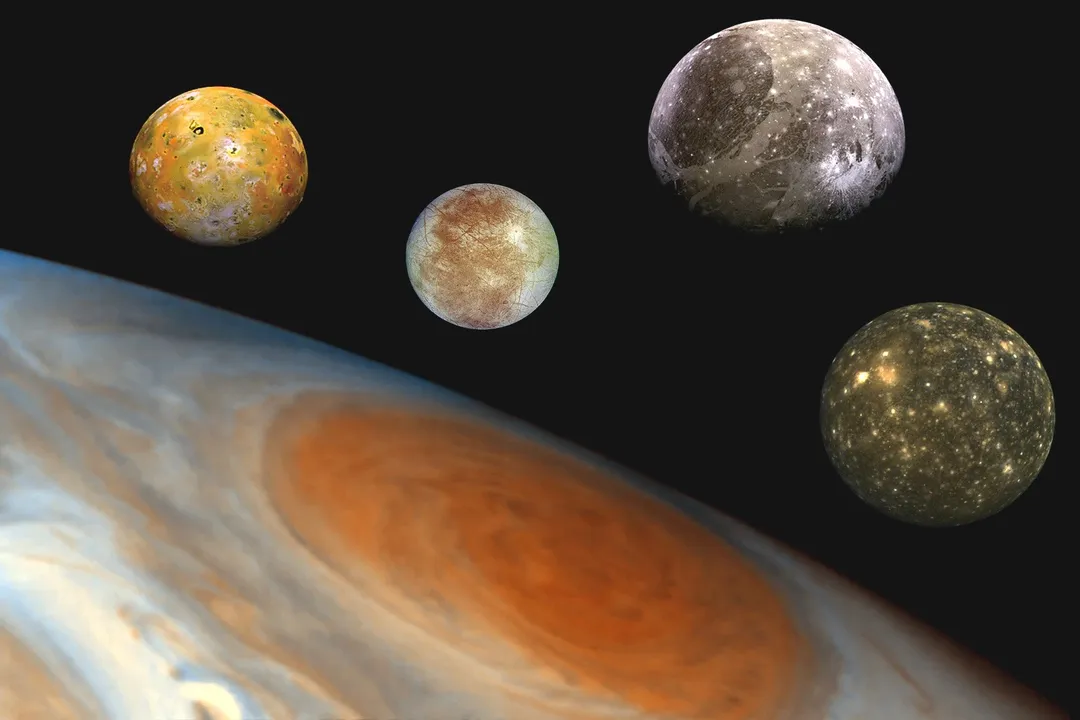
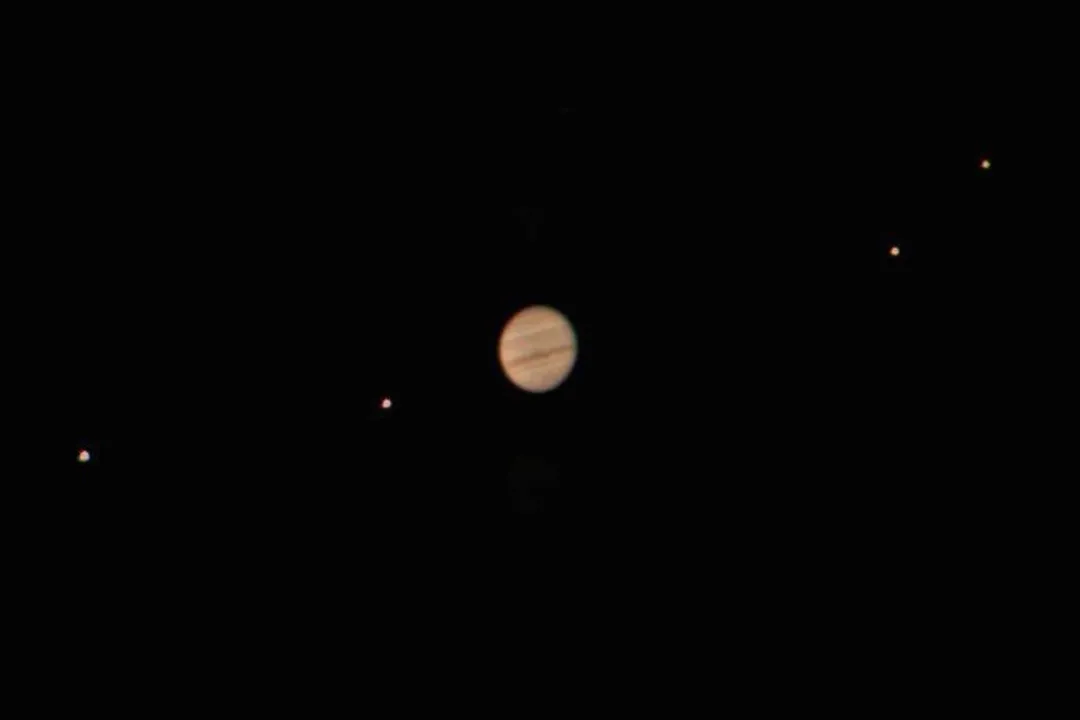
The celestial dance of Jupiter’s four largest satellites—Io, Europa, Ganymede, and Callisto—has captivated observers since Galileo first pointed his telescope at them in early 1610. While we celebrate their discovery for proving that not everything orbits Earth, explaining how this massive system assembled remains a profound puzzle for planetary scientists. Unlike the relatively straightforward, albeit violent, suspected birth of our own Moon, the formation of the Galilean moons requires understanding a dynamic, gas-rich environment around a planet vastly more massive than Earth: the circumplanetary disk, or CJD.
The foundational agreement among researchers is that these four worlds, often called the Galilean satellites, coalesced from this disc of gas and dust orbiting the young Jupiter, much like planets form around a star in a protoplanetary disk. However, the specifics of the disk's mass, its longevity, and the mechanism that delivered the material have led to several competing and evolving theories. The core challenge is accounting for the present orbital arrangement, the chemical differences between the moons, and the sheer amount of mass involved.
# Disk Models Evolve
Early ideas, such as the "minimum mass model" developed in the 1980s, assumed the CJD was largely static and initially contained only the mass required to form the four known moons. This approach struggled to account for the observed chemical characteristics and evolution of the system.
A subsequent refinement proposed that the CJD was relatively "gas-starved" initially, relying on a crucial second phase: gravitational capture of additional material directly from the larger circum-stellar disk (CSD) surrounding the young Sun. This captured material would have included abundant icy "pebbles" and larger objects called planetesimals.
A separate but related set of simulations, carried out by researchers at the University of Zurich, introduced the concept of successive generations of moons. Their modeling suggests that the satellites we see today are merely the survivors. In this view, multiple systems of Galilean-mass moons formed, spiraled inward due to drag from the gas in the CJD, and were ultimately engulfed by Jupiter. This process happened incredibly quickly—within a short epoch of perhaps just twenty thousand years, representing the "last minute" of Jupiter's growth. This repeated engulfment provides a neat, though dramatic, explanation for why Jupiter’s gaseous envelope is significantly richer in heavy chemical elements than the Sun’s composition suggests it should be; those engulfed moons carried that extra mass inward.
The challenge for any model is reproducing the current configuration, particularly the Laplace resonance shared by the three inner moons: Io, Europa, and Ganymede. For every one orbit Ganymede completes, Europa orbits twice, and Io orbits four times.
# Sequential Accretion Theory
A highly promising, more recent theory, informed by the revolution in exoplanet science, focuses intently on this resonance. Led by Konstantin Batygin and Alessandro Morbidelli, this model paints a picture where the moons formed sequentially from the inside out.
In this scenario, Jupiter’s CJD trapped tiny specks of icy matter, perhaps just 10 millimeters wide. As these particles collided and accreted, they grew into bodies known as satellitesimals, roughly 100 kilometers across, which then further clumped to form moon embryos. As the first moon grew, its orbit generated spiral density waves within the remaining gas disk, analogous to spiral arms in a galaxy. The interaction with these waves and the drag from the gas caused the newborn moon to migrate inward toward Jupiter.
When that moon reached the inner edge of the gas-rich feeding zone, its inward trek halted, and it settled into a stable position. Crucially, the next moon began forming further out, migrating, and then locking into the orbital pattern of its neighbor—Europa locking with Io, and Ganymede later locking with Europa. This process successfully reproduced the $4:2:1$ resonance.
The timing varied significantly based on the disk's dissipation. Io and Europa formed rapidly, possibly in only six thousand years. Ganymede took around 30,000 years. Callisto, the outermost, experienced a delay because by the time it began to coalesce significantly, the intensifying Sun had likely evaporated much of the gas in Jupiter’s disk. Consequently, while Callisto assembled half its mass quickly, it took nearly nine million years to accumulate the rest. The strength of this newer model lies in its ability to explain the current orbital arrangement, which earlier models found difficult.
# Mapping Internal Structure to Formation
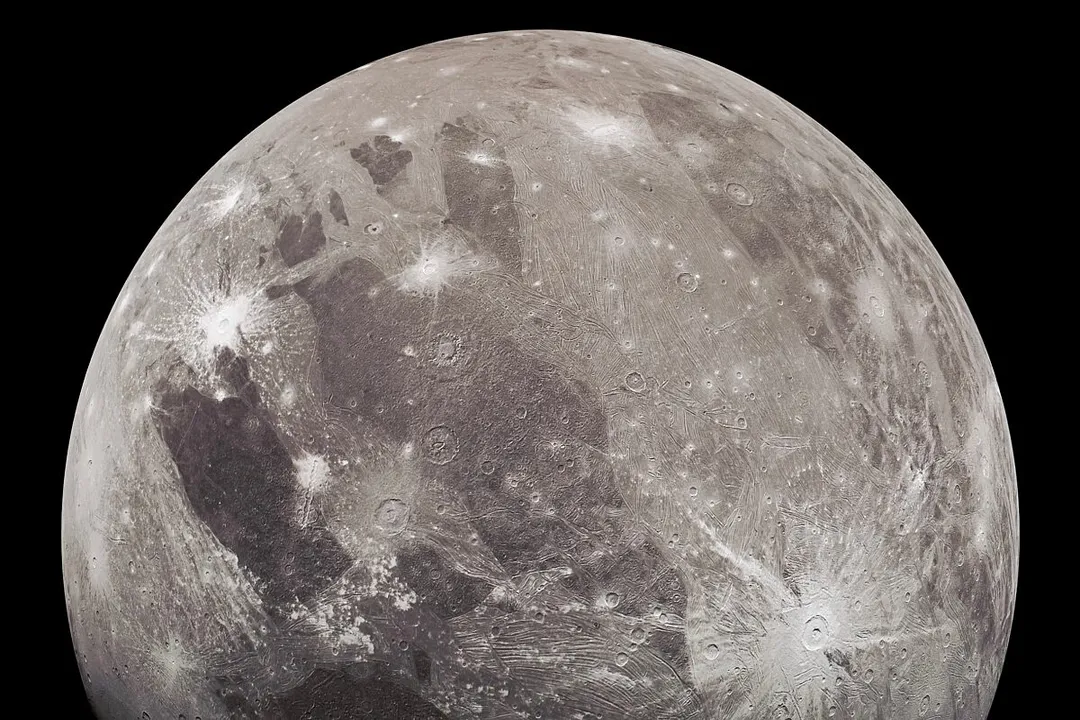
The four Galilean moons are vastly different worlds, and these compositional differences serve as critical tests for any formation hypothesis. They are also the only four moons in the Jovian system massive enough to have been rounded by their own gravity; the rest are irregularly shaped.
Here is a snapshot of the structural evidence that any successful formation theory must explain:
| Moon | Distance Rank | Density () | Differentiation | Key Feature |
|---|---|---|---|---|
| Io | Innermost (1st) | Fully Differentiated (Rock/Iron Core) | Most volcanically active body | |
| Europa | Inner (2nd) | Differentiated (Rock core, water layer) | Subsurface liquid water ocean | |
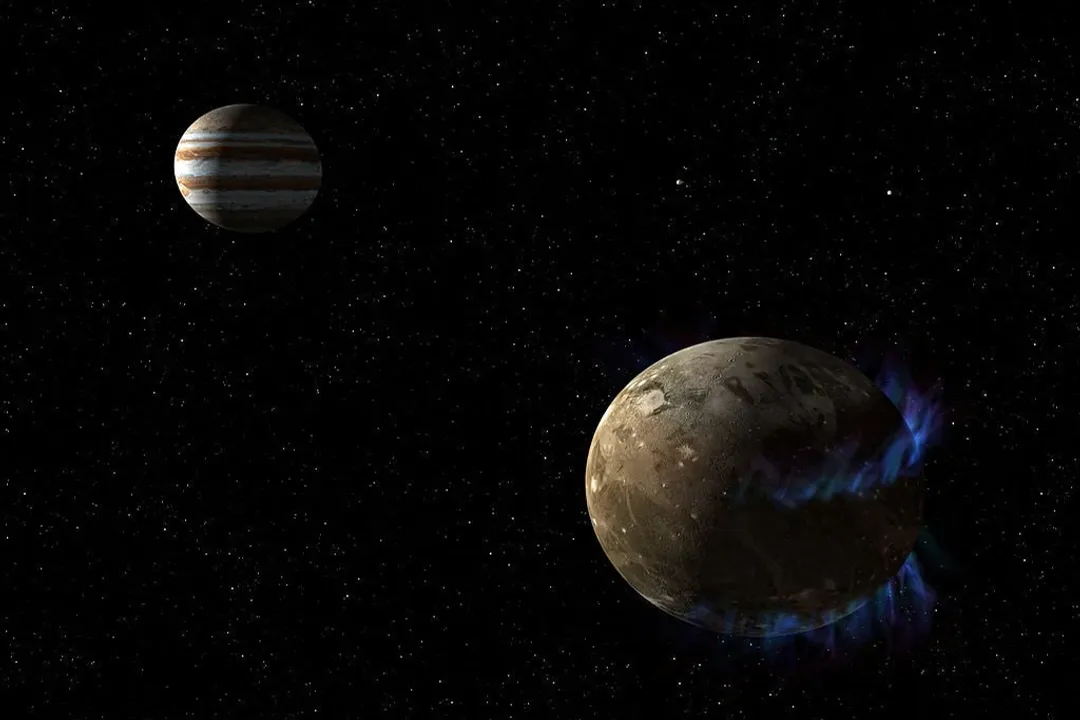
| Ganymede | Outer (3rd) | Differentiated (Likely layered oceans/ice) | Largest moon, possesses a magnetosphere | |
| Callisto | Outermost (4th) | Minimally Differentiated (Rock/Ice blend) | Most heavily cratered, lacks current tidal heating |
The pattern evident here is stark: the closer a moon is to Jupiter, the higher its density and the more differentiated it is, with denser, hotter materials concentrated at the core. This structure is attributed to tidal heating caused by Jupiter’s immense gravitational field acting inversely proportional to the square of the distance. This heating melted the interior ice layers, allowing rock and iron to sink, while water rose to form the surfaces we observe today.
Io experiences extreme heating, resulting in a molten interior and continuous resurfacing by sulfurous volcanoes. Europa’s heating maintains a deep, salty liquid ocean under its smooth, icy shell. Ganymede, being farther out, still has a complex internal structure with evidence of past tectonics and likely multiple ocean layers, though its crust is thicker, inhibiting surface renewal.
Callisto stands apart. Its low density suggests it is an equal mix of rock and ice, and importantly, it appears to be homogeneously mixed rather than layered. It is far less subject to the extreme tidal forces that differentiated its siblings, leading it to retain the oldest, most heavily cratered surface in the entire system—a near-pristine record of the early bombardment phase. Furthermore, Callisto is not in the $4:2:1$ orbital resonance with the inner three. This strongly implies it either formed much later, under entirely different disk conditions, or was gravitationally kicked out of resonance early on, perhaps by an impactor.
# Synthesis and The Unanswered Gaps
The two leading simulation efforts—the sequential migration model of Batygin/Morbidelli and the multiple-engulfment model of the U. Zurich group—address different aspects of the puzzle. The U. Zurich model excels at explaining Jupiter's enrichment in heavy elements by positing the loss of massive precursor moons. The Batygin model provides a clean mechanism for establishing the precise, present-day orbital resonance of the surviving inner three.
One area that requires careful consideration when comparing these scenarios is the age of the surfaces. The U. Zurich model suggests the current generation formed incredibly fast, perhaps in only 20,000 years, right at the end of Jupiter’s formation. Yet, Callisto’s surface is ancient, saturated with billions of years of impact scars. This suggests that while the assembly of the satellite system was a relatively quick event late in Jupiter’s history, the clearing out of the remaining impactors in the outer system—the debris that Callisto continually records—must have continued for much longer, or Callisto formed later, missing the initial, dense, high-velocity phase of bombardment that helped sculpt the inner system's debris field.
We can also note the disparity in the required material mass for the disk. While the U. Zurich simulations often resulted in massive moons, they state that the current set requires only a disk mass of about 2% that of Jupiter to form them, even accounting for previous lost generations. This implies that the CJD was an incredibly efficient factory, converting a tiny fraction of Jupiter's total captured solar nebula material into its satellite system, before the rest was locked into the planet itself. The difference between the 2% required for the current satellites and the 15 Earth masses lost to engulfed moons highlights the sheer scale of mass reprocessing that occurred in Jupiter's immediate vicinity.
Future exploration, particularly with missions like the European Space Agency’s JUpiters ICy moons Explorer (JUICE) and NASA’s Europa Clipper, will be essential in resolving these models. By taking more detailed measurements of the moons’ internal gravitational fields, scientists hope to confirm whether Ganymede and Callisto truly possess distinct cores or if Callisto remains the primordial, homogenous blend it appears to be on the surface. Until then, the formation of Jupiter’s moons remains a compelling example of how planetary dynamics drive the diversity seen across the Solar System.
Related Questions
#Citations
Astronomers re-create the formation of Jupiter's Galilean moons ...
Galilean moons - Wikipedia
How Did Jupiter's Galilean Moons Form? - Universe Today
How the moons of Jupiter were formed - NCCR PlanetS
What are Jupiter's Galilean moons? | The Planetary Society