How are the Galilean moons formed?
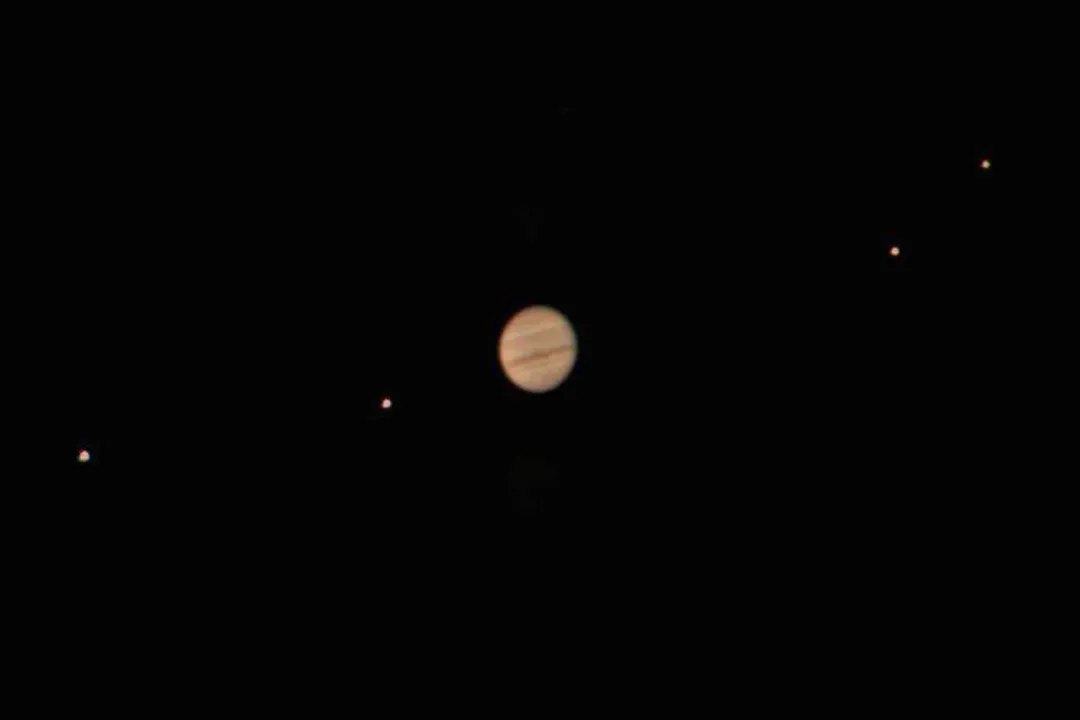
The four largest satellites of Jupiter, first observed telescopically by Galileo Galilei in 1610, represent a miniature solar system circling a giant. [3] These are Io, Europa, Ganymede, and Callisto, the Galilean moons, listed here in order of size from largest to smallest: Ganymede, Callisto, Io, and Europa. [3] Their discovery immediately challenged the established geocentric worldview, proving that not every celestial body revolved around Earth. [3] While they are all planetary-mass objects, bigger than some dwarf planets in our system, their formation history remains a captivating challenge for planetary scientists. [3] Understanding how such a massive, diverse, and dynamically linked system arose from Jupiter’s youth requires piecing together clues from modern observations of distant exoplanets and sophisticated computer simulations. [1]
# Early Environment
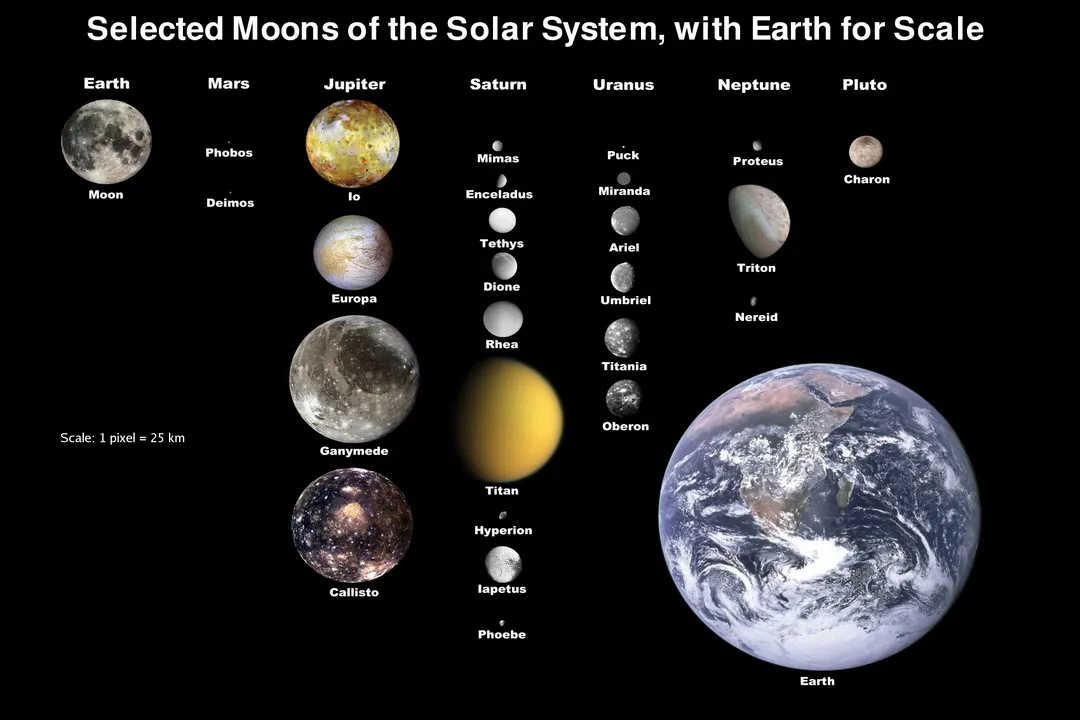
Jupiter began its life as a massive protoplanet coalescing from the raw material surrounding the early Sun. As it grew, it gravitationally carved out and held onto its own extended cloud of gas and solid debris, known as the circumplanetary disk (CPD). [1][2] This disk served as the direct cradle for the four major moons. [3]
This CPD was fed material siphoned from the larger, original circumstellar disk of the solar system. [2] Crucially, the CPD acted as a “dust trap,” efficiently capturing tiny specks of icy matter, perhaps only about 10 millimeters wide, that were circulating through the local environment. [1] The existence and composition of this disk dictate the final character of the moons that form within it. The location of the snowline—the boundary where volatile compounds like water condense into solid ice—is particularly important, determining the initial rocky versus icy content available for accretion. [2][4]
The physics governing this disk-moon interaction is not unique to Jupiter. The general process mirrors how planets form around a star from a circumstellar disk. [2] However, the specific dynamics within Jupiter’s disk—the mixture of gas drag, tidal forces, and gravitational interactions—sculpted a system that looks distinctly different from the terrestrial planets or even the outer giants in our own system. [1][4]
# Accretion and Growth
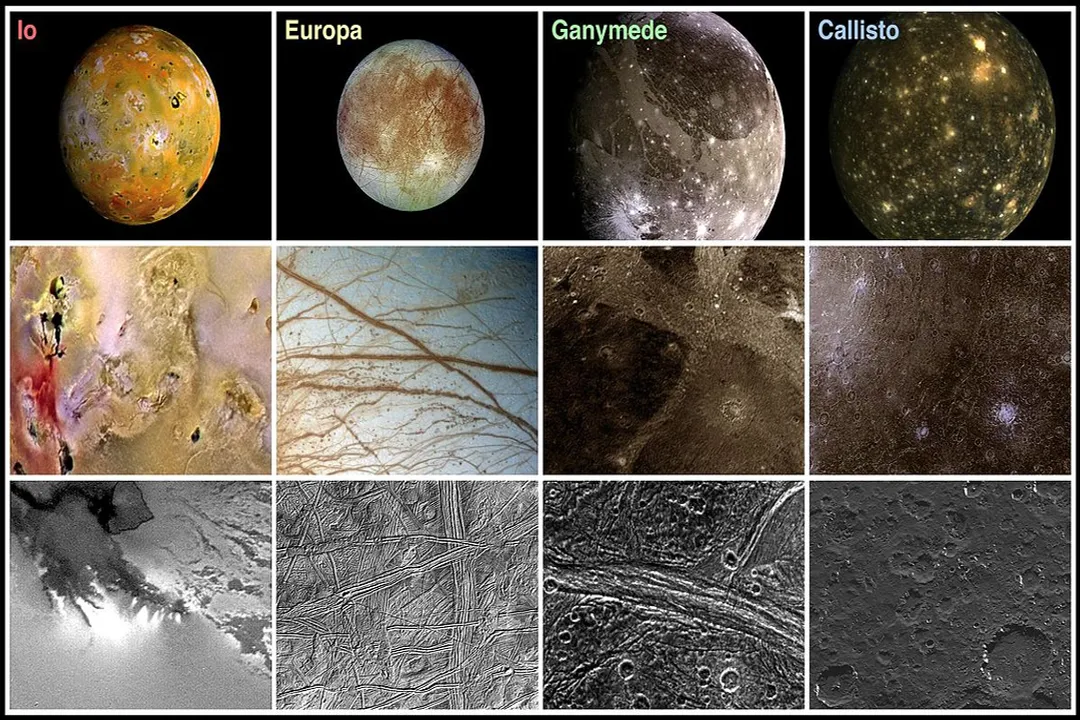
The accepted general pathway for moon formation in this disk involves the growth of initial seed bodies, sometimes called satellitesimals (bodies perhaps 100 kilometers wide). [1] These seeds grew larger through collisions and, more recently, through a mechanism called pebble accretion. [2][4]
Pebble accretion, a mechanism well-tested in exoplanet formation studies, suggests that as a proto-moon orbits within the gaseous disk, it gravitationally attracts and captures the surrounding small particles (pebbles) moving within its orbit. [1][4] This process is often modeled as a slow phase of growth, following an initial, rapid assembly of the larger seeds. [4]
One of the most compelling modern theories posits a formation that took place sequentially, building the moons one after another, starting from the innermost and working outward. [1]
# Inward March
As the first satellite grew within the dusty disk, its interaction with the remaining gas created density waves—spiral wakes, similar in concept to spiral arms in a galaxy. [1] This interaction, coupled with aerodynamic drag from the disk gas, exerted a braking force on the moon, causing it to steadily migrate inward toward Jupiter. [1][2]
The moon’s inward migration would only cease when it reached a point where the material feeding it was depleted, often referred to as the inner edge of its "feeding zone," where it could no longer gain mass from the disk gas. [1]
This migratory sequence explains the order of the moons. The innermost moon forms, migrates in, and settles into a stable stopping point. Then, the next moon forms from the next available material further out, migrates in, and settles outside the first one, eventually locking into a gravitational relationship with it. [1] This process repeated for the four largest moons, starting with Io and progressing outward to Callisto. [1]
A particularly intriguing aspect of this model is the timing. Researchers simulating this sequential formation found that the inner moons, Io and Europa, could have reached their final masses relatively quickly, perhaps in just a few thousand years. [1] Ganymede took a bit longer, taking perhaps 30,000 years. [1]
Here is where the influence of the Sun becomes apparent, differentiating the formation history of the outermost moon.
# Timing and Compositional Divergence
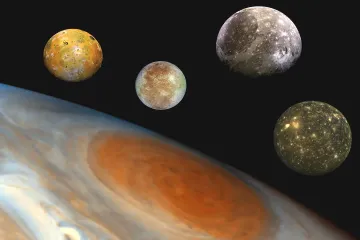
The differences in composition and internal structure among the Galilean moons provide the strongest evidence for a complex, time-dependent formation process. [4]
- Io: The innermost and densest, Io is almost entirely rock and metal, with virtually no water ice remaining. [3] It is the most volcanically active body in the Solar System today. [3]
- Europa: Second in, Europa is denser than the outer pair, composed of silicate rock with a significant fraction (about 8% by mass) of ice and water. [3]
- Ganymede: The largest moon, Ganymede, is about half rock and half ice, and uniquely possesses its own global magnetic field. [3]
- Callisto: The outermost and least dense, Callisto is also roughly half rock and half ice, though its interior is thought to be only partially differentiated, lacking the metallic core seen in the others. [3][4]
The key to explaining the varying ice content lies in the shrinking snowline as Jupiter’s feeding disk dissipated. [4] Io formed so close to the hot, gas-rich planet that its environment was too hot for ice to survive, leading to a purely rocky accretion. [4] Europa accreted rock first, but as the snowline moved outward, it began incorporating some ice before its growth halted. [4] Ganymede and Callisto always formed beyond that shrinking snowline, allowing them to accumulate large amounts of water ice. [4]
The slow-growth element of the newer models helps explain the subtle differences between Ganymede and Callisto, even though they formed in similar ice-rich regions. [4] While Ganymede’s formation may have been relatively quick, Callisto appears to have started accreting significantly later—perhaps hundreds of thousands of years after Ganymede had already started to assemble. [4] This delay meant that by the time Callisto was collecting its majority of mass, much of the radioactive aluminum isotope, which helps heat and differentiate an interior via decay, had already decayed away in the surrounding disk material. [4] Therefore, Callisto ended up with a less differentiated, cooler interior compared to Ganymede. [4]
This massive difference in formation timeline relative to the initial disk stability is quite telling. If Io and Europa formed in a matter of thousands of years, and Ganymede shortly after, Callisto’s longer, drawn-out assembly—taking perhaps 9 million years to reach its full mass due to the diminishing gas supply—implies a remarkable degree of orbital stability in the system for an extended period, even as the inner satellites formed and settled. [1] It suggests that the early Jupiter system maintained a quiescent, massive disk for longer than some earlier models predicted, allowing the outer edge to persist long enough for Callisto’s material to accumulate. [3]
# Resonant Clockwork
Perhaps the most striking feature of the inner three Galilean moons is their precise orbital relationship, known as Laplace resonance. [2][3] For every single orbit completed by Ganymede (Jupiter III), Europa (Jupiter II) completes two, and Io (Jupiter I) completes four—a perfect 4:2:1 ratio. [2][3] This resonance is extremely stable and has survived for billions of years. [1]
Computer simulations attempting to model the system’s birth must reproduce this resonance naturally, or the model is deemed incomplete. [2] New research, informed by insights from exoplanetary systems, has successfully reproduced this chain, showing that the resonance locked in as the moons migrated and encountered each other. [1][2] The process likely involved Europa locking into a 2:1 resonance with Io first, followed by Ganymede later establishing a 2:1 relationship with Europa, thus creating the stable 4:2:1 chain. [1]
Callisto, however, currently sits outside this resonance. [3] This suggests two possibilities: either Callisto formed independently of the migration/resonance locking that affected the inner three, or it was captured into a resonance earlier in Jupiter’s history but has since migrated outward due to complex tidal interactions with the broader Jovian system, eventually breaking free. [2] Future simulations explicitly incorporating planetary tidal dissipation will be necessary to resolve Callisto’s current orbital anomaly. [2]
# New Perspectives from Distant Worlds
The recent revolution in exoplanet discovery has provided a crucial new lens through which to view our own solar system's history. [1] When scientists look at planets orbiting other stars, they observe a much wider variety of formation pathways than previously imagined. [1] This new context prompted researchers to re-evaluate the old models for Jupiter's satellites, which were tailored only to our system. [1]
The observational confirmation for these new models came from studying exoplanets with circumplanetary disks. For instance, the PDS 70 system, located several hundred light-years away, provided the first direct look at a moon-forming disk around an exoplanet. [1] These distant observations revealed that such disks can be far dustier than theoretical models had previously predicted. [1]
The realization that these environments are incredibly rich in the building blocks for moons lends strong support to the pebble accretion model described above. [1] However, this high density presents an observational challenge for us: such a dusty, dense local environment around the forming Jupiter would have had a profound effect on the chemistry we observe today. If the disk was this dense with icy pebbles, then the radiation environment would have been highly modified by local scattering and absorption from the sheer volume of solid particles packed into the CPD, potentially obscuring or altering the spectral signatures of volatile compounds from our vantage point, making remote identification of initial material composition more difficult than we might hope for when planning future missions. [1]
The similarity between the Galilean resonance chain and the resonant chains observed in systems like TRAPPIST-1 further solidifies the idea that these formation pathways are common, even if the resulting systems look vastly different. [4]
# Unresolved Details
Despite the success of models that link pebble accretion, migration, and sequential formation in explaining the resonance and general compositional gradient, several mysteries remain.
For instance, explaining the extremely low water content of Io and Europa, even compared to the model’s predictions, may require factoring in hydrodynamic escape—where intense gas drag and thermal escape mechanism actively stripped water away from the inner moons after their initial formation. [1][2]
Furthermore, while the Ganymede/Callisto internal structure difference is tentatively explained by the radioactive aluminum decay timing, the precise mechanisms that dictated where each moon stopped its migration—the specific orbital distances they settled into—are still subject to intense computational scrutiny. [1][2] Planetary scientists continue to refine simulations, looking at the interplay between tidal forces, gas evolution, and small-scale accretion physics to lock down a complete history. Missions like ESA's JUICE and NASA's Europa Clipper are poised to gather the precise gravitational and compositional data needed to test these intricate formation scenarios in the coming decade, bringing the story of Jupiter’s four strange worlds into sharper focus. [1]
Related Questions
#Citations
Galilean moons - Wikipedia
Formation of the Galilean Moons | astrobites
Jupiter's Galilean Moons May Have Formed Slowly - Eos.org
Astronomers re-create the formation of Jupiter's Galilean moons ...