What forms when a nebula collapses and begins to spin?
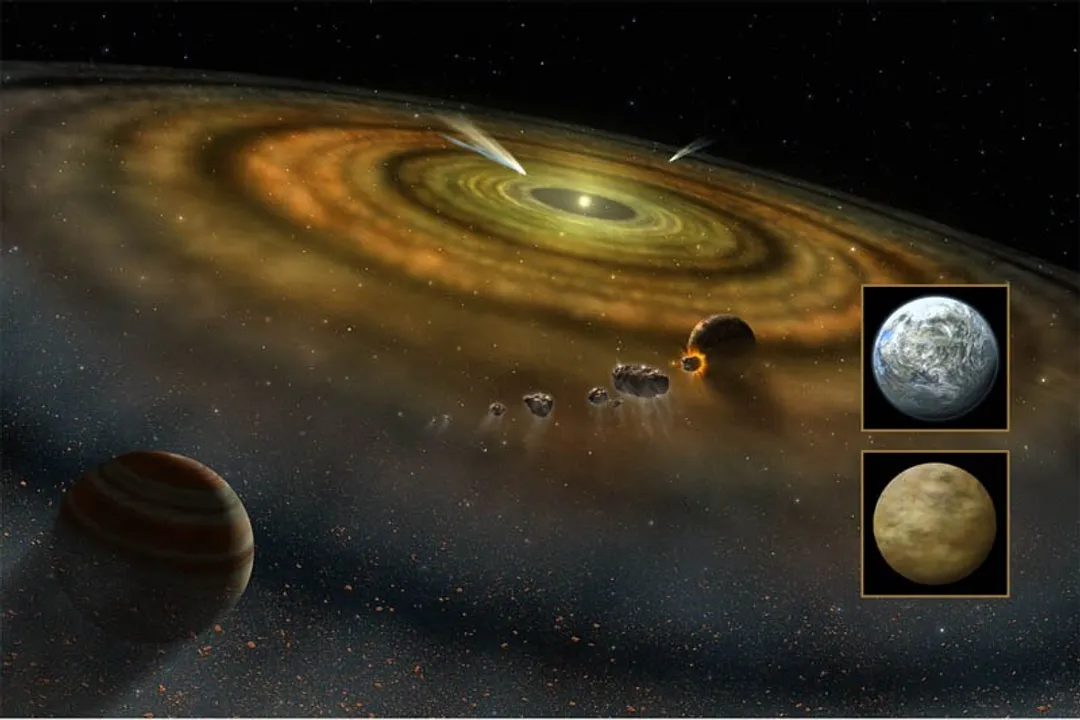
This dramatic cosmic event, the collapse of a nebula under its own gravity, sets the stage for the birth of stars and, quite possibly, entire solar systems. A nebula itself is a colossal, diffuse cloud made primarily of gas—mostly hydrogen and helium—interspersed with trace amounts of dust and heavier elements forged in previous stellar generations. These stellar nurseries drift in the interstellar medium, often remaining stable for eons until some external trigger—perhaps the shockwave from a nearby supernova or the gravitational pull of a passing star—initiates the process of change. Once disturbed, the cloud begins the long, inexorable process of contracting toward its own center of mass.
# Cloud Contraction
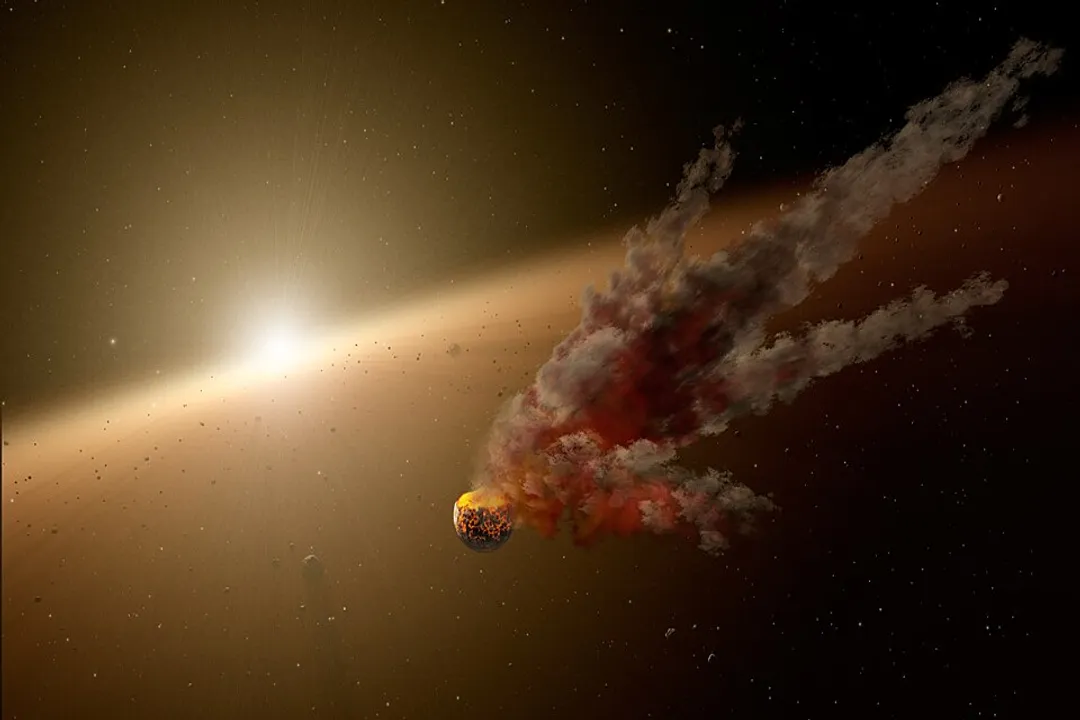
The initial phase of star birth is dominated by gravity overwhelming the outward pressure that keeps the diffuse gas cloud stable. When a portion of the vast molecular cloud becomes dense enough, gravity takes charge, pulling the material inward. This initial collapse is not uniform; rather, it happens in clumps or fragments, each one destined to become a star or a star system. As a region begins to contract, its density increases, which in turn causes the gravitational pull to strengthen further, creating a runaway effect in that localized area. The enormous scale of these collapsing regions means that even a relatively slow initial collapse takes millions of years to reach the next critical stage.
# Conservation Spin
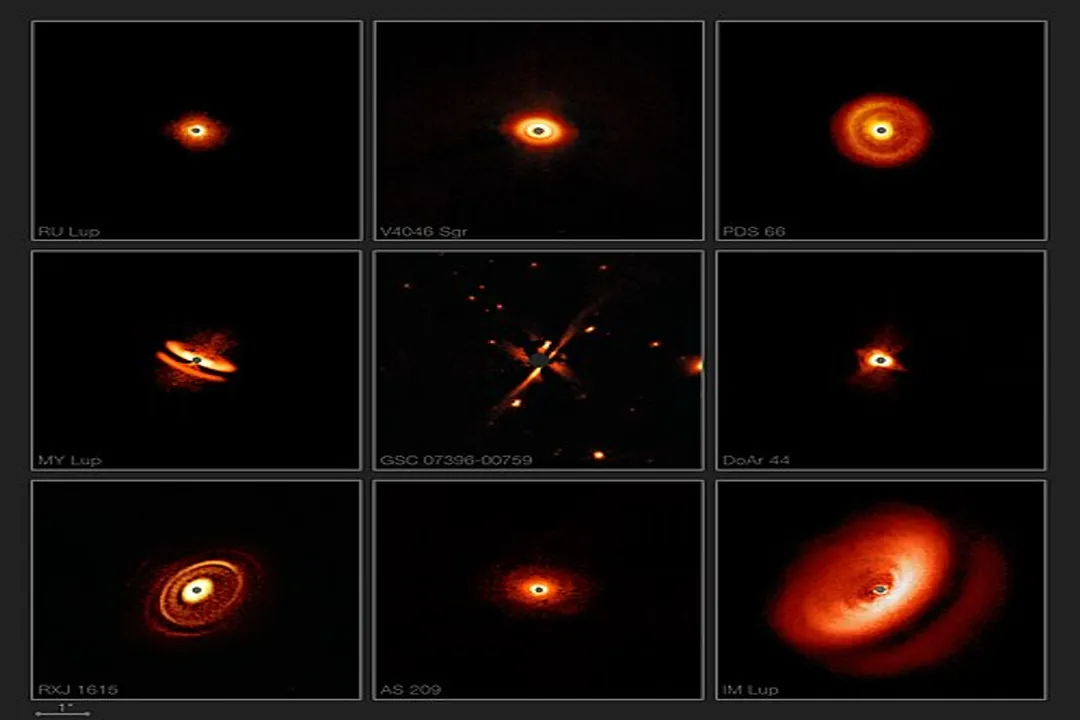
Crucially, the cloud fragments are never perfectly stationary; they possess some initial rotation, however slight, inherited from the overall motion of the gas within the galaxy or from turbulence within the nebula itself. As the cloud shrinks, this initial rotation must be conserved, following the principle of the conservation of angular momentum. Think of a spinning figure skater pulling their arms in: as their mass moves closer to the axis of rotation, their speed must increase dramatically to maintain the same angular momentum.
The same physical law applies to the collapsing cosmic cloud. As the vast, slowly rotating cloud pulls its material inward toward the center, its rate of spin increases significantly. If the original cloud was rotating only once every few million years, the central region, now compressed to a much smaller size, might be spinning hundreds or thousands of times faster. This spinning motion is not merely a byproduct; it becomes the primary organizing force that dictates the final shape of the stellar system that emerges from the collapse.
# Disk Formation
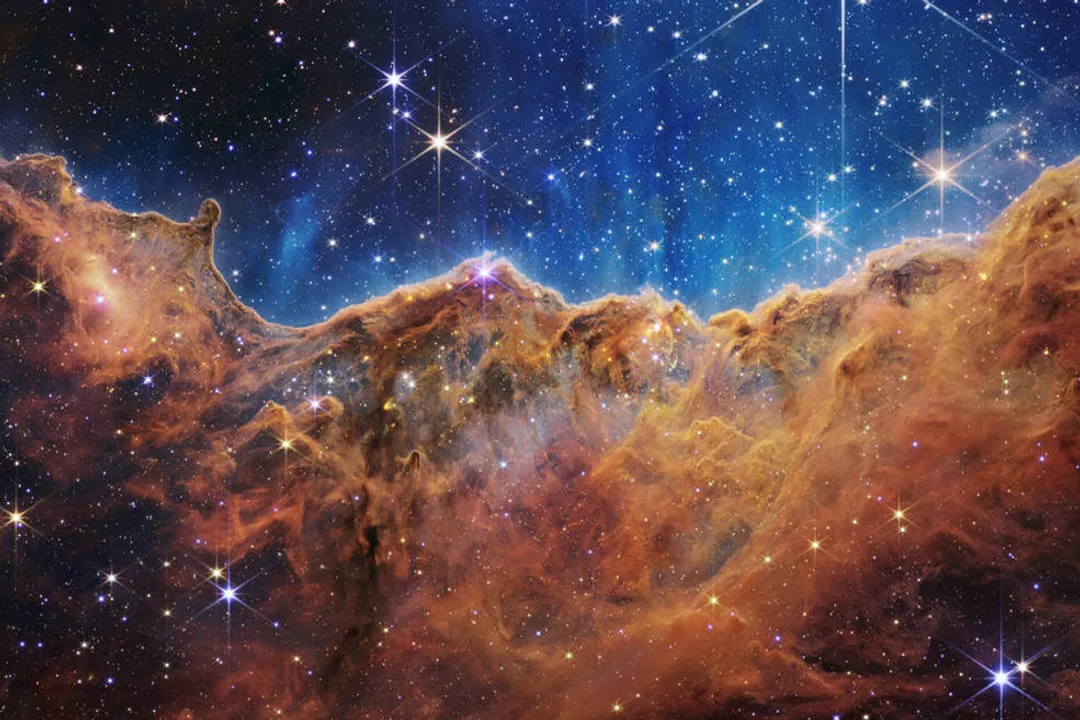
The effect of this accelerating spin is profound. While gravity pulls material inward along the rotational axis, the centrifugal force generated by the rapid spinning pushes material outward perpendicular to the axis of rotation. This opposing force acts most strongly on the material farthest from the center, causing the collapsing, roughly spherical cloud to flatten into a spinning pancake shape.
What forms is a two-part structure centered around the densest region: a protostar at the center, enveloped by a flattened structure called a protoplanetary disk or accretion disk. This transformation from a diffuse sphere to a flattened, rotating system is one of the most fundamental steps in star and planet formation, and it is entirely dictated by the interplay between inward gravity and the conservation of angular momentum. The entire concept describing the formation of the Sun and its planets from such a rotating nebula is known as the Nebular Hypothesis.
Consider the sheer difference in scale. If the initial nebula fragment was light-years across, the resulting protoplanetary disk might only be a few hundred times the diameter of the eventual star, yet it contains the raw material for all future planets, moons, and asteroids. The flattening process is extraordinarily efficient; observations of young stellar objects often reveal disks that are nearly edge-on, showcasing this pronounced flatness.
# Protostar Birth
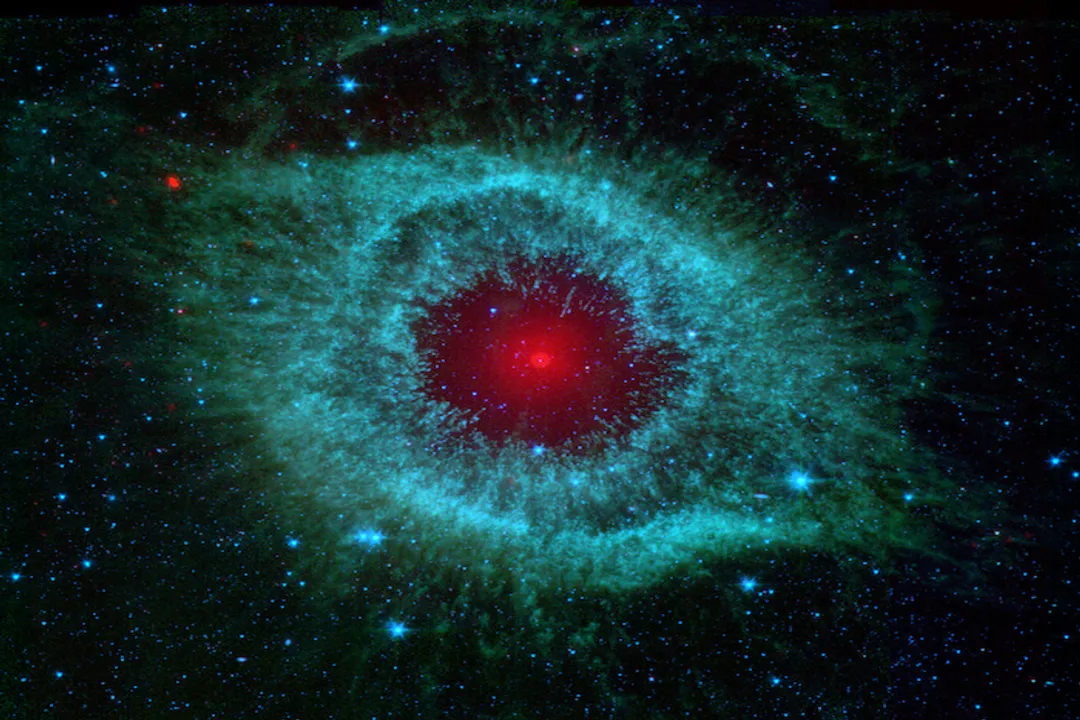
At the very heart of this collapsing and spinning structure is the protostar. As gas falls onto this central mass, gravitational potential energy is converted into thermal energy, causing the core to heat up immensely. This dense, hot core is not yet a true star because it has not initiated sustained nuclear fusion in its core, but it radiates intense heat from the ongoing infall of material. The protostar continues to gain mass as material from the surrounding disk spirals inward over time, a process known as accretion. The exact point at which this object officially graduates to being a star is marked by the core temperature and pressure becoming high enough (around ten million Kelvin) to ignite the fusion of hydrogen into helium.
# Disk Accretion
The material that fails to fall directly onto the protostar settles into the surrounding protoplanetary disk. This disk is not static; it is a dynamic environment where the gas and dust orbit the central object, constantly spiraling inward. While the protostar is gaining mass from the disk, the disk itself is the birthplace of solids. In this region, dust grains begin to collide and stick together, forming larger clumps, which eventually grow into planetesimals and, ultimately, planets.
The density and composition of the disk change dramatically depending on the distance from the hot protostar. Close to the center, the intense heat vaporizes lighter, volatile materials like water and methane, leaving behind only heavier, rocky components—the perfect recipe for forming terrestrial (rocky) planets like Earth. Farther out, beyond the frost line (or ice line), where temperatures are cold enough for these volatiles to condense into solid ice grains, the disk contains far more solid material. This abundance of mass allows for the rapid growth of icy/rocky cores that can then sweep up huge amounts of hydrogen and helium gas to become giant planets like Jupiter and Saturn. In essence, the temperature gradient established by the forming protostar dictates the chemical inventory available at different orbital radii, pre-determining the architecture of the resulting planetary system.
# Hypothesized System
The final configuration resulting from this process—a central star surrounded by a flattened disk of leftover material from which planets are forming—is the cornerstone of the Nebular Hypothesis. This theory posits that all stars and their attendant planetary systems are born in this manner when large, rotating clouds of gas and dust collapse. The initial spin ensures that not all the matter falls straight onto the central body, providing the necessary angular momentum to keep the rest of the material orbiting in a planar structure, which evolves into the orbits we observe in our own Solar System.
If the initial nebula fragment was not isolated but part of a larger cluster, the gravitational influence of nearby stars might strip away some of the outer disk material before planets have a chance to fully form, potentially leading to systems that only feature close-in, small planets, or perhaps just the bare star itself. This demonstrates that the initial conditions—the mass, the initial spin rate, and the environment—are critical variables that determine whether we end up with a single star, a binary system, or a fully populated solar system. The process begins with a diffuse cloud and ends with an organized, spinning collection of objects gravitationally bound to a central furnace.
#Videos
What Causes A Nebula To Collapse? - Physics Frontier - YouTube
Related Questions
#Citations
The Outer Planets: A Star is Born
What causes a nebula - a very diffuse cloud of Hydrogen to ... - Reddit
What Is a Nebula? | NASA Space Place – NASA Science for Kids
how a star is born? - The Physics of the Universe
Nebular Hypothesis – Formation of the Solar System ... - Facebook
What Causes A Nebula To Collapse? - Physics Frontier - YouTube
Nebular hypothesis - Wikipedia
The Origin of the Solar System
formation of a solar system - ASTRONOMY VISUALS