What is the main difference between a dark nebula and an emission nebula?
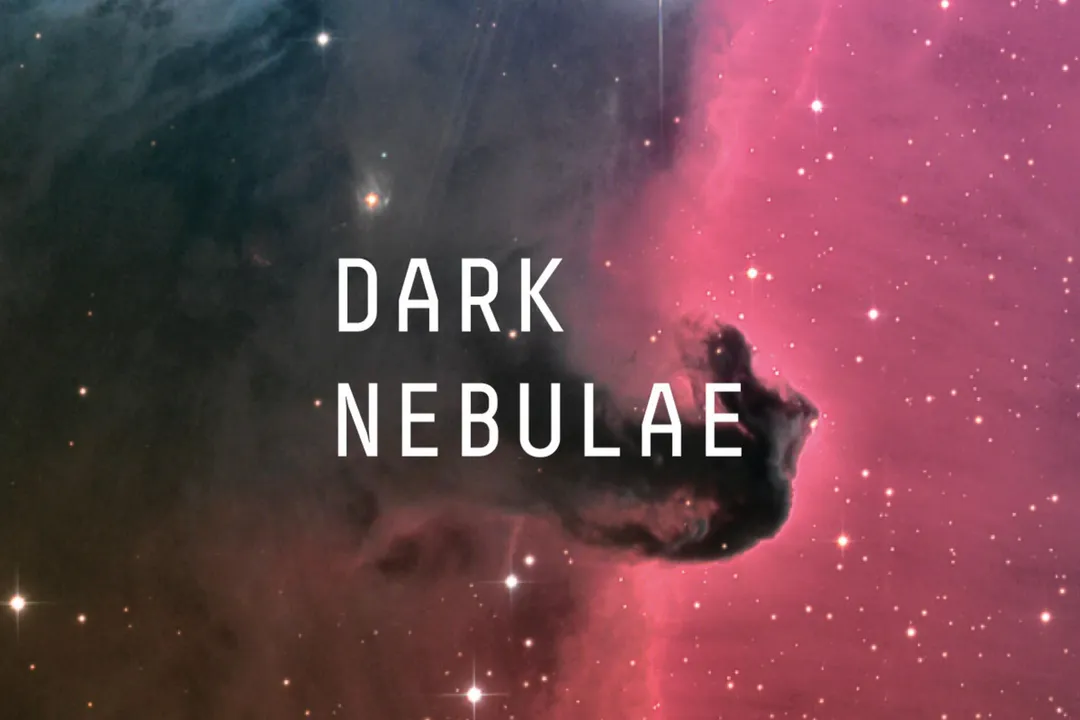
The celestial landscape is peppered with glowing clouds and vast, imposing shadows, all falling under the general classification of a nebula, which simply means a cloud in space. While the term covers many phenomena, the most fundamental division for many casual stargazers and serious observers alike lies in how these clouds interact with the light from stars: do they emit their own light, or do they simply obscure what lies beyond them? Understanding the primary difference between a dark nebula and an emission nebula boils down to the physical processes driving their visibility.
# Light Production
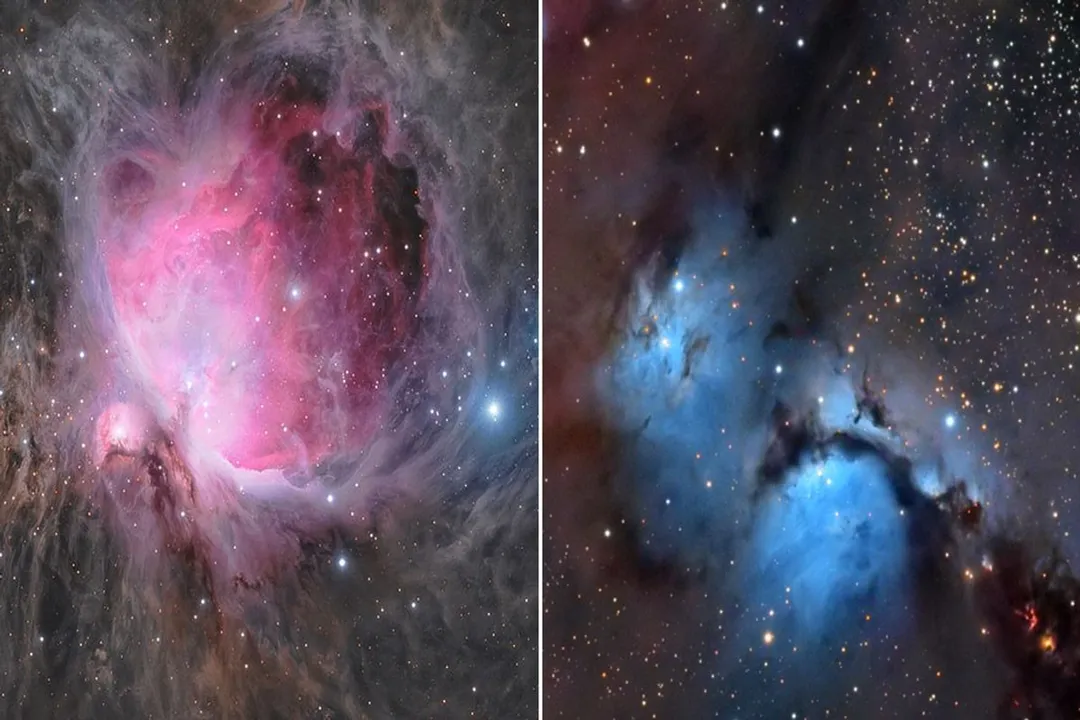
The defining characteristic of an emission nebula is its capacity to produce visible light through energetic excitation. These nebulae are essentially gigantic reservoirs of gas, primarily composed of hydrogen, that reside in the vicinity of extremely hot, massive, and luminous stars, often O- or B-type stars. The intense ultraviolet radiation streaming from these newborn stars is so powerful that it strips electrons from the atoms within the gas cloud—a process known as ionization.
When these freed electrons recombine with the gas ions, they drop back down through various energy levels, emitting photons at specific wavelengths characteristic of the gas involved. For hydrogen, the most abundant element in these regions, this recombination often results in the characteristic deep red glow associated with the spectral line. This makes many emission nebulae visually striking, appearing as bright, colorful patches against the blackness of space, such as the famous Orion Nebula. They are luminous bodies, giving off light that we can detect directly.
# Light Obstruction
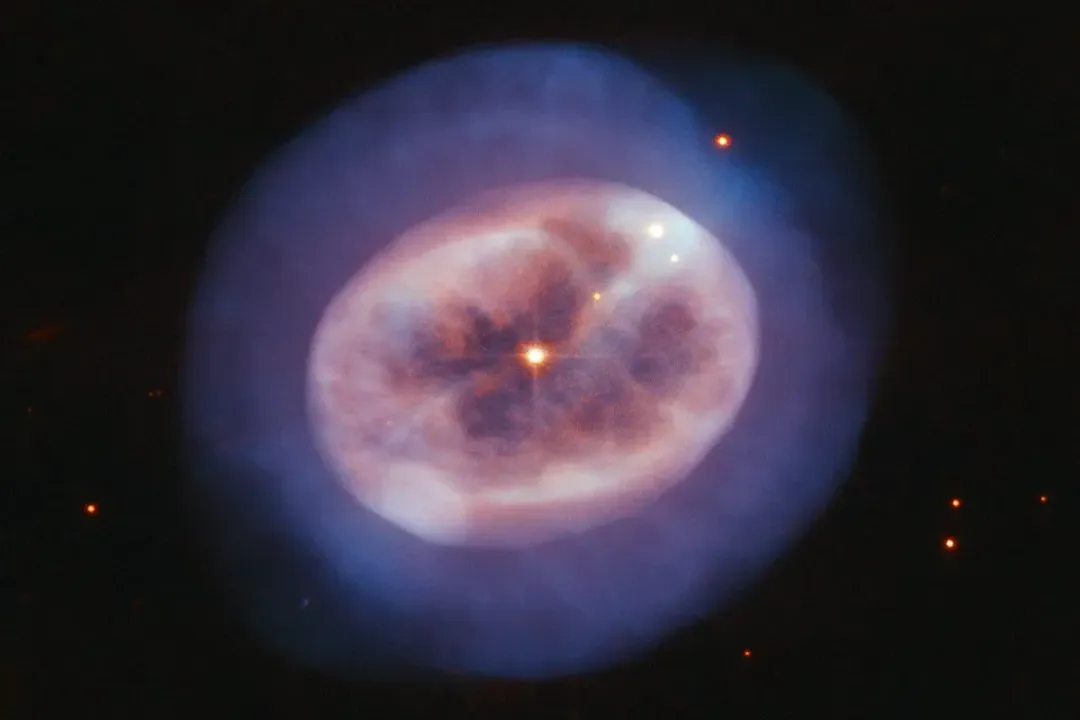
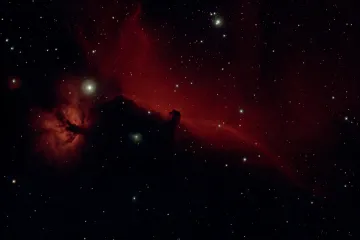
In sharp contrast, a dark nebula does not generate its own visible light through this ionization mechanism; instead, it is defined by its absence of emitted light. These celestial objects are massive accumulations of dense, cold molecular gas and dust grains. Their visibility stems entirely from their ability to block or absorb the visible light originating from sources located behind them.
Imagine looking at a distant, bright streetlamp through a heavy, localized fog bank on a clear night; the fog itself might not glow much, but it creates a distinct, dark silhouette against the lamp's brilliance. Dark nebulae operate on the same principle. They appear as black or brownish patches precisely because the thick lanes of cosmic dust absorb the background starlight or the light from a more distant emission nebula. These are often seen silhouetted against a brighter backdrop, such as a star cluster or an emission nebula itself. They are the cosmic negative images to the emission clouds.
# Physical Contrast Summary
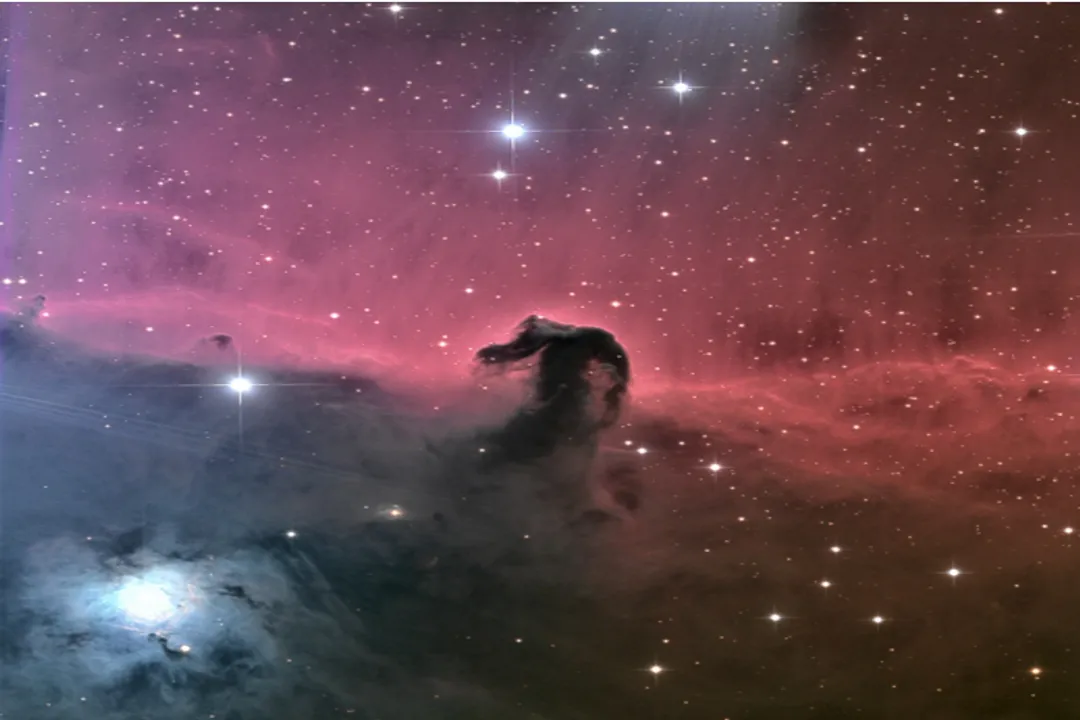
The core distinction is one of source versus shield. An emission nebula is an active radiator powered by nearby stellar energy, whereas a dark nebula is a passive absorber or occulting body.
To better visualize this fundamental difference, a table outlining the key interaction with light is helpful:
| Feature | Emission Nebula | Dark Nebula |
|---|---|---|
| Primary Light Source | Ionization from nearby hot stars | Background light sources (stars, other nebulae) |
| Interaction with Light | Absorbs UV radiation, emits visible light | Absorbs and scatters visible light |
| Typical Appearance | Bright, often red (Hydrogen-alpha) or pink | Dark, opaque silhouette against a brighter field |
| Composition | Diffuse, hot, ionized gas (mostly Hydrogen) | Cold, dense molecular gas and dust grains |
| Internal Activity | High energy processes (recombination) | Primarily gravitational collapse and chemistry |
When observing the sky, you can often determine the type by context. If you see a cloud that is intrinsically bright and glowing across its entire structure, it is likely an emission nebula. If you see a distinct, irregular, black shape that seems to cut out the stars behind it, you are witnessing a dark nebula.
An interesting point arises when considering scale. While emission nebulae are characterized by ionized gas, they often coexist with surrounding molecular clouds that are not ionized, which function as dark nebulae bordering the bright region. For instance, the massive stellar nurseries that power the bright emission nebulae are themselves embedded within much larger, colder, darker reservoirs of gas and dust that haven't yet started forming stars intensely enough to glow. This suggests that the physical material is often similar—gas and dust—but the condition (temperature, energy input) dictates the visible classification.
# Color and Illumination Mechanisms
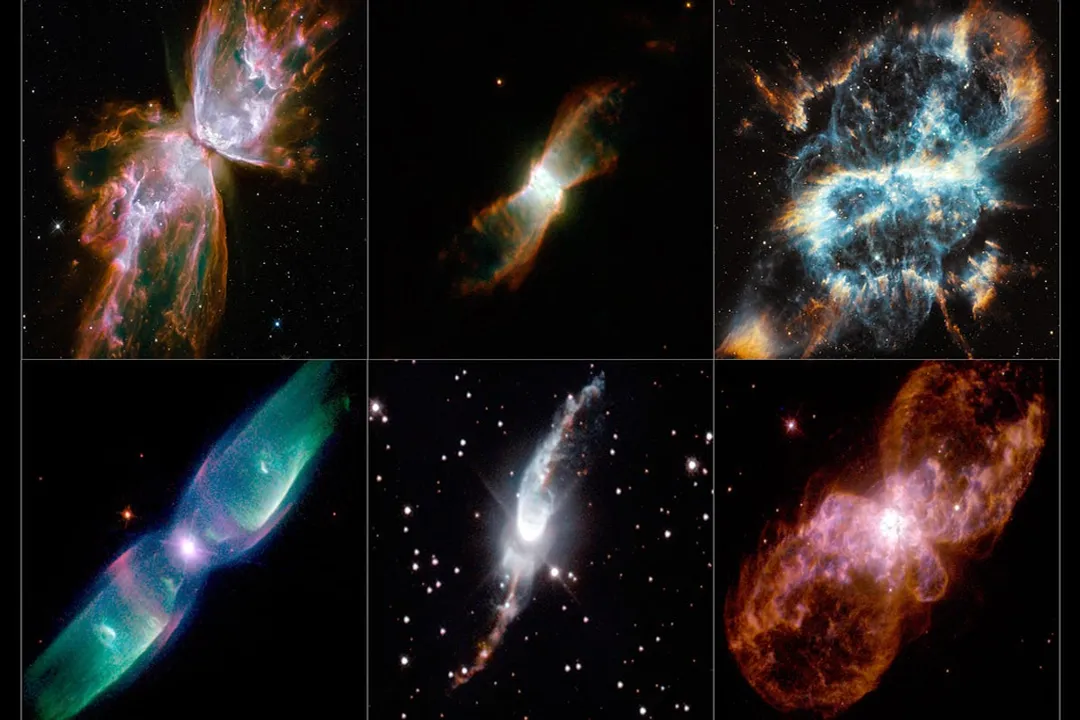
The visual signature of these objects is tied directly to their light interaction. Emission nebulae show colors derived from the atomic transitions within the excited gas. While the line of hydrogen yields red, other elements present, like doubly ionized oxygen or sulfur, contribute to the diverse palettes seen in astrophotography.
Dark nebulae, by definition, lack this energetic input, so they have no inherent color signature other than the absence of color where light should be. However, the dust composing them is not perfectly opaque to all wavelengths. This leads us to a necessary comparison with their close cousin, the reflection nebula. Reflection nebulae are also composed of dust, but unlike dark nebulae, they are not dense enough to completely block light, nor are they energized enough to glow. Instead, they scatter the light from a nearby star, much like our atmosphere makes the daytime sky blue. Because fine dust scatters shorter (blue) wavelengths more effectively than longer (red) wavelengths, reflection nebulae often present a distinct bluish hue.
If you encounter a cloud that appears distinctly blue near a bright star, you are seeing a reflection nebula, a third category distinct from the purely emissive red/pink glow or the purely absorbent black void. This subtle difference in how the dust interacts with photons—scattering blue light versus absorbing all light—is another key differentiator in the nebula family portrait. A practical exercise for an aspiring observer would be to find images where an emission nebula transitions into a dark lane; the transition zone often reveals wisps of dust scattering background light, showing a subtle blue fringe fading into the impenetrable blackness. This gradient illustrates the varying densities of the dust component across the cloud complex.
# Observational Insights and Context
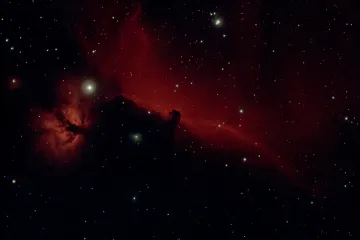
For the amateur astronomer, distinguishing between these types often relies on context within the night sky. Dark nebulae require a bright object—a star field, the Milky Way band, or another nebula—to be visible as a shape. If you are gazing into a truly empty patch of sky, a dark nebula will simply appear as empty space, as there is nothing behind it for it to block. In this scenario, it blends in, emphasizing that the "dark" appearance is relative to the background luminosity.
Emission nebulae, conversely, are self-illuminating. They stand out even against a relatively sparse star field, provided the illuminating stars are bright enough. Their visibility is less dependent on having a bright background and more dependent on the proximity of a very hot ionizing source.
Here is a simple analytical check one might apply when classifying an unfamiliar nebular feature: If the object’s brightness is proportional to the apparent density of the dust cloud itself (i.e., denser parts glow brighter), it is likely an emission nebula. If the object’s darkness is proportional to the apparent density of the dust cloud (i.e., denser parts appear blacker), it is a dark nebula. This relationship holds because in an emission nebula, more material means more atoms to excite and recombine, while in a dark nebula, more material means more blockage of background light.
Another valuable consideration when observing is the effect of filters. Astrophotographers frequently use narrowband filters centered on specific emission lines, like Hydrogen-alpha () at 656.3 nm, to isolate the light from emission nebulae. These filters dramatically enhance the red glow of regions. However, applying such a filter to a dark nebula—whose visibility relies on blocking light—will result in almost total obscurity because the filter only lets through a tiny sliver of light, none of which is being actively generated by the dark cloud itself. This practical application demonstrates the physical process: one object is defined by emitting at specific wavelengths, and the other by absorbing all visible wavelengths indiscriminately.
# Formation Environments
Both types of nebulae are intrinsically linked to the stellar life cycle, but they represent different stages or conditions within that cycle. Emission and reflection nebulae are often found in regions where new stars are actively forming or have recently formed, hence the proximity to hot, young stars that provide the necessary energy. These are regions of star birth.
Dark nebulae, however, are often the molecular clouds—the cold, dense precursors to these star-forming regions. They are nurseries awaiting ignition. The material within these dark clouds is cool enough that molecules can form and persist, and the density is high enough that gravity can eventually overcome internal pressure, leading to gravitational collapse that seeds the formation of new stars. A dark nebula can thus be thought of as the raw, primordial material from which an entire stellar association, including its glowing emission nebulae, will eventually emerge.
A final interpretive note is how we perceive these structures over cosmic time. An emission nebula represents a relatively brief, brilliant phase in a star-forming region's life, lasting perhaps a few million years before the massive stars either die or disperse the surrounding gas. A dark nebula, representing the cold, quiet molecular cloud, persists for much longer periods, potentially millions of years, slowly condensing until the star-forming process is triggered within it. Thus, one is a fleeting, energetic spectacle, while the other is a long-lived, patient reservoir.
#Videos
How Do Reflection, Emission, And Dark Nebulae Differ? - YouTube
How Do You Distinguish Emission, Reflection, And Dark Nebulae?
Related Questions
#Citations
How Do Reflection, Emission, And Dark Nebulae Differ? - YouTube
Emission nebula vs reflection nebula | BBC Sky at Night Magazine
What are the differences between dark and emission nebulas?
Decoding Nebulae - NASA Science
Reflection, Emission and Dark Nebulae : r/Astronomy - Reddit
What is a Dark Nebula? - Telescope Live
What are all the different types of nebula in astronomy? - Medium