What is the main force acting on a nebula?
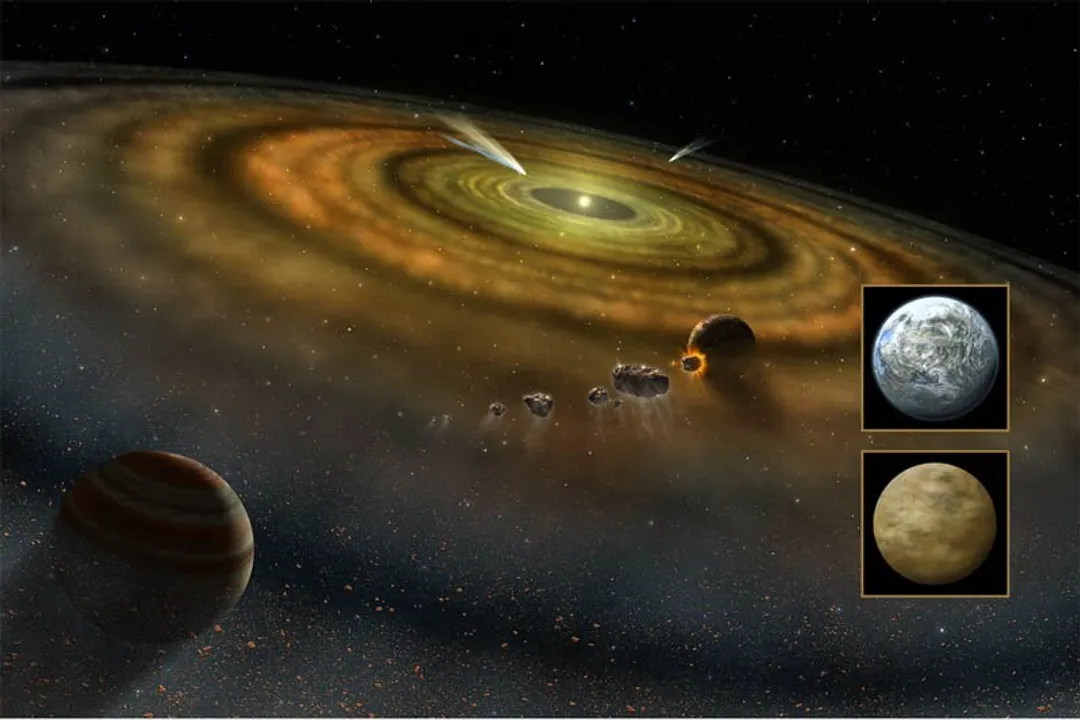
Vast, swirling clouds of gas and dust drifting through space are known by the evocative name nebulae. These cosmic clouds are not merely pretty backdrops for stellar activity; they are the fundamental building blocks of stars, planets, and galaxies. To understand how these structures evolve—how they go from diffuse masses to the ordered systems we observe—we must identify the primary driver of their change. In the grand theater of the cosmos, the main force acting upon a nebula is gravity.
# Defining Cosmic Structure
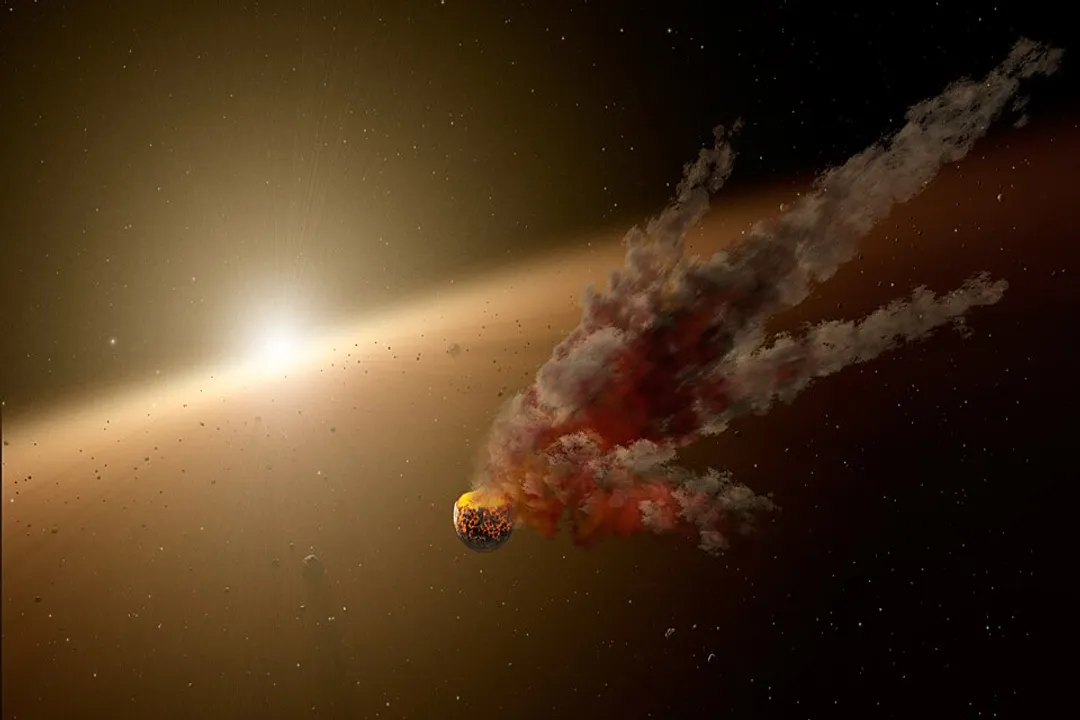
A nebula, derived from the Latin word for cloud, is essentially a massive interstellar cloud composed primarily of hydrogen and helium, mixed with traces of heavier elements and dust particles. These clouds can be incredibly extensive, sometimes stretching across light-years of space. The nature of the nebula—whether it is a bright emission nebula lit by nearby hot stars, a dark absorption nebula blocking background light, or a reflection nebula scattering starlight—depends on its environment and proximity to energetic sources. Regardless of its visible appearance, the raw material for new solar systems resides within these clouds. The study of nebulae has evolved significantly over time, moving from early misconceptions of them being distant galaxies to our current understanding of them as stellar nurseries.
# Gravity's Role
The sheer scale of a nebula makes its self-gravitation the most significant physical influence over long timescales. While other forces, like magnetic fields, thermal pressure, and rotation, are certainly present, gravity is the agent of change that dictates the nebula's eventual fate. Gravity is the attractive force exerted between any two masses, and when applied to a cloud containing billions of times the mass of the Sun, its effect becomes overwhelming.
The process hinges on the density of the cloud. In a stable, well-distributed nebula, the outward pressure from the gas attempting to expand (due to internal heat or turbulence) can balance the inward pull of gravity. However, regions within the nebula can become slightly denser than their surroundings through random fluctuations or external shocks. Once a section of the cloud reaches a critical mass threshold—a point where its self-gravity overcomes the internal thermal and pressure support—it begins an irreversible process of collapse. This initiating collapse driven by gravity is what sets the stage for the formation of new stellar objects. Some analyses confirm that the main force governing the dynamics and subsequent evolution of a nebula, leading toward concentration, is indeed gravitational attraction.
# Formation Sequence
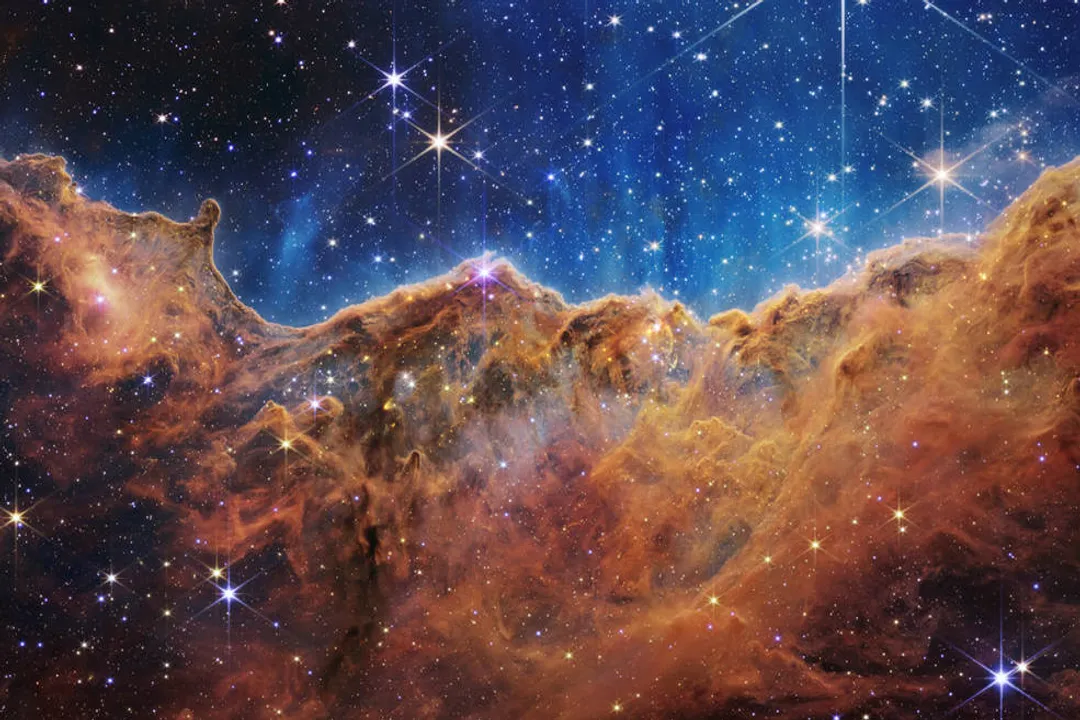
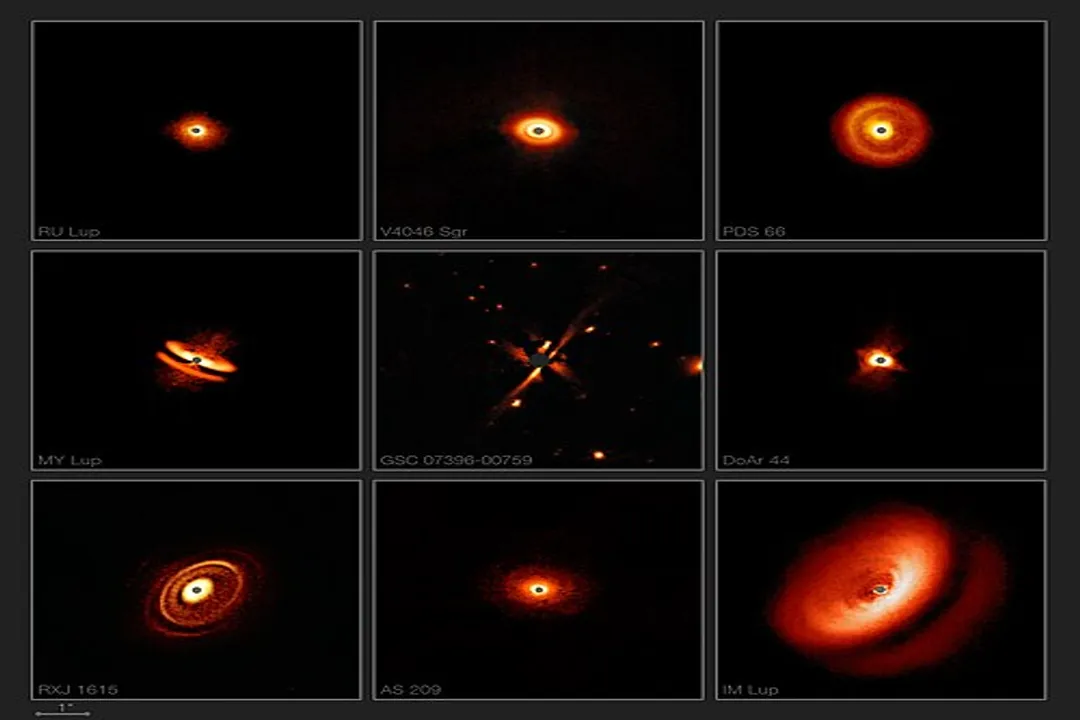
The outcome of this gravitational domination is the formation of stars, a concept central to the Nebular Hypothesis for the creation of solar systems. As gravity pulls the material inward, the cloud fragments into denser clumps. Conservation of angular momentum dictates that as these clumps shrink, they begin to spin faster, causing the material to flatten into a rotating disk, known as a protoplanetary disk, surrounding a central, contracting mass. The core mass continues to accrue material, heating up tremendously due to the conversion of gravitational potential energy into thermal energy. When the core temperature and pressure become sufficiently high, nuclear fusion ignites, and a star is born.
A fascinating comparison arises when looking at the creation versus the evolution of a solar nebula. While gravity is the primary contracting force, the creation of the initial solar nebula itself often involves a dynamic interplay where forces like gravity work alongside rotation and internal pressure to shape the initial structure from which collapse will later occur. This suggests that the beginning of a nebula's life is a tug-of-war, but its middle and end, concerning star formation, are dominated by the relentless inward pull of gravity.
If we consider a typical solar nebula, where the initial mass might be spread over a vast volume, the gravitational collapse does not happen uniformly across the entire cloud simultaneously. Instead, it happens episodically in localized pockets. Imagine a sheet of dough being stretched and then left to sit; some areas will naturally thin out, while others will bunch up under their own weight before the stretching force is reapplied. Similarly, the initial density variations within a nebula predetermine where the first stars will light up, long before the entire cloud has dissipated or formed a complete system. This is crucial because it explains why stars often form in clusters rather than in isolation; one collapsing core can trigger further instability in its neighboring regions through radiation or shockwaves, providing the necessary perturbation for their gravity to take over.
# Counteracting Influences
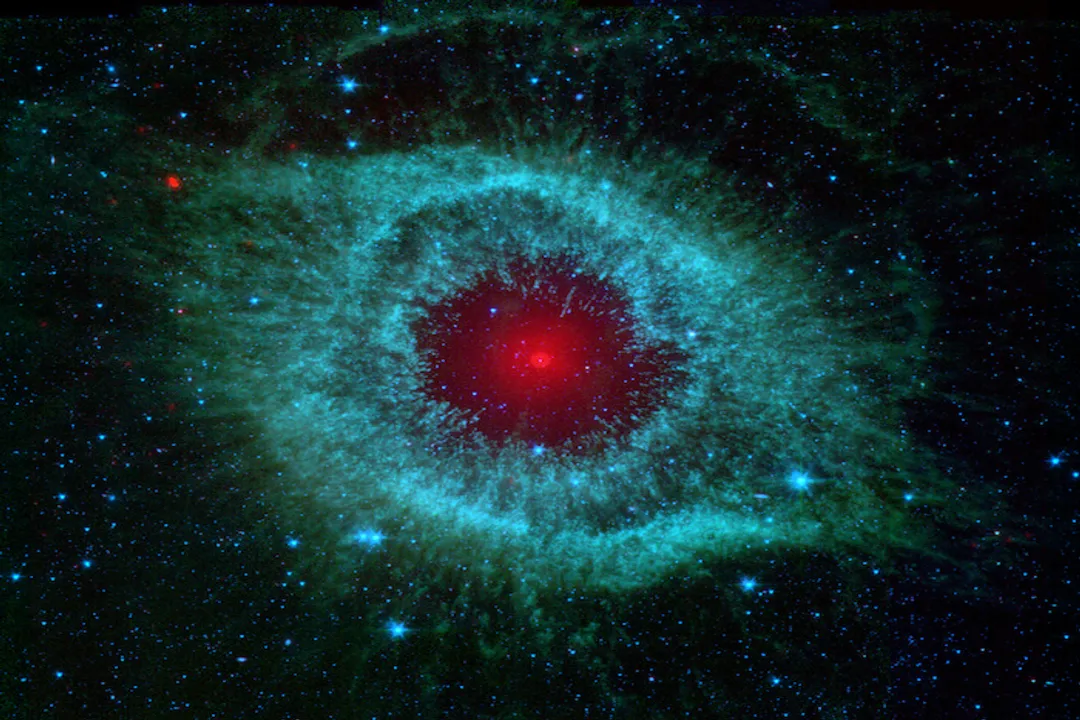
While gravity is the main organizing force, it is not unopposed. Other physical mechanisms attempt to stabilize or disrupt the cloud, adding complexity to the process of star birth. The source of gas and dust is often immense, but so too are the counter-pressures.
The pressure exerted by the gas itself, known as thermal pressure, resists compression. This resistance is what necessitates the extreme density required for fusion to start; the material must be compressed enough that the kinetic energy of the particles results in immense heat. Magnetic fields threaded through the interstellar medium can also provide a counter-force, effectively acting like elastic bands that resist the drawing together of charged particles within the cloud. Furthermore, rotation, mentioned in the context of shaping the disk, can also slow down or inhibit collapse along the equatorial plane if the initial cloud possessed any significant spin.
When these counter-forces are dominant, the nebula remains in a state of dynamic equilibrium or slow evolution. These are the nebulae we might observe as stable, expansive clouds that are not currently undergoing major gravitational collapse. They may persist for millions of years in this state, slowly accumulating material or waiting for an external event, like a nearby supernova explosion or the passage of a spiral arm density wave, to provide the initial shockwave necessary to overcome the internal pressure balance and allow gravity to take the reins fully.
# Evolutionary Trajectories
The ultimate fate of a nebula is determined by the success or failure of gravity's attempt to condense its mass. We can loosely categorize these outcomes based on the balance of forces.
| Outcome Scenario | Dominant Force(s) | Resulting Structure |
|---|---|---|
| Star Formation | Gravity (overwhelming) | Star(s) and Protoplanetary Disk |
| Stability | Thermal Pressure + Gravity (balanced) | Stable, diffuse cloud structure |
| Dispersal | External Radiation/Wind Pressure | Cloud dissipates into interstellar medium |
From a practical observational standpoint, one way to gauge the activity within a nebula is to look for evidence of collapse acceleration. If the gas seems highly localized, with sharp boundaries against the surrounding void, it suggests gravity is winning a strong, localized battle. If, conversely, the nebula appears diffuse, with very low density readings even across large volumes, it suggests thermal or magnetic forces are currently keeping the material spread out, delaying the gravitational trigger.
For anyone observing or studying these structures, understanding this gravitational competition offers an analytical perspective. Instead of just seeing a "cloud," one can analyze spectral data to look for blueshifts (material moving toward us) or redshifts (material moving away) that indicate bulk movement. A net inward velocity confirms that gravity is the currently prevailing large-scale force organizing that specific region of gas and dust toward a gravitational singularity, even if that singularity is millions of years away from forming an actual star. The entire history of star systems, from our own solar neighborhood to the most distant galaxies, is written in the success of gravity acting upon these initial clouds.
Related Questions
#Citations
What are the two forces that are responsible for the creation ... - Quora
What force caused the dust and gas in the nebula to come together ...
The Outer Planets: A Star is Born
Nebula - Astronomy, Formation, Gas & Dust - Britannica
Nebular hypothesis - Wikipedia
What is a nebula? - Space Center Houston
14/20 The main force acting on a nebula is: singularities microscopic ...
What Is a Nebula? | NASA Space Place – NASA Science for Kids
stars Flashcards - Quizlet