What force is causing the nebula to get denser and hotter?
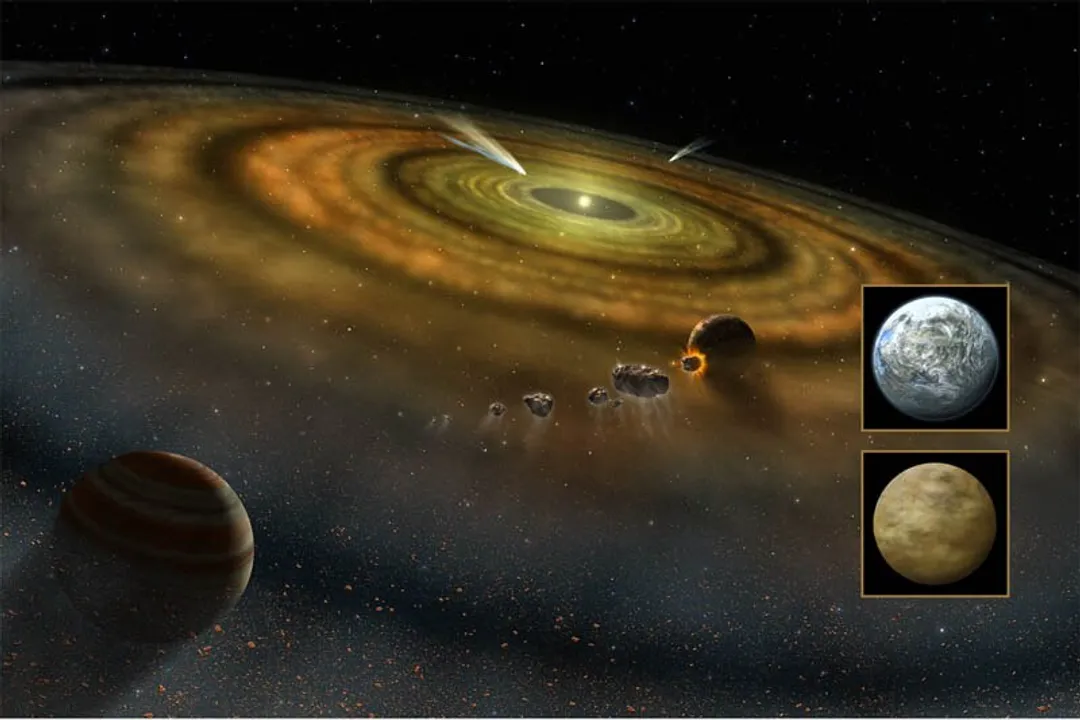
Vast, diffuse clouds of interstellar gas and dust, known as nebulae, are the stellar nurseries of the cosmos, yet they are not static. They undergo dramatic transformation, gathering material until they become dense and hot enough to ignite new stars. The fundamental cause driving this incredible concentration of mass is a relentless, omnipresent force: gravity. [1][7][8] This gravitational attraction acts upon the scattered particles within the nebula, pulling them inward toward a common center of mass. [6][9]
# Gravitational Dominance
A nebula, in its initial state, is characterized by extreme tenuity, often containing only a few atoms per cubic centimeter, spread across light-years. [1] Despite this sparseness, the sheer volume means that the total mass is significant. The force responsible for initiating the collapse—the increasing density—is the mutual gravitational attraction between every particle of gas and dust within the cloud. [5][6] When this self-gravity overcomes the internal outward pressures, such as the random motion of gas particles or magnetic fields, the cloud begins to contract. [6]
This contraction isn't uniform; it tends to happen along lines of slight overdensity. Over immense timescales, these regions grow more concentrated, pulling in more surrounding material. [1][9] The nebular hypothesis, which describes the formation of solar systems from a spinning, collapsing cloud of interstellar matter, hinges entirely on this initial gravitational instability. [9] Within the larger structure, denser clumps form, each one destined to become a star or a stellar system. [5]
# Heat Generation
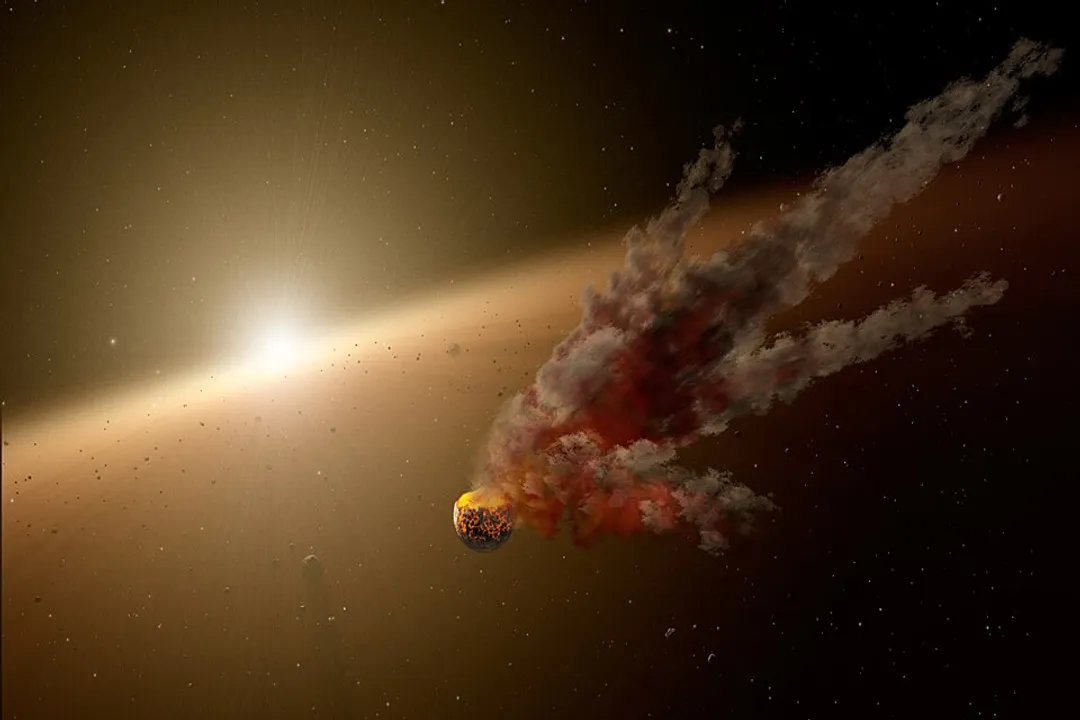
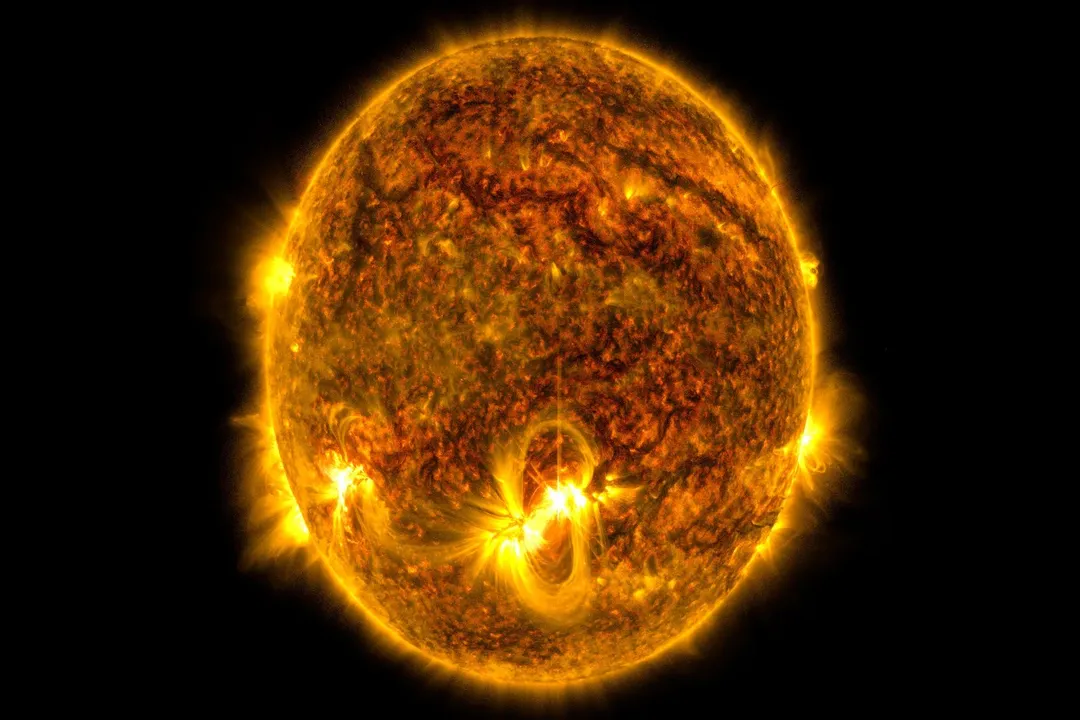
As the cloud compresses under the influence of gravity, the constituent particles are forced closer together. This physical squeezing is what causes the temperature to rise dramatically, leading to the "hotter" aspect of the transformation. [7] In physics, as a gas collapses and its volume decreases, its internal energy increases, which manifests as a rise in temperature. This is not heat generated by nuclear fusion—that comes much later—but rather the conversion of gravitational potential energy into thermal kinetic energy. [7] Imagine compressing a gas in a pump; it gets warm. In the case of a nebula, this compression happens on an astronomical scale.
The increasing density directly feeds the heating process. A denser region means particles collide more frequently and with greater force as they fall toward the center, increasing the average kinetic energy, or temperature, of the gas. [2] The core of the collapsing region, which is the densest part, becomes the hottest region, setting the stage for the next crucial phase of stellar birth.
# Composition and Conditions
To understand the force dynamics, one must appreciate the starting material. Nebulae are predominantly composed of hydrogen and helium gas, along with trace amounts of heavier elements in the form of dust grains. [5][8] These components are initially spread very thinly across the vast expanse of space. [1] The initial structure might be relatively uniform, but even slight variations in density, perhaps caused by the shockwave from a nearby supernova or the turbulence of passing spiral arms in a galaxy, can act as the seed for gravitational collapse. [9]
It is interesting to note the delicate balance in the interstellar medium before collapse is triggered. While gravity is pulling inward, the existing gas pressure and magnetic fields exert an outward push. [6] For the nebula to start getting denser, the gravitational pull must exceed these resisting forces. If the resisting forces are too strong, the gas cloud might simply remain diffuse or disperse over time. [1] The ability of gravity to win this struggle determines whether a new star is born or not.
# Collapse Stages
The process of gravitational contraction leads to distinct phases in the nebula's evolution, each marked by escalating density and temperature. [4]
# Protostar Formation
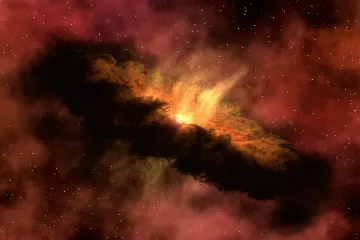
As the central region continues to shrink, it forms a dense, hot core known as a protostar. [4][7] The density here becomes orders of magnitude greater than the surrounding envelope of gas and dust that is still slowly accreting. [7] This protostar is intensely hot, radiating energy primarily in the infrared spectrum due to the ongoing gravitational collapse, though it has not yet achieved the sustained core temperatures necessary for hydrogen fusion. [4]
This gravitational contraction continues until the internal pressure generated by the extreme heat can finally counteract the inward pull of gravity. This state of balance, known as hydrostatic equilibrium, marks the transition from a collapsing protostar to a true main-sequence star, provided the mass accumulated is sufficient. [7] If the mass is too low, the core will never reach the required temperature (about 10 million Kelvin) for sustained fusion, resulting instead in a brown dwarf. [8]
# Force Comparison
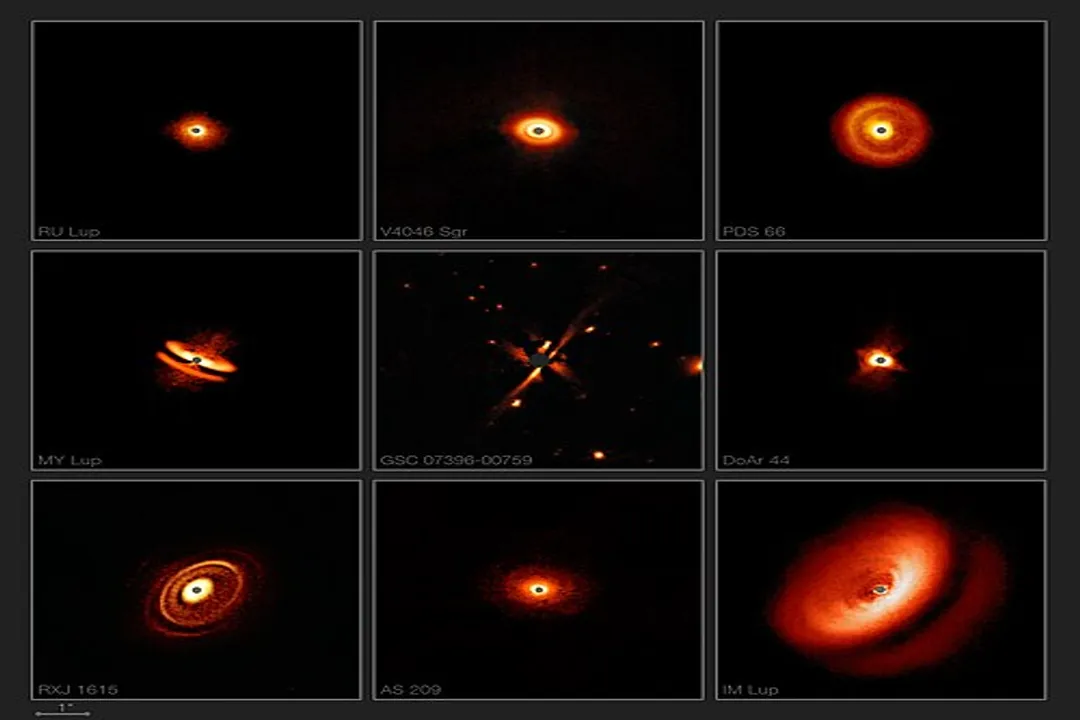
When considering the formation of a solar system from a nebula, it is essential to distinguish between the forces driving the overall collapse and those affecting the structure that remains. While gravity pulls everything toward the center of mass, the conservation of angular momentum plays a crucial secondary role in determining the final shape. [6][9] As the cloud shrinks, it must spin faster, like a figure skater pulling in their arms. This rotational effect creates an outward centrifugal force that resists the gravity most effectively along the equatorial plane, causing the material to flatten into a spinning disk—the protoplanetary disk—around the central, dense protostar. [9]
This flattening is a direct consequence of the initial rotation combined with the gravitational collapse. Therefore, the density increase is driven by gravity, but the resulting geometry—a disk rather than a perfect sphere—is shaped by the interplay between gravity and angular momentum. [6] The material in this disk, while no longer collapsing directly onto the star's center, is still undergoing internal processes that lead to localized heating and the eventual accretion of planets. [9]
Considering the vastness of space, it is striking that a relatively small perturbation can trigger such a monumental event. If we look at a typical Giant Molecular Cloud (GMC), which can span hundreds of light-years, the density difference between the bulk cloud and the densest cores might be a factor of or more. [1] The consistency of the physical laws—that the same gravitational pull acting on a handful of dust grains near Earth is what dictates the fate of these massive clouds—is a powerful reminder of cosmic scale.
# Stellar Evolution Context
The increasing density and heat within the nebula are merely the opening act in the life cycle of a star. [4] This early heating phase dictates the final properties of the star that emerges. For instance, the amount of mass accreted during this gravitational phase determines the star's lifespan and luminosity on the main sequence. [8]
A key takeaway from studying stellar evolution is that the heat generated during gravitational collapse is essential because it provides the thermal pressure that will eventually counterbalance the crushing weight of the star's own mass once fusion begins. [7] Without the initial, prolonged phase of density increase and resultant heating, the star could never achieve the stable existence we see in stars like our Sun. [3]
# Localized Heating Dynamics
It is also worth examining the heating mechanism at a finer scale within the collapsing core. While the overall collapse generates heat, the final densification phase involves the conversion of gravitational energy into heat until the gas becomes opaque to its own radiation. [7] Once the core becomes opaque, the heat generated by the continuing inward fall of material cannot escape as quickly. This trapping of energy dramatically accelerates the temperature and pressure rise in the very center, pushing it toward ignition. [7]
This opacity threshold is a fascinating physical boundary. Before it is reached, the cloud radiates energy away efficiently, allowing the collapse to proceed relatively "coolly" (though still hotter than the surrounding space). Once radiation gets trapped, the core effectively insulates itself, leading to a rapid, final squeeze of material onto the growing protostar. This mechanism explains why the center of the collapsing mass gets hotter faster in the later stages of formation than in the earlier, more diffuse stages.
To summarize the forces involved in making the nebula denser and hotter, we have a clear hierarchy: Gravity is the primary engine for density increase, while the resultant compression transforms that potential energy into thermal energy (heat). The geometry of the final system is then fine-tuned by angular momentum resisting the gravitational pull tangentially. [6][9] These forces acting in concert transform a nearly empty, cold cloud into the blazing heart of a new solar system. [3][5]
Related Questions
#Citations
What causes a nebula - a very diffuse cloud of Hydrogen to ... - Reddit
What happened as the nebula became denser due to ... - Brainly
The Outer Planets: A Star is Born
Topic 8- the life cycle of stars Flashcards - Quizlet
Formation of Galaxy - Solar Nebulas and Solar System - Turito
What are the two forces that are responsible for the creation ... - Quora
Stellar Evolution - | The Schools' Observatory
Star Basics - NASA Science
Nebular hypothesis - Wikipedia