How does SpaceX get its methane?
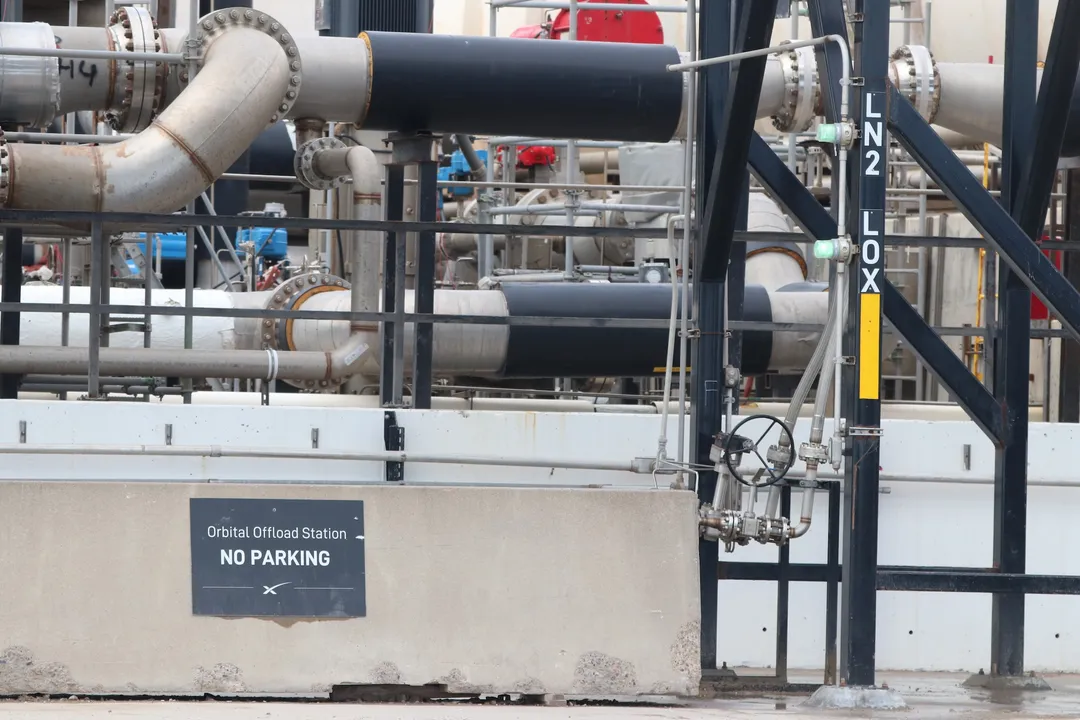
The transition to methane as the primary propellant for SpaceX’s next generation of vehicles, particularly Starship, represents more than just a slight modification to the fuel tank; it’s a fundamental strategic decision tied directly to the company's ambitions for interplanetary travel. [1][5] While previous generations of SpaceX rockets, like the Falcon 9, relied on RP-1 (refined kerosene) and liquid oxygen () for their first stage engines, the newer Raptor engines that power Starship utilize a combination of liquid methane () and . [4][9] This change is deeply rooted in engineering trade-offs and long-term mission planning, especially regarding operations far from Earth. [1]
# Propellant Rationale
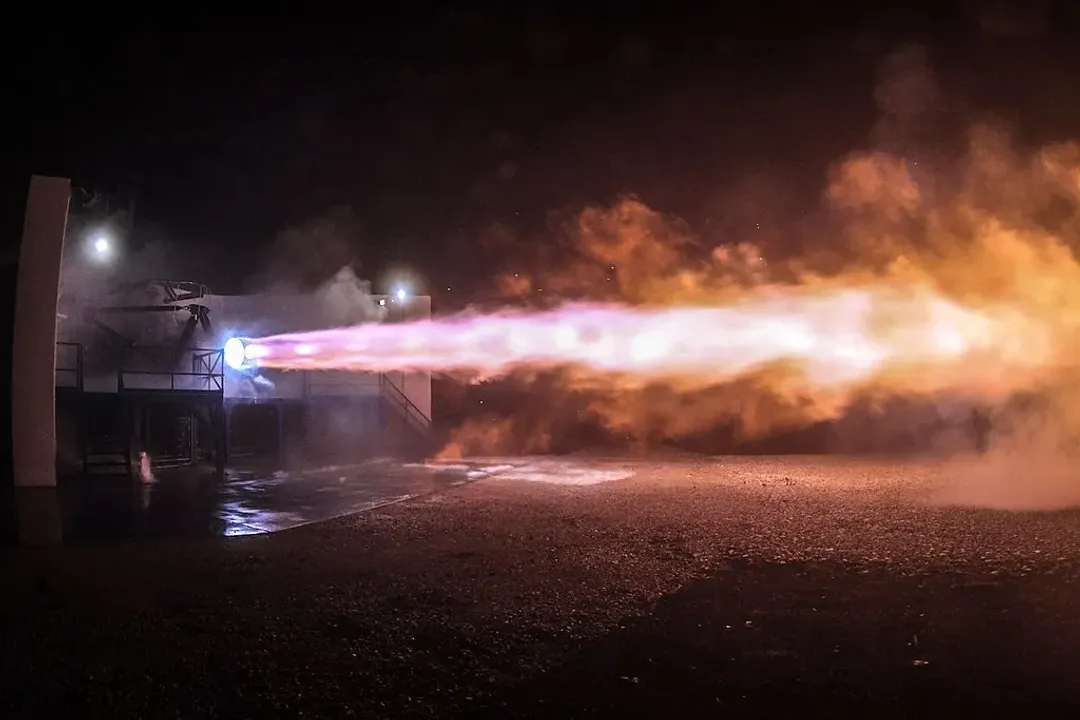
The choice of propellant for a massive, rapidly reusable launch system is a complex optimization problem involving performance, cost, engine longevity, and planetary accessibility. [1][5] SpaceX deliberately opted for methalox over the established RP-1 or the high-performance, yet challenging, liquid hydrogen (). [1][4]
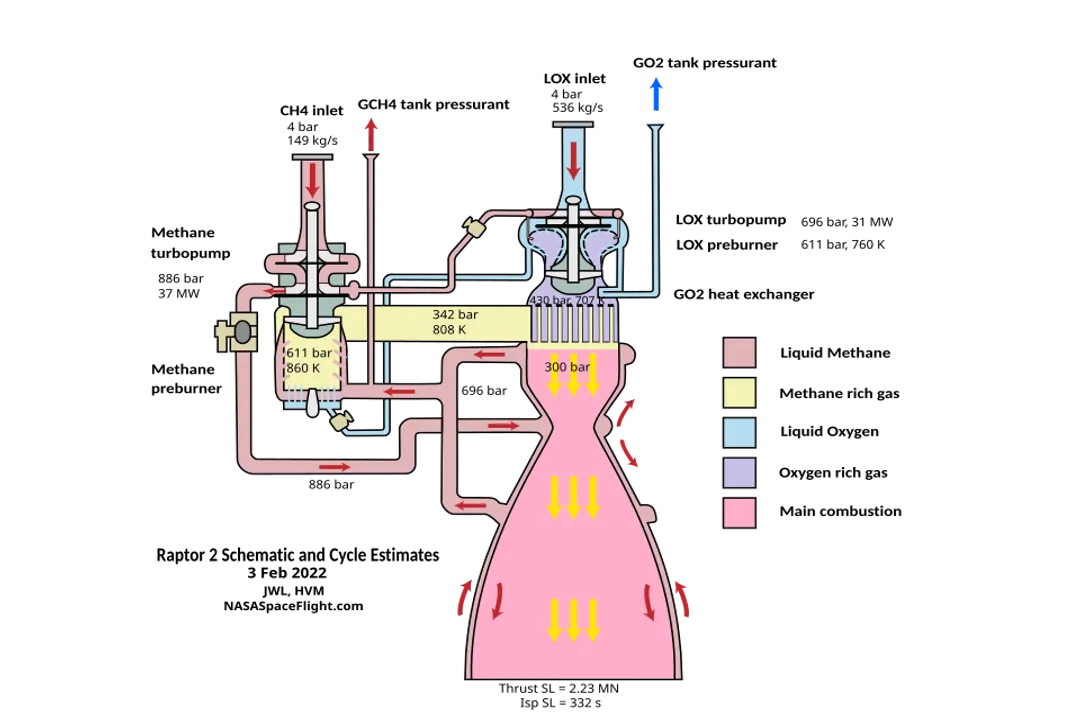
One of the immediate, practical benefits of methane centers on the engine itself. The Raptor engine, which uses an all-full-flow staged combustion cycle, benefits significantly from methane’s characteristics. [4] Compared to RP-1, methane burns much cleaner. [1] RP-1 leaves behind deposits, soot, and carbon residue inside the engine's complex plumbing, particularly in the preburners, which necessitates significant turnaround time and cleaning procedures to maintain engine health. [1] Methane, by contrast, leaves behind far less residue. [1] This cleaner burn directly translates into reduced maintenance cycles, a core tenet of SpaceX's goal for rapid, high-cadence reusability. [1]
Another key factor is the specific impulse, a measure of rocket engine efficiency. While liquid hydrogen offers the highest theoretical specific impulse, methane provides a very respectable performance level while avoiding the significant drawbacks of . [1] Liquid hydrogen is extremely difficult to handle; it has a very low density, requiring massive, heavy propellant tanks, and its extremely low boiling point () makes cryogenic storage and handling exceptionally challenging on Earth and in space. [1] Methane’s boiling point () is significantly warmer, making it denser and easier to manage in terms of insulation and boil-off rates compared to . [1]
This leads to an essential engineering point regarding the longevity of the hardware itself. Methane combustion, while not as clean as pure hydrogen, runs at substantially lower temperatures than RP-1. [1] This lower thermal load means less stress on critical engine components, particularly the highly stressed turbopumps and combustion chambers of the Raptor engine. [4] The engine can tolerate a higher number of firing cycles before requiring deep refurbishment, which is an economic necessity for a fully reusable system. [1] The consistent, lower thermal budget afforded by methalox is a quiet engineering victory that directly underpins the economic viability of Starship's ambitious flight schedule, allowing for quicker reflights without sacrificing the performance needed to reach orbit and beyond. [4]
# Terrestrial Methane Sources
Before Starship can become an interplanetary vehicle fueled by local resources, it needs vast quantities of propellant on Earth for testing, orbital flights, and eventual crewed missions to the Moon and Mars. [8] Currently, the methane used for testing the Raptor engines—such as at the Starbase facility in Boca Chica, Texas—is sourced commercially. [5] This terrestrial methane is overwhelmingly derived from natural gas. [5]
Natural gas, predominantly composed of methane, is extracted from underground reservoirs, often through drilling and hydraulic fracturing operations. [5] SpaceX’s immediate need for propellant means they are purchasing liquefied natural gas (LNG) that meets stringent purity requirements for rocketry. [5] The availability of this commodity is tied to the established global energy infrastructure, which has substantial supply and demand dynamics in North America. [5]
However, relying on commercial supply chains, even for the relatively massive quantities needed for testing, introduces constraints. The process involves extracting, purifying, liquefying, transporting, and storing the fuel, all of which carry logistical costs and environmental footprints associated with terrestrial fossil fuel extraction. [5] This terrestrial sourcing is temporary, a necessary step to validate the vehicle before the real goal can be achieved. [8]
# Martian Production Imperative
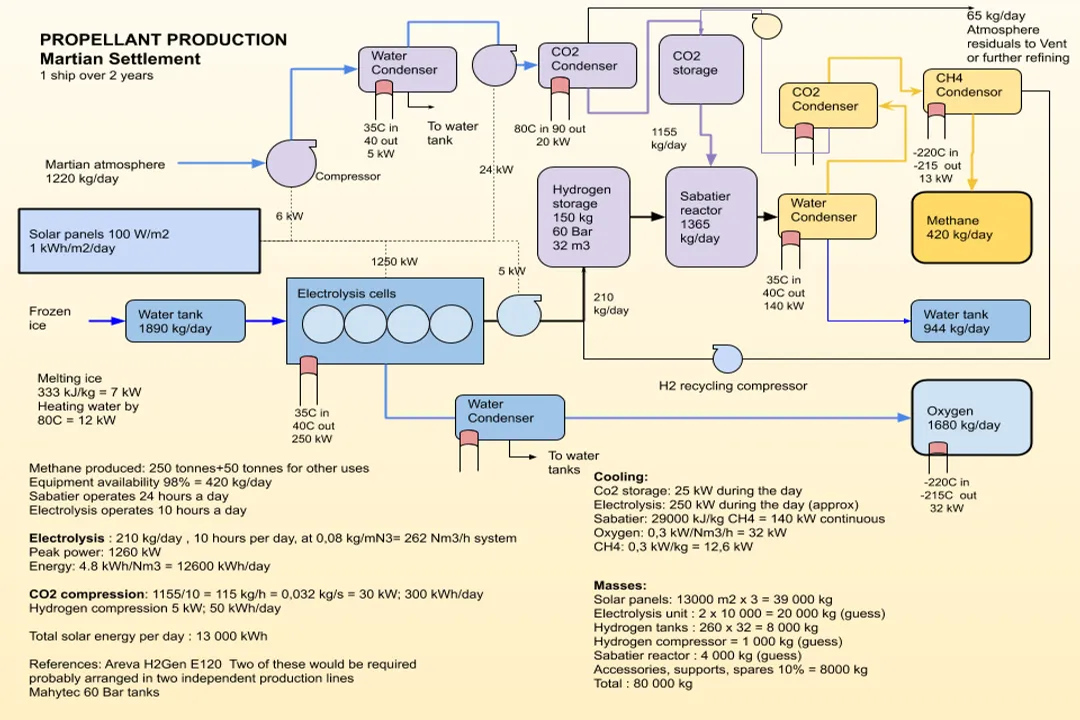
The real reason SpaceX chose methane shines brightest when considering Mars. The company’s ultimate goal is to make humanity multi-planetary, which necessitates refueling on other celestial bodies to complete the round trip. [8] This capability is known as In-Situ Resource Utilization (ISRU). [8]
Mars presents a unique chemical environment perfectly suited for generating methane in situ. [8] The Martian atmosphere is overwhelmingly carbon dioxide (). [8] Deep beneath the Martian surface, scientists believe there are significant deposits of water ice. [8]
The plan involves combining these two readily available, local Martian resources to synthesize methane and oxygen through a chemical reaction known as the Sabatier process, followed by water electrolysis. [8] The idealized reaction sequence is:
- Take atmospheric and combine it with hydrogen () derived from splitting Martian water () to produce methane () and water (), releasing oxygen () as a byproduct. [8]
- The generated water is then split via electrolysis to produce more (which is recycled back into the Sabatier process) and the required liquid oxygen () for the oxidizer. [8]
This process effectively transforms Martian and water ice into the precise propellant required by the Raptor engines. [8] This closed-loop, self-sufficient system eliminates the insurmountable logistical barrier of transporting return fuel from Earth. [8] The sheer scale of propellant required for a sustained Mars presence means that any system requiring Earth-based refueling for the return leg is not a true colonization plan; it's an expensive, one-way trip for the initial cargo. Methane's chemical viability on Mars transforms the business case for interplanetary exploration from prohibitively expensive logistics to manageable in-situ manufacturing. [8]
# Onsite Terrestrial Synthesis Plans
In parallel with the long-term Martian vision, SpaceX is also rapidly moving toward generating its own fuel at its primary launch site, Starbase, in South Texas. [8] This move serves two purposes: it perfects the ISRU technology required for Mars, and it provides a more controlled, cost-effective, and potentially scalable supply for Starship's Earth-to-orbit missions. [8]
The plan involves setting up an infrastructure near the launch facilities capable of recreating the necessary chemical processes on a large scale. [8] This ground-based facility would likely utilize terrestrial sources of (perhaps captured from industrial sources or the atmosphere) and locally sourced water to produce methane and oxygen on-site. [8] By manufacturing its own propellant locally, SpaceX reduces dependency on external suppliers and the complex, energy-intensive liquefaction and shipping required for cryogenic fuels coming from distant natural gas processing plants. [8]
This terrestrial pilot production facility acts as a vital stepping stone. If the process of generating and from raw materials proves efficient in Texas, the scaling up of the exact same process on Mars becomes a significantly lower-risk engineering endeavor. [8]

# Emissions and Operational Context
While methane is selected for its reusability and Martian viability, its use in rocketry does invite environmental scrutiny, primarily concerning greenhouse gas emissions. [3] Methane itself is a potent greenhouse gas, and any unburnt fuel or byproducts released into the atmosphere during launch or ascent are a consideration. [3]
The combustion process of methane and oxygen in a Raptor engine yields primarily carbon dioxide () and water vapor (). [3] While is a well-known atmospheric concern, the crucial difference from RP-1 is the virtual absence of soot or black carbon particulate matter when running on pure methane. [1][3] RP-1 combustion produces significant soot, which can contribute to atmospheric warming effects in the upper atmosphere. [3] The cleaner exhaust profile of methalox is often cited as an environmental advantage over kerosene. [3]
However, any rocket launch involves propellant loss. In the context of Starship, which is designed to launch from a site like Starbase on the Gulf Coast, the emissions are an area of ongoing public and regulatory interest. [3] The goal, as with any high-cadence launch vehicle, is to maximize efficiency to minimize what little unburnt propellant might escape or contribute to atmospheric releases. [3] The fact that the engine is designed to run extremely fuel-rich for cooling purposes means that trace amounts of methane or other hydrocarbons might be released, requiring careful management as launch rates increase. [3]
# Propellant Density Considerations
To better grasp the engineering trade-offs, comparing the volumetric and mass aspects of the fuels is helpful. While the specific impulse () is often the headline number, the physical density dictates the size of the rocket needed for a given mass of fuel. [1]
| Propellant Combination | Oxidizer | Density (Approximate ) | Key Handling Issue |
|---|---|---|---|
| Methalox () | Fuel: | Moderate Cryogenics | |
| RP-1/LOX | Fuel: | Soot/Residue | |
| Hydrolox () | Fuel: | Extreme Cryogenics/Low Density |
As the table shows, liquid methane is about half the density of kerosene (RP-1). [1] This means that for the same mass of fuel, the tank must be significantly larger than the RP-1 tank, leading to a larger overall vehicle structure. [1] However, this density deficit is accepted because the gain in engine cleanliness, lower operating temperatures, and—critically—the ability to refuel on Mars far outweighs the structural penalty of larger tanks for deep-space missions. [1] For purely Earth-to-orbit missions using a vehicle that doesn't return to Mars, RP-1 offers a slight advantage in structural simplicity due to its higher density, which is why it remains in use on the Falcon 9 family. [9]
The entire methane ecosystem, from acquisition on Earth to synthesis on Mars, is being built around one guiding principle: establishing a cost-effective, high-cadence transportation system to Mars. [8] Acquiring methane locally, whether through large-scale terrestrial processing or extraterrestrial ISRU, is the necessary foundation for that transportation architecture. [8]
#Videos
Why SpaceX is Using a New Fuel - YouTube
Where Does SpaceX Get Their Rocket Fuel? - YouTube
Related Questions
#Citations
How did Methane become the rocket fuel of the future? : r/spacex
Why SpaceX is Using a New Fuel - YouTube
Does SpaceX Starship have significant methane emissions?
SpaceX Raptor - Wikipedia
SpaceX's Starship May Nearly Triple US Natural Gas Demand (the ...
How will SpaceX land on Mars with limited methane fuel? - Facebook
Fuel supply is a bottleneck for Starship—here's how SpaceX will get ...
What Fuels Do SpaceX Rockets Use? | by Johat A. | Predict - Medium